
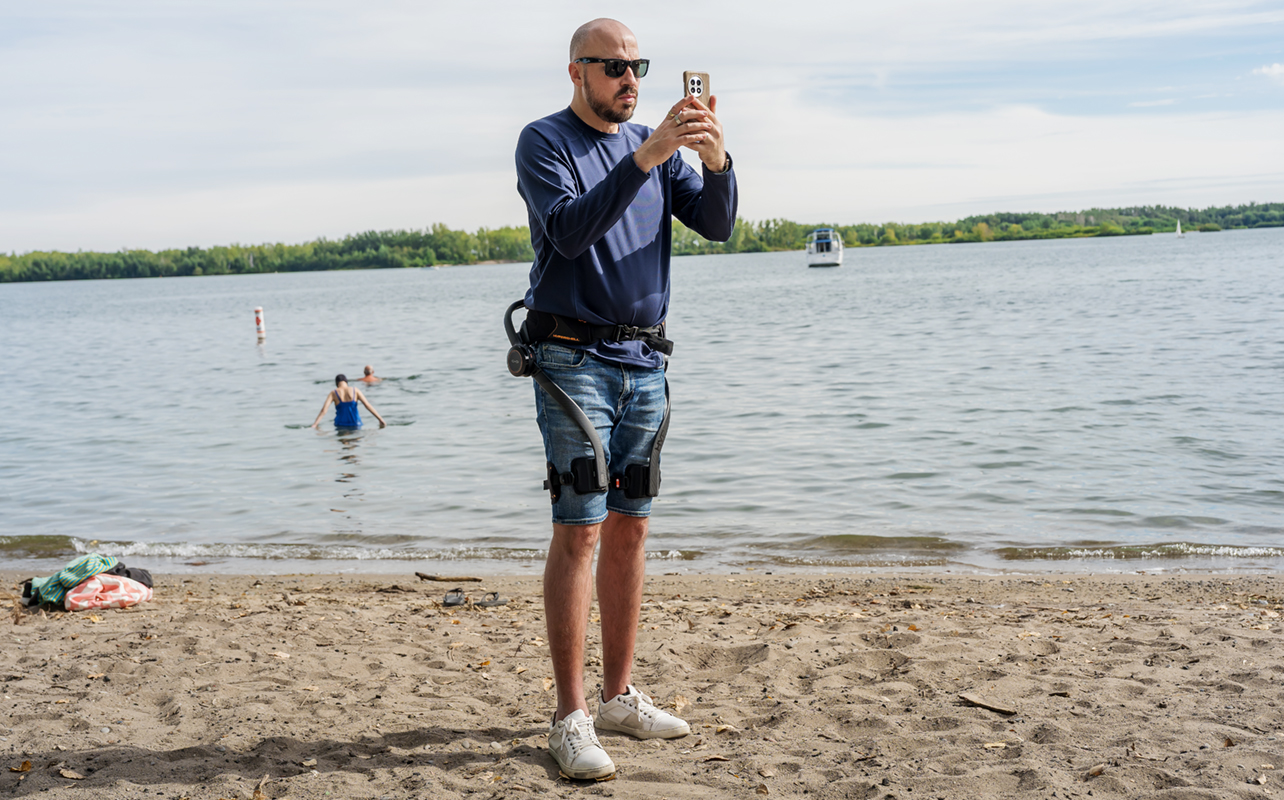
Wearing an exoskeleton may look odd, but if it has the potential to increase your mobility, it might very well feel like your body’s own liberation. To be clear, the Hypershell X Ultra isn’t a miracle product that can make the fully impaired walk again but its combination of electric motors and AI-driven software can do wonders for those who need the boost.
Wearable exoskeletons aren’t new—research and development into them goes back decades—but they’re quickly going mainstream within reach of various budgets. No longer the stuff of science fiction and futuristic propositions, the X Ultra is a current example of what’s possible when strapping it on to move further, climb a hill, or hike a trail.


Watch my Hypershell X Ultra review video
Hypershell X Ultra build
Open up the carrying case and the whole thing looks like it came out of a military base. Hefty and sizable, the initial impression is somewhat misleading because once you strap yourself in and tighten it to your body, it becomes routine afterward. What took me 10 minutes or more to initially figure out the first time only took less than a minute afterward.
It’s not as heavy as it looks to begin with, weighing in at just shy of 5 lbs. with the battery attached. Most of the load bearing weight lies in the hips, though without feeling like it places undue stress on the body that way. I will say, however, the weight is totally subjective because I can see both a younger person and a senior wearing an X Ultra feeling differently about that.
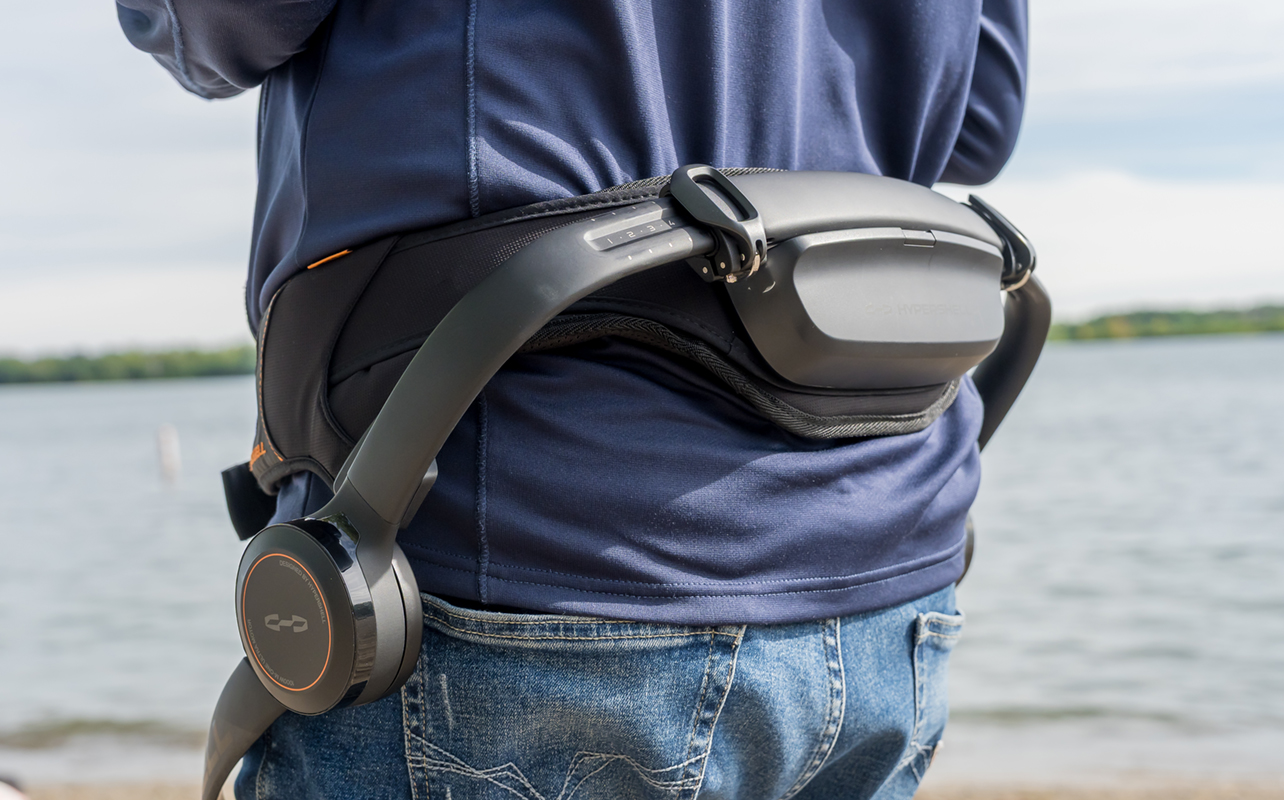
The exoskeleton is made from a titanium alloy frame and carbon fibre arms that attach to straps wrapping around the thighs. While I never fell wearing it, Hypershell built it to withstand physical incidental contact, so an accidental tumble shouldn’t be game over for the device. Mind you, I don’t know about landing on rock or concrete. Canadian weather should be fine with a temperature range between –20 to 60 degrees Celsius.
My one hesitancy is the IP54 dust and water resistance. For an outdoors-y product, frolicking in snow or walking in a rainy environment may be okay at first, but not for a sustained period. It’s definitely not made for going underwater.
In any case, it straps on fairly easily with three clips: one around the waist, two for the thighs. The lumbar base in the back needs to go around the iliac bone, which is basically the height of the pelvic bone. Once that’s in place, everything else should align nicely.
How the Hypershell X Ultra works
The Hypershell+ app is the most instructive part here because it not only pairs with the exoskeleton but also presents a detailed walkthrough on putting it on properly and setting it to help you become accustomed to how it operates.
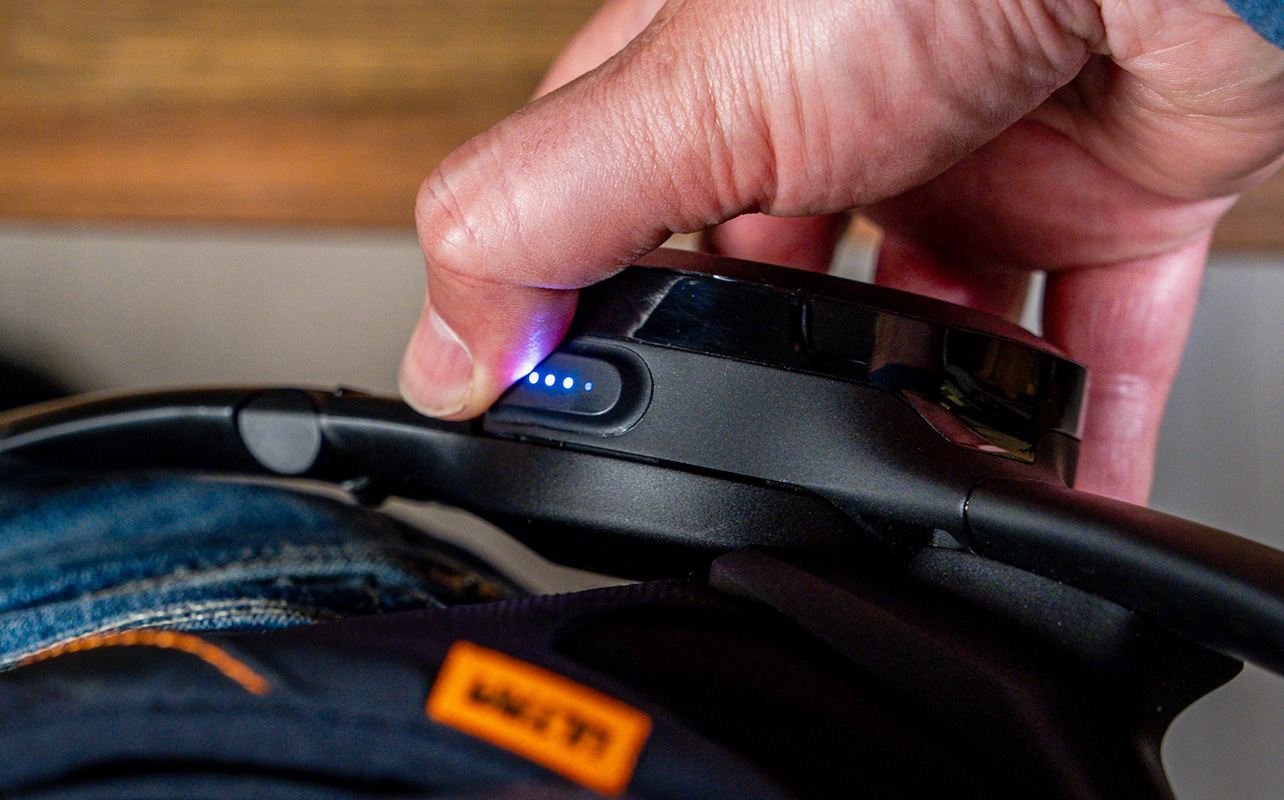
The basics are these: the twin electric motors combine for up to 1,000 watts of power, with the system feeding torque into your stride when you need it. Eco mode provides a gentler nudge, whereas Hyper mode is where the X Ultra adds a much more noticeable kick, ramping up as the terrain gets steeper or more irregular.
That power is generated at the hips and transferred through the mechanical arms attached to the leg straps, helping drive your legs through each step. The X Ultra also adapts its assistance to your movement, responding to your gait and stride rather than just continuously delivering the same amount of power. That’s what allows it to accommodate people of different heights and stride lengths without requiring the system to be completely reconfigured for each person.
Where the app steps in
The other half of the equation is the AI MotionEngine Ultra, which is where the X Ultra gets even more interesting. The system utilizes onboard sensors to monitor your movement in real time, recognizing changes in your pace, gait, and terrain to adjust the motor assistance accordingly. So, while the motors are pushing a set power amount (Eco, Hyper), they redistribute that power by anticipating when you need the extra help and deliver it at the optimal point in your stride.
The Hypershell+ app essentially acts as the control centre for all of this. Within it, there’s an “Adaptive Motion Recog” section that lets you select from about a dozen activities for the AI algorithm to account for your motion. You can leave it at Auto to figure it out but if you want some reassurance that it’s calibrating more distinctly, that’s one way to do it.
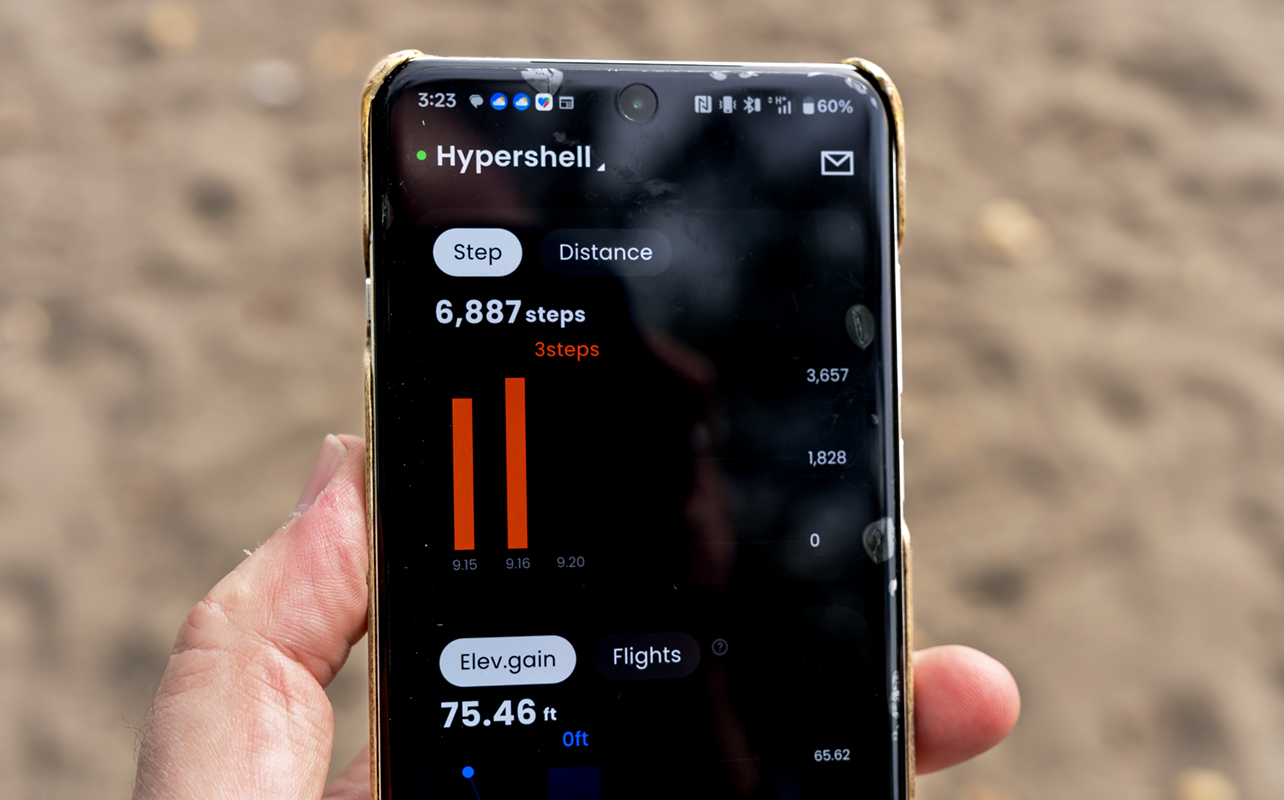
It’s important to note that the app itself isn’t doing the AI processing because AI MotionEngine is part of the exoskeleton’s own control system. The app simply gives you control over the different modes and power, while also acting as a system monitor.
Walking and hiking with the X Ultra
Walking with it on, I often made jokes to myself and others that I was “bionic” or even “borderline cybernetic” but that’s actually overstating things a little. Neither is technically true here because we are talking about more of an assist than an augmentation. The motors aren’t moving your legs for you, they’re simply reducing the effort required to move them further and faster than you otherwise could.
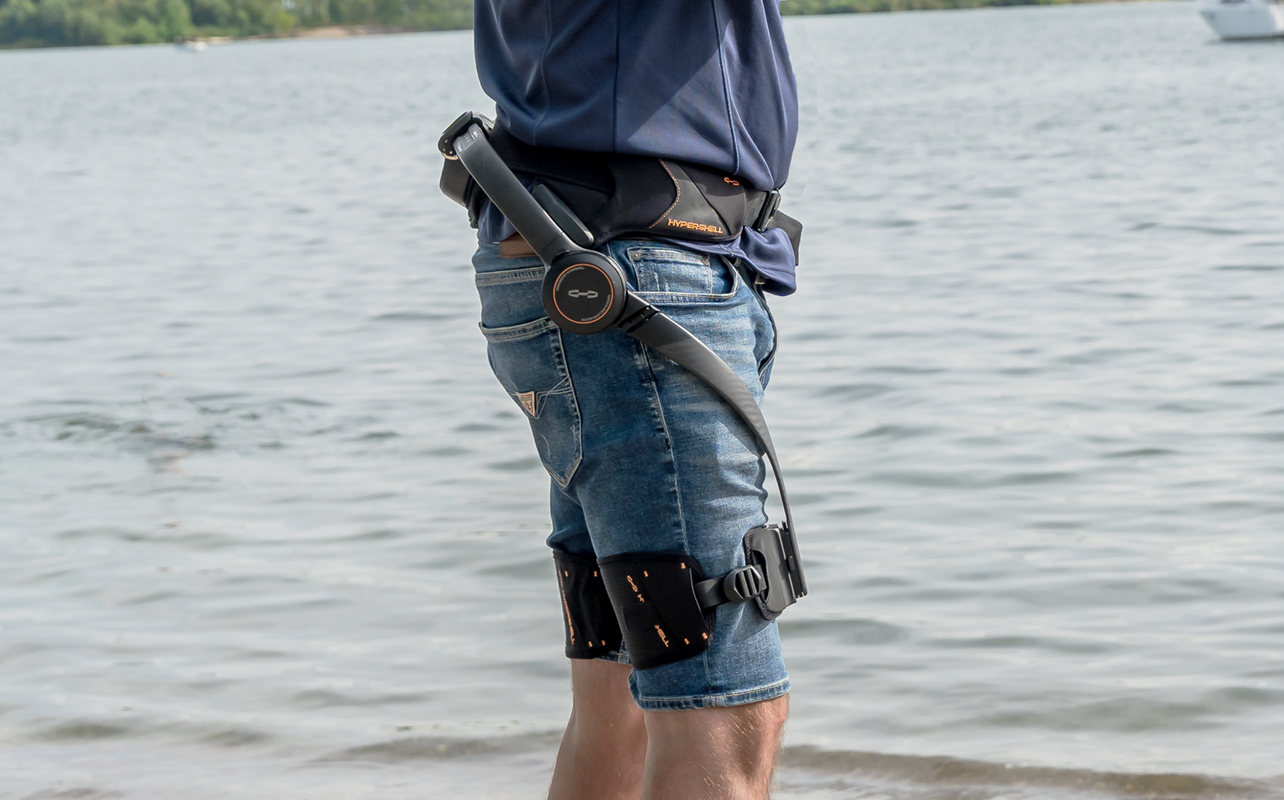
For instance, Eco and Hyper mode are both designed to do the same thing, albeit by exerting different power levels. Eco mode is more about providing a moderate boost for modest activity, largely governed by the intensity you apply, either from the LED controller on the right side or through the slider in the app. Hyper takes all that up a notch by delivering greater torque assistance, which is how the X Ultra is able to make walking uphill or for a longer duration feel less physically taxing.
At first, you’re not always sure it’s actually working but that’s what I call the “feeling out” period. You know the motors are doing something when taking steps forward, but you may not necessarily feel the assistance is in sync with your own movement. That eventually normalizes as the X Ultra learns your pace and gait, but I would also stress that fit and placement are of paramount importance. Don’t be shy to make the leg straps a little tighter, and to ensure the belt portion is stable along the iliac bone. It makes the motors’ job so much easier.
As taxing as it can be to go uphill, it’s the descent downhill that can strain knees and leg muscles. That’s where the exoskeleton shows that it’s got some versatility in terms of terrain, reducing the discomfort and torque on those body parts. You may notice it even more in uneven terrain, but it certainly helps maintain a steady pace and stride on stairs or when carrying a load.
Being active wearing the X Ultra
I’ve had a personal history of sports-related injuries, particularly tendinitis with my knees and a torn labrum in my hip, which has made running for any extended length a painful reminder when feeling it the next day. Running with the X Ultra in Hyper mode took some of that load off, though I wouldn’t say it’s a panacea, either. I just appreciate that it makes it easier to play a sport that involves some running, like tennis or basketball, though it requires some adaptation and likely won’t fully offset compensating by shifting weight, for instance.
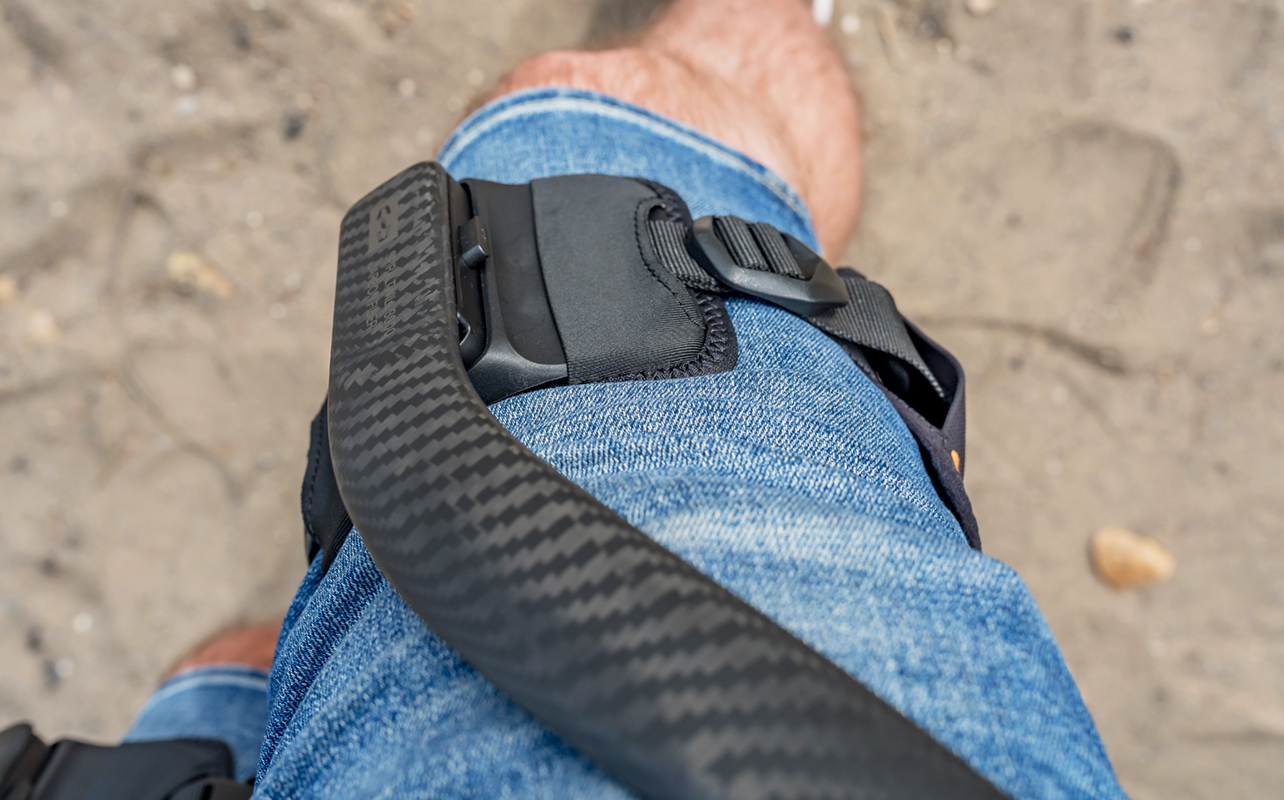
The motors do stick out a little, and carrying the weight, while not necessarily straining your back, naturally requires adapting your movement because, even at 5 lbs., it’s almost like playing with a weighted vest. Moreover, since the motors protrude, arm movements close to your torso may lead to collisions or bumps that otherwise wouldn’t happen if they weren’t there.
Needless to say, you’d have to use your own discretion—and perhaps any league rules—were you to try this playing any sort of organized sport. Solo sports without swinging motions are less of a problem, but again, the exoskeleton feels like it takes a load off when you actually move, so you’re not likely to feel it as much when standing for a golf swing. Play pickleball, however, and it can almost certainly help enhance your movement on your feet.
What about Fitness mode?
The other option aside from Eco and Hyper is Fitness mode, which basically reverses the energy transfer so that the motors work against you without assistance. Think of it as a form of resistance training, adding extra load to your stride to make walking or climbing more physically demanding. In other words, instead of the X Ultra taking some of the work off your legs, Fitness mode deliberately puts some of it back on.
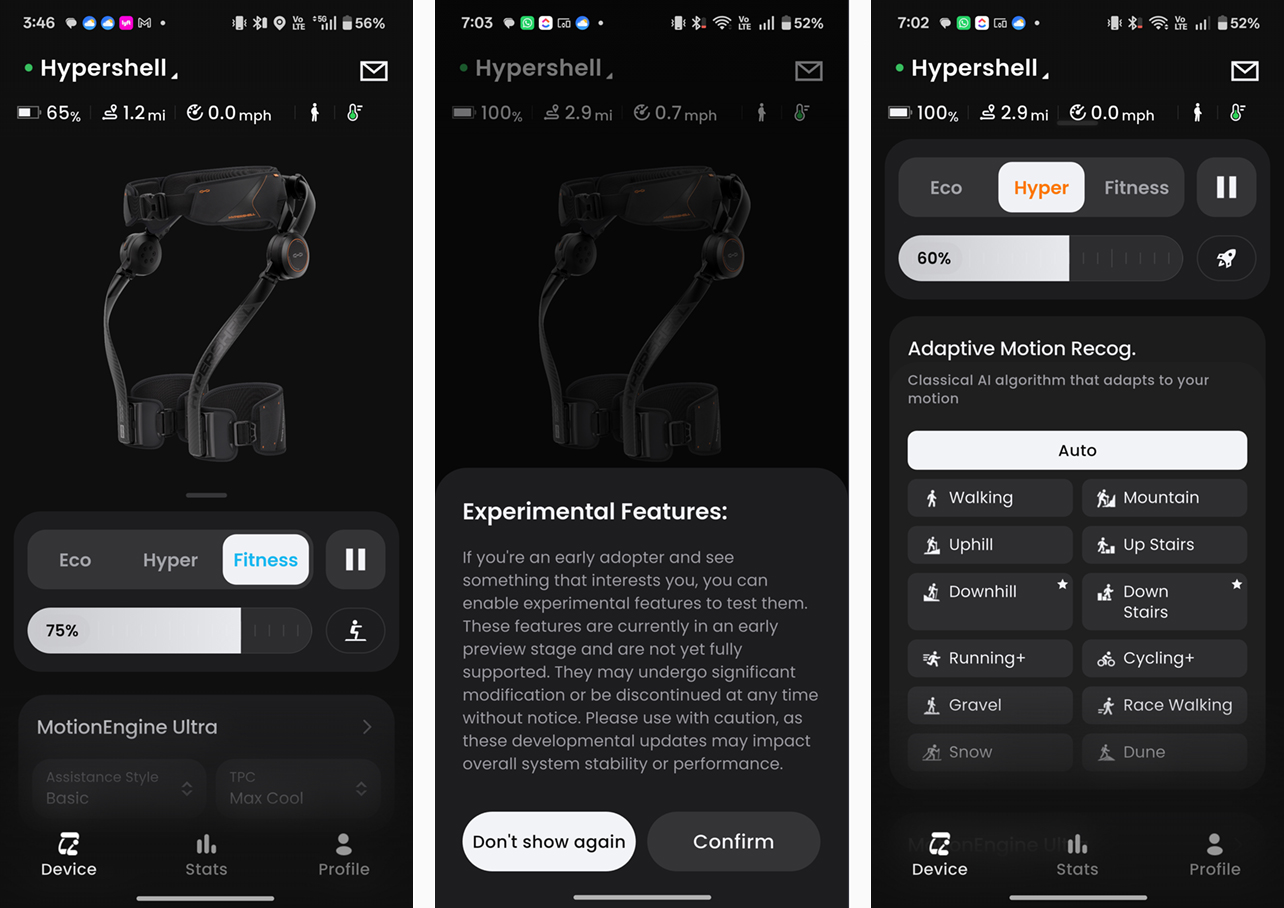
In this way, you feel it push against your legs as you stride to take a step forward. It’s not all that subtle, either, though it also depends on the level you have it on. Like the others, there’s a sliding scale letting you decide how much resistance you want. It’s a neat way to introduce some form of exercise (resistance training) within an exercise (walking, hiking, running).
I personally like it a lot because it makes my legs work a little more to exert the same energy. While I would hardly call it a heavy workout, it’s one of those more passive ones that doesn’t feel like a commitment, albeit one that should have a positive effect when doing it regularly over time.
Battery life
Hypershell includes two batteries in the box with the exoskeleton, rating each one for up to 30km of movement. There’s a big catch to this: that figure is for Eco mode at the rough default, so about 30-40% intensity. Increase it, or use Hyper and Fitness modes, and the number goes down precipitously. The main point to remember is that battery life is highly contingent on how hard the motors have to actually work. Being in Hyper mode is one thing, but using Hyper while traversing a lot of hilly or rocky terrain saps more than using it to walk on a flat surface.
You definitely need to equip the second battery for longer walkabouts or hikes, especially when driving more power out of the motors. Hypershell markets the X Ultra as an outdoors-y product but battery life is something you’ll likely have to ration if you’re thinking about hiking for hours. On average, I’d estimate you’re looking at about 5km on Hyper at 100%. That may be more than enough for what you have in mind, but if not, prepare accordingly.
Plugging in a portable battery pack probably won’t help much, either, and it usually adds to the overall weight if you have to put it in a pocket or backpack. At the same time, there’s no pocket or sleeve for the extra battery, so you’d need some form of storage to take with you anyway.
The exoskeleton is reasonably easy to fold up and transport, such as it is. The case carries a footprint, so if you plan to travel with it, know that it may be considered a carry-on more than a personal item. It can slide under a seat on a plane, so that may help bring it on with another carry-on.
Final thoughts
The Hypershell X Ultra may have its own speeds and feeds but the metric that truly matters is how you feel after using it. A hike or run that might usually induce pain and soreness the next day may feel noticeably better if you do it wearing the exoskeleton instead. It’s hard for me to tell you exactly what you’d feel relative to your own mobility challenges but I can attest that this isn’t some gimmick; it works and can be a difference maker. It’s also SGS-certified through independent testing by SGS to meet safety and quality standards in Canada. A key point to remember is this is not a medical device.
Understandably, you want to be sure given the price. That’s why I’ll hedge a little by noting that you’re actually more likely to feel the difference when you still have some level of mobility. If you’re at the point where taking two or three steps is too much, or you have plantar fasciitis, unrepaired ligament damage, or issues with the nervous system affecting motor skills, this exoskeleton may or may not provide a measure of increased mobility. I honestly can’t say for sure, and I don’t know that Hypershell can, either.
That being said, I can see tremendous value here for those who’ve felt forced to make compromises in staying active. Even more so for those in health situations where activity is crucial to quality of life and longevity. Don’t expect miracles but it may turn out to be what helps you keep it moving with less strain and discomfort.
The Hypershell X Ultra is available now. You can also check out an alternative in the Hypershell X Pro, which is similar, save for less power (800W), lower battery life (up to 17.5km range), and fewer activity modes (10 vs. 12). For all other exoskeletons, check them out here.