
GoPro has been synonymous with action cameras for years but it’s not the only game in town with other alternatives available. Not every action cam is the same, even if they largely serve the same purpose. That’s why it’s better to break it down based on what you might want to prioritize more.
Brands like DJI and Insta360 stand out as big competitors because they’ve been in the same space for a while now. This list presents you with some options that bear different logos.

Best overall GoPro alternative: DJI Osmo Action 6
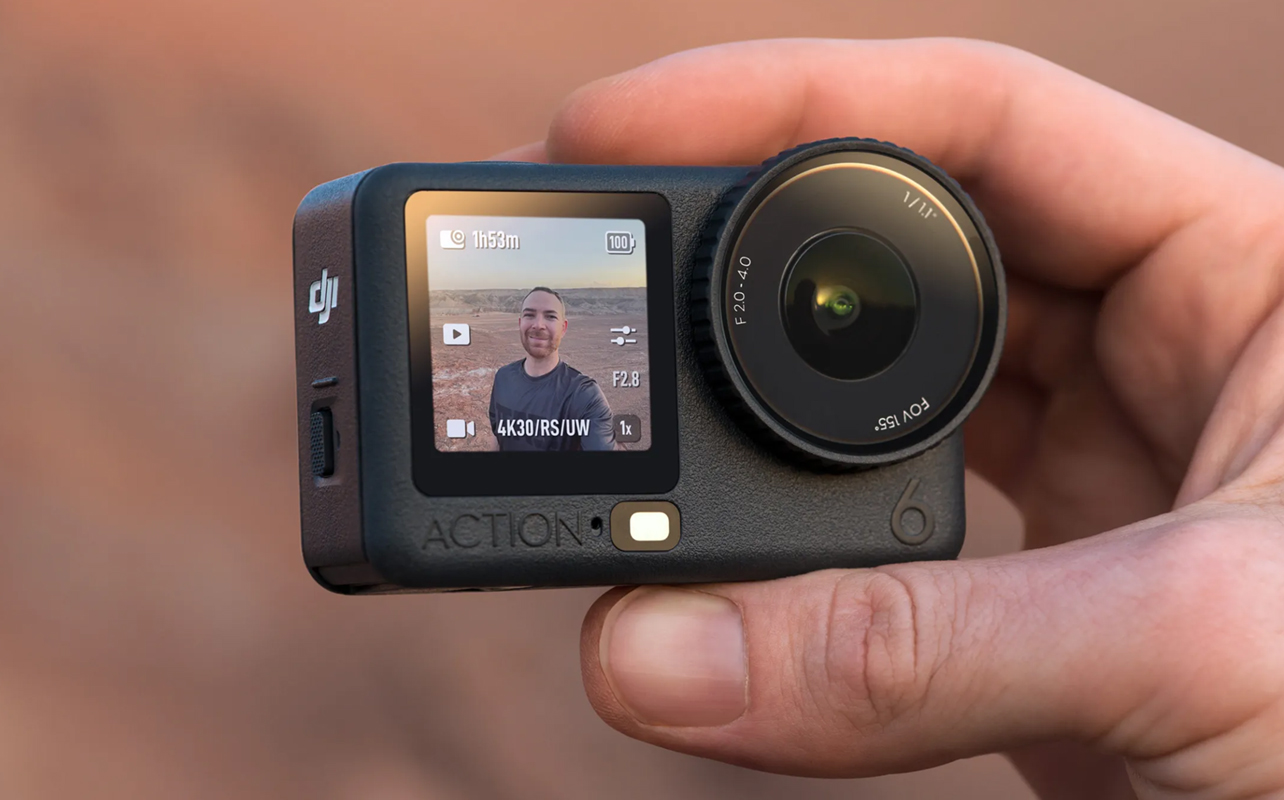
The DJI Osmo Action 6 remains the most complete alternative to a GoPro, starting with its 1/1.1-inch square sensor paired with the first variable aperture (f/2.0 to f/4.0) in an action camera. They combine to capture good low-light footage and photos, while the square sensor lets you frame or crop footage between horizontal and vertical aspect ratios after the fact. This way, you can use the same clip on both YouTube and social platforms.
Dual OLED touchscreens, 20-metre-depth waterproofing without a case (double the Hero13 Black’s rating), built-in storage, and swappable lens attachments are all nice touch points to start with. You can record up to 8K at 30fps and go more cinematic in 10-bit color with D-Log M for colour grading later.
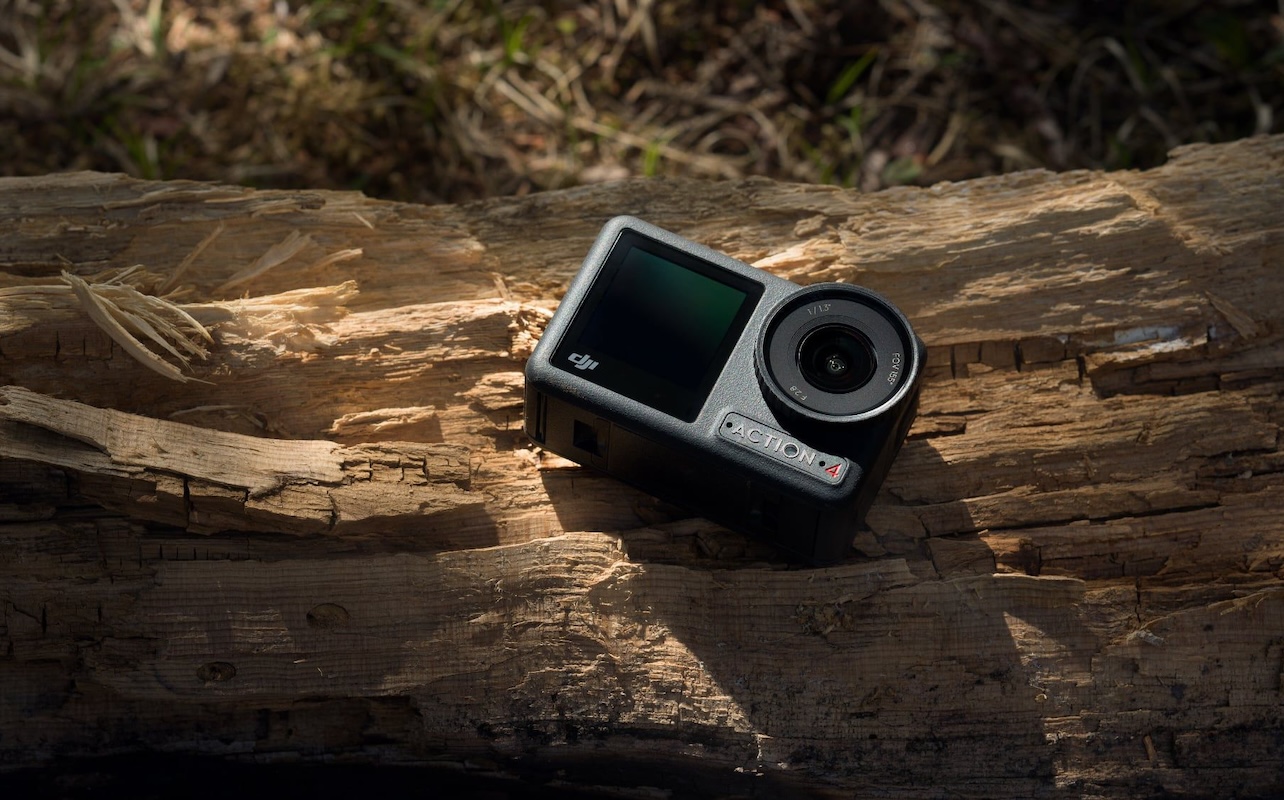
GoPro’s mounting system is an industry staple at this point, but don’t count out DJI’s magnetic quick-release mount, which is arguably more convenient given how it snaps on or off for quick swaps from one mount to another. You get a GoPro-style mount in the box, so you basically have the best of both worlds off the bat.
Not that there aren’t caveats to consider. GoPro’s MISSION 1 PRO has a larger 1-inch sensor and records 8K at 60fps, except it’s also bulkier, more expensive, and geared a little more towards the professional users. As an alternative, the Action 6 offers the best balance of image quality, features, and durability outside GoPro’s own lineup.
The Standard Combo comes with a GoPro-compatible mount. The Adventure Combo adds two extra batteries with a case, more mounts, and a 1.5-metre extension rod.
Best GoPro alternative for image quality: Insta360 Ace Pro 2
The Insta360 Ace Pro 2 earns this spot because image quality matters a lot here. Co-engineered with Leica, it pairs a 1/1.3-inch, 50-megapixel sensor with 8K video at 30fps, a Leica Summarit lens, and dual AI chips for processing. Its 50-megapixel stills are, at least on paper, more than the Osmo Action 6’s 38-megapixel images, though the image sensor is smaller here. You’re better off shooting most footage in 4K rather than 8K.
Leica’s colour tuning is key because of how it gives footage a more graded, polished look straight from the camera. Even if you know little about post-production, you’ll capture content that probably looks like you do. Its PureVideo mode brightens dim scenes, though you can use the feature for a variety of low-light conditions.
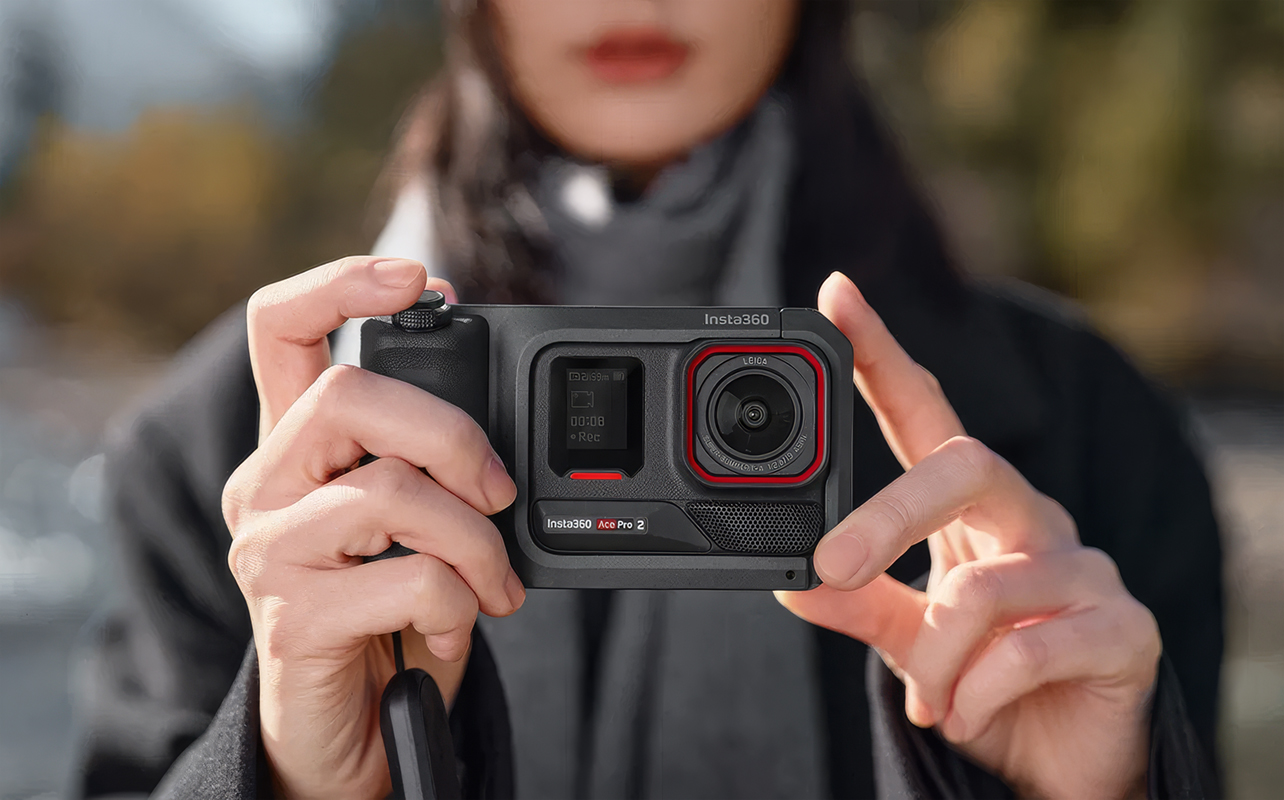
The big trade-off is that the Ace Pro 2 records 8-bit color, not 10-bit. That leaves less room for grading compared to 10-bit footage from the Osmo Action 6. Technically, the smaller sensor and fixed f/2.6 aperture put it behind DJI’s camera in low light, so a lot of this is situational. DJI’s flagship action cam might produce better low-light shots but it can’t match the Leica aesthetic right out of the camera. That makes it a tougher call that depends on how and where you shoot.
The Ace Pro comes in either a Dual Battery Bundle that adds an extra battery, or a Dual Battery Xplorer Bundle that includes a variety of other accessories on top of the extra battery.
Best GoPro alternative for battery life: DJI Osmo Action 5 Pro
Battery ratings can really differ between what the manufacturer states and what you experience, so take that into account. For example, DJI rates the Osmo Action 5 Pro at up to four hours, but that’s only possible if you record at the lowest settings and resolution. A more realistic number is probably somewhere in the 120-minute range, which would be roughly 30 minutes longer than the GoPro HERO13 Black gets under the same settings.
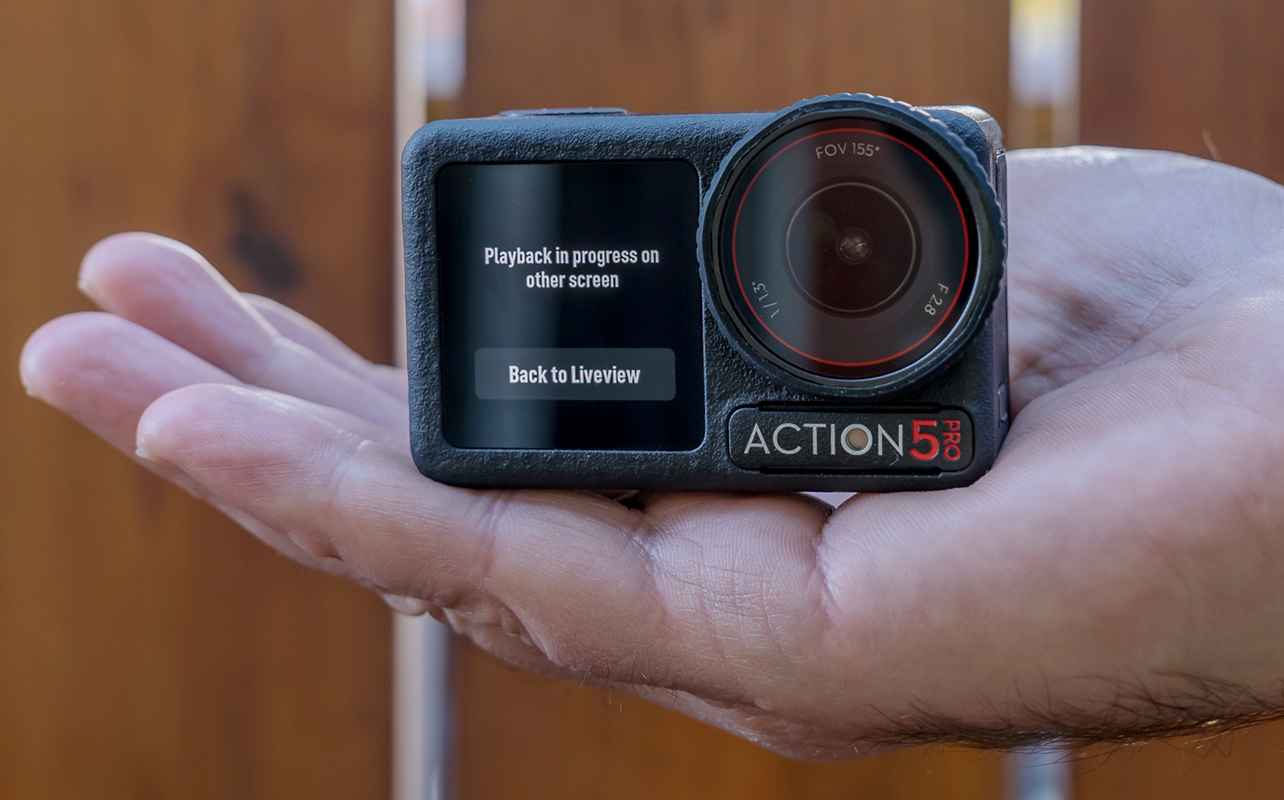
Why? It’s mainly because the Action 5 Pro has a larger 1,950mAh battery and more efficient processing. In fact, DJI uses the exact same battery in the Osmo Action 6 and Osmo 360, so spares can serve a purpose between devices. You still get dual OLED touchscreens, the same 20-metre waterproofing, and 47GB of built-in storage. Sure, there’s no 8K but that’s not something you’re going to miss if you care about battery life.
To be fair, GoPro’s Mission 1 Pro may have better battery life but the Action 5 Pro is really a better comparison to the HERO13 Black. You can get the Action 5 Pro in either the Standard Combo or get a few extra accessories—including extra batteries—with the Adventure Combo.
Best budget GoPro alternative: Zero-X Waterproof 4K UHD Sports and Helmet Camera
This Zero-X action cam keeps things simple, giving you something you can quickly mount on a helmet, handlebars, or chest harness. It’s not designed with all the latest bells and whistles compared to the likes of GoPro, DJI, and Insta360 but it doesn’t skimp on features.
On paper, it covers the basics. It records in 4K at up to 120fps using a 12-megapixel Sony sensor and electronic image stabilization. There’s both a 2-inch rear screen and a 1.4-inch front screen, along with burst, time-lapse, slow-motion, and slow-shutter modes. There’s a pretty generous set of mounting kits, too. It even comes with a separate waterproof casing rated at 30 metre depth, as well as freezeproofing to –10 degrees Celsius and shock protection from 1-metre drops.
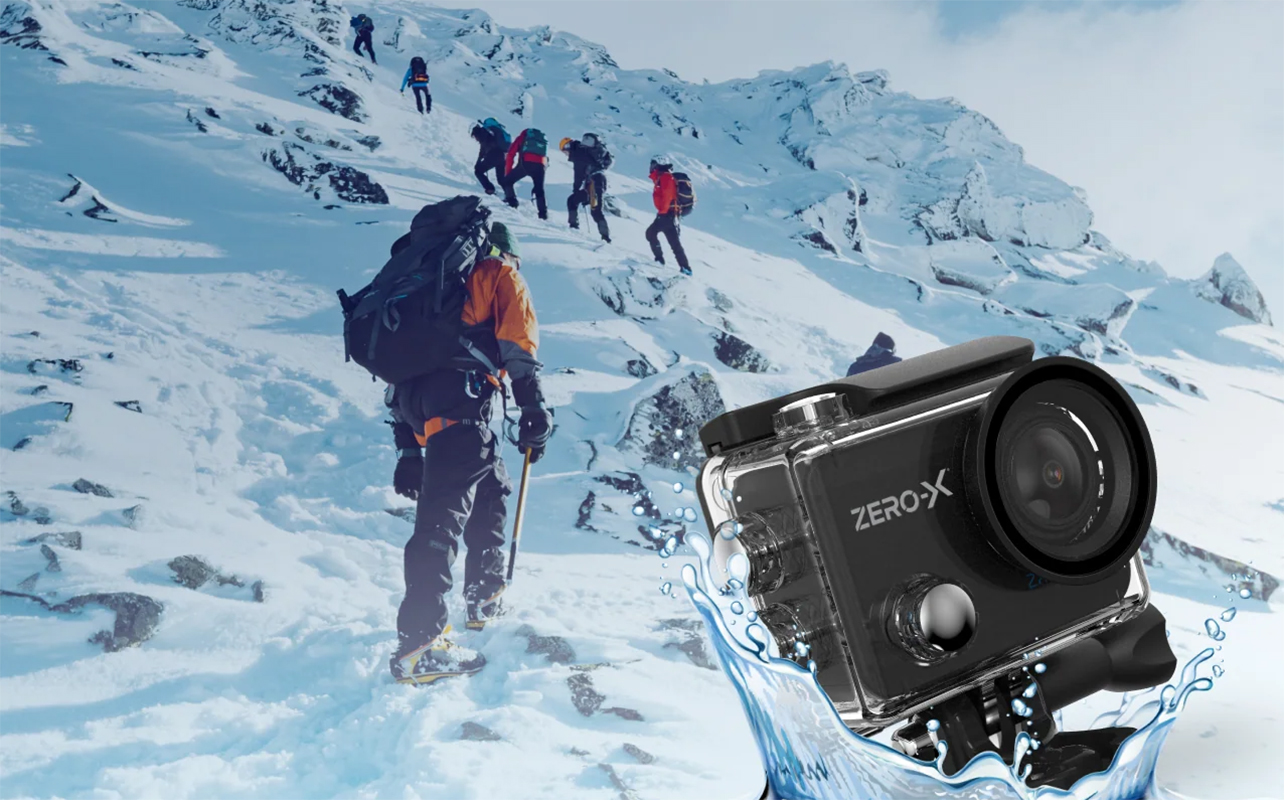
Just bear in mind the trade-offs involved. It’s a smaller battery at only 900mAh, while the 1/3-inch sensor size is considerably smaller in comparison. That will affect overall image quality, especially in low-light conditions. As a budget-friendly action cam, battery life likely won’t fully match, either. You’ll also need a microSD card (supporting up to 128GB) to save footage and images.
This is the kind of camera you go with on a tight budget where GoPro and other alternatives might be out of reach. It can also act as a second camera for supporting footage where a better one serves as the primary.
How these action cameras compare with GoPro
The GoPro Hero13 Black is still the mainstream model, while the MISSION 1 series targets more professional users. This quick glance table below lays out our top picks above against these two particular GoPro variants.
| Camera | Sensor | Video | Waterproof (no case) | Rated battery life |
| GoPro Hero13 Black | 1/1.9-inch | 5.3K/60 | 10m (33 ft.) | 80 minutes |
| GoPro Mission 1 Pro | 1-inch | 8K/60 | 20m (66 ft.) | 133 minutes |
| DJI Osmo Action 6 (best overall) | 1/1.1-inch (square) | 8K/30, 4K/120 | 20m (66 ft.) | 120 minutes |
| Insta360 Ace Pro 2 (image quality) | 1/1.3-inch | 8K/30 | 12m (39 ft.) | Rated up to 180 minutes at 1080p |
| DJI Osmo Action 5 Pro (battery) | 1/1.3-inch | 4K/120 | 20m (66 ft.) | 112 minutes |
| Zero-X Waterproof 4K UHD Sports & Helmet Camera (budget) | 1/3-inch | 4K/120 | Casing only: 30m (98 ft.) | 90 minutes |
The numbers show where the trade-offs sit. GoPro’s Mission 1 Pro leads on sensor size and top frame rate, but it costs considerably more than any alternative here. The Hero13 Black is the closest GoPro match for the DJI and Insta360 flagships, and it trails them on waterproofing and battery life while carrying a similar price tag. The Zero-X is the only pick aimed squarely at tight budgets for obvious reasons. The Action 5 Pro sticks out as a nice-to-have alternative because of its similarities to the Action 6.
Check out our best action cameras list for 2026.