
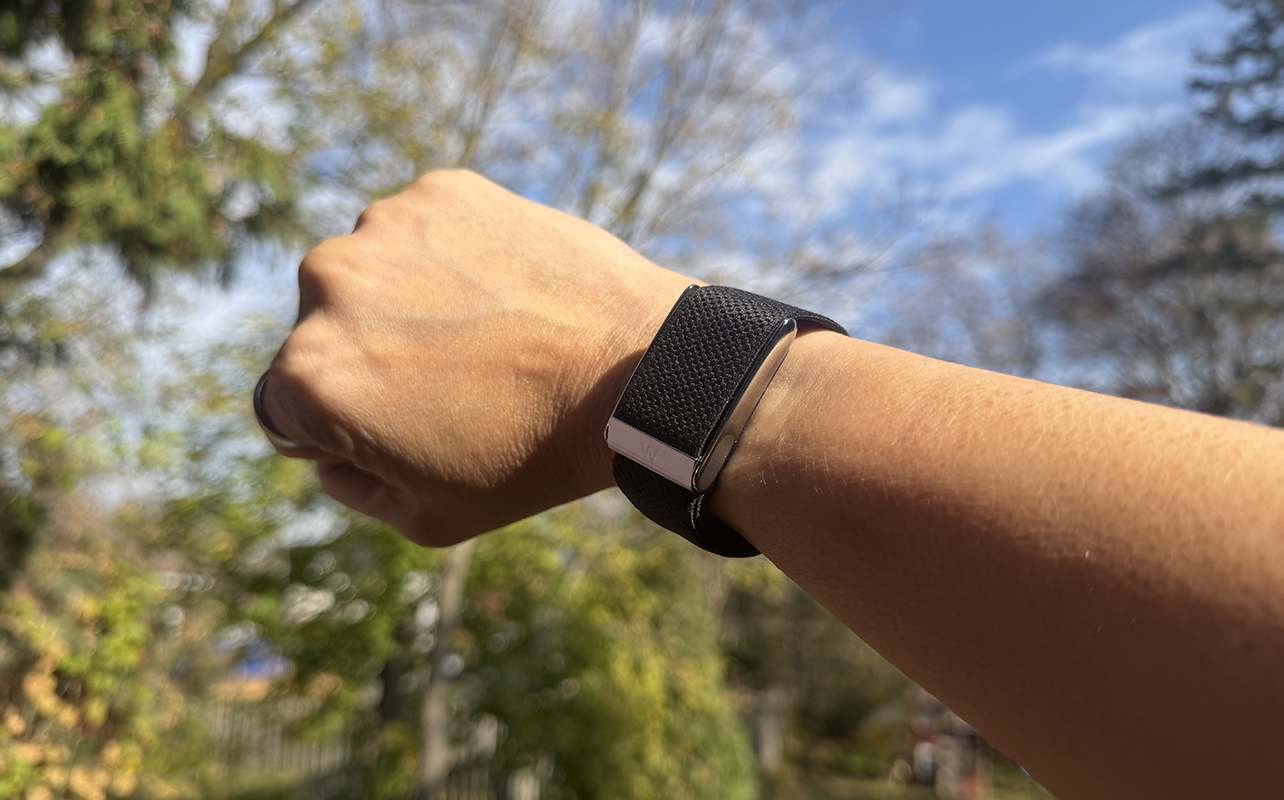
While there are plenty of new screenless trackers, Whoop was one of the first, if not the first. The earliest Whoop tracker launched more than a decade ago in 2015 and the two latest models are the Whoop 5.0 and the Whoop MG, both of which are available at Best Buy. I spent over a month testing the Whoop MG. It’s the more advanced model of the two, adding ECG readings and daily Blood Pressure inisghts. It’s the option for serious athletes, packing tons of features into a device that looks like a stylish bracelet. But most notable is that the data it collects along with how it’s presented in the app, plus unique insights and consistent notifications that kind of, sort of, scare me into getting my butt in gear. And that’s a good thing.

Ultra-comfortable and easy to swap bands
The Whoop MG is smaller than the previous generation version and about as wide as a chunky bracelet. It’s sleek and fashionable, ideal for both men and women. It comes with the standard black SuperKnit Luxe fabric band. I was also sent a stylish LeatherLuxe genuine Italian leather band, perfect for a dressier look. It’s easy to swap bands once you know how to do it. Note that you may need to gently squeeze the pins together to ensure a secure fit when using a new band or going back to the old one.
Whoop MG vs. Whoop 5.0
Deciding between the two newest models? Here’s a handy comparison chart.
| Whoop MG | Whoop 5.0 | |
| Band Material | Micro-filament fabric (antimicrobial coating); upgrade options available | Performance knit or polyamide/polyester/elastane (depending on membership tier); upgrade options available |
| Band Colour | Black (other colours available directly through Whoop) | Jet Black, Obsidian (other colours available directly through Whoop) |
| Sensors | PPG (heart rate, HRV), SpO2, skin temperature, blood oxygen, stress, accelerometer, ECG | PPG (heart rate, HRV), SpO2, skin temperature, blood oxygen, stress, accelerometer |
| Sleep Tracking | Yes (detailed) | Yes (detailed) |
| Battery Life | 14+ days | 14+ days |
| Automatic Workout Detection | Yes | Yes |
| Unique Features | Healthspan, Pace of Aging, ECG readings, blood pressure estimates, latch-on battery pack (included), journal | Healthspan and Pace of Aging (with Peak membership), latch-on battery pack (with Peak membership, basic charger with One), journal |
| Membership | Whoop Life ($529/yr.) | Whoop One ($259/yr.), Whoop Peak ($349/yr.) |
Membership details: it’s necessary
Whoop trackers work with a membership. What you pay when you buy one is actually the membership, a recurring annual fee, while the hardware is technically free. It’s $529 annually for the Whoop Life plan, which is the required one for the Whoop MG. There are more affordable Whoop One and Whoop Peak plans, but these are only available with the Whoop 5.0 band.
That’s because WHOOP Life includes everything you need to leverage the added features of the Whoop MG. The medical-grade band offers sleep, strain, and recovery insights, VO2 Max, women’s hormonal insights, health and stress monitors, Healthspan and Pace of Aging analytics, ECG heart screener, irregular heart rhythm notifications, and daily blood pressure insights. It also comes with a Wireless Powerpack.
The main difference between the Whoop MG and the Whoop 5.0
Whoop launched both the MG and the 5.0 in 2025. The Whoop MG steps things up with medical-grade Heart Screener technology for ECG readings, along with daily Blood Pressure Insights. By contrast, the more affordable Whoop 5.0 focuses on advanced fitness, sleep, and general health tracking. If ECG screening and daily blood pressure estimates are priorities, the Whoop MG is worth the upgrade.
If you don’t need ECG, you can opt for the Whoop 5.0 band instead and go with the Whoop One ($259/yr.) or Whoop Peak ($349/yr.) plans. The One membership comes with a CoreKnit band and basic wired charger, while Peak upgrades you to a SuperKnit band and Wireless PowerPack and adds the Health Monitor, Stress Monitor, Healthspan, and Pace of Aging analytics for the extra $90.
The Whoop app experience: a lot to take in
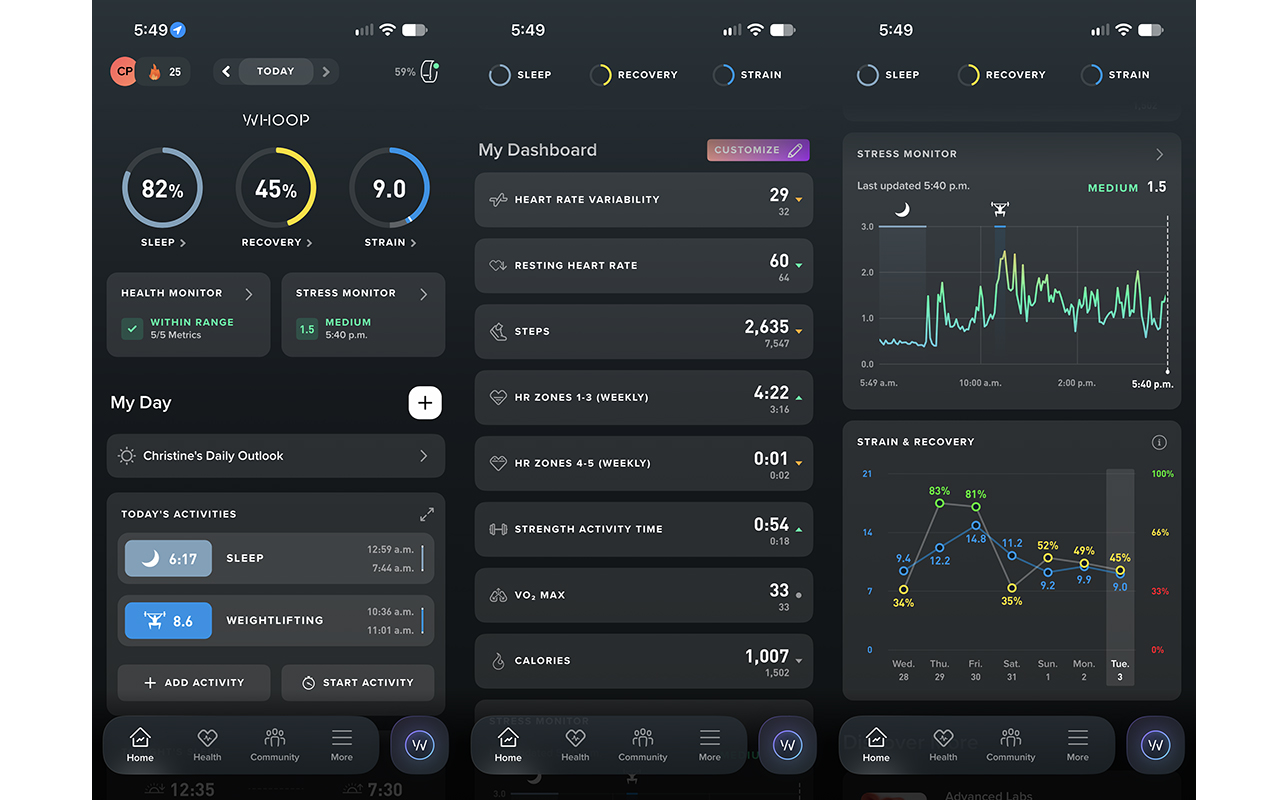
Not surprisingly given how jam-packed with features Whoop MG is, the app can be overwhelming if you’re just starting out. It’s nicely organized, but there’s a lot of data to digest. Key metrics are up front with progress rings for sleep, recovery, and strain. Health Monitor tells you at a glance if five metrics (respiratory rate, blood oxygen, resting heart rate, heart rate variability, and skin temperature) are within range. If there’s something amiss, you can dig deeper.
Stress monitor is marked as low, high, or medium. A diagram shows when stress peaked so you can tie it back to specific factors. Feeling stressed? Enjoy relaxation breathing exercises, accessible right from the app. See your day’s activities, from sleep to workouts, and manually log or start an activity. A recommended bedtime nudges you when you should turn in for the night to get the best recovery for the day ahead.
Scroll down and there’s a dashboard for quick access to key metrics with up and down arrows to compare with baselines. For example, I can see that my HRV has risen considerably, but my resting heart rate is down. There’s also an option to build a custom plan to reach a set goal, like boost fitness, sleep deeper, or overall feel better.
There isn’t a native nutrition section in the app, a miss given the high price. However, you can use the journal to log your meals or sync with a third-party app like Apple Health. This won’t give you calorie or protein counts, however, nor tie it back to your other health metrics aside from things like caffeine consumption.
I could write a novel about all the elements of this app. It’s one of the most comprehensive I’ve seen. I would recommend taking time to explore the data to see what’s valuable for you. What’s most important is that amidst all the charts, graphs, and numbers that you might feel like you need a medical degree to understand, there’s textual analysis to break it down in simpler terms.
For example, under Strain, I’m told I can engage in moderate activity today based on the calculation. There’s also a one-click option to see a summary of your day, advising about things like strain and sleep debt, and encouraging you to share how you feel or what else you think is notable from the day. To get the most input and feedback, though, you need to pay attention to the journaling feature.
Journaling takes diligence, AI helps
Whoop is insistent that you fill out this journal, prompting you to do so daily when you open the app. Log key aspects of the day, like if you had caffeine or alcohol, felt stressed, saw friends, anything you might otherwise put in a diary. Use Whoop AI to log via text or talk or choose from predefined behaviours like “had food close to bedtime,” “consumed caffeine,” or “experienced mood swings.” Maybe you’re feeling stressed because of a big deadline coming up or elated about an upcoming vacation. Telling Whoop this helps it better understand your vitals and metrics.
You can tap into the AI assistant at any time to ask a question or get support. Maybe you’re feeling sore and want advice on how you can still be active. Perhaps you’re feeling sluggish and want to ask it for insight as to why. The assistant is very fact-based, robotic even. In fact, it’s almost demanding more than it is encouraging. That’s in stark contrast to apps like Google Health Premium that might start a conversation with “I’m so sorry you hurt your shoulder, let’s find a way for you to take it easy.” Whoop is more inclined to say, “here’s what’s probably wrong, this is what to do.” It feels cold, but some people might prefer this instead of the illusion they’re talking to a human.
Healthspan, ECG, and blood pressure estimates are defining features
The goal with Whoop MG is to take the data it tracks and translate it into useful guidance. At the heart of this experience is Healthspan, which aggregates nine metrics linked to long-term health along with your chronological age to deliver a Whoop age. If the latter exceeds the former, you’re given guidance on how to slow down this pace of aging. There’s a gamification with this: I found myself checking daily to see it drop little by little while calibrating, desperate to get it down to my actual age or below.
A standout is a medical-grade ECG feature that allows you to take a reading at any time by placing your thumb and index finger on the ECG conductive clasp. It works well though you need to get positioning just right. It often took me a few tries to avoid an either failed reading or inconclusive result.
Heart Screener can detect signs of atrial Fibrillation (AFib) and deliver irregular heart rhythm notifications. Blood Pressure Insights, currently in beta, require an initial measurement with a blood pressure cuff for calibration and then provide daily estimates that factor into your overall guidance.
Hormonal shift insights are appreciated, explaining how where you are in your cycle can influence sleep, recovery, and stress. This applies whether you’re menstruating, in perimenopause, menopause, or pregnant. Sleep tracking is similar to others, and in my testing, its data was generally consistent with the other wearables I wore at the same time. I love that it also detects short power naps, too.
Activity tracking is automatic and generally consistent
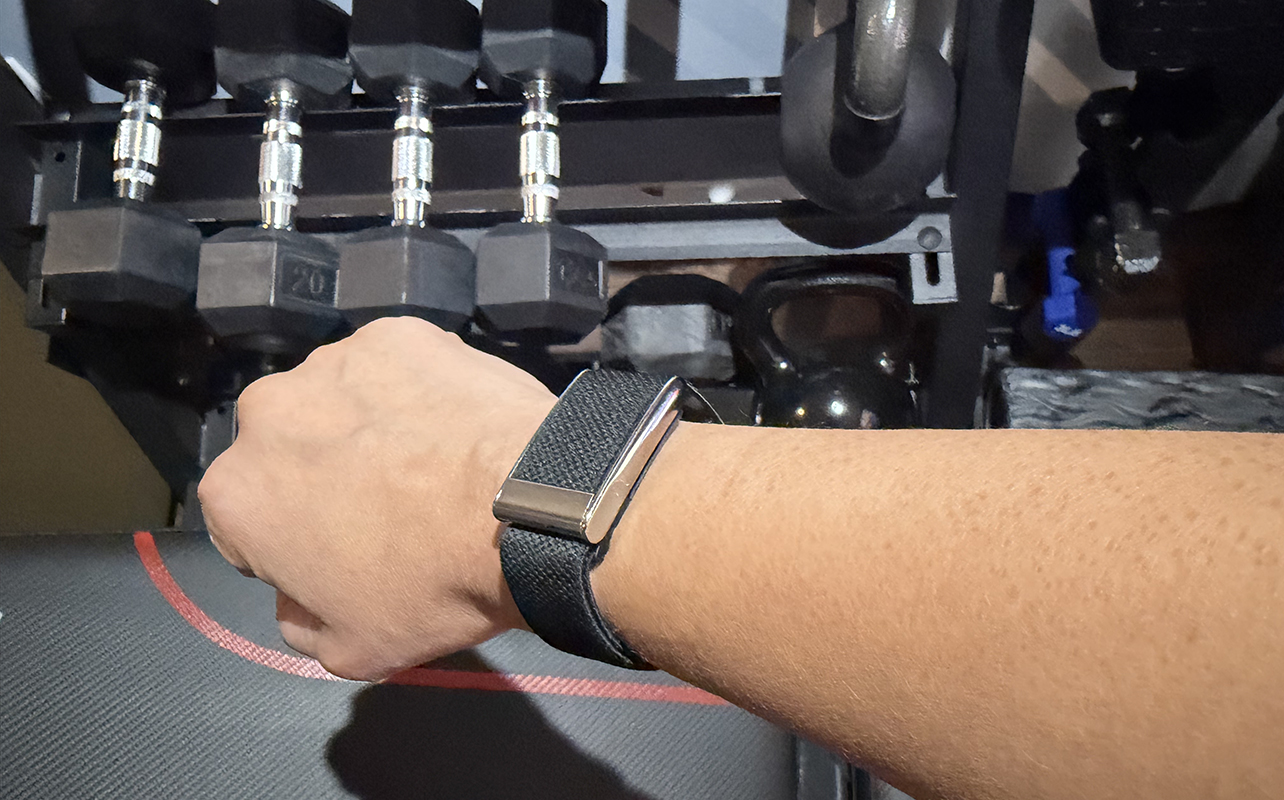
Whoop MG calculates all the usual activity metrics, including steps, activity, workouts, and calorie burn. It calculates VO2 Max and Muscular Strain for those who do strength training exercises. Choose from more than 145 different activities to log. They are workouts in the app, but they aren’t guided videos, just text-based guidance for moves and reps, which is disappointing.
The tracker can auto-detect some activities with distinct movements. At first, it would consistently track everything I did as walking, though at least post-workout stats like duration, heart rate zones, and calorie burn were in line with other devices I wore at the same time. But after about a month, it did start tracking things correctly.
Whoop says its enhanced sensors capture data 26 times per second while the new processor is 10 times more power efficient, helping to extend battery life. I love that you can drill down to the details when recording workouts. Use the AI assistant after a workout to add what equipment you used (dumbbells or machines), the method (floor or bench), number of reps (it can only record number of reps, not time duration per move), and more to keep track.
Battery life and charging are amongst the best features
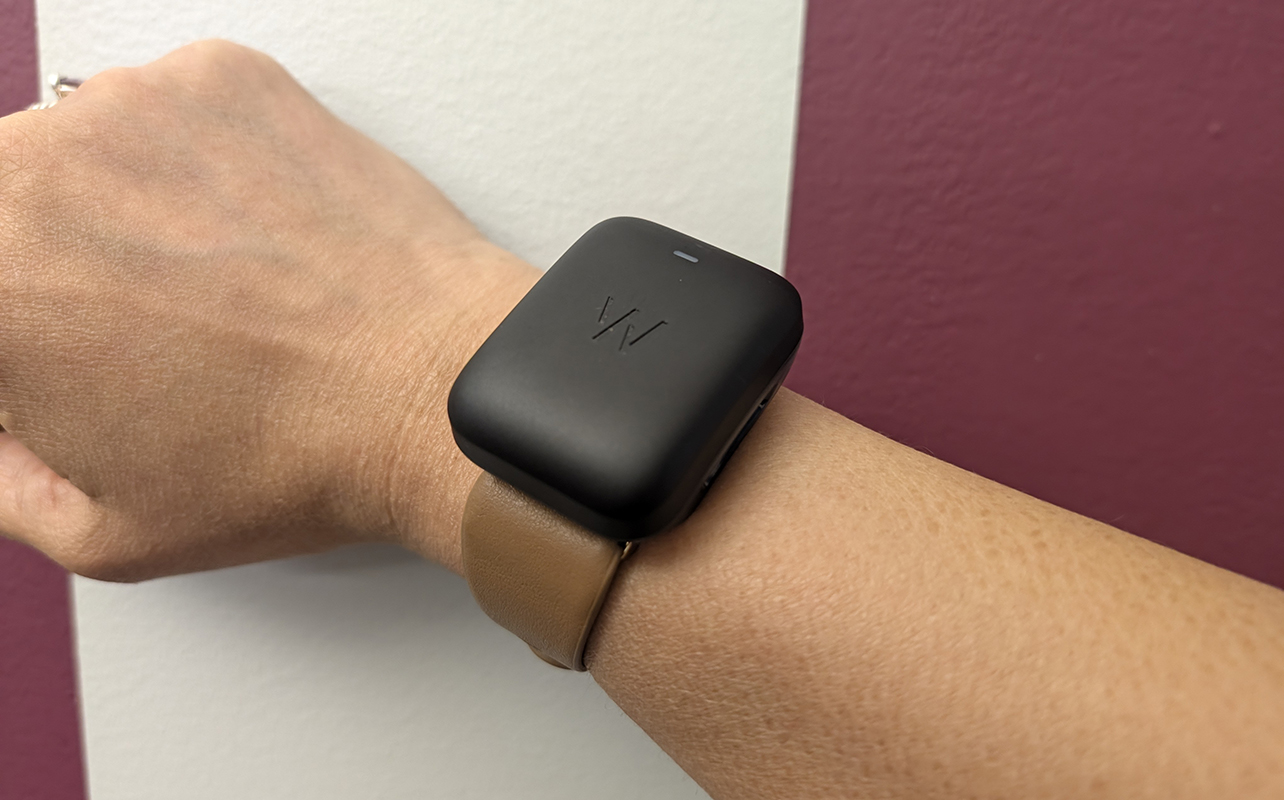
WHOOP rates the battery for 14+ days, which is fantastic in and of itself. But the real “wow” moment comes with the USB-C rechargeable Wireless Powerpack. Charge this tiny unit then slide it onto the tracker while it’s still on your wrist to recharge on the go. You basically never need to remove the band!
While the charger adds bulk, it’s not so much that you can’t still go about your day while it recharges (though you won’t want to sleep with it on). It works quickly, getting me from 40% up to full in exactly an hour. With the Powerpack, you get a full month of battery life per charge. It’s one of my favourite features of this tracker.
Who should buy a Whoop MG band?
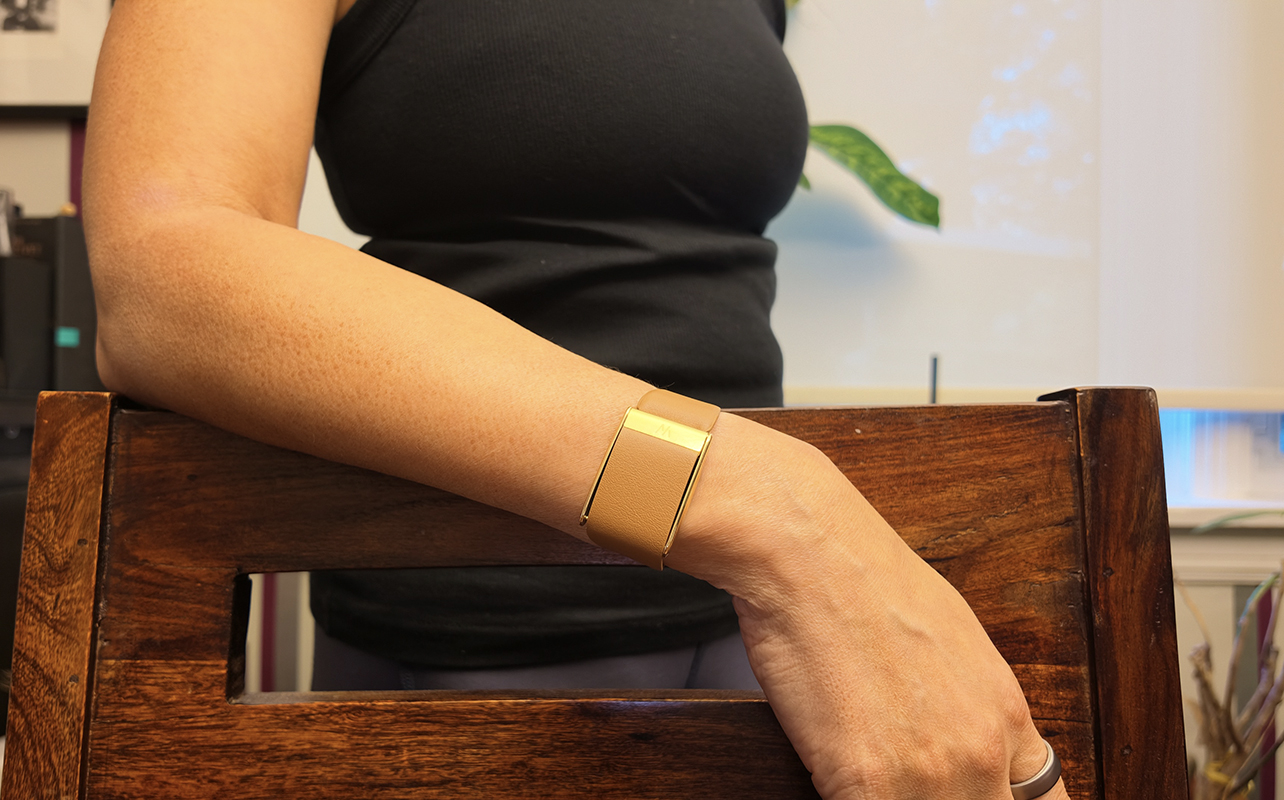
There’s no question that the Whoop MG sits at the premium end of the health tracker market. With the high price tag and a membership being at the heart of the Whoop experience, this is a band for executives, serious athletes, or those who want intense analysis of their health and wellness, including metrics like heart rate, blood pressure, and overall fitness level.
I would recommend the Whoop MG for someone in serious athletic training or who is concerned about aging and keeping on top of their vitals 24/7. It’s only worth it if you’ll be diligent about logging the daily journal and adding as much detail as you can. The more you provide, the more valuable the experience is. And the more Whoop sends you notifications and reminders to focus on what’s important. It almost feels like it’s wagging a virtual finger in your face, telling you to shape up. But in a good way for those who appreciate the discipline.
Alternatives to consider
In this respect, however, though it offers some of the benefits of a screenless tracker, including a distraction-free on-wrist experience, you will find yourself accessing the app more than you might with others. And you’ll be glancing over at the many notifications and reminders. So, if ECG and blood pressure is a crucial feature to you, you might prefer a smartwatch that can take these measurements, too, like the Samsung Galaxy Watch 9 (see my Galaxy Watch 9 review) or the Google Pixel Watch 5 (see my Pixel Watch 5 review).
If you want something similar without the high price tag, the Fitbit Air (read my Fitbit Air review) with Google Health Premium won’t set you back as much and offers many of the same features and similar analysis and guidance. But it only lasts for up to seven days per charge and doesn’t have ECG nor blood pressure tracking.
For a subscription-free, screen-free experience, the Garmin CIRQA (read my Garmin CIRQA review) is a good alternative, best for casual fitness enthusiasts. There’s also the option to go with a smart ring like the subscription-based Oura Ring 5 (Read our Oura Ring 5 review) or the non-subscription-based RingConn Gen 3 (Read my RingConn Gen 3 review). But none of those devices allow you to take an ECG reading and only the Oura Ring 5 offers blood pressure trends.
Weigh the pros and cons, and your budget
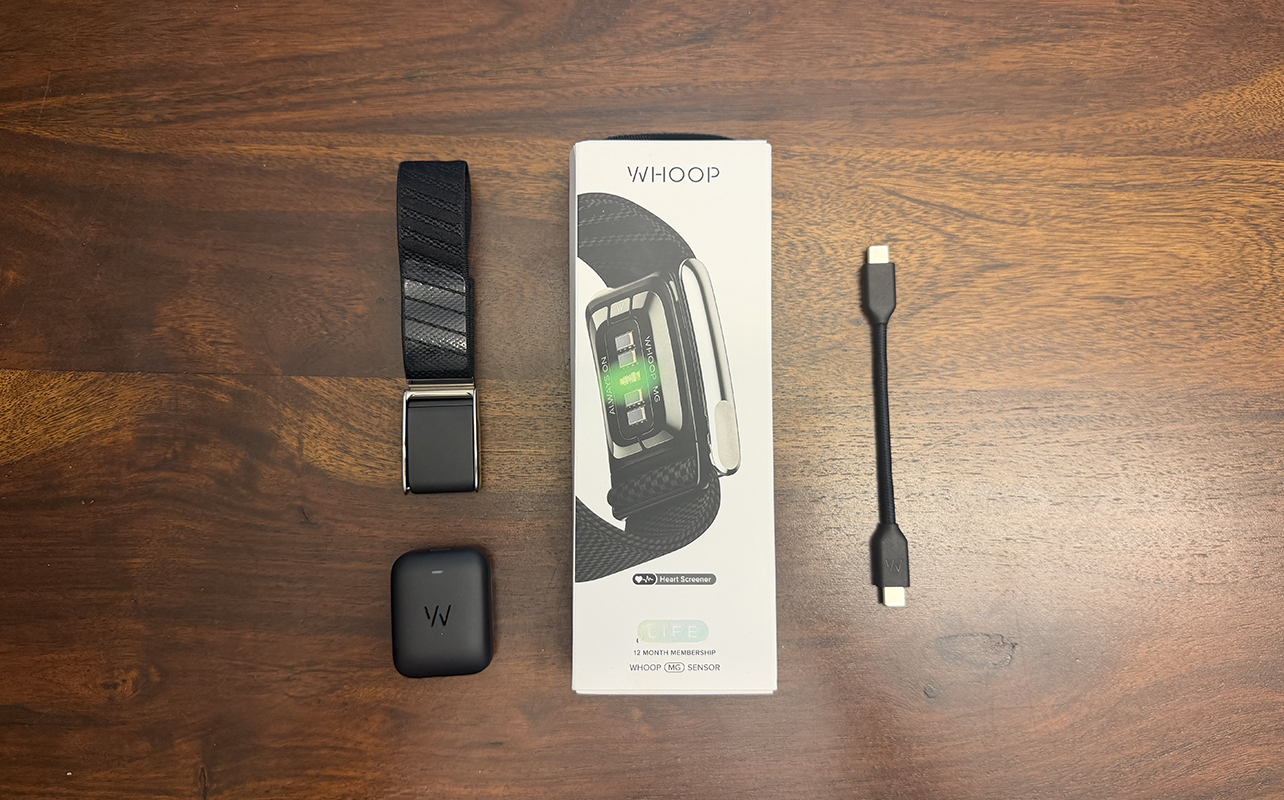
“Overall, the decision comes down to understanding how the Whoop app analyzes your data and weighing the pros and cons. If you value features like incredible battery life, seamless charging, and advanced details like Healthspan, ECG readings, and blood pressure tracking, you might want this band over others that either don’t require a subscription or offer one that’s less expensive. Whoop’s goal is to keep you healthy, slow aging, and aware of your body, and it won’t let you forget it.
Find the Whoop MG at Best Buy. If you are willing to forego blood pressure insights and ECG, you can also find the Whoop 5.0 with the One or Peak membership.