

Wearing a pair of smart glasses doesn’t necessarily have to feel like wearing a piece of tech on your face. Meta’s smart AI glasses usually refer to the Ray-Ban Meta and Oakley Meta pairs but the company has its own Meta Glasses in the Adventurer and Fury models.
These aren’t so much about branding as they are about fit and style connected with the technology inside. You can do cool things wearing these but you don’t always have to stand out while doing so. Meta has since widened the lineup further, adding two new styles in the Meta Capri AI Glasses (cat-eye shape) and Meta Nova AI Glasses (pantos, rounded shape), alongside the Meta Adventurer LISA, and Meta Capri LISA Edition.

Table of contents
- What are Meta smart glasses?
- What sets them apart
- Usability differences between them
- Key features of the Meta Glasses
What are Meta Glasses?
The key point to start with is that these are not like Ray-Ban Meta or Oakley Meta AI glasses. Those are different styles and models that may share similar features but are ultimately separate product lines. Meta introduced the Adventurer and Fury models as standalone core styles relevant to everyday wearers, manufactured together with EssilorLuxottica. It then expanded the lineup with the Capri and Nova, along with special LISA variants.
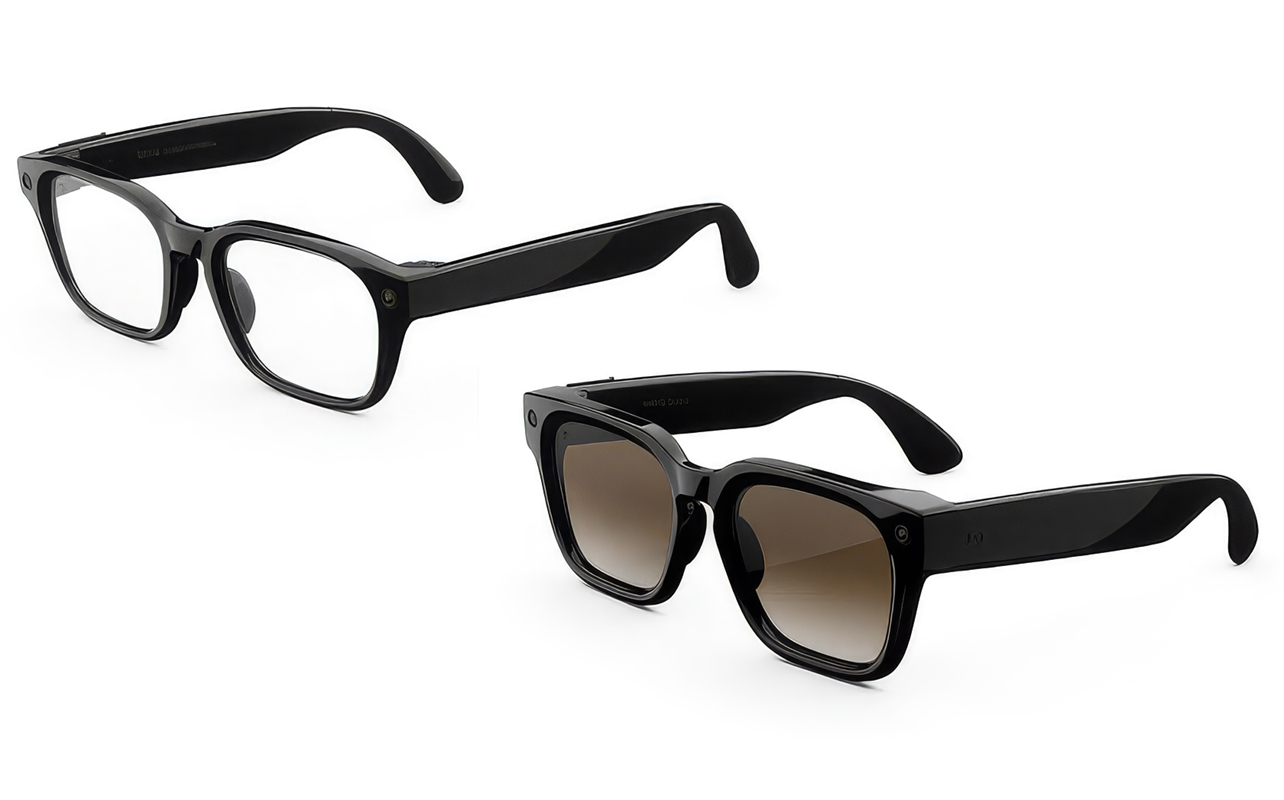
They are all smart AI glasses in that they let you take photos and video, play music, make calls, and talk to Meta’s AI assistant, all without touching a phone. They aren’t display smart glasses that project content into the lens, but similar to pairs that work as a hands-free extension of your phone with access to Meta’s AI services. They also don’t come at the same price as the Ray-Ban and Oakley pairs, leaving these to be more affordable and accessible ones to choose from.
The Adventurer, Fury, Capri, Nova, and LISA models all run on Qualcomm’s Snapdragon AR1 Gen 1 platform, the same chip found in Meta’s other Ray-Ban Meta Gen 2 smart glasses. Each frame includes a 12-megapixel camera with a 100-degree field of view, capable of recording video up to 3K resolution at 30 frames per second, with additional options to shoot 1080p at 30 or 60fps or 720p at 120fps for faster-moving footage. They share the exact same camera specs, so choosing between Adventurer and Fury really comes down to aesthetics rather than any difference in photo or video quality.
Adventurer
The Adventurer glasses are the more understated of the two. They borrow some elements of the Wayfarer-style sunglasses that have been a fashion staple for decades. They also have the thinnest frame of any of Meta’s smart/AI glasses to date, available in standard or large sizes, along with a high-bridge option in case that’s a more comfortable fit.
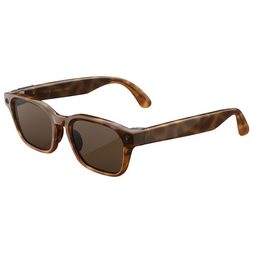
The colour palette leans more toward natural tones, like Linen and Merlot, instead of more “techy” colour schemes. It’s fairly clear that these are designed to fit in anywhere you go, where the technology functions as a less obvious add-on. The white light still comes on when recording video, but without it, they don’t scream out “smart glasses” on their own.
Fury
The Fury take the opposite approach. They share the same general look of the Adventurer, only with a more “techy” frame that’s noticeably thicker and bolder. Even the colours get into that with a bold look like Racing Green, paired with tinted or transparent lenses that make no attempt to hide the hardware inside. No question the combination makes these a distinctive pair that stand out.
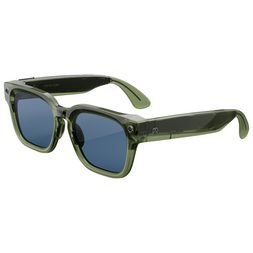
While interpretations are certainly subjective, they kind of have both a retro and futuristic vibe to them. Like the Adventurer, they are also unisex by design, so despite the thicker frames, they’re for anyone who likes how they look wearing them.
Capri
The Capri are more distinct and fashion-forward with a cat-eye silhouette designed to suit faces that may not work as well with the existing rectangular Adventurer or bolder Fury. They come in a classic black and grey look with a shape that skews more toward a feminine-inspired style while retaining the same core smart-glasses functionality.
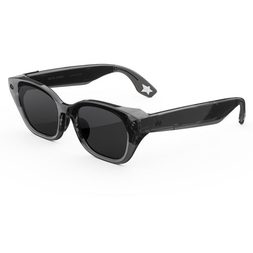
These are probably the most distinctive in the lineup because they largely cater to a female wearer, offering all the tech Meta Glasses currently have to offer. In that way, you can look chic without losing out on what’s going on under the hood.
Nova
The Nova take a more traditional approach with a rounded, classic pantos shape, arguably making these a somewhat “softer” alternative to the Adventurer and Fury. Meta sees this style as a better fit for a wider range of faces, with frame and lens combinations between black/grey and sandstone/chocolate.
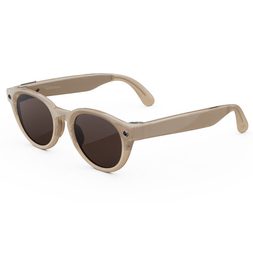
These are also more of a unisex design that can fit well with both men and women, depending on personal style and preference. Like the others, they come with the same technology inside, so they are another option in the lineup.
What sets them apart
Aside from the differing shapes, the Adventurer, Fury, Capri, and Nova all share the same engineering underneath. They have the same three-way adjustable nose pad, adjustable temple tips, and a set of over-extension hinges that let the arms flare slightly outward to accommodate a wider range of head shapes.
Then there are all the combinations between the two styles. Meta offers no less than two dozen colour and lens combinations, including sun, polarized, and Transitions lenses, including support for prescription lenses ranging from -12 to +2.25. They can go through the same Rx Lens Swap program that the Ray-Ban models can use, allowing a local optician to add prescription lenses after purchase without voiding the warranty.
That also makes them pretty functionally identical on top of that. It’s just the cosmetic difference and how each frame sits on the face that stands out more. The Adventurer are for those who want smart glasses that fit in as any other ordinary eyewear, with the tech coming second. The Fury are for people who don’t mind, or actually want, their glasses to look like tech gear. The Capri are for the ladies who want a bolder sense of feminine styling. The Nova are the pair that can fit on anyone going anywhere. Whichever way you go, you get the same camera resolution, battery life, and AI capability, so the choice mostly comes down to personal style and face shape rather than performance.
Key features of the Meta glasses

Camera and video capture
These models use the same 12-megapixel camera capable of capturing photos and video up to 3K resolution. It’s built into the same Snapdragon-based chipset that powers the Ray-Ban Meta Gen 2 glasses, so image quality should effectively be on par with Meta’s more expensive Ray-Ban line despite the Adventurer and Fury costing less. That also goes for the small LED light on the front of the frame that lights up when actively recording to signal to others nearby that the camera is on.
Audio, speakers, and calls
Like the Ray-Ban Meta glasses, these use open-ear speakers positioned near the temples to listen to music, take phone calls, or hear directions. Being open-ear, they don’t fully block outside noise but are audible, regardless. This all works through a six-microphone array designed to improve call clarity and voice command accuracy in noisy environments.
Meta AI Voice Assistant
Meta AI also works the same way with all the models. It can answer questions, describe what you’re looking at and translate languages in real time, including additional ones like Mandarin, Japanese, Korean, and Hindi. Press the physical action button to wake the assistant without having to say a wake phrase out loud. This can make interactions faster and more contextual, especially when it comes to asking about objects, places, or things you’re looking at.
Muse: Meta’s personal AI agent
Where Meta AI on the glasses handles questions, descriptions, and translations, Muse takes things further. Meta launched Muse as its AI agent in September 2026, and it’s said to be coming to all of its AI glasses in the coming months. Instead of only answering, it can actually go do multi-step tasks on your behalf, like booking something, adding items to a list, managing a plan, or sending an email. It keeps working in the background after you’ve stopped talking to it, running on its own secure virtual machine with a built-in browser. That’s part of how it’s able to act rather than just respond.
Once it arrives, you’ll wake Muse hands-free by saying its name, and it can turn a passing comment into something actually done. That hands-free access through the glasses is really just the entry point. On your phone or computer, Muse can hold a live video conversation with an embodied version of itself, powered by a new model from Meta Superintelligence Labs called Muse Realtime Avatar. You choose how to shape its voice and how it sounds through real-time voice conversation and custom voice options.

Neither pair of the glasses have a display to show you anything, but it’s the same underlying agent the glasses tap into for voice requests. You can even email Muse as another way to reach it and get something done. On a Mac, it can now drive apps directly with your permission and keep working through a task list even after you’ve stepped away. Meta says it will continue to add to Muse’s list of connected partners across retail, grocery delivery, travel, work, and payments, especially since that’s how it can check for information on flight prices or buy something you point out while wearing the glasses.
Alongside all this, Meta also showed off Muse Charm, a small, pocket-sized device built specifically for talking to Muse through a real-time voice model, for those times when you’re not wearing glasses at all. Meta hasn’t shared pricing or a firm release date for Charm yet, only that more details are coming later this year.
Usability differences between them
This one is more subjective because it has to do with how they fit and feel on your face. Since they all share so many features and attributes, the differentiators tend to be more about placement and weight distribution over function. The Adventurer’s thinner build should feel lighter on the nose over longer periods, whereas the Fury’s thicker frame provides slightly more surface area for the internal components—and possibly a more secure fit during movement. The Capri are lightweight and more minimalistic by design, yet still stand out because of the distinct cat-eye look. The Nova also stand out, though for different reasons, as fashionable glasses with a more understated look. Otherwise, they are so alike that wearing one or the other isn’t necessarily “better”.

Lifestyle and active use
For outdoor and active use, these frames offer lens options suited to changing conditions, including polarized and Transitions lenses. Neither the Adventurer nor Fury is a dedicated ‘sports’ frame like the Oakley Meta glasses, but that doesn’t mean you can’t use them for any activity at all. You just don’t get the same kind of stability Oakley pairs offer for sports. That also goes for the Capri and Nova, which are arguably more about lifestyle wear than they are about being super active with them. Either way, since there’s no screen in front of your eyes, there’s nothing to distract from the environment around you, maintaining visual awareness while walking, running, hiking, or cycling.
Setup, app, and learning curve
Getting started requires pairing the glasses with the Meta AI app on a smartphone, which then runs you through the setup and device settings. The app is also where you can import and share photos and videos you capture with the glasses. From there, the three key interactions through the glasses are either using voice commands or the dedicated action button to access Meta AI, or the capture button to take a photo or video. Of the three, the action button offers the most flexibility. You can choose whether it wakes Meta AI or activates something else, such as camera modes, live translation, music, or Be My Eyes.
Those who already use Ray-Ban Meta or Oakley Meta glasses will be familiar with this layout, although the new Meta Glasses’ action button adds an additional element to the mix that sets them apart.
Privacy concerns and responsible use
Camera-equipped glasses raise privacy questions that don’t come with ordinary sunglasses, particularly around recording people who may not realize there’s a camera in there. Meta has faced scrutiny over the visibility of the capture LED on its smart glasses and the question of whether bystanders can meaningfully consent to being recorded. The company says the white LED is designed to make recording visible, and newer safeguards disable the camera if the LED is blocked or physically tampered with.
The current privacy debate is centred mainly on the visibility of the recording light and on how comfortable people are being filmed without a clear verbal heads-up, an issue that predates this specific product but remains unresolved industry-wide. You can read more about that directly from Meta.
You must have a Meta account to use the glasses. There are no specific privacy laws for smart glasses in either Canada or the United States, though there is some litigation around Meta using user footage to help train its AI. Check your auto-upload and AI-training settings right after setup and don’t assume they’re off by default.
Review the app’s privacy and auto-upload settings immediately, and use the Sensitive Places feature where available. Avoid recording in healthcare settings, changing rooms, private gatherings, or anywhere consent expectations are high. The simplest way to think about it is this: if it would be inappropriate to pull out your phone to film, it’s probably inappropriate to use the glasses to do the same, particularly because the camera is harder to notice.
Battery life and charging
Meta rates both the Adventurer and Fury for about eight hours of typical use on a single charge, which falls in line with Meta’s Ray-Ban models. The included folding charging case adds up to 40 extra hours, letting the glasses top up throughout the day much like true wireless earbuds do. The Capri and Nova follow a similar path as well. Plug in to charge via USB-C, again, just like you would with wireless earbuds.
Get your Meta Glasses at Best Buy
Both the Adventurer and Fury are lifestyle choices meant to fit in wherever you go. The Capri and Capri LISA Edition have a more distinctive look, whereas the Nova are the chic pair that fit with more faces. It really comes down to your style preferences and what you feel fits best, especially since there is no feature advantage between them. They have the same tech specs and functionality.