The filament you choose has a major impact on how your 3D prints look, feel, and perform. PLA is usually the best starting point for beginners, PETG is a good choice for durable everyday parts, and ABS is better suited to projects that need higher heat resistance and impact strength. Other materials, including TPU, ASA, nylon, and polycarbonate, are available when your project has more specific requirements.
Choosing filament isn’t just about picking a colour. The material affects print temperature, bed requirements, warping, flexibility, durability, moisture sensitivity, and whether your printer needs an enclosure.
Wondering which filament to buy for your 3D printer or what you can actually print with it? This 3D printer filament guide explains the differences between PLA, PETG, ABS, and other common materials to help you choose the right filament for your printer and the project you’re planning.

Table of contents
- Which 3D printer filament should you choose?
- PLA vs PETG vs ABS: What’s the difference?
- Which filament is best for your project?
- Common filament problems and how to fix them
- How to choose filament for your 3D printer
- Frequently asked questions
Which 3D printer filament should you choose?
The easiest way to choose filament is to start with what you want to print.
| If you want to… | Choose | Why |
|---|---|---|
| Start 3D printing | PLA | Easy to print and requires relatively little setup |
| Print models, prototypes, or decorations | PLA | Produces detailed prints and has low warping |
| Make everyday functional parts | PETG | Offers a good balance of strength, durability, and ease of printing |
| Print containers or organizers | PETG | Durable and more resistant to moisture than PLA |
| Print parts exposed to higher temperatures | ABS | Offers higher heat resistance than PLA |
| Print parts for long-term outdoor use | ASA | Designed for outdoor applications and offers good UV resistance |
| Print flexible or rubber-like parts | TPU | Flexible and resistant to repeated bending |
| Make demanding mechanical parts | Nylon or composite filament | Designed for strength, durability, or stiffness in more demanding applications |
For most new users, PLA is the best place to start. Once you’re comfortable with your printer, PETG is a practical next step for functional parts. ABS, ASA, nylon, TPU, and other technical materials are better suited to specific applications and may require more capable hardware or additional setup.
What is 3D printer filament?
3D printer filament is a thin strand of material, usually plastic, that feeds into an FDM (fused deposition modelling) 3D printer. The printer heats the filament until it can be extruded through the nozzle, then deposits it layer by layer to build a three-dimensional object.
FDM is one of the most common types of 3D printing for home users and hobbyists. The filament is available in different materials, colours, finishes, and specialty formulations, so you can choose a material based on the properties you need from the finished object.
The material you choose affects much more than appearance. It can determine how strong, flexible, heat-resistant, durable, or easy to print your finished object will be.
If you’re still choosing your printer, our beginner’s guide to 3D printing at home covers the basics of setting up a 3D printing workspace and getting started.
The most common types of 3D printing filament
While there are many specialised filament types available today, most beginners and hobbyists start with three core materials that cover almost every everyday use case. These are:
- PLA – easy and beginner-friendly.
- ABS – strong and heat-resistant.
- PETG – balanced and versatile.
Each of these materials has its own strengths, printing requirements, and ideal use cases. Choosing between them depends on what you’re printing and how comfortable you are with your printer settings. If you’re just starting out, these three filaments provide the best foundation to learn, experiment, and gradually improve your 3D printing results without feeling overwhelmed.
PLA filament: the best choice for beginners
PLA, or polylactic acid, is generally the easiest filament for beginners to print with. It prints at relatively low temperatures, has low shrinkage and warping, and usually doesn’t require the enclosure or specialized setup needed for more demanding materials.
That makes PLA a good choice when you’re learning how to level or calibrate your printer, tune temperatures, and get your first successful prints.
Best uses for PLA
- Decorative objects and display models
- Figurines and hobby projects
- Prototypes and design mockups
- School and learning projects
- General indoor printing
PLA is particularly useful when appearance and ease of printing matter more than heat resistance or long-term mechanical durability.
When PLA isn’t the best choice
PLA is relatively rigid and has lower heat resistance than materials such as PETG and ABS. A PLA part that works perfectly on a desk may not be the best choice for an application involving significant heat, repeated mechanical stress, or prolonged outdoor exposure.
For example, a phone stand printed from PLA can work well indoors, while a part that will remain inside a hot vehicle may be better made from a more heat-resistant material.
Choose PLA when ease of printing is your priority.
PETG filament: a versatile choice for functional parts
PETG, or polyethylene terephthalate glycol, sits between PLA and more demanding technical materials in many common applications. It is relatively easy to print while offering good toughness, impact resistance, and temperature resistance.
PETG is a popular choice when a print needs to do more than simply look good. It can be useful for containers, brackets, organizers, replacement parts, and other objects that will be handled regularly.
Best uses for PETG
- Functional parts
- Storage containers and organizers
- Brackets and holders
- Everyday-use objects
- Parts exposed to occasional moisture
- Light outdoor applications
PETG also has some flexibility compared with PLA, which can help it withstand impact and bending without cracking as easily.
What to watch for with PETG
PETG can be more prone to stringing than PLA, especially when print settings aren’t properly tuned. It can also absorb moisture from the surrounding air, which can affect print quality.
If your PETG spool has been exposed to humidity, drying the filament according to the manufacturer’s recommendations may improve print consistency.
Choose PETG when you need more durability than PLA without moving all the way to a more demanding material such as ABS.
ABS filament: best for heat resistance and demanding parts
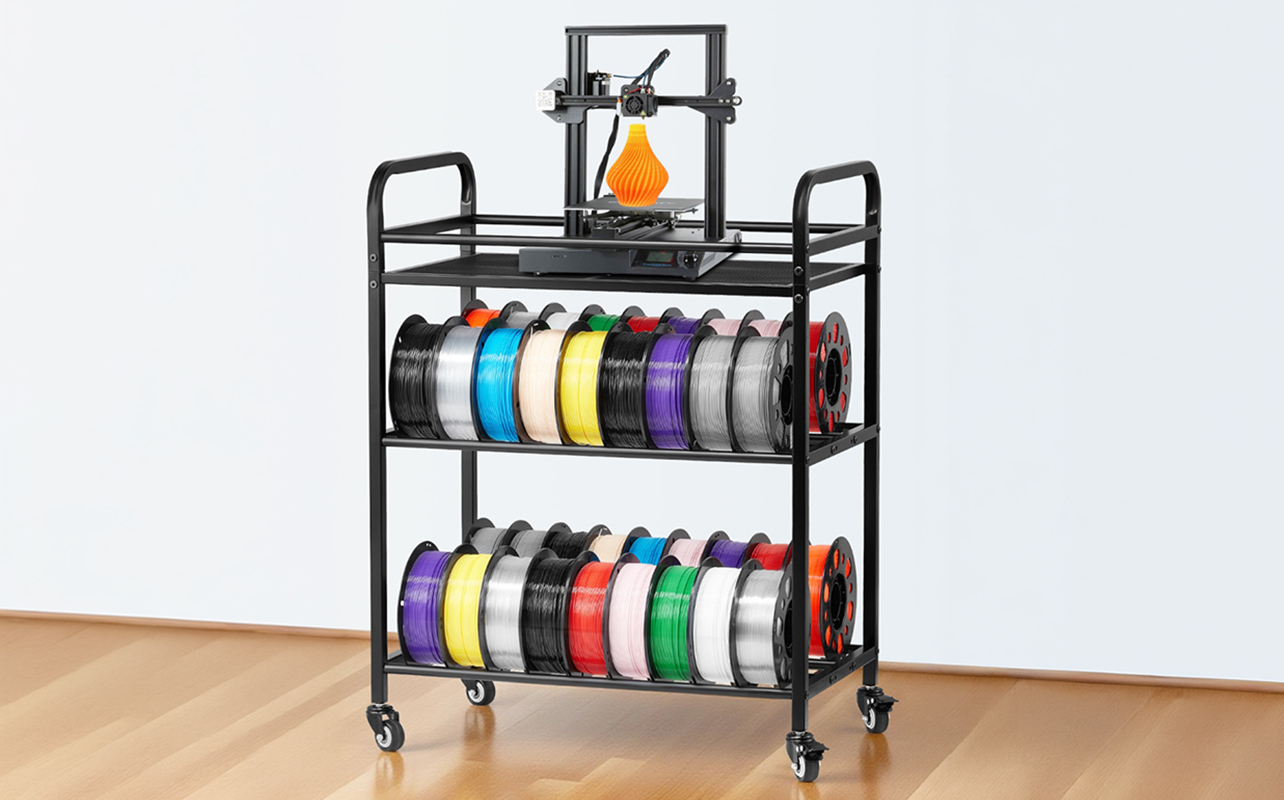
ABS, or acrylonitrile butadiene styrene, is a durable filament commonly used for functional and mechanical components. It offers higher heat resistance than PLA and is well suited to applications where the finished part needs to withstand greater mechanical or thermal stress.
ABS is also the material used in products such as LEGO bricks, although the exact formulation and manufacturing process can differ from 3D printer filament.
Best uses for ABS
- Mechanical parts
- Functional components
- Parts exposed to higher temperatures
- Tougher hobby projects
- Applications where impact resistance matters
Why ABS is harder to print
ABS shrinks as it cools. That can cause corners to lift from the print bed, warping, or cracks between layers. An enclosure can help maintain a more consistent printing environment and reduce the effect of drafts.
ABS also produces noticeable fumes and odours during printing. Good ventilation is important, and manufacturers may recommend additional precautions depending on the material and printer.
For these reasons, ABS is usually not the first material to learn with. A user who is comfortable printing PLA and PETG will generally have an easier time moving to ABS.
Choose ABS when heat resistance and tougher mechanical performance are more important than ease of printing.
PLA vs PETG vs ABS at a glance
PLA, PETG, and ABS are three of the most common filament materials for FDM 3D printing. They overlap in some applications, but their strengths and printing requirements are different.
| Feature | PLA | PETG | ABS |
| Ease of printing | Very easy | Easy | More challenging |
| Best for | Models, prototypes, decorations | Functional parts, containers, organizers | Mechanical and heat-exposed parts |
| Impact resistance | Moderate | High | High |
| Flexibility | Low | Moderate | Low to moderate |
| Heat resistance | Low | Moderate | High |
| Warping | Low | Low to moderate | High |
| Heated bed | Usually recommended | Recommended | Required |
| Enclosure | Not required | Usually not required | Recommended |
| Moisture sensitivity | Moderate | High | Moderate |
| Beginner-friendly | Yes | Yes, after basic PLA experience | Usually no |
Exact temperatures and hardware requirements vary by printer and filament manufacturer. Always check the recommended settings for the specific spool and printer you’re using.
Other 3D printer filament types to know
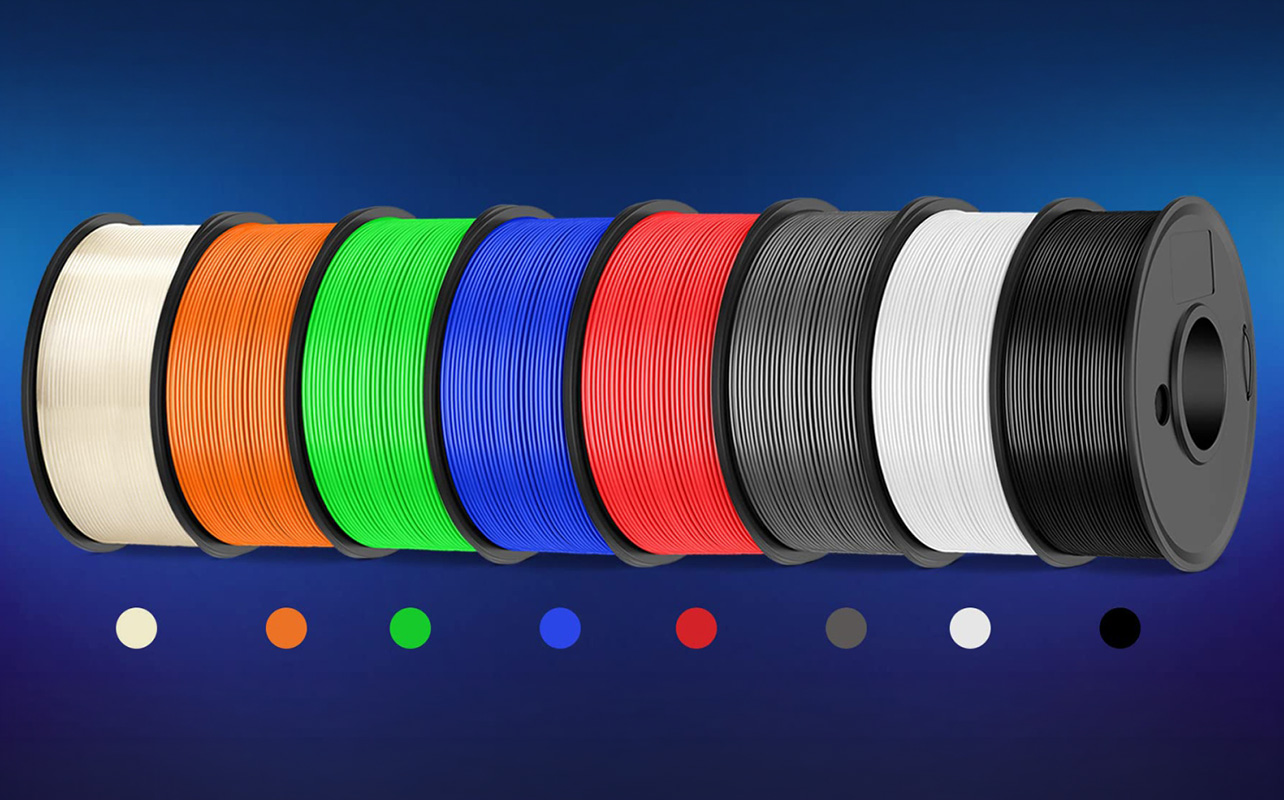
Beyond the core three, there are a few more 3D printer filament types worth knowing about as you look for the best filament for 3D printing beyond the basics.
- TPU: A flexible, rubber-like filament used for phone cases, gaskets, and anything that needs to bend without breaking. Not particularly beginner-friendly, since it prints slowly and needs careful calibration. Best for flexible covers, gaskets, protective parts, and other bendable objects.
- Nylon: Extremely tough and wear-resistant, often used for gears and mechanical parts that see repeated motion. Moisture-sensitive and generally not a beginner material. Best for gears, moving parts, mechanical components, and parts exposed to repeated wear.
- ASA: Similar to ABS in strength, but with much better UV and weather resistance; a better choice for anything that will sit outdoors long-term. Shares ABS’s need for an enclosure. Best for outdoor brackets, housings, signs, and other parts exposed to sunlight.
- Polycarbonate (PC): Polycarbonate is a strong, heat-resistant engineering material. It generally requires a more capable printer and controlled printing conditions than beginner materials. Best for high-performance functional parts and applications where heat resistance and strength are important.
- Carbon-fibre-filled blends: Added stiffness and abrasion resistance for demanding functional parts, at the cost of needing a hardened nozzle and generally being a pricier, more advanced material. Best for stiff structural or mechanical components where the additional performance justifies the higher cost and more advanced setup.
None of these dethrone PLA, PETG, or ABS as the best filament for 3D printing day-to-day, but nylon and carbon-fibre blends are worth knowing about as the strongest 3D printer filament options once a project outgrows the basics.
Which filament is best for your project?
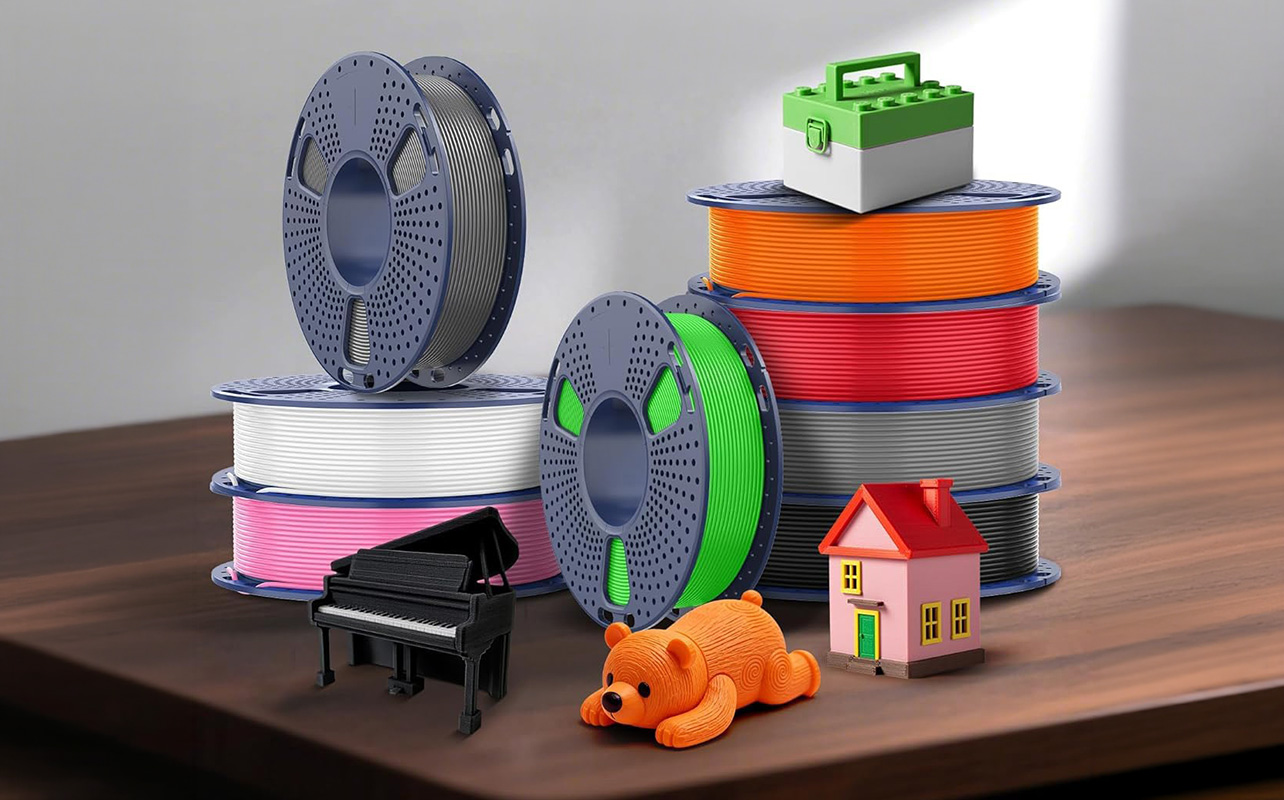
There isn’t one universally best 3D printer filament. The right choice depends on what you’re making and where the finished object will be used.
Best filament for beginners and indoor printing: PLA
PLA is the easiest filament for most beginners to start with. It prints reliably with less specialized hardware, is less prone to warping, and produces fewer fumes than ABS.
Best filament for detailed models: PLA
PLA is a strong choice for decorative models, prototypes, figurines, and other projects where detail and ease of printing matter.
Best filament for functional parts: PETG
PETG is a practical choice for everyday functional parts that need more durability than a typical PLA print.
Best filament for parts exposed to heat: ABS
ABS offers higher heat resistance than PLA and is useful for parts that need to withstand higher temperatures. It requires more careful printing, including attention to enclosure, bed temperature, and ventilation.
Best filament for outdoor use: PETG or ASA
PETG can work well for light outdoor applications where moisture resistance and durability are important.
For parts that will remain outdoors for extended periods, ASA is worth considering because it is designed for outdoor use and has better UV resistance than ABS.
Best flexible filament: TPU
TPU is a flexible, rubber-like material. It’s useful when a part needs to bend rather than remain rigid, such as certain phone cases, protective covers, gaskets, and flexible components.
TPU generally requires more careful printer calibration than PLA, so it is better suited to users who are already comfortable with basic 3D printing.
Best filament for demanding mechanical parts: Nylon or composite materials
Nylon is tough and wear-resistant and can be useful for gears, moving components, and other demanding applications. It is also moisture-sensitive and generally requires more attention to storage and printing conditions.
Carbon-fibre-filled and other composite filaments can add stiffness or other performance characteristics, but they may require a hardened nozzle because abrasive fibres can wear standard nozzles.
Printer compatibility: what your 3D printer needs to print each material
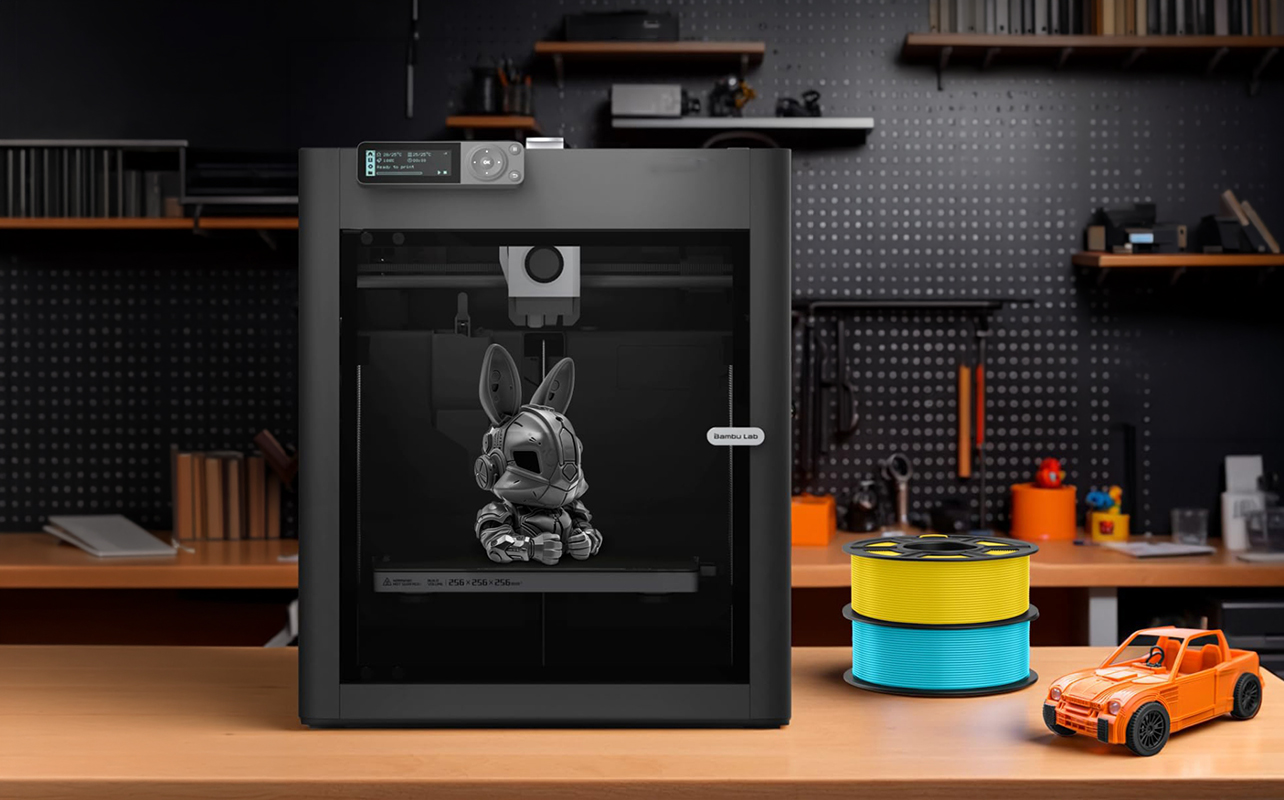
Not every 3D printer can print every type of filament successfully. Before buying a spool, check your printer’s maximum nozzle temperature, heated-bed capability, supported materials, and whether an enclosure is recommended.
- PLA: Works on almost any entry-level FDM printer. No heated bed strictly required, though a warm bed (around 50–60°C) can improve adhesion. No enclosure needed.
- PETG: Works on most consumer printers, but usually needs a heated bed and may require some temperature tuning to avoid stringing. An enclosure isn’t essential, but it can help with consistency.
- ABS: More demanding on hardware. Needs a heated bed, benefits significantly from an enclosure, and requires good ventilation in the room regardless of setup. Entry-level printers without a heated bed generally can’t print ABS well.
- ASA: Has similar printing demands to ABS and benefits from an enclosure. Its advantage is its greater suitability for outdoor applications because of its UV resistance.
- TPU: Can be printed on compatible FDM printers, but its flexibility makes feeding and extrusion more challenging than rigid filaments. Check your printer manufacturer’s recommendations before using it.
- Nylon: Typically requires more demanding printing conditions and careful moisture management. Some nylon formulations also benefit from an enclosure and a dry box.
Always check your specific printer and filament manufacturer’s recommendations. Material names alone don’t guarantee compatibility because different brands and formulations can have different temperature and hardware requirements. Manufacturer material tables usually show substantial differences between materials in required nozzle temperature, bed temperature, enclosure use, and drying requirements.
Common problems with PLA, ABS, and PETG
Choosing the right material is only part of getting a successful print. Filament condition, printer calibration, temperature, bed adhesion, cooling, and slicer settings can all affect the finished object.
Stringing
What it looks like: Thin strands of filament appear between separate parts of a print.
Possible causes: Incorrect retraction settings, printing temperature, or moisture in the filament.
What to try: Check the manufacturer’s recommended temperature, adjust retraction settings, and make sure the filament is dry.
Warping
What it looks like: Corners of the print lift away from the print bed.
Possible causes: Material shrinkage, insufficient bed adhesion, cooling, or drafts.
What to try: Check bed temperature and adhesion, avoid drafts, and consider an enclosure for materials such as ABS.
Brittle or cracking prints
What it looks like: Parts snap or crack more easily than expected.
Possible causes: Material properties, insufficient wall thickness or infill, poor layer adhesion, or filament condition.
What to try: Increase wall thickness or infill for load-bearing parts, check print temperature, and make sure moisture-sensitive filament has been stored properly.
Weak layers
What it looks like: Layers separate easily or the print breaks along layer lines.
Possible causes: Incorrect temperature, excessive cooling, drafts, or unsuitable print settings.
What to try: Check the recommended temperature range, adjust cooling, and use an enclosure when appropriate. ABS is particularly susceptible to layer separation when exposed to cold air during printing.
Poor first-layer adhesion
What it looks like: The print doesn’t stick properly to the build plate.
Possible causes: Incorrect bed temperature, an unclean print surface, poor bed levelling, or unsuitable first-layer settings.
What to try: Clean the print surface, recalibrate the bed, and follow the manufacturer’s recommended first-layer settings.
For a broader troubleshooting walkthrough, see our guide to common 3D printing problems and how to fix them.
How to store 3D printer filament
Moisture is one of the most common storage concerns with 3D printer filament. Many materials absorb moisture from the air, and moisture can affect extrusion and print quality. Prusa notes that many materials used for FFF printing are hygroscopic, meaning they readily attract water molecules from the surrounding environment.
Moist filament can contribute to problems such as:
- Stringing
- Inconsistent extrusion
- Bubbling or popping during extrusion
- Rough surfaces
- Poor layer consistency
How to keep filament dry
- Store opened spools in an airtight container or resealable bag.
- Add desiccant such as silica gel to the storage container.
- Keep filament away from humid environments.
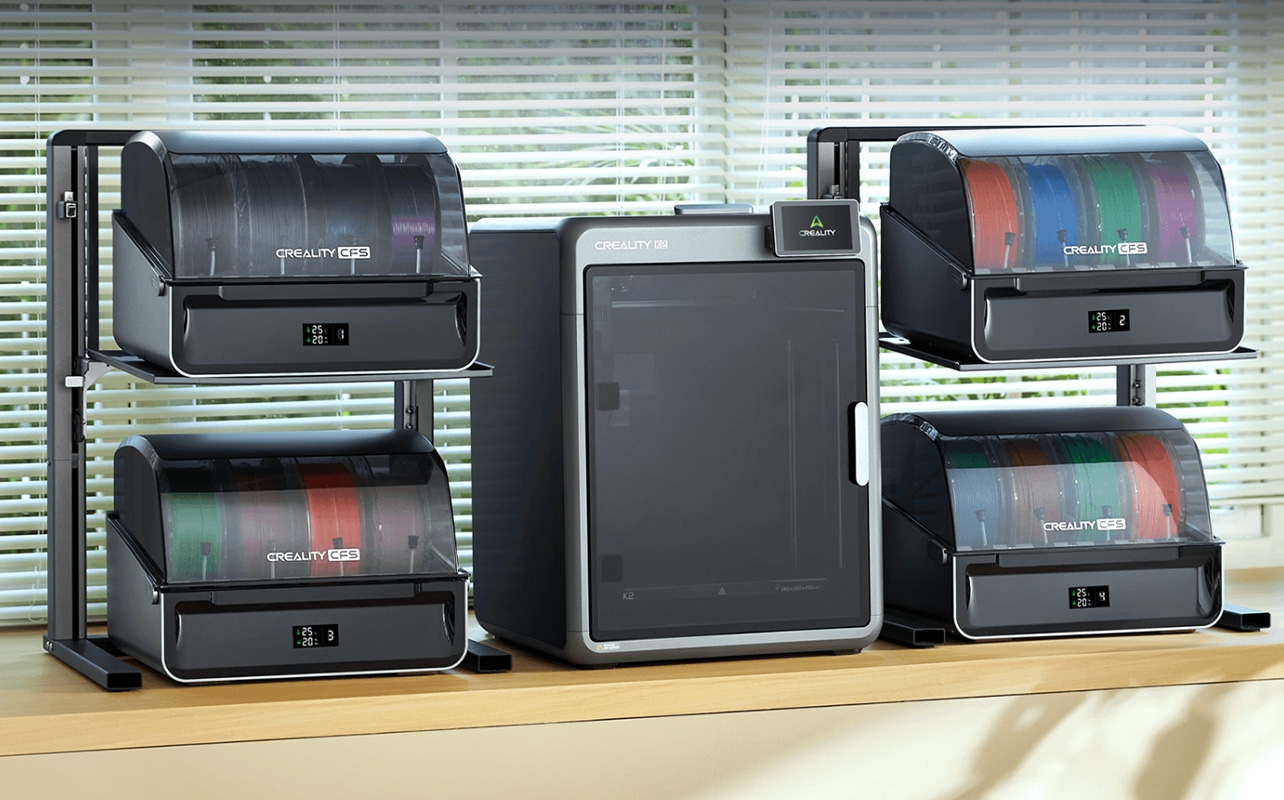
- Consider a filament dry box if you print frequently.
- Follow the manufacturer’s drying temperature and time recommendations when drying filament.
Moisture management is particularly important for materials such as PETG, TPU, and nylon.
What else do you need besides filament?
Our 3D printer filament guide wouldn’t be complete without covering what supports good results beyond the spool itself. Even the best filament for 3D printing won’t perform well if it’s stored poorly or if your printer isn’t properly maintained.
- Filament storage: Airtight containers, resealable bags with silica gel packs, or a dedicated dry box help prevent moisture absorption; especially important for PETG and any future move into nylon.
- Nozzles and maintenance tools: Keeping spare nozzles on hand (and a hardened one if you ever print carbon-fibre blends) helps avoid mid-project downtime.
- Bed adhesion aids: Adhesive sheets or bed surfaces can reduce warping issues, particularly with ABS.
- Ventilation: A basic fan or well-ventilated space matters most with ABS, but it’s good practice regardless of material.
For a full rundown of what’s worth having from day one, the must-have 3D printer accessories for beginners guide covers the essentials in more depth. And if resin printing is ever on your radar, its safety requirements are meaningfully different from FDM filament printing and worth understanding separately before making that switch.
Is 3D printer filament safe to use indoors?
The answer depends on the material, printer, ventilation, and printing environment.
PLA and PETG generally produce less noticeable odour than materials such as ABS and ASA, but that doesn’t mean ventilation should be ignored. It’s recommended to use a separate ventilated room or enclosure when printing larger quantities of ABS or ASA, while noting that PLA and PETG generally produce minimal odour in typical use.
For home printing:
- Follow the filament manufacturer’s safety recommendations.
- Print in a well-ventilated area.
- Pay particular attention to ventilation when using ABS, ASA, or other materials that produce noticeable fumes.
- Don’t assume that an enclosure eliminates the need for appropriate ventilation.
If you’re considering resin 3D printing, note that resin printing has different handling and safety considerations from FDM filament printing. Our FDM vs. resin 3D printers guide explains the differences.
Finding the right filament for your 3D printing needs
Choosing filament becomes much easier when you start with the finished object rather than the material name.
- For beginners and detailed models, start with PLA.
- For everyday functional parts, consider PETG.
- For parts exposed to higher temperatures, consider ABS.
- For long-term outdoor applications, look at ASA.
- For flexible parts, consider TPU.
- For demanding mechanical applications, explore nylon, polycarbonate, or composite materials.
Before buying a spool, always check that your printer supports the material and can reach the required nozzle and bed temperatures. Also consider whether you need an enclosure, hardened nozzle, dry box, or other accessories.
Once you’ve found a material that fits your project, you can explore 3D printer filament at Best Buy Canada and find the right spool for your setup.
Every successful print starts with matching the material to the job. Once you understand what each filament does well, and where its limitations are, you can spend less time troubleshooting and more time creating.
Frequently asked questions
There’s no single “better” material; it depends on the project, which is really the heart of which 3D printer filament you should use for any given job. PLA is best for beginners and decorative prints, PETG is best for everyday functional parts, and ABS is best when heat resistance matters most.
PLA is both the easiest and the best 3D printer filament for beginners. It prints at lower temperatures, warps very little, and produces consistent results without advanced printer settings.
Yes. PETG offers better impact resistance and durability than PLA, making it a better choice for parts that need to withstand daily use.
It depends on your setup. ABS is worth it if you need heat resistance or stronger mechanical parts and already have a heated bed and enclosure. For general home printing, PLA or PETG is usually more practical.
In most cases, yes. An enclosure helps prevent warping by keeping temperatures consistent, and it’s strongly recommended alongside proper ventilation.
PETG for everyday functional use, or ABS if the part will be exposed to heat or needs higher impact resistance.
PLA produces the lowest fumes and is generally considered the safest option for indoor use, including shared spaces like bedrooms or home offices.
Related 3D printing guides
- 3D printer buying guide: How to choose your first 3D printer
- How to start 3D printing at home
- Common 3D printing problems and how to fix them
- Must-have 3D printer accessories for beginners