
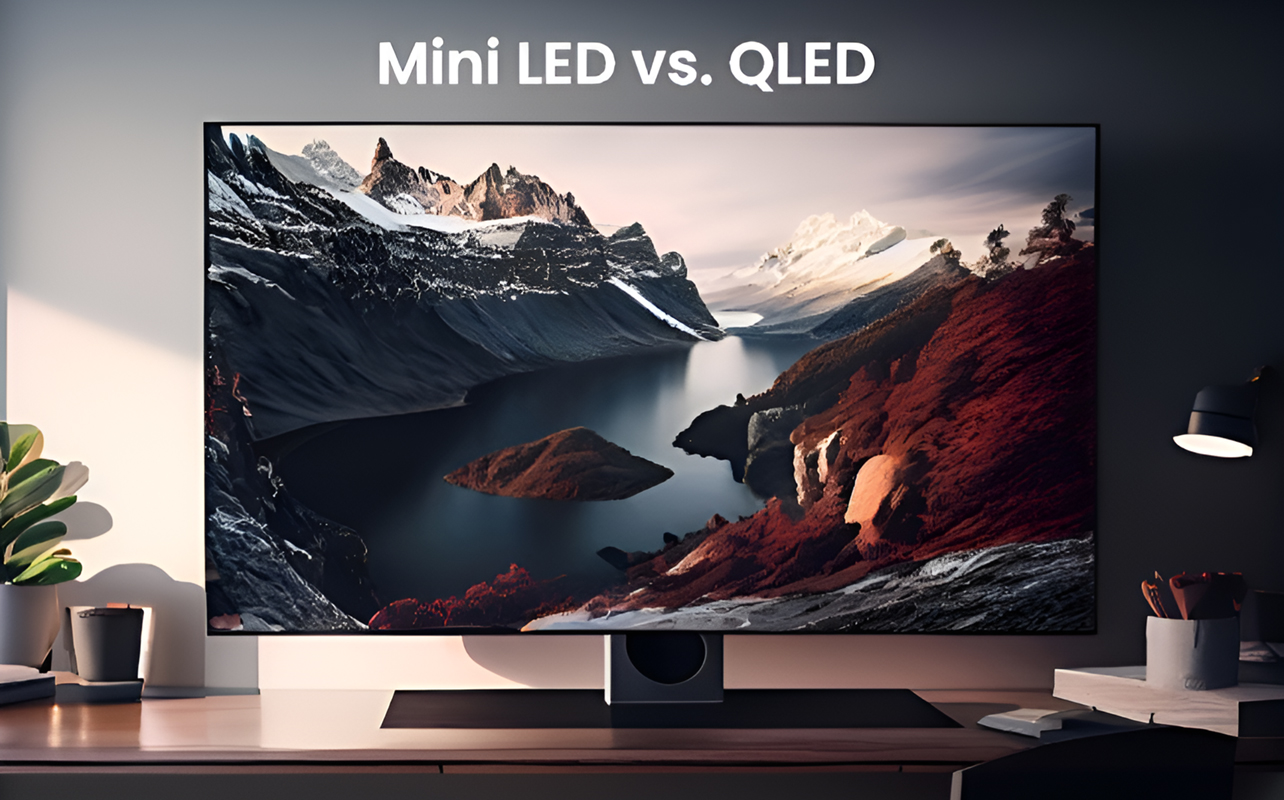
You’ve probably come across both QLED and Mini-LED technologies while shopping for a new TV. If you’re wondering what the QLED vs Mini-LED differences are, you’re not alone—both technologies offer unique benefits. But which one is the better choice? In this guide, we’ll break down the key differences between QLED and Mini-LED to help you make an informed decision for your next entertainment upgrade. We’ll compare their picture quality, performance, pricing, and best use cases, so you can confidently choose the perfect TV for your space.


Understanding QLED and Mini-LED technology
What is QLED?
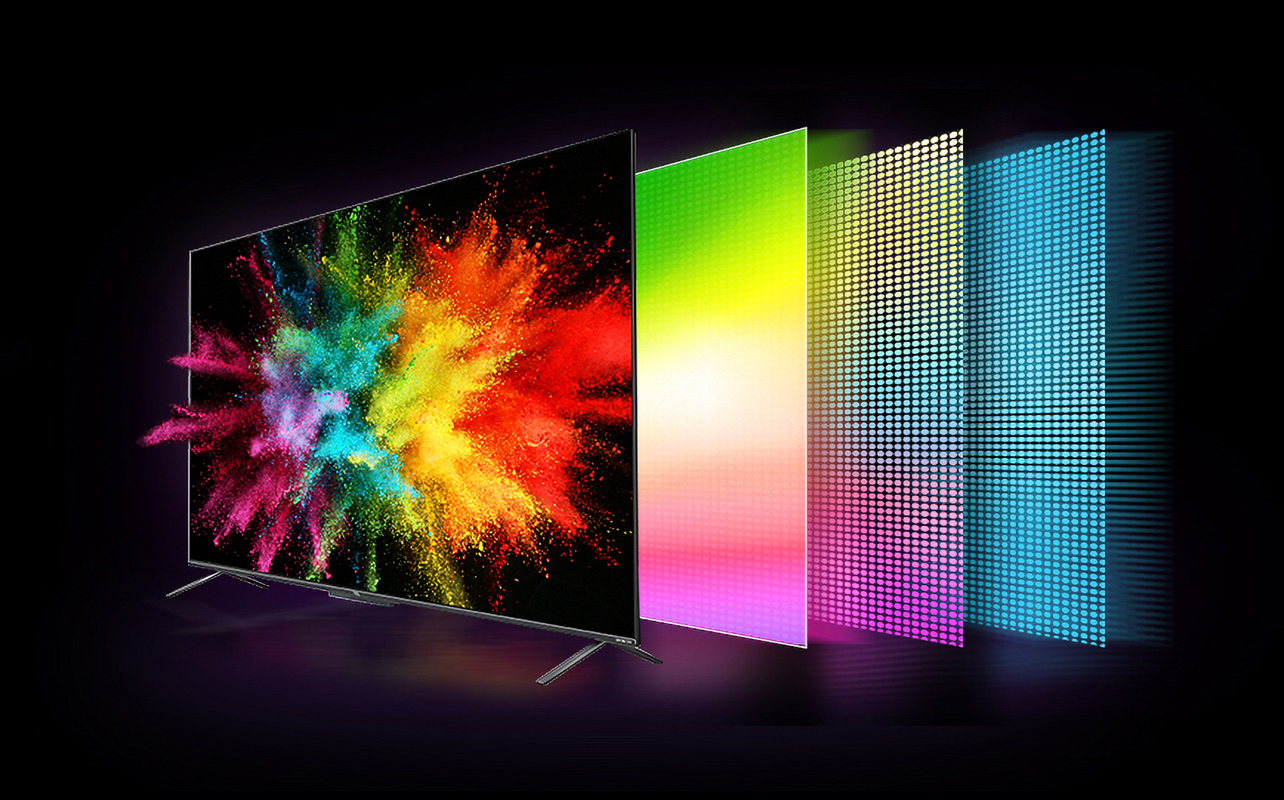
QLED, short for Quantum Dot Light Emitting Diode, is an advanced LED TV technology developed to enhance colour accuracy and brightness. The underlying technology still uses a backlight like LED/LCD screens do, only there’s an extra quantum dot layer to improve the colour performance. This results in vibrant, lifelike hues that stand out, especially in well-lit environments.
Benefits of QLED
- Exceptional colour volume: Quantum dots enable richer, more saturated colours, making them ideal for watching animated movies, sports, and nature documentaries.
- High brightness: QLED TVs are among the brightest available, perfect for bright living rooms where sunlight might otherwise wash out the screen.
- Broad brand availability: You’ll find QLED models from leading manufacturers like Samsung, TCL, and Hisense, offering a range of features at different price points.
Potential drawbacks of QLED
- Not self-emitting: Unlike OLED, QLED TVs rely on a backlight, which can result in minor light blooming in darker scenes.
- Limited contrast compared to OLED or Mini-LED: While QLED offers superior brightness, the backlight isn’t always localized or dynamic, so black levels may not be as deep as other high-end technologies.
What are the features to look for when buying a TV? Read our TV buying guide.
What is Mini-LED?
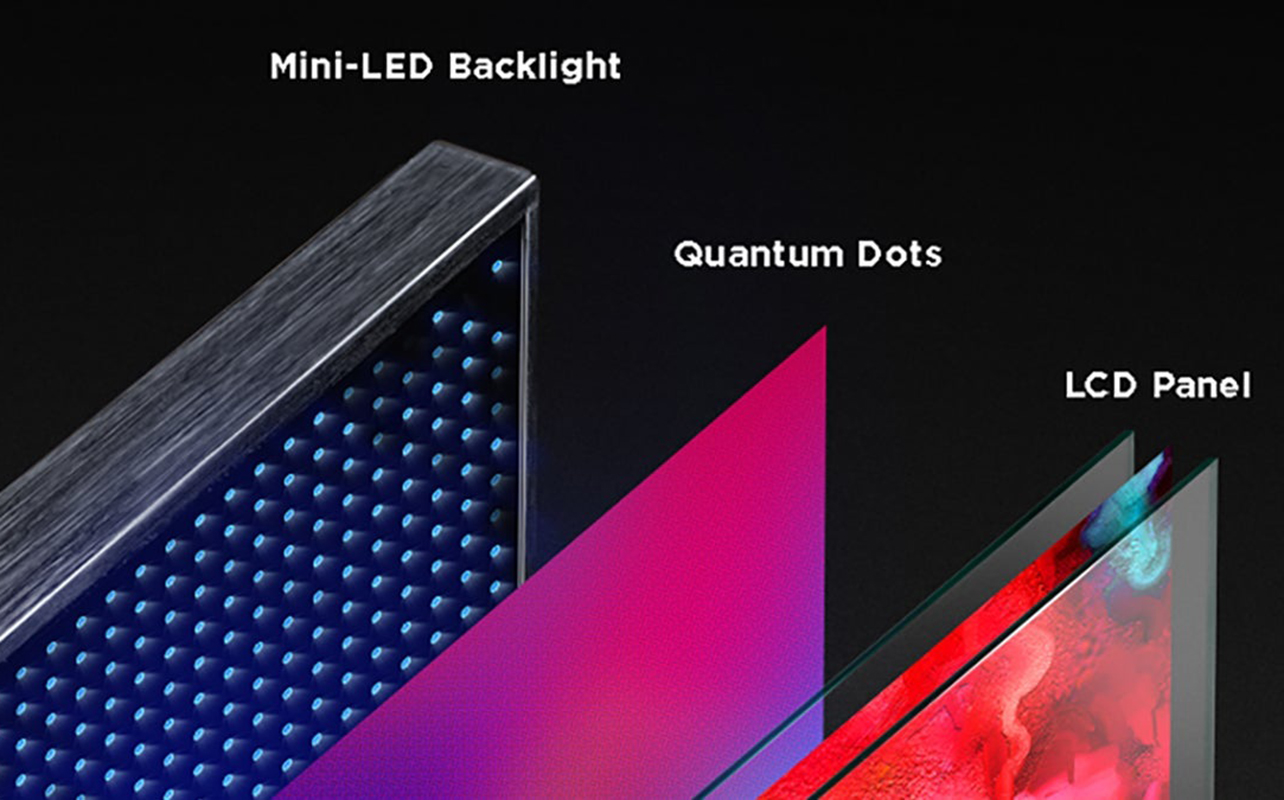
Mini-LED is an evolution of standard LED backlighting that uses thousands of smaller LEDs arrayed on the back panel to improve contrast and local dimming. This results in deeper blacks, better brightness control, and reduced halo effects around bright objects on dark backgrounds.
Benefits of Mini-LED
- Deeper blacks and improved contrast: Ideal for watching movies or playing games in a dark room, Mini-LEDs offer enhanced detail in shadowed areas.
- More precise local dimming: Helps eliminate light bleeding, improving overall picture uniformity.
- Potentially slimmer designs: Since Mini-LEDs take up less space than traditional LEDs, manufacturers can create thinner TV profiles.
Potential drawbacks of Mini-LED
- Still uses an LCD layer: While improved over standard LED, Mini-LED still relies on a backlight panel, unlike self-emitting pixels on OLED TVs.
- Higher cost: Some high-end Mini-LED models can be more expensive than QLED alternatives, though prices are becoming more competitive.
Where QLED and Mini-LED are similar
Despite their differences, QLED and Mini-LED share some key similarities:
- Both are based on LCD technology: Unlike OLED, which produces its own light, both QLED and Mini-LED rely on a backlight to illuminate the screen.
- They deliver high-quality performance: Both technologies enhance brightness, colour accuracy, and contrast beyond what standard LED TVs offer.
- Available from multiple brands: Samsung, TCL, and other manufacturers offer models featuring both technologies, giving consumers a wide selection.
- Smart features included: Most QLED and Mini-LED TVs come with smart platforms like Tizen, Google TV, or Roku, making it easy to stream content and connect devices.
QLED vs. Mini-LED: key differences
Backlight vs. Quantum dots
- QLED: Uses quantum dot technology via an additional layer between the traditional LED backlight and LCD panel to enhance colours.
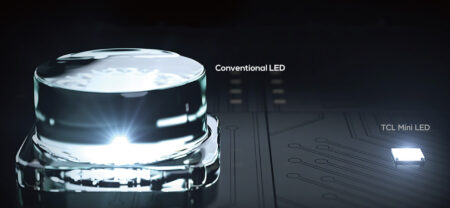
- Mini-LED: Features significantly smaller LEDs for precise local dimming and better contrast but lacks a quantum dot layer by default (though some models combine both technologies).
Contrast and black levels
- QLED: Provides better contrast than standard LED TVs but can suffer from some light bleed in dark scenes.
- Mini-LED: Offers superior local dimming, reducing halo effects and achieving deeper black levels, making it ideal for watching movies at night.
Brightness and colour accuracy
- QLED: Among the brightest TV options, making it perfect for well-lit rooms where glare might be an issue.
- Mini-LED: While also bright, it excels more in achieving deep blacks and realistic contrast, which is great for cinematic viewing.
Price and brand availability
- QLED: More mature technology with a broader range of price points, from budget-friendly to premium models.
- Mini-LED: Typically positioned as a high-end option, but prices are becoming more accessible as more brands adopt and refine the technology.
If you’re interested in exploring more, check out our guide on QLED vs LED: Which TV technology is right for you? to see how QLED compares to standard LED.
Pros and cons of QLED
| Pros | Cons |
|---|---|
| Very bright, vibrant colours | Not self-emissive; relies on a backlight |
| Widely available across brands | Potential for some light blooming |
| Great for well-lit rooms | Black levels not as deep as OLED or top-tier Mini-LED |
Pros and cons of Mini-LED
| Pros | Cons |
| Excellent contrast and deep blacks | Can be pricier than standard QLED or LED TVs |
| Better local dimming and uniformity | Still not self-emissive (unlike OLED) |
| Great for dark-room movie viewing | Limited availability (though expanding) |
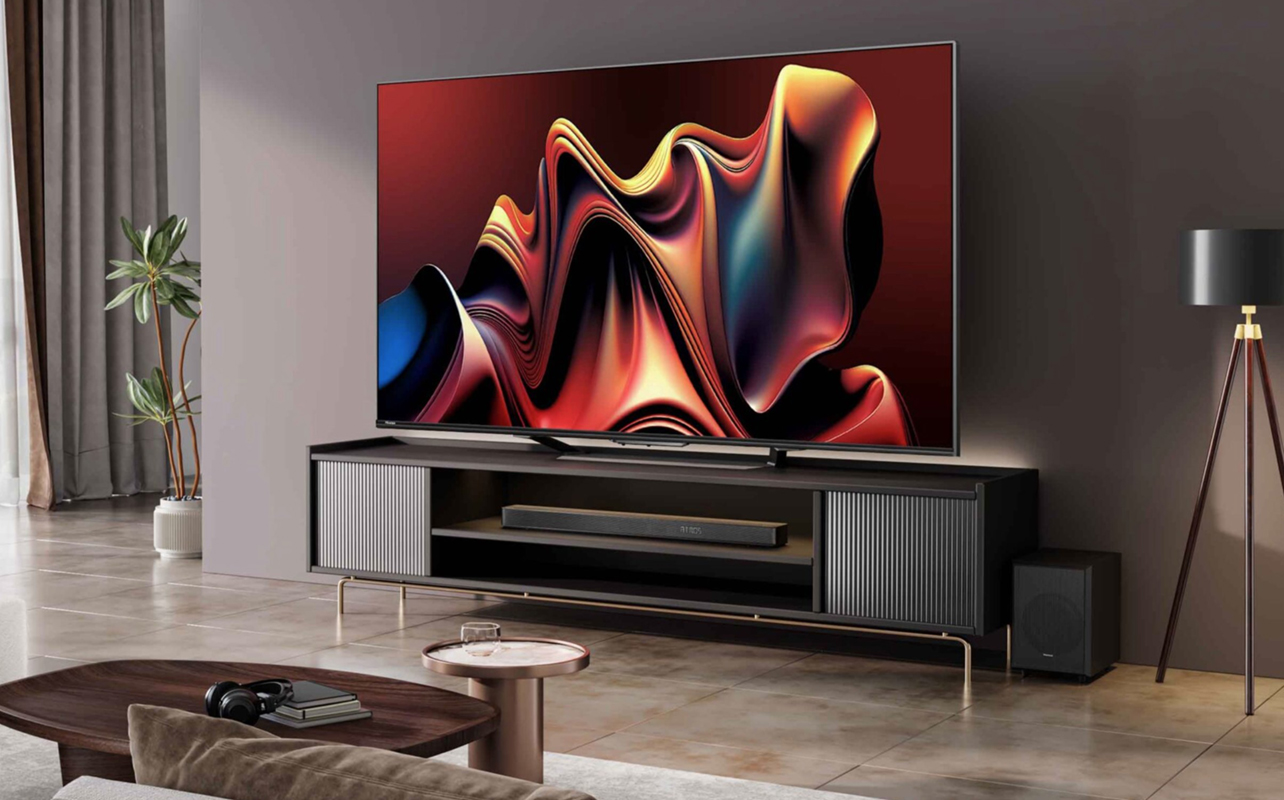
Who should buy a QLED TV?
- Great for bright rooms: If your living room gets a lot of natural light, QLED’s high brightness ensures a clearer, vibrant picture.
- Ideal for sports fans: Fast-moving sports look crisp and vivid on a QLED screen.
- Perfect for HDR content: If you watch a lot of HDR movies or shows, QLED’s rich colours and high brightness enhance the experience.
Who should buy a Mini-LED TV?
- Best for movie lovers: If you enjoy watching films in a dim or dark room, Mini-LED’s superior contrast and deeper blacks provide a more cinematic experience.
- Great for gamers: Many Mini-LED models feature high refresh rates, making them excellent for immersive gaming setups.
- For those who want premium picture quality: If you’re looking for high-end contrast without the price of OLED, Mini-LED is a great choice.
Which TV is right for you?
- QLED is best if you need a bright, vibrant TV for a well-lit space and love watching sports or colourful HDR content.
- Mini-LED is best if you want superior contrast, deep blacks, and an immersive home theatre experience.
- If you’re on a budget, a standard LED TV can still deliver decent performance, but it won’t match the premium features of QLED or Mini-LED.
QLED Mini-LED TVs deliver the best of both worlds
If you’re torn between QLED and Mini-LED, QLED Mini-LED TVs are worth considering. These hybrid models let you enjoy vibrant colours and high contrast without choosing one over the other. They combine quantum dot colour technology with a more precise Mini-LED backlight system, delivering high brightness, rich colour volume, and improved local dimming control in one package.
You’ll see brighter highlights, richer colours, and better contrast between light and dark areas. Bright scenes like daylight sports or colourful animations look vivid, while darker movie scenes retain more detail without looking washed out. The overall effect is a clearer, more immersive picture whether you’re watching in a bright living room or a blacked-out home theatre.
Because these TVs are still LCD-based, some models can control light and dark areas more precisely than others, which can affect how deep the blacks look and how much detail you see in high-contrast scenes—but overall, this hybrid approach offers a well-balanced picture.
Several major brands now offer QLED Mini-LED models across a wide range of price points:
- Samsung Neo QLED: Samsung brands its Mini-LED lineup as Neo QLED. These models pair quantum dots with tightly controlled Mini-LED backlighting using Samsung’s Quantum Matrix technology. Depending on the series, you’ll find strong peak brightness, refined local dimming, and advanced gaming features like high refresh rates. Read our blog on what is Neo QLED.
- TCL QD-Mini LED: TCL has pushed QD-Mini LED into more accessible price tiers. Its QM-series models emphasize high brightness, competitive gaming features, and strong contrast for the price.
- Hisense Mini-LED with Quantum Dot Colour: Hisense continues to compete in the value-performance space. Its U-series Mini-LED models combine quantum dot colour with high refresh rate panels and gaming-friendly features like VRR. If you love watching sports, you’ll enjoy the TV models offering 165Hz refresh rates and AI Sports Mode to help eliminate blurry motion.
For the best deals, explore QLED and Mini-LED TVs at Best Buy Canada and find the perfect fit for your home entertainment setup.

This article was drafted using AI technology and then reviewed, fact-checked, and revised by a member of our editorial team.