

Meta Ray-Ban Display glasses are very much like they sound, meaning they have a real screen built into the lens itself, along with a dedicated Neural Band wristband. These differ from other Meta smart glasses in that they don’t purely rely on audio and voice prompts to relay information since there’s a way to visualize it on the display embedded in the lenses. The wristband also lets you control everything without touching your phone or the glasses.
Think of it less like a pair of sunglasses with a gadget bolted on, and more like a small, private monitor that only you can see, sitting there at all times and lighting up when you need it. If you’re considering a pair of AI-powered glasses, here’s how the Meta Ray-Ban Display work.

What are the Meta Ray-Ban Display glasses?
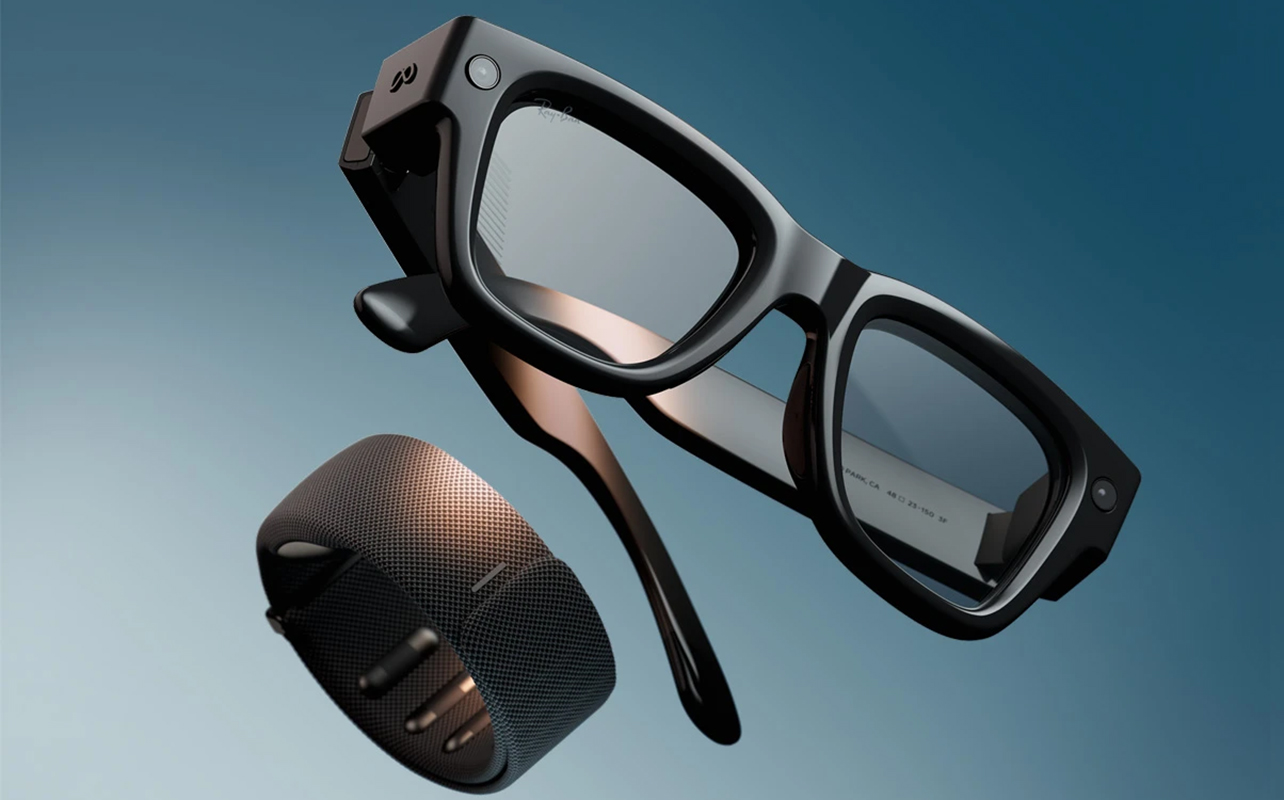
Like the other Meta Ray-Ban AI smart glasses, Meta built the Display as an AI-powered pair in partnership with Ray-Ban. It combines the brand’s familiar eyewear styling with an in-lens display (that isn’t visible to others) and hands-free gesture control. From the outside, they look like a slightly thicker version of a classic Ray-Ban frame, though not necessarily bulky, like a pair of thick glasses out of a sci-fi movie.
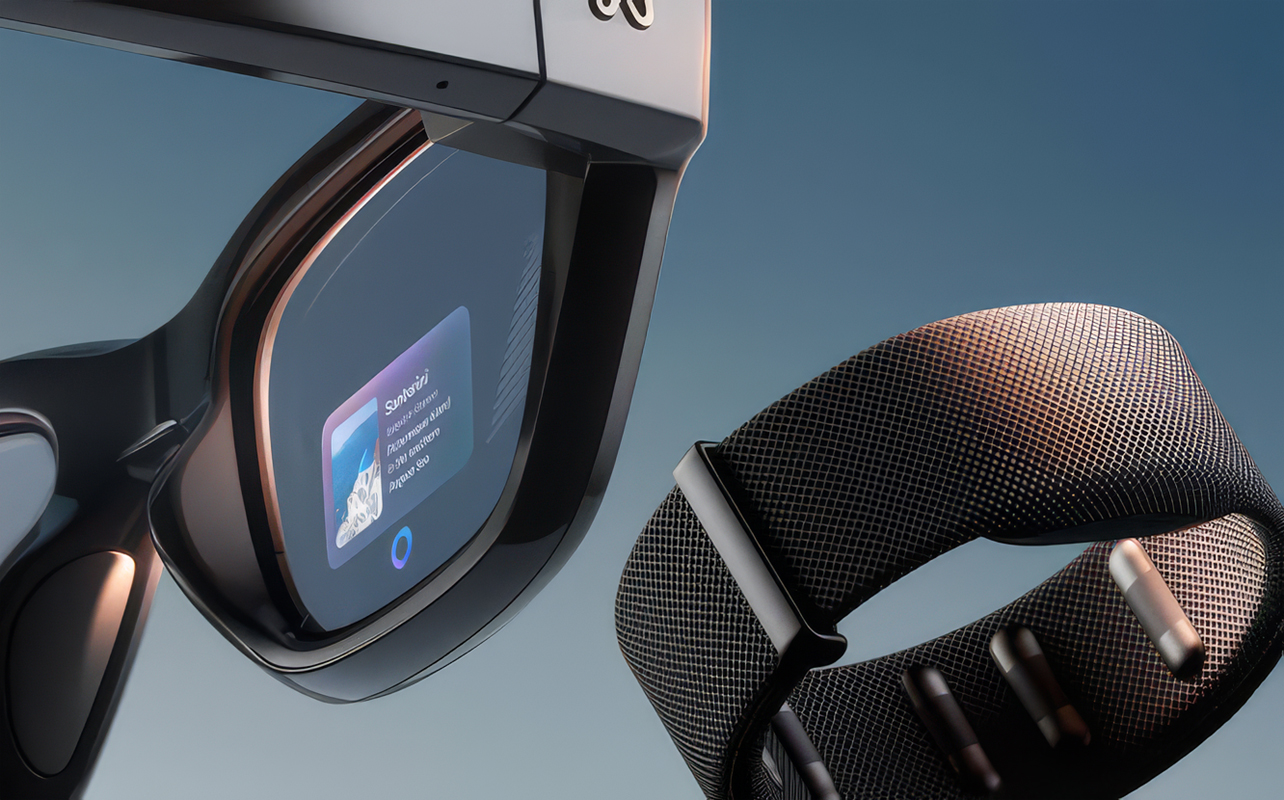
The right lens embeds a small, full-colour screen that only you can see. A good analogy would be a heads-up display in a car when you’re driving. Only you can see it on the windshield from your angle as the driver without blocking your view of the road.
Then there’s the Meta Neural Band that pairs with the glasses. It’s a soft wristband that reads subtle muscle signals to let you navigate menus, answer messages, and control the camera using small finger movements, almost like a TV remote you never have to look at or pick up. That’s why the Display glasses and Neural Band come bundled together as a package, available in black. Plus, they include Transitions lenses, so the lenses automatically darken outdoors and clear up indoors, much like traditional photochromic sunglasses.
How the technology works
The display is a 600 × 600-pixel full-colour display integrated into the right lens that’s bright enough to stay legible both indoors and in daylight. It sits just below your natural line of sight rather than directly in front of your eye, much like the heads-up display on the windshield example cited earlier. It’s there when you glance down, invisible when you don’t. It’s also designed for private viewing with minimal outward light leakage, which matters if you’re reading a private message on a crowded train.
Controlling that display is where the Neural Band comes in, and this is really the part that makes the whole system feel different from other smart glasses. Using EMG technology (surface electromyography), which basically means it senses the small electrical signals your muscles produce when you move your fingers. Pinching your thumb and index finger together selects an item, similar to clicking a mouse. Swiping your thumb along your index finger scrolls or navigates the display, kind of like swiping on a trackpad. Rotating your wrist while pinching adjusts things like volume or camera zoom, similar to turning a dial. Because there’s no touchscreen and no need to hold up a phone, the whole system is meant to work hands-free and keep your attention on what’s actually in front of you, whether that’s a conversation, a recipe, or the road ahead.
Interacting with the content
The 12-megapixel ultra-wide camera shares many similarities with the other Meta Ray-Ban models, so it’s capable of 3x zoom and video capture. And because you can see a live viewfinder on the in-lens display, framing a shot no longer means guessing and hoping. Some features run through WhatsApp, Messenger, Instagram, and Threads, which could let you read, dictate, and even hand-write short replies using finger gestures in the air without pulling out your phone. It’s meant to be somewhat of a variation to replying to a text on a smartwatch but with a much larger, clearer screen to read from, though supported features vary by app, country, language, and software version.
Meta AI is also built-in to answer questions, describe what’s in front of you, and show supporting, contextual visuals (directions or search results) directly on the display rather than only reading them out loud.
As for navigation, the glasses can show turn-by-turn walking directions on a small on-screen map, similar to glancing at, say, a map on a smartwatch. Meta says it’s been expanding this with more natural, landmark-based directions along with cycling and public transit guidance. You can also connect the glasses to streaming services, like Spotify and Amazon Music, so you can browse and control playback from your wrist while your phone is in your pocket or charging.
Meta rates battery life for these glasses at up to six hours per charge, though that figure can vary based on what your usage looks like. The included charging case provides up to 24 additional hours of use, for up to 30 total hours. With heavy use, you can probably expect to recharge more often, maybe even more than once in the same day.
How it all fits in on a daily basis
The Meta Ray-Ban Display glasses aren’t really about one specific feature because they aim to blend together lifestyle with tech in a practical way. Think of how often you check a message while walking, glance at a map without picking up your phone, preview a photo before you take it, or skim a translated menu while travelling. Those are all things anyone can probably identify with at one point or another, and these glasses are supposed to reduce how often you need to look at your phone.
With the display and Neural Band working together, it can be quicker and less disruptive, which is where Meta believes it has the real everyday value. Imagine having a conversation or taking part in an activity and seeing useful information appear on the screen. A quick peek at a smartwatch could do the same thing but it wouldn’t be as subtle. Same with being out and about and trying not to look at either your watch or phone.
Prescription (Rx) and sizing options
You can get your own prescription lenses installed on a pair of Meta Ray-Ban Display glasses to keep everything sharp. This generally goes through optical professionals or directly from Ray-Ban, but eligible prescriptions currently fall within a total power range of -4.00 to +4.00. It’s worth confirming your options before purchasing in case your prescription doesn’t fall within the supported range. Continue to Meta’s Rx website* to get prescription glasses delivered to your home with free shipping and returns from Meta. Single-vision prescription lenses can be ordered at the time of purchase. Because so much of the experience depends on physical fit, you have to also take size into consideration, too.

That leaves you with two separate components to consider, and they work a bit like buying shoes and a fitness tracker at the same time—both need to fit well, but for different reasons. The glasses themselves come in Standard and Large frame sizes, similar to how regular eyewear fits differently across face shapes. Meanwhile, the Meta Neural Band comes in three sizes—Size 1 (Small), Size 2 (Medium), and Size 3 (Large)—so getting this combo right matters more than it might seem, since the band’s sensors need to sit snugly against the skin just like any other smartwatch or fitness tracker. If the band is too loose, it can affect how the glasses read your gestures and controls, ultimately affecting the entire system.
Meta has an online wrist-sizing tool or you can look into this more directly in a store to measure both the frame and the band before buying. And if you get the chance to take it further and practice a few gestures and controls, you get a better sense of how it all feels.
Available now
Meta Ray-Ban Display glasses are a slightly different take on smart eyewear. A private, in-lens display isn’t new but when paired with wrist-based gesture control, it becomes something uniquely different in this space. The value comes down to how much you value hands-free capability, and whether this is a way to handle everyday tasks like messaging, navigating, and capturing moments.
That’s why getting the fit right from the start, for both the frame and the Neural Band, is so important. For this to feel like a natural process, it has to function with intention and consistency.
You can check out the Meta Ray-Ban Display glasses and Neural Band available now. Take a look at all the other smart glasses currently available to compare.