Recording footage or taking photos with a 360 camera requires planning and patience. You’re not just pointing in one direction, you’re considering what’s all around you, where to position the camera, and where you’re going. It’s a creative pursuit that differs from action cameras in that you’re taking more into account from the start. Then, there’s the editing process, which can also feel different.
But there’s no doubt that there’s something exhilarating about capturing scenery and action in a spatial context. With 360 cameras maturing faster now, image quality is only getting better and more vibrant. This list covers the best of the best to help you find the right match.

Best overall: Insta360 X6
The Insta360 X6 is a serious player in this category as it’s both compact and highly effective. Its square 1/1.1-inch sensors take a step up from what the previous X5 could do in delivering image quality that’s better in more varied situations, including low-light scenarios. It shoots 360 video at up to 8K at 50fps in 10-bit colour, offering I-Log and Dolby Vision for colour grading on your terms. Plus, still images come out at a total of 120-megapixels. Not to mention you can kick things off right away with the 47GB of usable onboard storage.
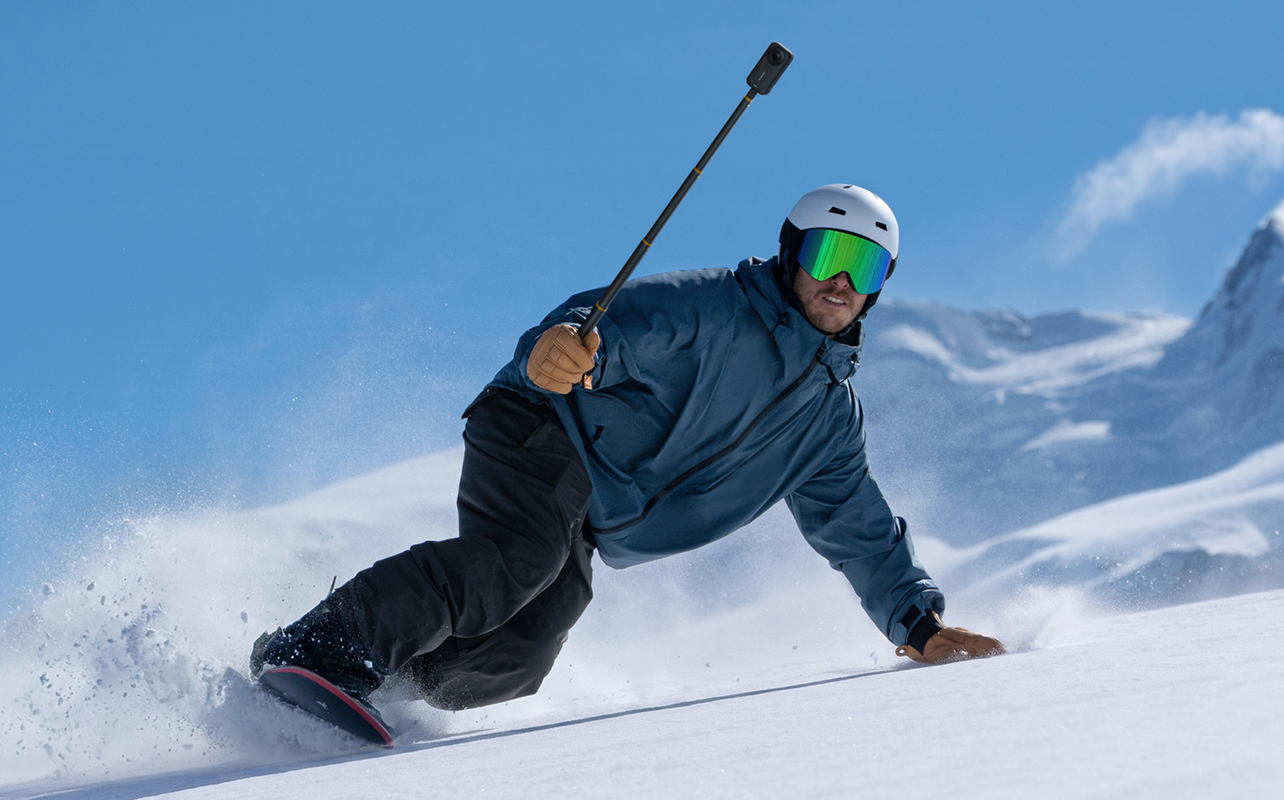
IP68 dust and water resistance give it some rugged chops out of the box, where you can even dunk it as deep as 20 metres (65ft.) without a case. That includes the oceans and seas, by the way, but you can dive even deeper if you put a proper protective case on it. On land, sea, or maybe even air, you’ll find plenty to work with if you’ve got prior experience with 360 cameras. Stabilization and HorizonLock features help keep footage smooth when you want to get adventurous, while you can also swap out lenses should either one get dinged up along the way.
Insta360 rates battery life at about 140 minutes in 8K/30fps. It varies beyond that. There’s some built-in editing, but you’ll be doing most of that on the dedicated app for both mobile (iOS or Android) and on a computer (Windows or macOS).
You can either get the Standard bundle or find better value with the Sports Camera Essential bundle that includes an extra battery, selfie stick, lens cap, charging case, and extended warranty.
Best for creators and editors: GoPro Max2
This is a tough one because video quality is superb from the top options in this category. The GoPro Max2 offers a bump in both resolution and more prosumer-level features even though it launched in 2025. If you want to edit your footage more seriously, this could be the way to go. GoPro’s pitch is what it calls “true 8K”, where each of the 1/2.3-inch sensors captures enough pixels that the stitched file holds a full 8K frame with upscaling.
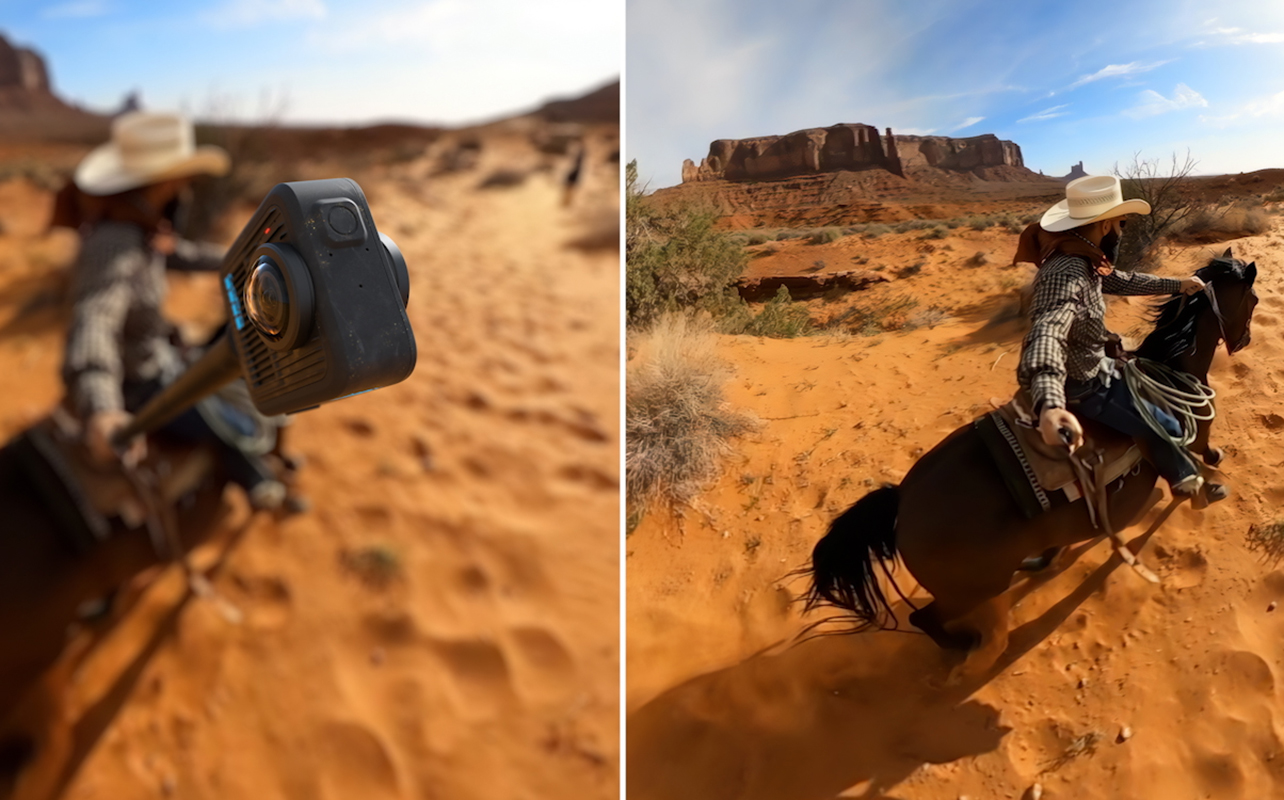
To put that in perspective, the camera records 10-bit colour with GP-Log, encodes at 120Mbps, and reaches 300Mbps with GoPro Labs, which also allows custom triggers and automation. That means you can configure the camera to automatically start recording or perform certain actions based on things like motion, speed, or a set time. Thus, you don’t need to always press the record button for every clip. There are also 360 plug-ins for Adobe Premiere Pro and After Effects. The replaceable lenses are also fairly easy to manage.
Note that the image sensors are smaller than those in the Insta360 X6 and DJI Osmo 360 II, so while footage may look great, low-light performance may not be as dynamic. Waterproofing also stops at 5 metres (16ft.), so you need to get a protective case to go deeper. Battery life may also vary depending on resolution and conditions. It’s ultimately good value compared to what competitors cost and for those looking to produce more elaborate content.
Best for beginners: Insta360 X4 Air
The Insta360 X4 Air is the company’s lightest 8K 360 camera at 165 grams, so it already heads out of the gate with a more portable benefit. It records 8K at 30fps or 6K at 50fps, using dual 1/1.8-inch sensors that are larger than the regular X4, as well as being waterproof to 15 metres (49ft.) without a case. You can also replace the lenses at any time for longevity.
This camera is easy to use. As a beginner, you can figure it out and start shooting in no time, even if you consider yourself someone with limited videography experience.
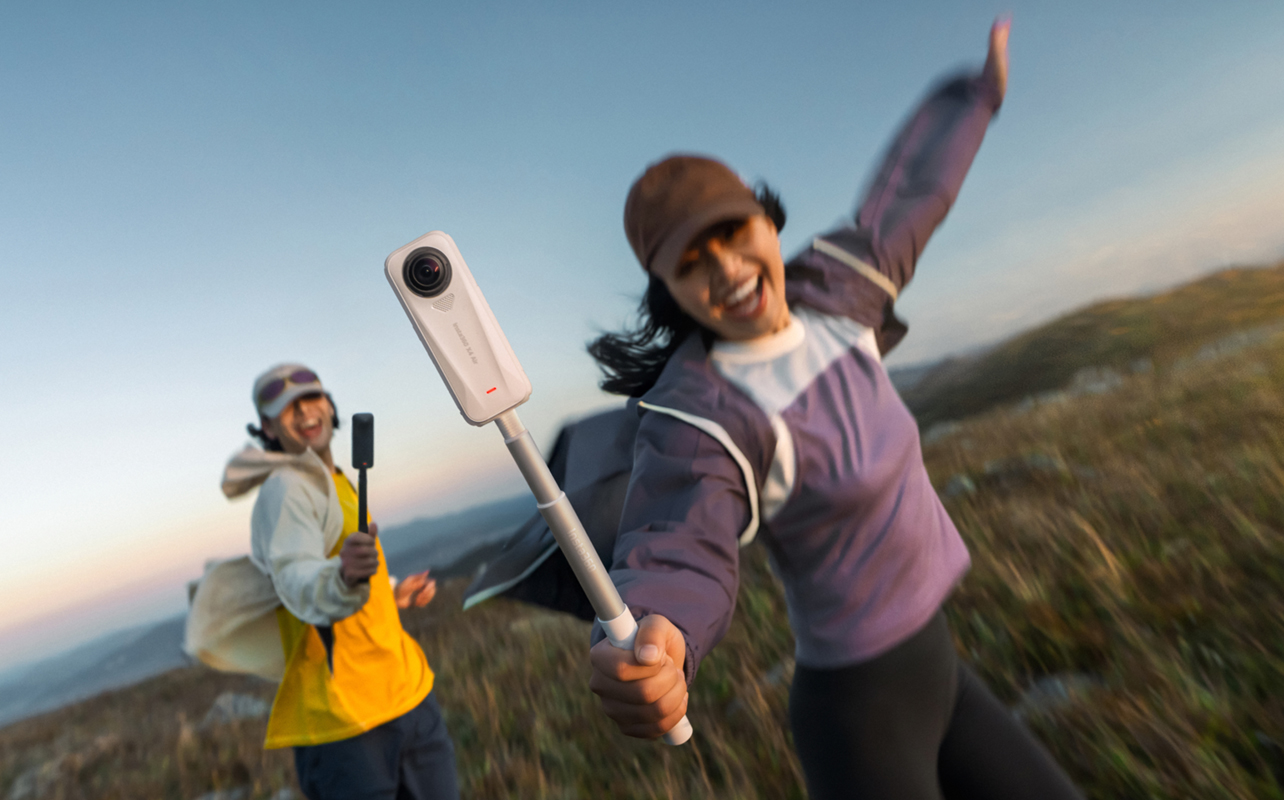
Given the slimmer and lighter body, the 2,010mAh battery is small under the circumstances, rated at about 88 minutes of 8K/30. Budget for at least one spare battery, just in case. The 2.5-inch screen is also on the smaller side owing to the general size constraints involved here. You don’t get I-Log profile or the X5’s PureVideo low-light mode. And while novice-friendly, it’s smart to truly learn the Insta360 app to understand how all the features and connections work.
So, you do make compromises to get the more feathery build, but at least it should all feel accessible and produce good results. You have the option of going for the standalone camera or the Sports Camera combo that includes an extra battery, selfie stick, and lens cap.
Best premium option: DJI Osmo 360 II Adventure Combo
The DJI Osmo 360 II is a sequel that packs a real punch. For one, it’s is the first 360 camera to record native 8K at 60fps with what DJI claims to be 14.5 stops of dynamic range. That, along with the dual 1/1.1-inch image sensors, help deliver better and cleaner footage when using the SuperNight 2.0 low-light mode. It can capture 120-megapixel spatial still photos or you can shoot them with just one of the lenses, if you want. In some key ways, it’s what the original DJI Osmo 360 should’ve been.
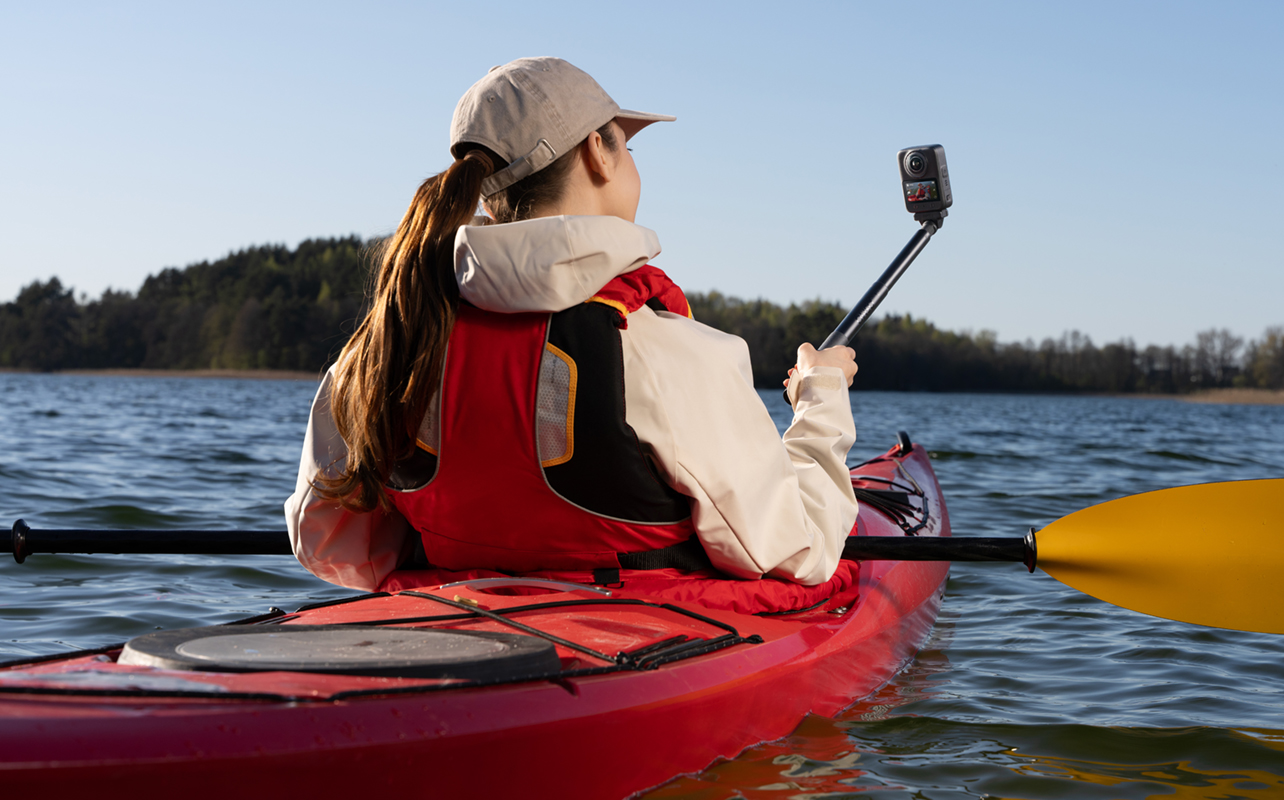
The camera offers 105GB of built-in storage and you can replace lenses whenever necessary. DJI claims 100 minutes of 8K footage per charge but that’s at lower frame rates, so keep that in mind. While 8K/60fps sounds great, you won’t be able to do it for very long because the thermals inside probably can’t go longer than 20 minutes in one go.
It can also submerge down to 10 metres (33ft.) without a case—50 metres (164ft.) if you get the Invisible Waterproof Case (sold separately)—and DJI recommends you go the latter route for any underwater footage, regardless of depth.
The Adventure Combo is generally a better buy (unless you already have the requisite gear) over the Standard version because it includes two extra batteries, a battery case that holds all three, a 1.2-metre Invisible Selfie Stick, and a quick-release adapter.
Best for riding and motorsports: DJI Osmo 360 II Limitless Riding Combo
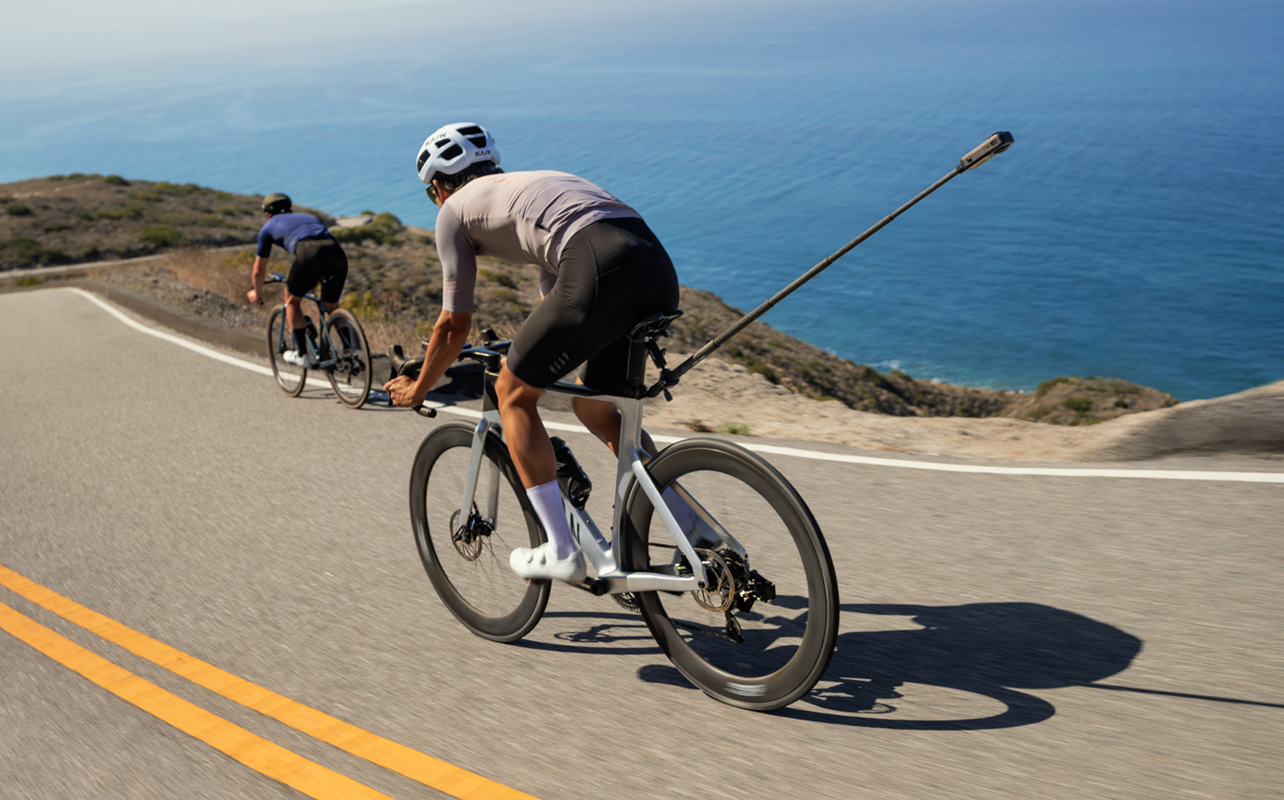
This is not a different camera, it’s a different bundle serving a more specific purpose. The Limitless Riding Combo pairs the Osmo 360 II with a heavy-duty clamp mount kit for handlebars and other rigid tubes, an extra battery, a pouch, a silicone lens cap, and a charging cable. While there are other accessories you could purchase to use the camera with vehicles, this mount kit has riders in mind.
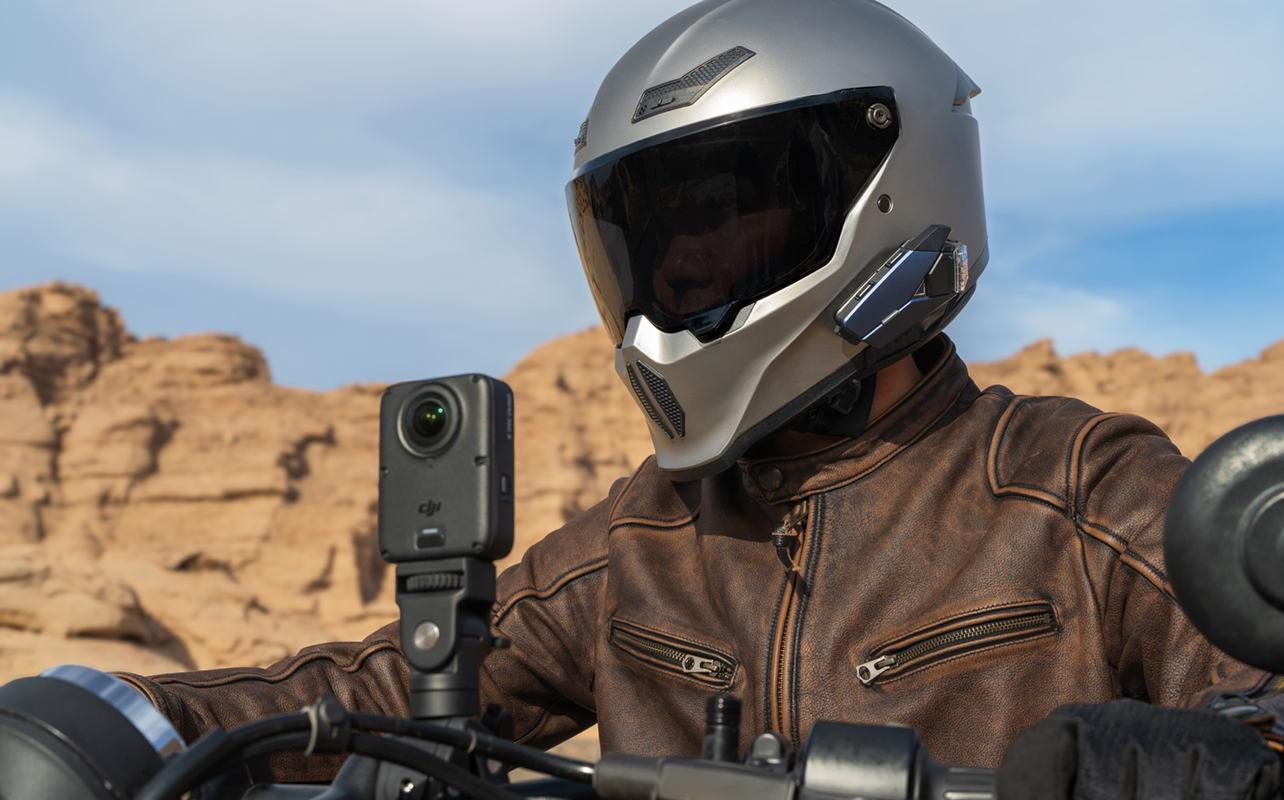
DJI figures that native 8K/60fps provides smoother motion, especially if you have a need for speed while rolling. A key factor for all this is stabilization—keeping footage looking steady while also making things look cool in (up to) 4K/240fps slow motion. Like any of the other 360 cameras on this list, it’s very worthwhile to learn the settings and features to better prepare for what you actually record.
The only thing is that you may want to consider a third battery if you’re thinking of all-day shooting. DJI’s 100 minutes at 8K/30fps claim is conditional, and at 8K/60fps, overheating is a real possibility in less than 20 minutes. These are also large files to edit later on, which you can start on your phone or tablet before moving to a computer. The Android app needs to be sideloaded, as you won’t see it in the Google Play Store. There’s no danger in doing so. The iOS app is readily available in the App Store.
Take it with you
Recording or capturing anything with a 360 camera is already different because of the perspective. It’s all around, not just facing one way, and that makes it all look and feel immersive, almost like others can be there virtually. That also means almost anything you use the camera for can turn out to be interesting and compelling.
It’s best to also understand the workflow involved, as editing can differ after the fact, much like the extensive features and settings are worth learning. The more you know, the better prepared you are for what you want the camera to see.
Also check out the best action cameras.
How we decide what’s best
At Best Buy Canada, curating a “Best of” or “Top X” list is a thoughtful and transparent process. We evaluate products based on brand reputation, popularity, customer interest, and relevance within their category. Our bloggers then bring deep product knowledge and hands-on experience to help identify the best options for you.
Testing goes far beyond unboxing—products are used in real-world scenarios, with our bloggers putting themselves in your shoes to better understand how a device or accessory performs day to day and whether it meets expectations. Where possible, they compare similar models and assess key factors such as design, performance, and category-specific features to offer well-rounded, informed recommendations. For niche or new product categories where broader hands-on testing might not be possible within that category as a whole, our skilled bloggers evaluate the products using every objective method they can.
In some cases, a blogger may not have direct experience with a specific product. When that happens, they draw on broader expertise, such as time spent with comparable items, an understanding of the brand’s current lineup, and its overall reputation. We also draw on insights from Best Buy’s in-house category experts and aggregate feedback from both trusted reviewers and customer ratings to make the best selections.
We’ll always be clear about the basis of our recommendations—whether they stem from first-hand testing or extensive research. Authenticity matters to us. Every “Best of” guide is built on objective insights, product knowledge, and a commitment to helping you make confident buying decisions.