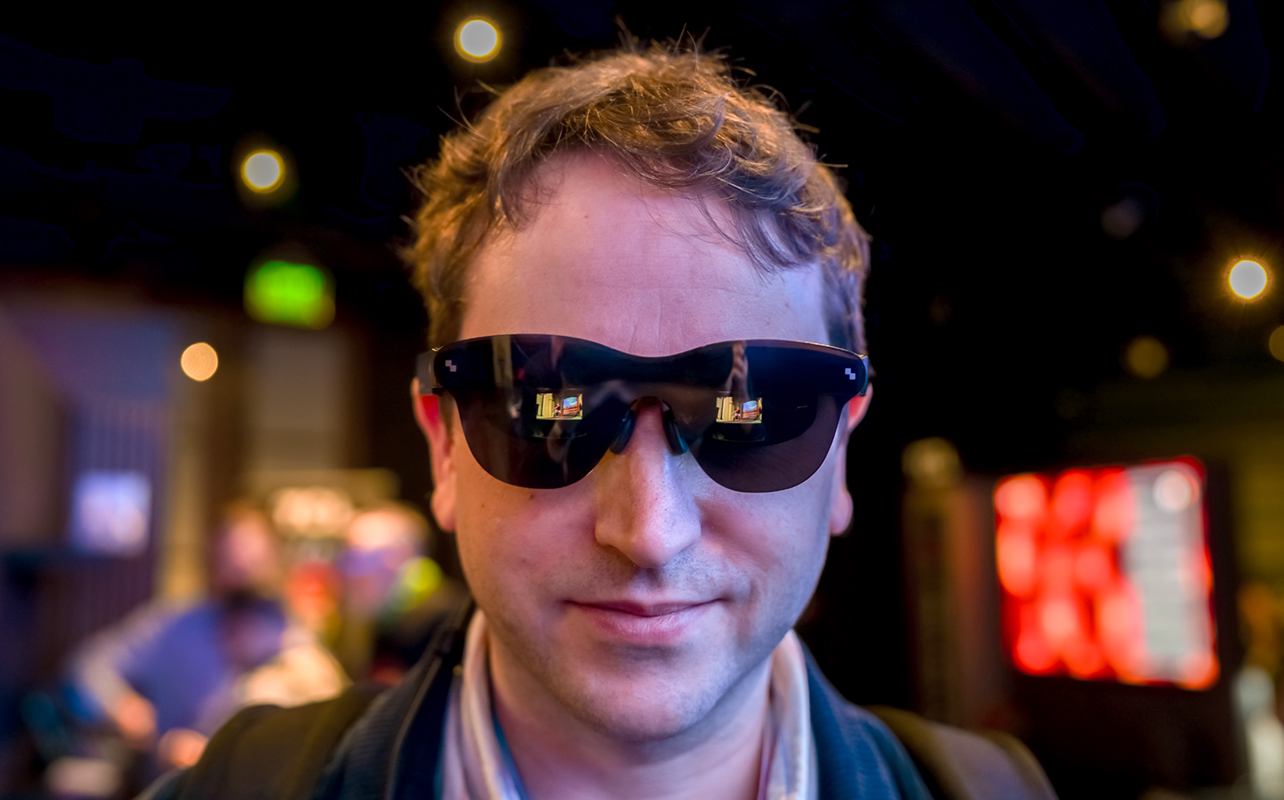
Wearable technology is a broad category unto itself, and smart glasses are one within that umbrella starting to make waves. A big reason why is because they don’t all fall into one particular type.
The idea of “smart glasses” is hardly new when you consider Google Glass launched back in 2013. Met with both fanfare and plenty of ridicule, the glasses still showed there might be something to such an idea in spite of being a cultural punchline. Now, smart glasses are moving from niche curiosity to a genuine product category, with a slew of manufacturers making them in different forms. Understanding what’s actually on offer, however, requires cutting through a tangle of overlapping terminology.

What are smart glasses, exactly?
In a nutshell, smart glasses fall under any eyewear that go beyond simple optics by integrating electronics, connectivity, or computational capability. That means they can fit in several distinct product families that differ substantially in what they do, how they do it, and who they’re designed for.
The easiest way to distinguish between them is by looking at glasses that deliver information and glasses that transform what you see. In the former case, which are generally considered AI glasses, typically look like ordinary eyewear. The latter, on the other hand, are augmented reality, or AR glasses, which use optical technology to overlay digital content onto the wearer’s field of vision. Either one is a pair of smart glasses, even though they don’t necessarily function the same way. That’s why there’s some confusion in the market.
What are the main types?
AI Glasses
At the moment, AI glasses have the widest mainstream presence. These devices incorporate cameras, microphones, and open-ear speakers, plus connectivity to a smartphone or the cloud. That connectivity enables you to interact with an AI assistant, capture hands-free video and photos, listen to music, and take calls—all without looking at a screen.

The Meta Ray-Ban smart glasses are a good example of that, and arguably the pair that set the tone for the whole category. Developed in partnership with EssilorLuxottica and now in their second generation, they look like ordinary Ray-Bans, but their broader appeal is that they can do so much more without looking conspicuous. It’s easy to blend and fit right in wearing them.
AI glasses hold a key hardware proposition in that they integrate large language models into everyday eyewear. You can ask the glasses about nearby restaurants, see a real-time translation of a foreign-language sign by pointing your head at it, or receive a real-time description of what’s in front of you. This isn’t science fiction, it’s reality because these features are available today.
AR Glasses
AR glasses are more technically demanding, which is why they remain more niche right now. Rather than simply provide audio assistance, AR glasses project digital imagery, be it text, navigation arrows, icons, and 3D objects, onto a transparent lens. In effect, it makes it so that digital and physical worlds blend together. The technology making this possible is the waveguide, a thin optical component that directs light from a tiny projector into the user’s eye without obstructing their view. It also doesn’t have any detrimental effect on your eyes, either.
Without getting overly technical, AR glasses also have their own unique distinctions. Flat or Lite AR, such as those from XREAL and Vuzix, display relatively simple overlays—notifications, subtitles, navigation instructions—onto a transparent lens. Slim, power-efficient, and increasingly practical, they’re good at keeping things simpler.
Spatial or Dimensional AR, is far more ambitious in that it maps the user’s environment in three dimensions and anchors digital objects to physical space. In other words, a virtual diagram of a machine can hover above the actual machine being serviced, which is why the technology has real appeal for engineers, technicians, and mechanics. Microsoft HoloLens and Magic Leap are prime examples of how that works, though they’re usually business and enterprise-focused.
XR Glasses
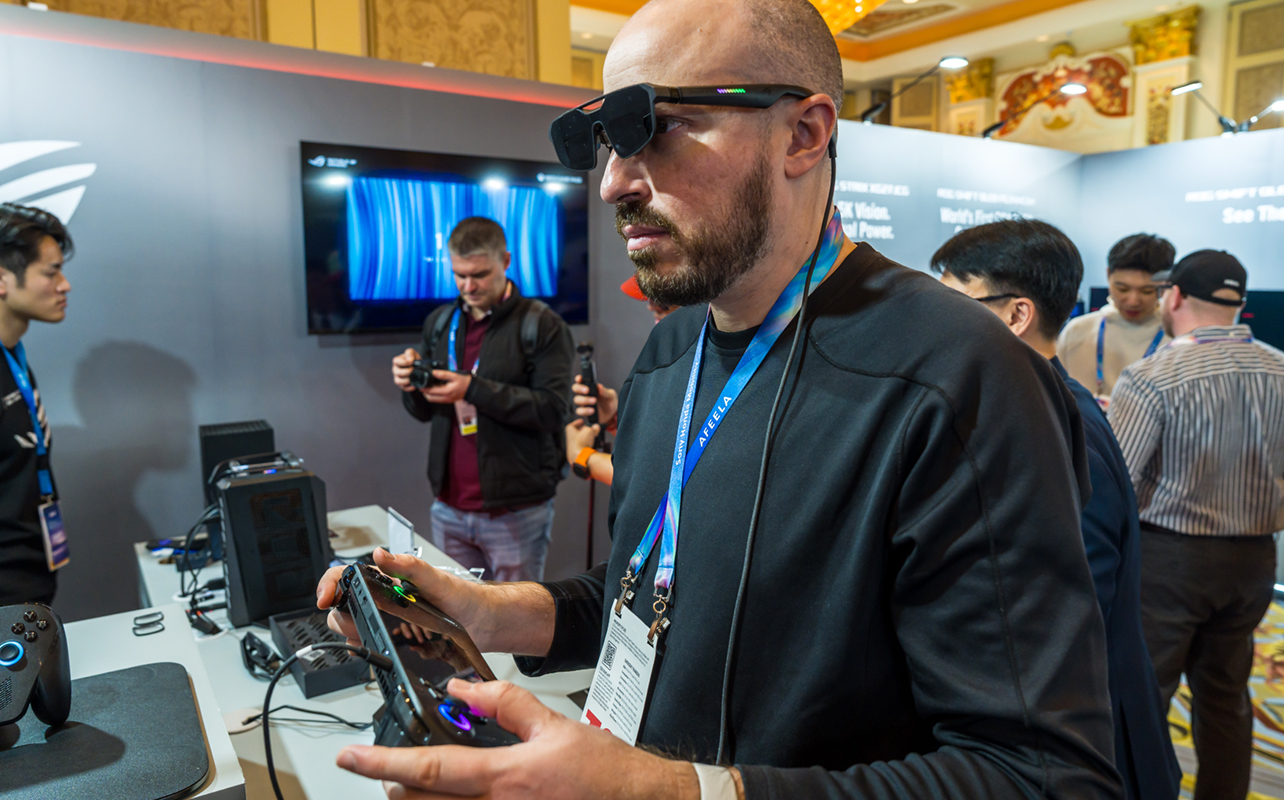
XR glasses (extended reality) are less a separate technology and more an umbrella term that can include AR and mixed reality (MR). The premise is to blend digital content with the physical world—but in different forms. XR glasses can overlay simple digital information the same way AR glasses do, only they aim for more immersive, spatial experiences that aren’t quite in the same lane for AR glasses. In layman’s terms, you’re still in the real world but there are augmented and possibly even virtual elements visible to you as well. The technology isn’t as polished as AI and AR glasses are to this point but look for that to change in due course.
How is AI impacting the category?
It’s important to remember that what makes glasses “smart” is in reality an evolving prospect. Simply having built-in Bluetooth for calls and music was enough to warrant the label. Integrating modern AI, specifically large language models and computer vision, is radically changing what that means today.
Contemporary AI glasses go much further because they can better understand context. When you ask a question, your smart glasses aren’t just executing a predetermined command, they are passing audio or visual information to a model capable of reasoning about it. It’s basically the difference between Google Assistant and Gemini. The former handled basic requests whereas the latter offers conversation and context at a much bigger scale.
It’s the convenience of the glasses knowing what to translate when you point your glasses at a restaurant menu in another language. Stand in front of a broken piece of equipment, and a remote expert wearing the same glasses can see what you see and guide your repairs in real time.
Businesses and enterprises are looking into that with considerable curiosity. We’re also talking a wide range of industries, be it engineering, manufacturing, health care, tourism, and more. As a consumer, the proposition is different but increasingly compelling given the core appeal is a lot less friction. The information comes to you, rather than forcing you to reach for a phone, break eye contact with the world, and navigate a screen. Live translation, real-time captioning for the hearing-impaired, and visual search represent use cases that can genuinely improve daily life.
Are smart glasses safe to use?
Smart glasses are generally considered safe for most people to use since they’re not known to cause any permanent eye damage. There’s no evidence showing that blue light from smart glasses damages the retina in ordinary use. Still, their safety depends on how long you wear them, what features they use, and the situations in which you use them.
Digital eye strain is a more plausible issue because smart glasses place visual information close to your eyes through tiny projected displays. Your eye muscles may work harder to focus when switching between real-world objects and virtual overlays. That kind of strain can lead to dry eyes, blurred vision, headaches, and fatigue after extended sessions. Smart glasses also emit low-power non-ionizing radio signals that are well below thresholds considered harmful, much like Bluetooth earbuds or smartphones do.

Safety issues centre more around physical comfort and distraction. Like any pair of glasses, pressure on the nose bridge, ears, or temples are always factors. Some smart glasses will feel heavier, which can affect how comfortable they feel.
With all the notifications, navigation prompts, or overlays capturing your attention, you may encounter reduced situational awareness when wearing smart glasses. That raises potential risks while driving, cycling, crossing streets, or doing tasks that require full concentration. In that sense, it’s not the hardware itself but more the diversionary elements that may cause danger.
Who are the key players?
Meta’s Ray-Ban collection stands as the most successful AI glasses to date. The second-generation models, along with new Oakley Meta variants aimed at sports users, represent a broader appeal beyond just lifestyle use cases.
Google, whose original Glass was a cautionary tale, has re-entered the field through its Android XR platform, releasing prototype glasses in early 2025. Microsoft has signalled its AR ambitions through patent filings for CoPilot AR glasses designed around spatial data processing and accessibility. Samsung and Apple may eventually enter the market with meaningful products, but we’ll have to wait and see. Chinese brands, including XREAL, Rokid, and RayNeo (from TCL) have all released unveiled advanced AR glasses, further pushing the market to expand.
What about expectations of privacy?
Privacy is another kind of safety concern. Many smart glasses include cameras and microphones, which raises risks involving unauthorized recording, hacking, or accidental data sharing. The wearer may be physically safe, but people around them may have legitimate privacy concerns depending on how the device is used.
This is somewhat of a two-pronged point. One of the biggest privacy concerns with smart glasses is that they make recording far less visible than smartphones or traditional cameras. When someone lifts a phone to take a picture, it’s fairly clear to people nearby. The cameras and microphones embedded in smart glasses that are made to blend in, making it much harder for bystanders to know whether they are being filmed, photographed, or recorded. That creates a consent problem: people may have no idea their image, voice, or behavior is being captured in the first place.
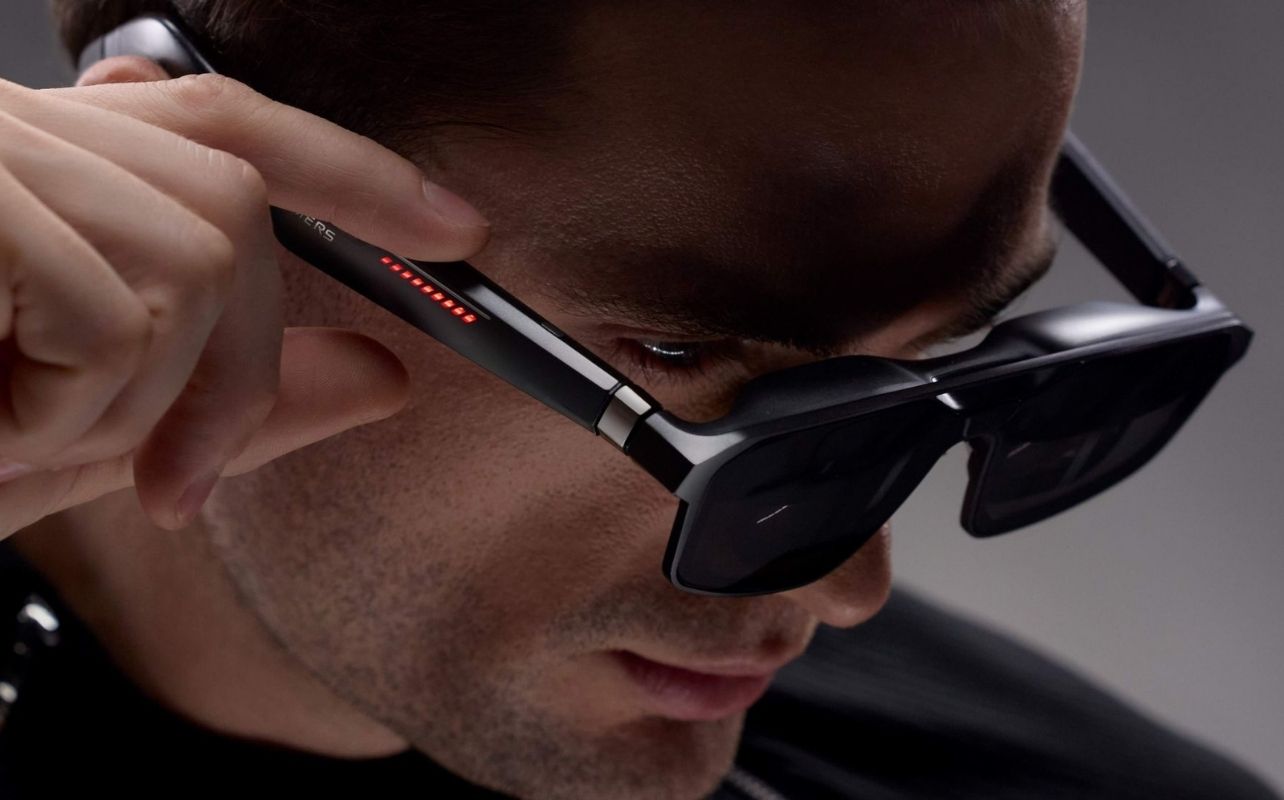
Then there’s the data collection aspect. Smart glasses that rely on cloud-connected AI systems to process voice commands, analyze images, or store captured media upload that data to company servers, where they might be retained, analyzed, or used to train machine-learning systems. While expectations of privacy in public are already murky territory in the digital age, users capturing private footage through their glasses may not know what happens to it when uploaded to servers.
Offices, hospitals, schools, courtrooms, and other sensitive places may have rules in place governing where and when smart glasses are acceptable. Until privacy laws catch up, it’s a legal grey area that pits smart glasses in unchartered territory.
Ultimately, the privacy challenge with smart glasses goes both ways. Unlike phones, which are put away when not in use, smart glasses are worn continuously and always ready to capture the world around them.
Other challenges along the way
Unlike smartwatches and smart rings, smart glasses are intrinsically more social because they involve a wearer’s eyes. It’s not clear what the long-term implications will be and how society will take to the technology as it evolves.
Battery life is another hardware constraint. The components required for real-time AI processing and optical display are power-hungry, and there’s little room in smart glasses to raise battery capacity. Hence, they do require you charging them fairly often when actively using them.
Convergence is also a real problem because AI glasses and AR glasses still represent different trade-offs. The former are comfortable and practical but limited to audio, whereas the latter are more powerful but bulkier and more expensive. In my mind, the devices that serve the best chance of unleashing the category’s full potential are those that combine substantive AI capability with unobtrusive AR display. Even if those were available today, they wouldn’t be at consumer-friendly prices. It may take a year or two yet.
What comes next for smart glasses
More than likely, smart glasses will veer toward that kind of convergence. The most successful products in the near term will likely blend AI assistants with modest AR overlays to deliver information and some degree of visual augmentation for wearers, all without the bulk of current full-AR hardware. Snapdragon XR chipsets and similar platforms are pushing more on-device AI to reduce latency and lessen dependence on cloud connectivity.
The technology will force lawmakers to consider how smart glasses fit in broader privacy frameworks, while manufacturers will need to show they’re ready to work to assuage public concerns. Either way, consumers like you will ultimately decide whether having smart eyewear is worth the trade-offs in weight, battery life, and social perception.
Check out the latest smart glasses available at Best Buy now.