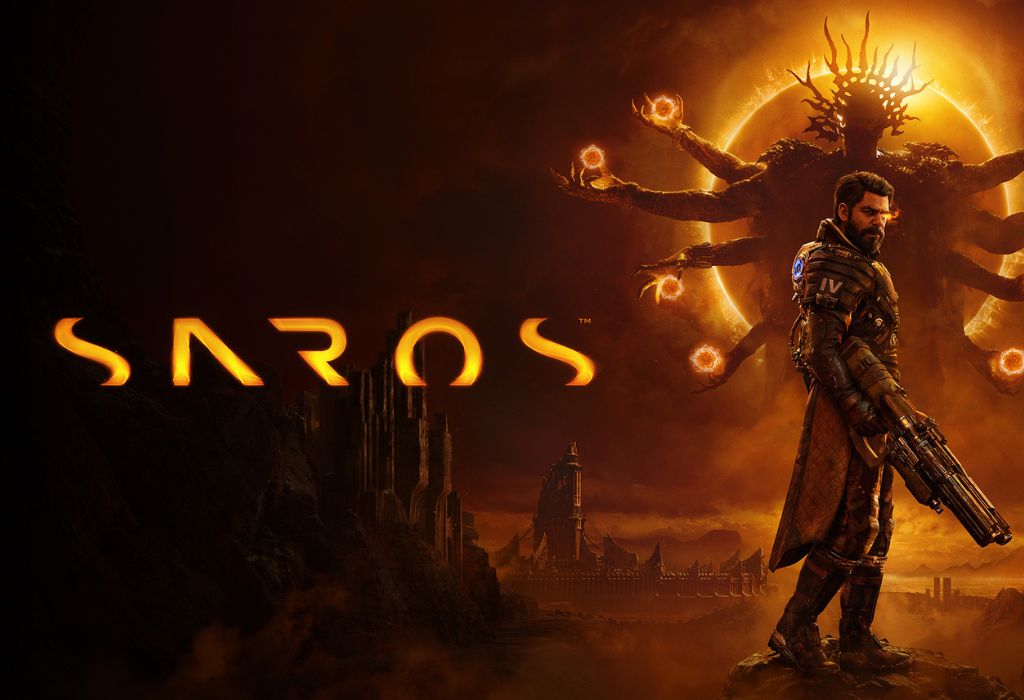
When it comes to the roguelike experience, Saros takes everything that made its predecessor Returnal popular and supercharges it. It’s a sharper, faster, and more rewarding experience that is so good, it was honestly hard to put down. I came away genuinely impressed by how it evolves the roguelike formula, blending blistering combat, a stronger narrative, and a progression system that makes every run feel worthwhile.
Saros may still offer challenges that feel too daunting for some players, and the new Carcosan gameplay modifiers could be divisive for those who prefer a more fixed difficulty curve. However, I appreciated the added flexibility. It gives more players a way to engage with Saros on their own terms without taking away the demanding edge that defines the experience.
It still delivers the studio’s signature tension and intensity, but this time around, failure feels less punishing, and progress feels much more meaningful. For me, Saros is not just a worthy follow-up to Returnal; it is one of the best action roguelikes I’ve ever played.

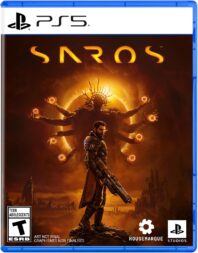
Saros review details
Platform(s): PlayStation 5, PlayStation 5 Pro
Reviewed on: PlayStation 5 Pro
Developer: Housemarque
Publisher: Sony Interactive Entertainment
Genre: Action, Third-Person Shooter, Roguelike
Available game modes: Single-player
ESRB Rating: T for Teen
Saros features a gripping sci-fi horror storyline
One of the first things that grabbed me about Saros was its mysterious sci-fi horror premise. The game takes place on Carcosa, an alien world made even more dangerous by a deadly eclipse that reshapes the planet and intensifies its threats.

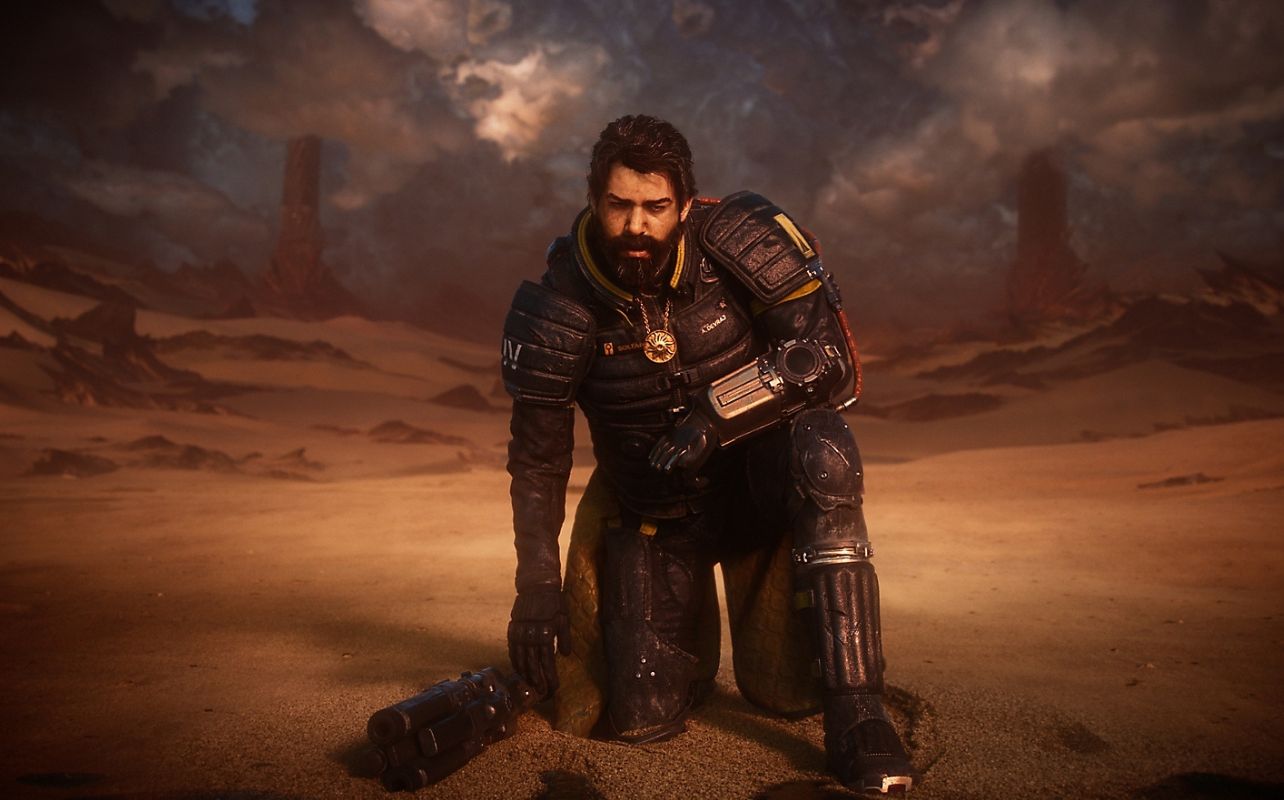
You play as Arjun Devraj, a Soltari Enforcer sent to investigate failed missions tied to a valuable resource known as Lucenite. What starts as a search-and-rescue operation quickly becomes something far more sinister, with missing colonists, abandoned outposts, and an alien force closing in.
Saros also cleverly ties its story directly into its roguelike structure. Arjun dies, returns, and dies again on repeat making each run feel like part of both the gameplay loop and the larger mystery.
Compared to Returnal, which follows a similar structure, Saros feels more character-driven and emotionally grounded. It still has that haunting sense of discovery, but the story is delivered with a stronger personal focus that made me want to keep pushing forward, not just to survive another run, but to uncover what was really happening on Carcosa. The story is like a great novel you can’t put down, and, along with wanting to progress in the game, I felt a need to keep playing to peel back another layer of the mystery. By the end, not all character threads were tied up like I hoped, but it was still satisfying to piece together the story.
Saros gameplay: Fast, fluid, and fiercely rewarding
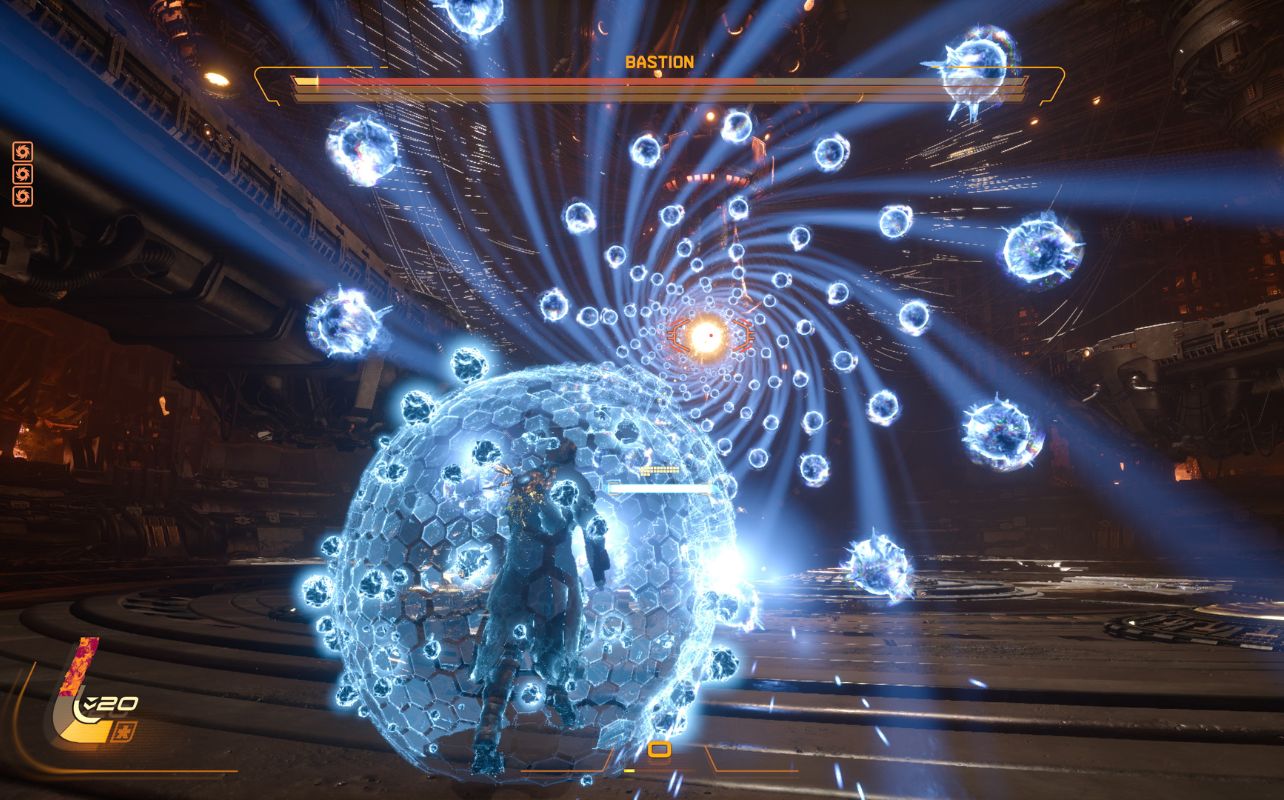
At its core, Saros is still unmistakably a Housemarque game, and that’s a great thing. The studio’s trademark combat is here in full force, with fast movement, aggressive enemies, and deadly screen-filling projectile patterns that demand precision, awareness, and quick reactions. There is even an amazing sense of scope to the action, with towering enemies that dwarf you and some creative boss battles that will test your skill. The moment-to-moment action is outstanding. I felt right at home almost immediately, but Saros also goes beyond simply recreating Returnal’s formula. It feels faster in a way I really liked, and, more importantly, more flexible.
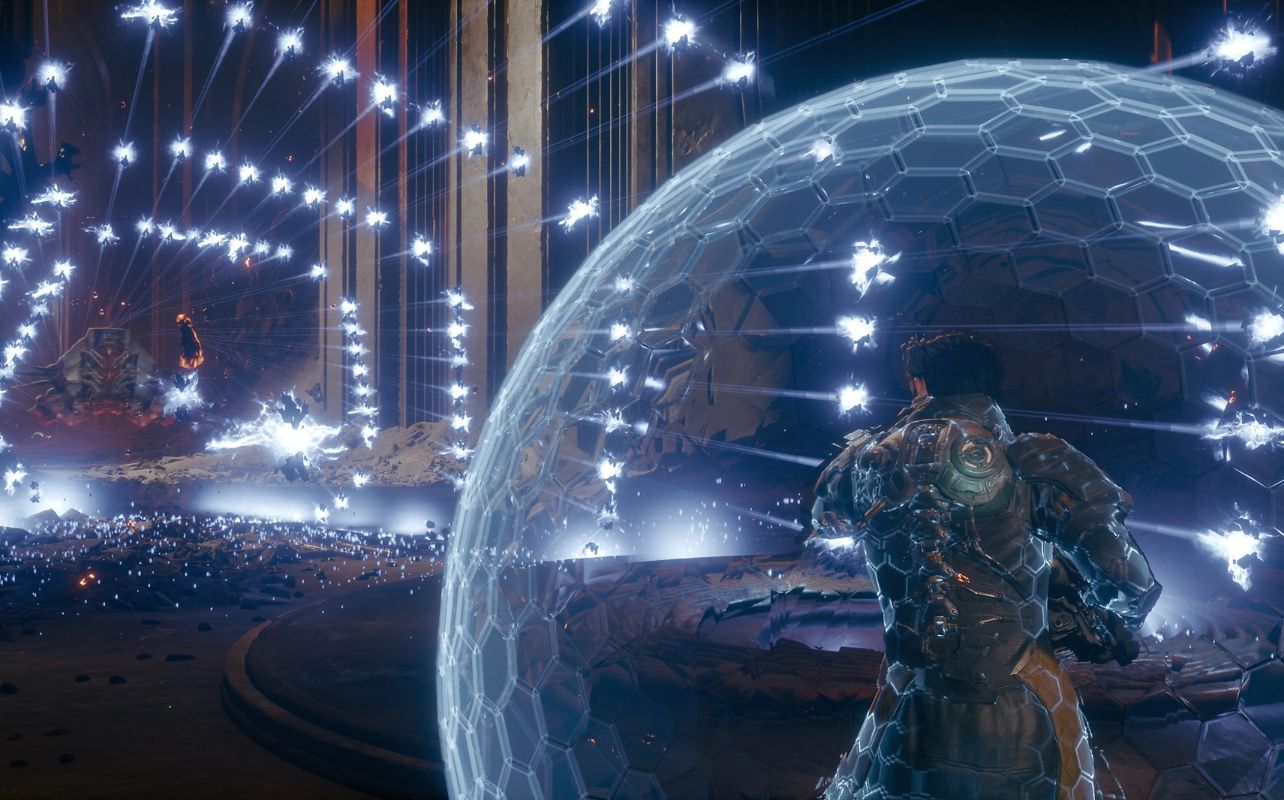
The new Soltari Shield offers more combat options
Combat introduces new layers of depth, making encounters more dynamic. One of the standout additions is the Soltari Shield, which gives you a defensive option that feels active rather than passive. Used effectively, it becomes part of the flow of combat instead of just a panic button. Not only can it protect you, but absorbing certain types of enemy projectiles powers up your secondary weapon’s ammo.
Mastering a bullet ballet
It all combines into what Housemarque describes as a “bullet ballet,” and honestly, that phrase fits what I experienced perfectly. Sometimes you weave, dodge or activate your shield to absorb projectiles to help you hit back harder. It’s a fabulous push-and-pull that makes combat so much more engaging. Even when everything on screen is trying to destroy you, the action feels readable, rhythmic, and exhilarating.
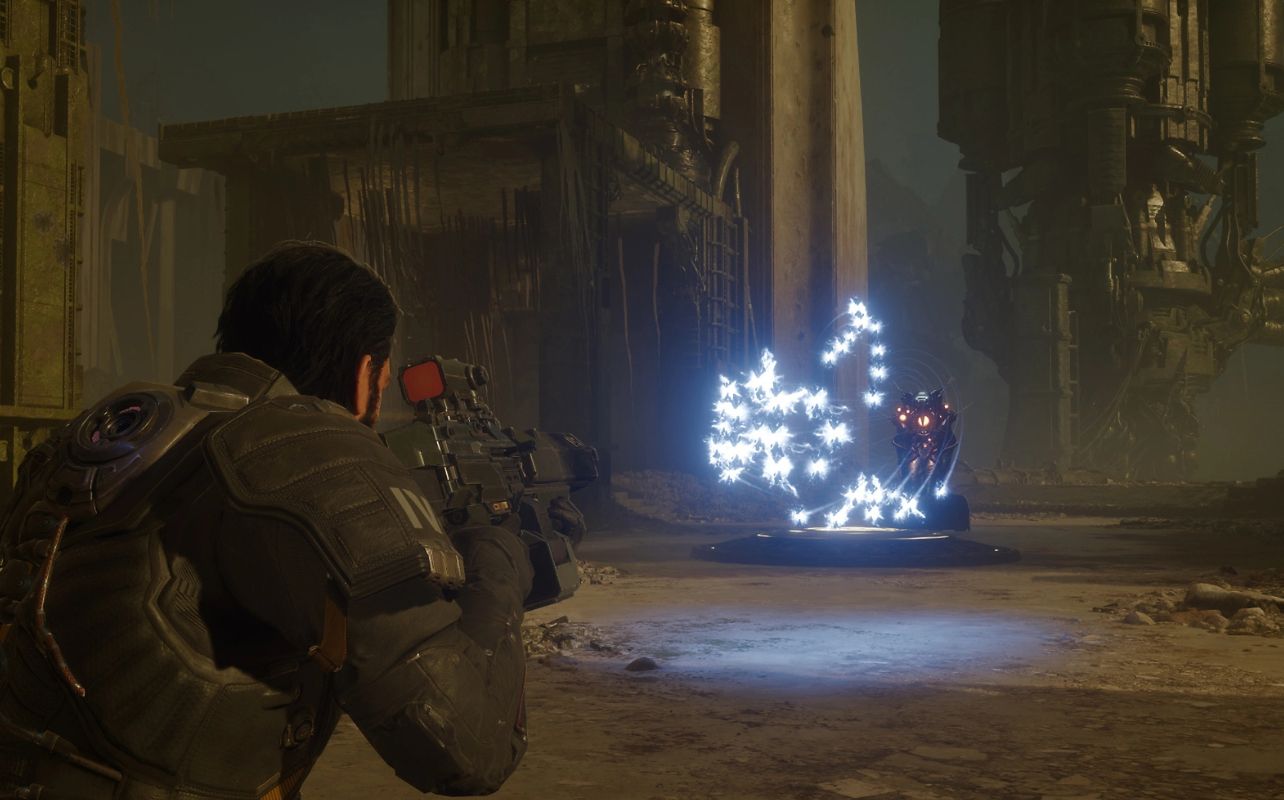
An enticing arsenal of weapons
Weapons themselves feel punchy, and the DualSense integration adds an extra layer of tactile feedback, making every firefight feel more immersive. There is a full range of armaments, including the Hand Cannon, Assault Rifles, Soltari Shotgun, and more. Each feels very distinct in its power, bullet spread, and haptic feel from the DualSense controller.
Saros invites you to master the chaos
What I appreciate most is that Saros does not just ask you to endure its combat. It invites you to master it. There is a stronger feeling of momentum in the way your abilities, tools, and upgrades come together. Instead of just surviving by the skin of my teeth, I often felt like I was learning how to control each run more effectively. That subtle difference changes the entire tone of the experience.
Every run counts
In Saros, the frustration from lost time in a “run” is greatly reduced, thanks to a much more rewarding progression system. Runs are structured to be more focused, usually under 30 minutes, and nearly every attempt leaves you with something valuable. That could be resources for upgrades, narrative discoveries, or meaningful boosts to Arjun’s overall strength. I absolutely loved this approach because it makes the roguelike loop feel more motivating instead of punishing.
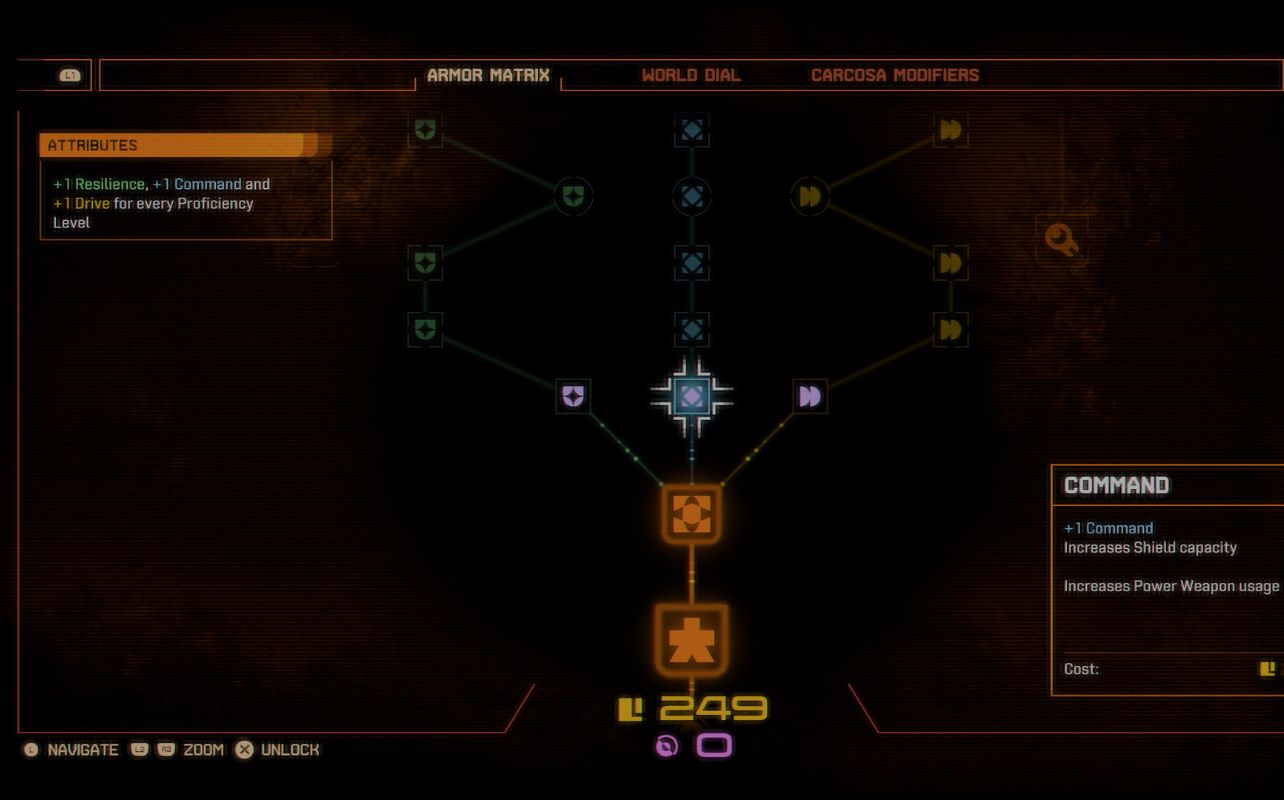
Armour Matrix offers a deep skill tree with permanent unlocks
The “come back stronger” design is key to what makes Saros feel fantastic, and the Armour Matrix is a key component. The Lucenite you pick up in the game serves as a core resource for upgrades, and the Armour Matrix gives you several ways to shape your build over time. I found this system far more encouraging because it meant a failed run wasn’t “wasted.” Even a short, messy sequence could still contribute to future success if enough resources were gathered. That created a satisfying sense of progression that quickly hooked me. I kept wanting to jump back in because I felt like I was always moving forward, even when I died. That is a huge win for the genre, and it solves one of the biggest barriers that can make roguelikes intimidating and a big turn-off.
Carcosan Modifiers offer more ways to shape your challenge
Carcosan Modifiers add another layer of flexibility to Saros, letting you shape the difficulty to your playstyle. From the game’s hub, you can add special Protection Modifiers that can make runs slightly more manageable by reducing incoming damage, easing weapon reload timing, or extending how long Arjun’s shield remains active.
Trial Modifiers push in the opposite direction, making enemies more aggressive or weakening weapon power over time. I can see this being divisive among players who want Housemarque’s challenge to remain completely fixed, but I fall on the side of giving players more options. I really like the concept of the modifiers helping to expand Saros’ appeal without stripping away its identity. Even with helpful modifiers active, Saros is still quite challenging, and you can forgo them completely if you want.
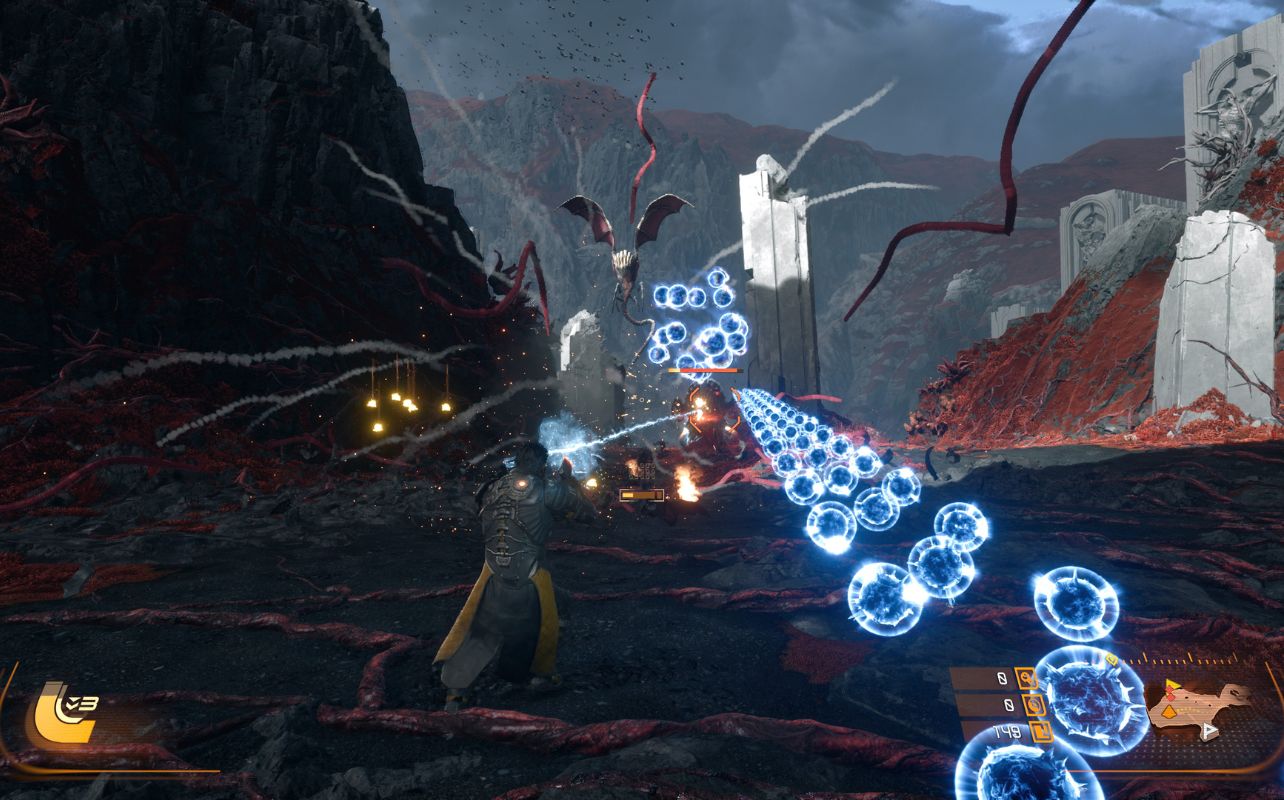
Level progress is all killer, less filler
I also liked the way Saros reduces repetition through its structure. The ability to revisit unlocked biomes rather than always starting from square one gives the game more flexibility and keeps it feeling fresh.
Add in dynamic systems like the eclipse, which transforms the world into a more hostile and rewarding version of itself mid-run, and each session has a wonderful unpredictability. When the environment turns blood red and the intensity spikes, it creates those unforgettable “oh no, here we go” moments that Housemarque does best. It is stressful, thrilling, and just a little bit mean in the best possible way.
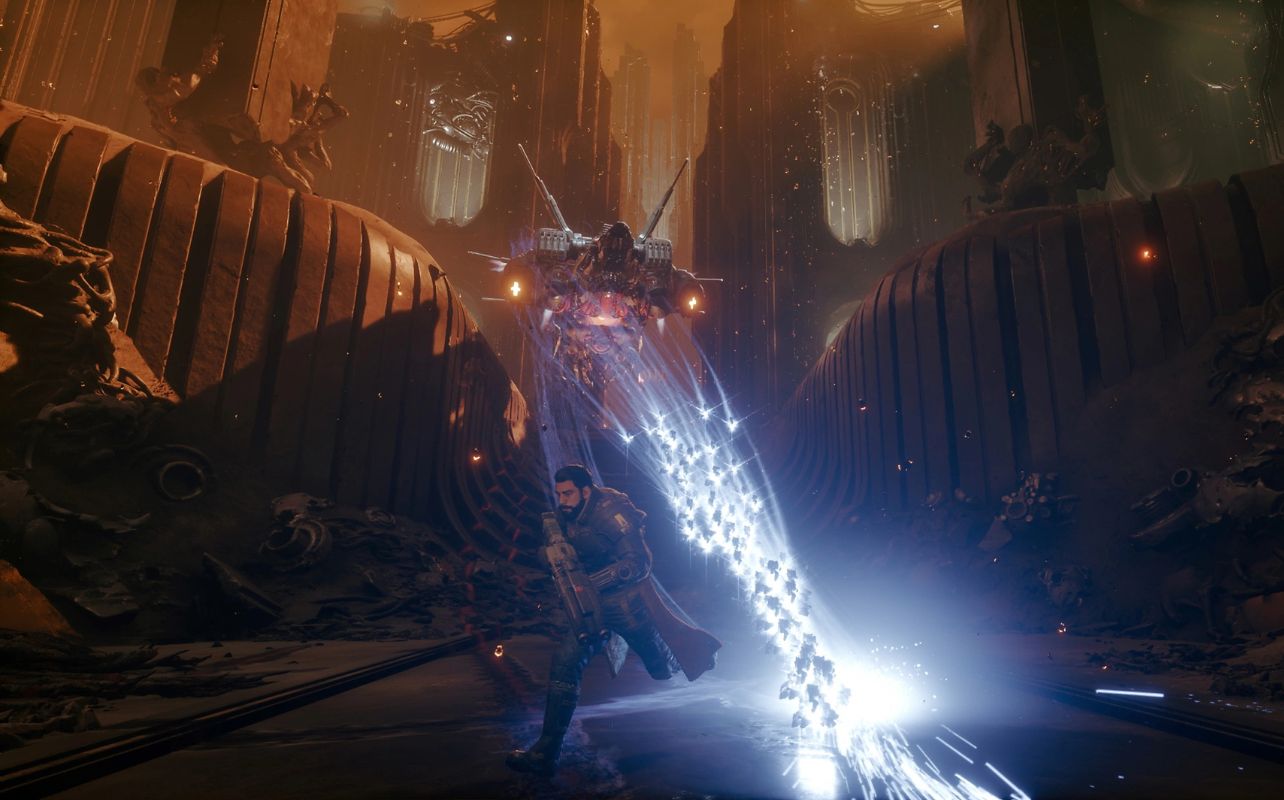
Saros graphics and performance: PS5 Pro puts on a show
Visually, Saros is stunning on the entire family of PlayStation 5 hardware. Housemarque has always excelled at spectacle, but this feels like a major step forward in atmosphere, cinematic presentation, and environmental design.
I was able to play Saros on both the PlayStation 5 and the PlayStation 5 Pro; overall, the PS5 Pro steals the show. There, I noticed that image clarity is much sharper, effects are dense and eye-catching, and the game’s use of lighting and reflections adds a lot to its eerie sci-fi tone.
Combat remains smooth and responsive, which is exactly where performance matters most in a game like this. Housemarque understands that fluidity is not optional for this style of shooter, and it shows. The 60fps gameplay target helps every dodge, dash, and burst of gunfire feel crisp and controlled.
Final thoughts on Saros
Saros feels like Housemarque at the top of its game. It takes the foundation of Returnal, one of my favourite roguelikes of the last several years, and builds on it in ways that feel thoughtful, exciting, and genuinely player-focused.
Saros still demands skill, precision, and resilience, but it balances all of that with systems that make failure feel productive rather than deflating. That is a difficult needle to thread, and Saros does it beautifully.
| Pros | Cons |
| Fast, fluid combat that builds brilliantly on Returnal’s bullet-hell foundation | Difficulty can still feel intense for less patient players |
Meaningful progression makes every run feel rewarding | Not all aspects of the plot come together |
Gorgeous visuals, strong atmosphere, and excellent PS5 Pro performance | Some players may prefer the harsher, more ridgid structure of Returnal |
Overall assessment of Saros
Gameplay: 4.5/5
Graphics: 4.5/5
Sound: 5/5
Lasting Appeal / Replayability: 4.5/5
Overall rating: 4.5/5 (90%)
If you love roguelikes, third-person shooters, or sci-fi horror, Saros is an easy recommendation. It is thrilling, rewarding, and one of the best PlayStation games I have played this year.