
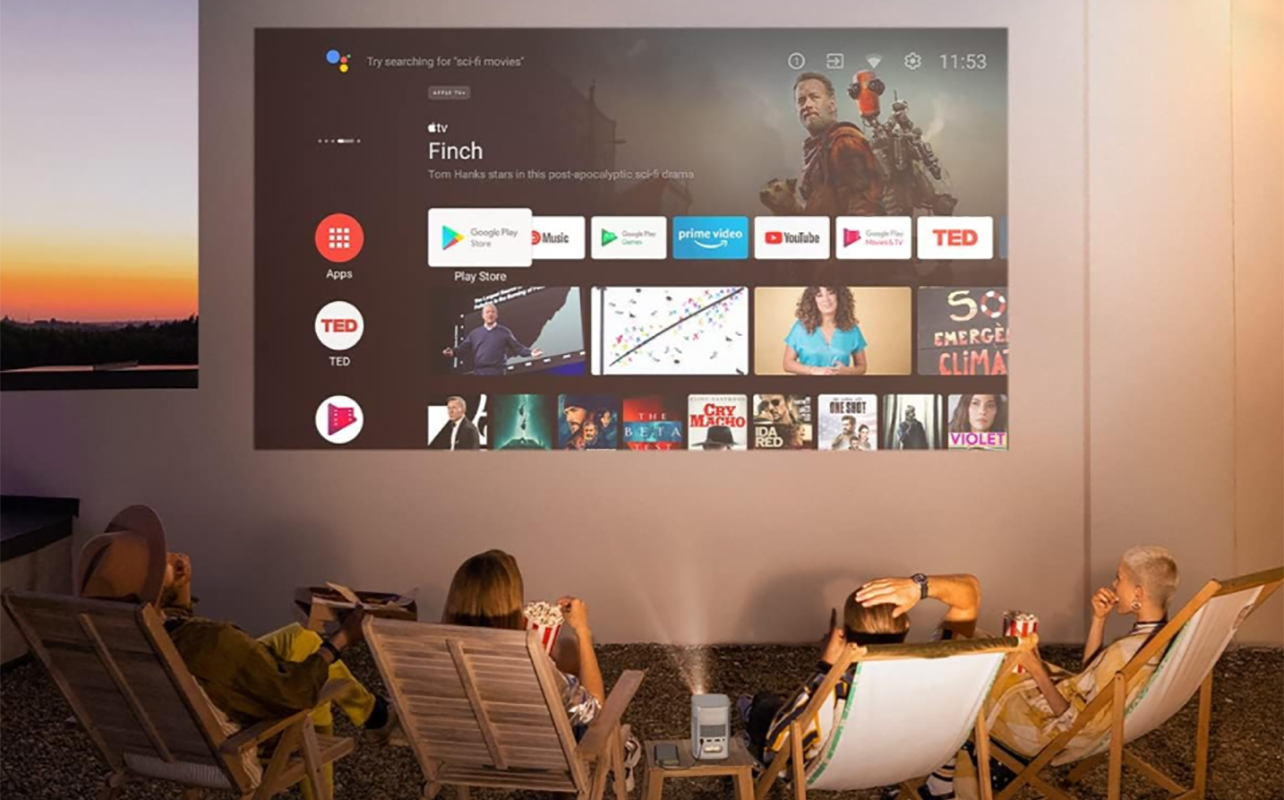
There’s something special about summer outdoor movie nights in Canada. The sun sets later, the air finally feels warm, and the backyard turns into the perfect place to gather with family or friends. Add popcorn, lawn chairs, and a great screen, and suddenly home feels like a private cinema. For your outdoor entertainment setup, should you choose an outdoor TV or an outdoor projector?
Here’s the quick answer: If you want something that works during the day, handles changing weather, and is always ready to go, an outdoor TV is a smart choice. If you want a big-screen movie-night experience and don’t mind setting things up when needed, an outdoor projector is often the better fit.
The best option depends on how you plan to enjoy your outdoor space. Let’s break it down so you can choose with confidence.

Table of contents:
- What is an outdoor TV?
- What is an outdoor projector?
- Outdoor TV vs outdoor projector: Key differences that matter
- When an outdoor TV makes more sense
- When an outdoor projector is the better pick
- Outdoor TV vs outdoor projector: which should you choose?
- FAQs

What is an outdoor TV?
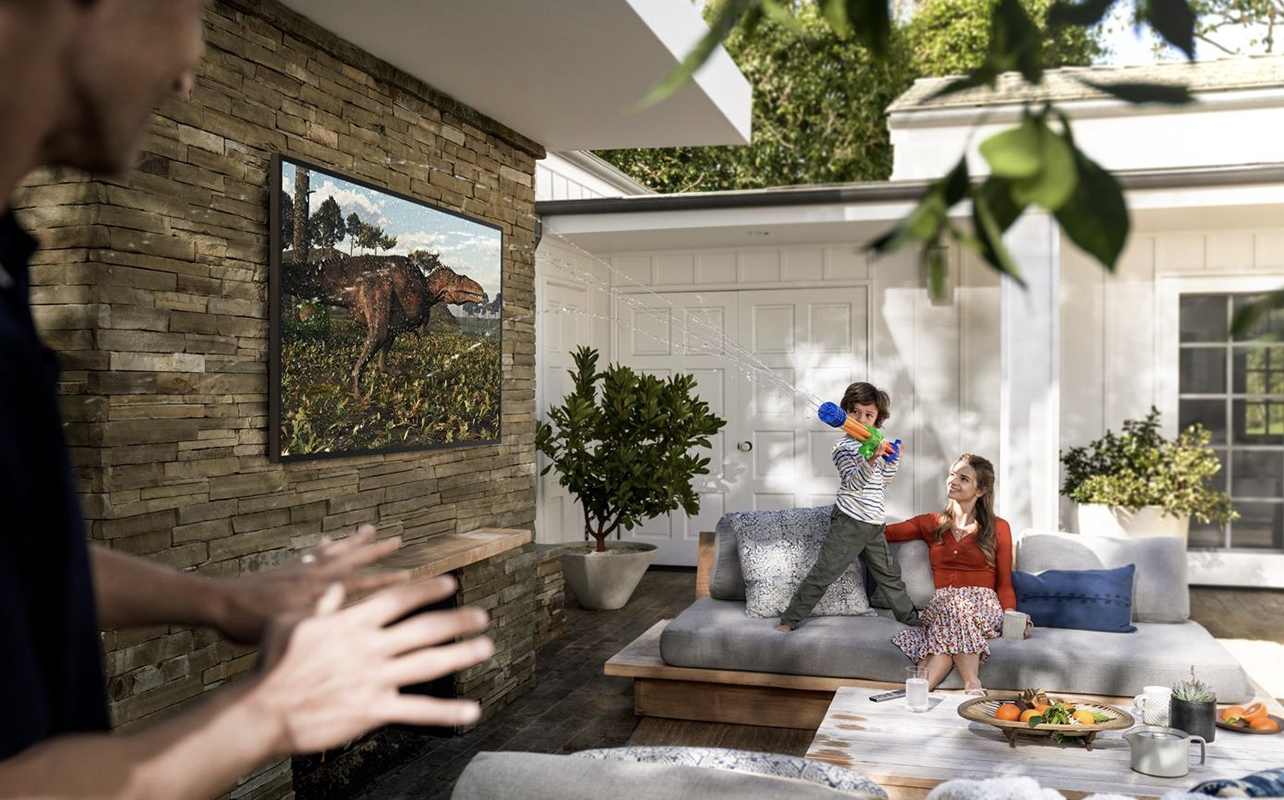
An outdoor TV is a television specifically designed to handle outdoor conditions. Unlike a regular indoor TV, it’s built to deal with weather, temperature changes, and bright sunlight. What makes it different comes down to a few key features.
- High brightness: Brightness is measured in nits, and outdoor models can reach 1,000 to over 3,000 nits. That extra brightness helps the picture stay visible even in direct sunlight. For comparison, most indoor TVs sit somewhere between 300 and 600 nits.
- Weather-resistant design: Many outdoor TVs protect against rain, dust, humidity, and even insects. Some are rated for full sun, while others are designed for shaded or partially covered areas.
- Anti-glare screens: If you’ve ever tried watching a regular TV outside, you’ll know how reflections can ruin the picture. Outdoor TVs reduce glare so you can actually see what’s on screen.
With all these features, outdoor TVs are definitely worth considering. You can mount one on your patio wall, turn it on during a sunny afternoon, and watch a hockey game without squinting or adjusting the angle every few minutes.
What is an outdoor projector?
Projectors are popular because they can create massive screen sizes, often between 100 and 300 inches. That’s where the “backyard cinema” appeal really comes from. With a projector, you can project a movie or other content onto a surface, like a wall or a dedicated projector screen.
Look for outdoor projector features that can enhance your viewing experience.
- Brightness: Projectors often rely on lumens instead of nits to measure brightness. Lumens describe how much light the projector outputs. For outdoor use, especially in Canada where summer nights can still be fairly bright at dusk, you’ll want at least 2,500 ANSI lumens for a good experience. If you plan to start movies earlier in the evening, a brighter model can help produce a clearer image.
- Portability: Compact and lightweight models are easier to move between the house, backyard, cottage, or campsite. Battery-powered portable projectors can also be convenient if you don’t want to run extension cords across the patio.
- Weather resistance: Most projectors are not designed to stay outdoors so it’s best to bring them inside after use. However, some models or outdoor enclosures offer added protection from dust or moisture, which can be useful if your setup is exposed to the elements.
- Smart features: Many newer models include built-in streaming apps, autofocus, and automatic keystone correction. Keystone correction is a feature that straightens the image if the projector isn’t perfectly aligned with the screen.
In a typical setup, you might bring the projector outside, set up a screen or use a blank wall, connect a speaker, and start your movie once the sun goes down.
Outdoor TV vs outdoor projector: Key differences that matter
Here’s a quick summary of the key differences between outdoor TVs and outdoor projectors:
| Feature | Outdoor TV | Outdoor projector |
|---|---|---|
| Brightness | Excellent for daylight and sunny afternoons | Best after sunset or in darker lighting environments |
| Picture quality | Sharper image, stronger contrast, clearer details | Strong cinematic feel, quality depends on lighting and screen |
| Screen size | Fixed sizes, usually smaller than projector setups | Easily reaches 100″+ for big-screen viewing |
| Weather resistance | Built for outdoor use, handles changing conditions better | Most models need to be brought indoors after use |
| Setup | Quick and convenient, ready at any time | Requires positioning, screen setup, focus, and audio |
| Audio | Built-in speakers often usable for casual viewing | Usually benefits from external speakers |
| Portability | Generally mounted in one place | Many models are easy to move around |
| Upfront cost | Usually higher | Often lower starting price |
| Best for | Sports, daytime use, regular backyard viewing | Movie nights, special events, large-screen fun |
On paper, both options sound great. But when you’re actually using them in your backyard, a few key differences will shape your experience.
Brightness and daytime viewing
Outdoor TVs are designed to be watched in daylight. Whether it’s a sunny afternoon BBQ or an early evening game, the screen stays clear and visible. Projectors, on the other hand, struggle with ambient light. Even a bright projector will look washed out if the sun is still up. They perform best after sunset or in very dark conditions.
If you want to watch a Blue Jays game at 2 p.m. while the kids run around outside, an outdoor TV handles that easily. A projector would look faint and hard to see. But if you’re planning a movie night at 9:30 p.m., the projector suddenly shines—literally and figuratively.
Picture quality and screen size
Outdoor TVs deliver a sharper, more consistent image. You’ll usually get better contrast, more accurate colours, and clearer details, especially in bright scenes or daylight viewing. This can make a difference when watching sports, where fast movement and crisp details help you follow the action.
Projectors trade some of that precision for size and immersion. Watching a movie on a 120-inch or 150-inch screen feels very different from watching it on a 65-inch TV. While projector image quality has improved significantly, the final result can depend on lighting conditions, screen quality, and projector brightness. At night, many projectors look excellent and highly cinematic.
Weather resistance and durability
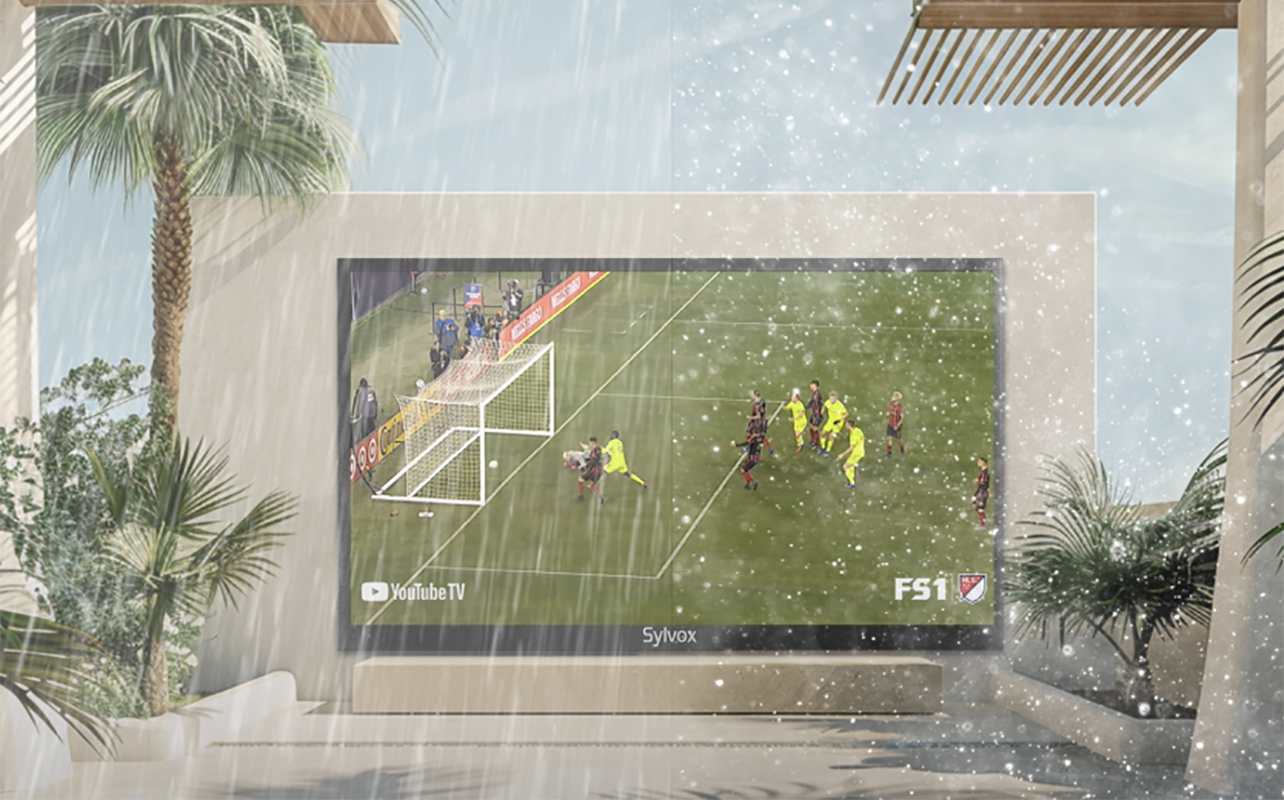
Outdoor TVs are built to stay outside. Many can handle rain, dust, and temperature swings, which is important in Canada where weather can change quickly. Most projectors are not weatherproof. You’ll need to bring them inside after each use or store them in a protected space.
Imagine leaving your setup out overnight. An outdoor TV can handle a sudden drizzle. A projector cannot. This difference alone makes outdoor TVs appealing for permanent setups.
Setup and ease of use
Outdoor TVs are simple. Once installed, they’re basically plug-and-play. Turn them on, open your streaming app, and you’re ready to watch. That convenience is a major advantage if you want to step outside and start a show or game without any extra effort.
Projectors require more setup each time. You’ll need to position the projector, set up or unroll a screen if needed, adjust focus and alignment, and connect audio. It’s not overly difficult, but it does take a few extra minutes before the entertainment begins.
If you like the idea of spontaneous viewing, an outdoor TV is far more convenient. If you enjoy the ritual of setting up a movie night and creating a special event, a projector can actually add to the experience.
Audio performance
Sound matters outdoors. Outdoor TVs usually have built-in speakers that are decent enough for casual viewing. However, open-air environments make sound dissipate quickly, so adding a sound bar or outdoor speakers is still a good idea.
Projectors almost always benefit from external audio. Their built-in speakers tend to be weaker, especially for larger spaces. Picture hosting friends for a movie. With a projector, you’ll likely want a Bluetooth speaker or sound system to match the big screen. Otherwise, the audio won’t keep up with the visuals.
Cost and overall value
Outdoor TVs typically cost more upfront. You’re paying for features like weather resistance, higher brightness for daytime viewing, and the convenience of a display that can remain installed outdoors.
Projectors can be more affordable to start, but the complete setup can add to the final price. Depending on your needs, you may also need a projector screen, external speakers, and mounts or stands. Over time, that price gap can narrow more than some buyers expect.
The real value comes down to how often and when you plan to use it. If you’ll watch frequently during the day or want something always ready to go, an outdoor TV can be worth the investment. If it’s mainly for occasional movie nights or seasonal use, a projector can be a more budget-friendly choice.
When an outdoor TV makes more sense
An outdoor TV is the better choice if your goal is everyday usability. It works especially well for households that want to use the backyard as an extension of the living room. An outdoor TV is perfect if you:
- Want to watch during the day or early evening: Brighter screen is easier to see in sunlight
- Plan to install a permanent setup: An outdoor TV is designed for long-term placement in patios, decks, or covered outdoor areas
- Prefer something low-maintenance: Instead of setting up equipment each time, you simply turn it on and start watching
- Have a covered patio or outdoor kitchen: It easily becomes the centrepiece for sports nights, casual streaming, or entertaining guests
Read our comparison of two of the most popular outdoor TV models, the Samsung The Terrace and Sylvox outdoor TVs.
When an outdoor projector is the better pick
A projector is all about experience. It’s the right fit for people who want their backyard entertainment to feel memorable and cinematic. It’s the right fit if you:
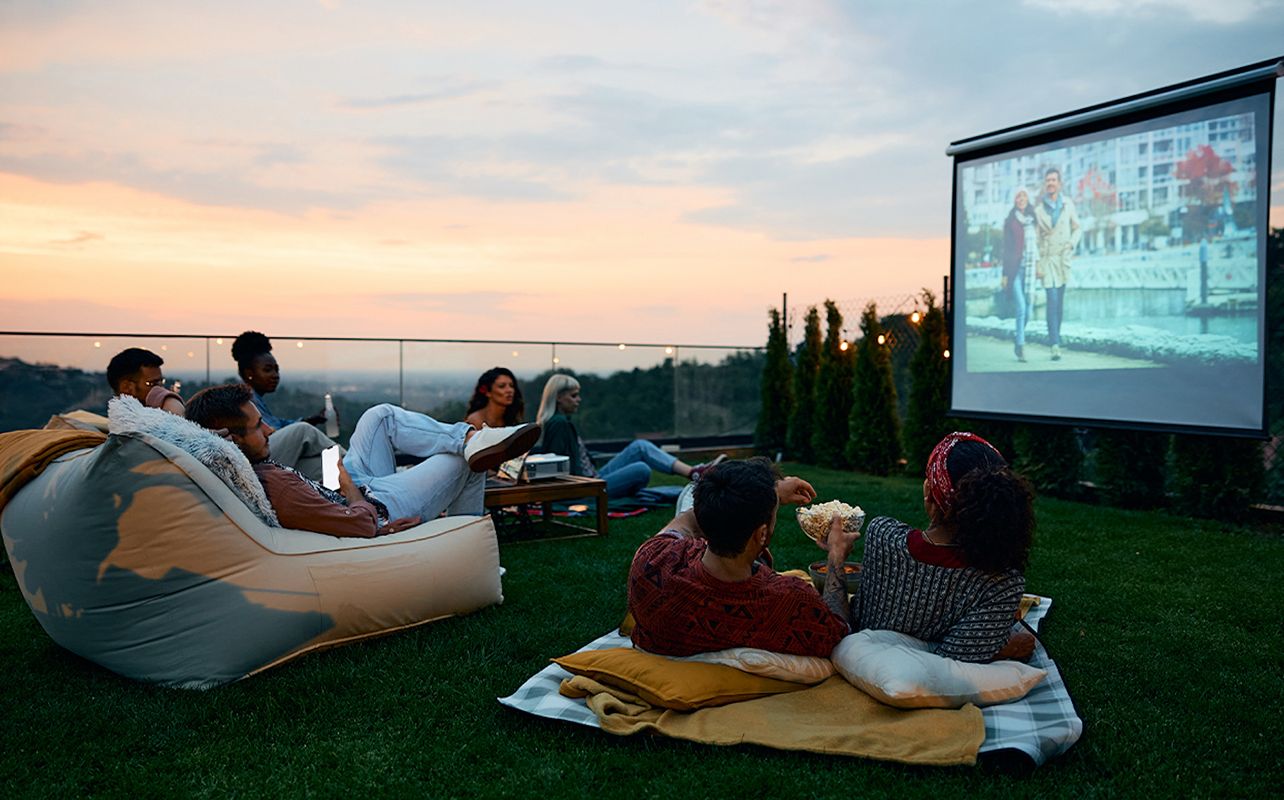
- Love movie nights under the stars: A projector creates the kind of oversized screen that makes films feel more immersive
- Want a huge screen size: It’s hard to beat the value of projecting 120 inches or more without paying for an equally massive TV
- Don’t mind setting things up each time: For some people, rolling out the screen, arranging seating, and dimming the lights is part of the fun
- Prefer something portable: Many projectors can move easily between the backyard, cottage, garage, or campsite
Can you combine both?
If you have the space and budget, some people go for a hybrid setup. They use an outdoor TV for daytime viewing and a projector for nighttime movie sessions. It’s a premium approach, but it gives you the best of both worlds.
Outdoor TV vs outdoor projector: which should you choose?
Think about how you want your backyard to feel this summer.
Maybe it’s the place where the family watches a game while dinner cooks on the grill. Maybe it’s where you unwind after work with a show and a cool drink. If that sounds like your style, an outdoor TV makes a lot of sense. It’s easy to use, bright enough for daytime viewing, and ready whenever the mood strikes.
Or maybe you’re picturing blankets on the lawn, neighbours dropping by, kids staying up late, and a favourite movie playing on a giant screen under the stars. If that’s the experience you want, an outdoor projector delivers something special.
The best choice is the one that matches the way you want to spend your summer
FAQs
Can I use a regular indoor TV outside?
A regular indoor TV is not designed for long-term outdoor use. It’s more vulnerable to moisture, dust, insects, and temperature changes. They’re also usually not bright enough for sunny conditions. If you plan to watch outside regularly, an outdoor TV is the better investment.
Do outdoor projectors work during the day?
Most outdoor projectors work best after sunset or in dark lighting environment. Daylight and bright ambient light can wash out the image, making it harder to see. If you want to watch during the afternoon or early evening, choose a brighter projector or consider an outdoor TV instead.
How many lumens do I need for an outdoor projector?
For outdoor viewing, around 2,500 ANSI lumens is a good starting point for evening viewing. A brighter projector can help produce a clearer image.
Does an outdoor TV need to be covered?
Many outdoor TVs are built to handle weather, but using a cover when the TV is not in use can still help protect the screen and keep it cleaner. A cover can also reduce wear from dirt, pollen, and seasonal conditions.
What’s better for movie nights: an outdoor TV or projector?
If your goal is a true cinema-style experience, a projector is for you as it can create a much larger, immersive image. If you prefer quicker setup, sharper picture quality, and something ready anytime, an outdoor TV may be the better fit.

This article was drafted using AI technology and then reviewed, fact-checked, and revised by a member of our editorial team.