
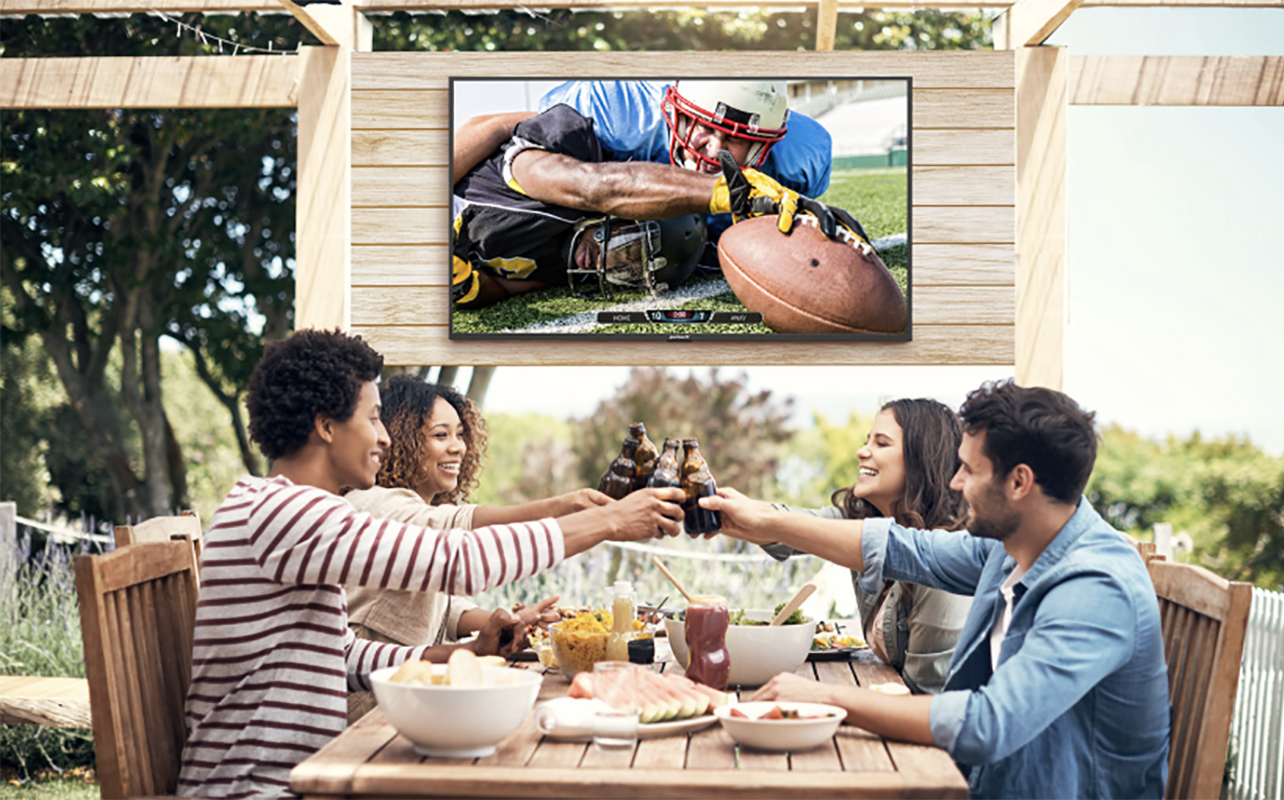
Watching the big game on the patio. Streaming a show while relaxing in the hot tub. Sunday morning cartoons on the deck while grilling breakfast. Outdoor entertainment spaces have become more popular in homes across Canada. Do you need an outdoor TV to make it work?
You might think you can simply move an old indoor television outside and call it a day. But outdoor environments are tough on electronics. Sunlight, rain, temperature swings, and humidity can quickly damage equipment that wasn’t designed for the elements. And when you live in Canada, the elements are not only seasonal and can reach extremes, they’re also unpredictable.
What makes an outdoor TV different than a regular TV? What are the practical considerations before buying one? In this guide, we’ll walk you through features that make a TV rated for outdoors and how to choose the right model for your patio, deck, or backyard setup.


What is an outdoor TV?
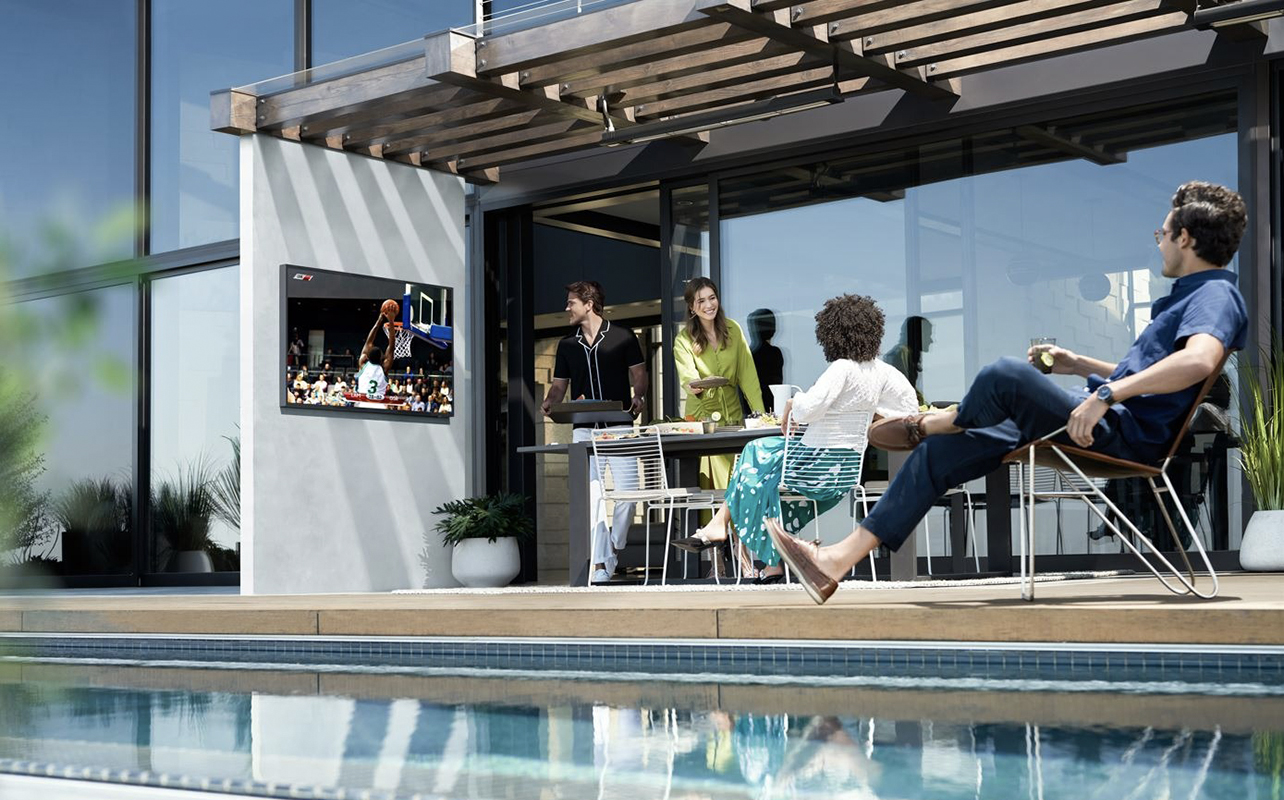
An outdoor TV is specifically engineered to operate safely and reliably outside. Unlike indoor televisions designed for living rooms and bedrooms, outdoor models are built to withstand weather, temperature changes, and bright sunlight. The screen, electronics, and connections are sealed inside a durable cabinet that shields them from moisture, dust, and insects. The materials used are also rust-resistant to prevent corrosion from rain or humidity.
This design allows outdoor TVs to function in environments where normal televisions would fail. For example, if you install a regular TV on a patio wall, even a small amount of moisture or temperature fluctuation can cause internal damage over time. Outdoor TVs are built to handle these conditions while maintaining picture quality.
Most outdoor TVs also have much brighter screens and anti-glare technology so that sunlight doesn’t wash out the image and you can comfortably see the picture during the day.
Outdoor TV vs indoor TV: what makes them different
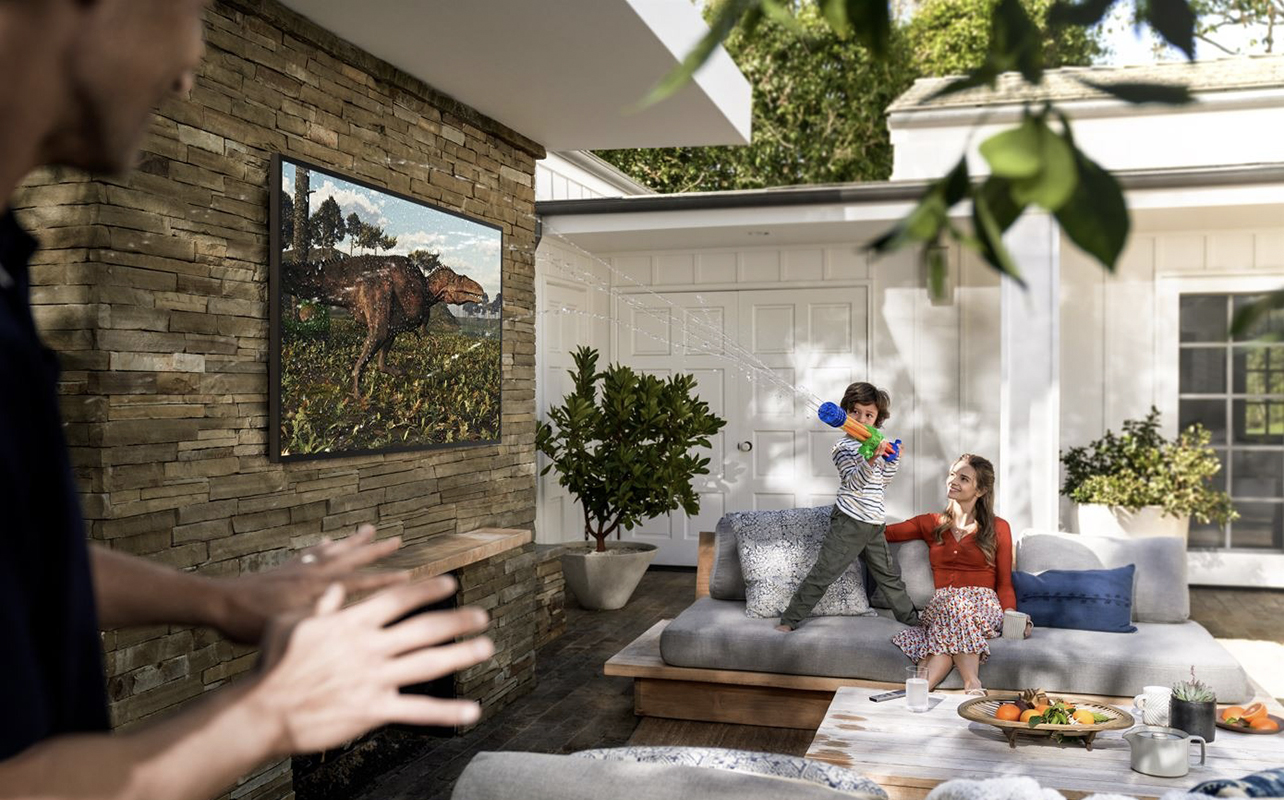
At a glance, outdoor and indoor TVs can look similar. Both have flat screens, streaming apps, and familiar interfaces. But under the hood, the engineering is very different. Indoor TVs are not recommended for outdoor use for several reasons. Exposure to rain, humidity, and temperature extremes can damage internal components. Bright sunlight also makes indoor displays difficult to see, and using them outside may void the manufacturer warranty.
Understanding what makes an outdoor TV different helps explain why they exist in the first place.
1. Construction and weather resistance
Outdoor TVs are designed with sealed enclosures that prevent moisture and debris from reaching the electronics. These enclosures often carry an IP rating, which indicates the level of protection against dust and water. For example, the ports on outdoor TVs are typically protected by weather-resistant covers. Internal components are shielded from humidity, and the outer casing is built using corrosion-resistant materials such as aluminium or powder-coated steel. Indoor TVs, on the other hand, are designed for climate-controlled environments. Even a light drizzle or morning condensation can eventually lead to electrical issues.
Are outdoor TVs waterproof?
Technically, most outdoor TVs are water-resistant rather than waterproof. That’s where IP ratings come in. IP ratings describe how well a device resists dust and water. Common ratings you’ll see on outdoor TVs include:
- IP54: Protection from dust and light water splashes
- IP55: Resistant to rain and low-pressure water spray
- IP56: Resistant to more powerful water jets
- IP65: Higher level protection from dust and water exposure
These ratings mean outdoor TVs can handle rain, humidity, and splashes from pool areas. However, they are not designed to be submerged in water. Models that meet IP55 and IP56 rating, like the Samsung The Terrace TV, can withstand higher-power water jets—but you should still try to avoid this if possible. With any outdoor TV, if a summer storm rolls through while you’re watching a game on the deck, for example, a properly installed outdoor TV with a suitable IP rating should continue operating safely.
2. Temperature and element protection
Outdoor environments in many parts of the country can be harsh, especially with seasonal temperature swings. That’s why outdoor TVs are built to operate across wider temperature ranges than indoor models. Some can function in freezing winter conditions or intense summer heat without damaging internal electronics. Check the temperature rating of the TV as it will tell you the minimum and maximum operating temperature, which can help you decide what you need based on the climate in your city.
Some premium outdoor TVs include built-in heating systems that prevent condensation and keep internal components warm enough to operate in cold weather. Others incorporate internal fans or ventilation systems that prevent overheating during hot afternoons. These features allow outdoor TVs to remain installed year-round, even in climates with significant seasonal variation.
3. Screen brightness and glare handling
Sunlight is one of the biggest challenges when watching TV outside. Indoor televisions typically produce brightness levels between about 300 and 700 nits. That’s perfectly fine for living rooms but nowhere near enough to overcome outdoor sunlight. Outdoor TVs are much brighter. They often feature specialized panels and anti-glare coatings that reduce reflections and improve visibility in bright environments. This extra brightness is essential for daytime viewing. Without it, the image would appear washed out or nearly invisible.
How many nits are needed for an outdoor TV?
If you’re researching how many nits for outdoor TV brightness is ideal, the answer depends on where the TV will be installed. Outdoor viewing spaces generally fall into three categories:
- Full shade (about 700–1,000 nits): If the TV will be installed in a fully covered space such as a screened porch or gazebo, lower brightness may work.
- Partial sun (about 1,000–2,000 nits): Many patios and decks receive some sunlight throughout the day. In these environments, a brighter screen is helpful to maintain visibility when sunlight hits the display.
- Full sun (2,500 nits or more): Areas exposed to direct sunlight require the brightest outdoor TVs available. These models are specifically designed to remain visible even in strong daylight conditions.
For example, if your patio faces west and receives strong afternoon sun, choosing a higher-brightness outdoor TV will make a significant difference in picture clarity.
How much does an outdoor TV cost?
Outdoor televisions generally cost more than standard indoor models because of their specialized construction and brightness technology.
- Entry-level outdoor TVs typically start around $1,500 to $2,000 depending on size and features.
- Mid-range models with higher brightness levels and improved weather protection often fall between $2,500 and $4,500.
- High-end outdoor TVs designed for full-sun installations can cost $5,000 or more, especially for larger screen sizes.
It’s also important to consider accessories when planning your budget. Outdoor installations may require weatherproof mounts, protective covers, and professional installation depending on the setup. You might want to consider an outdoor-rated sound bar as well for enhanced audio, or rugged wireless speakers.
Are outdoor TVs worth it?
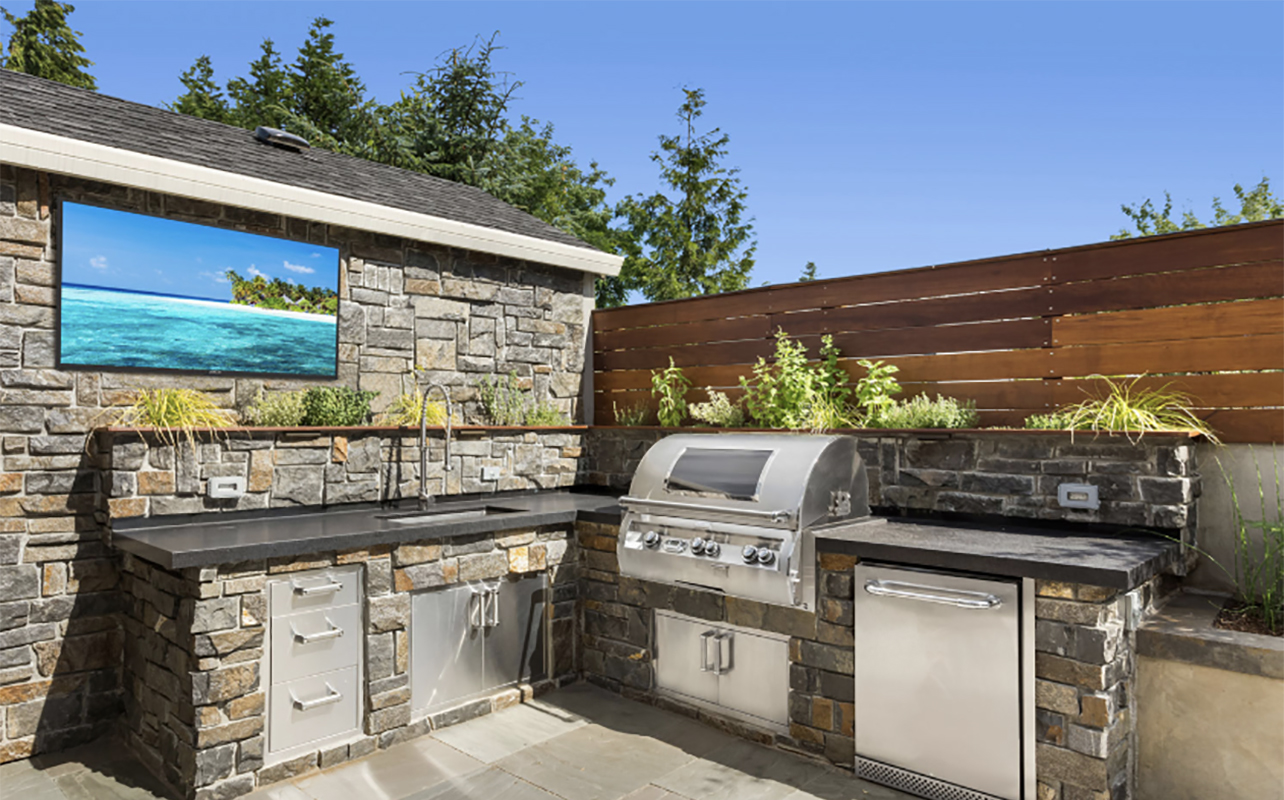
For many homeowners who frequently entertain or spend time outdoors, the answer is yes. But it depends on how you plan to use the space.
| Pros | Cons |
| They’re designed to withstand rain, humidity, and temperature swings | Many models can be more expensive than indoor models |
| Brighter displays remain visible in daylight | Installation can require additional hardware or electrical work |
| Weather-resistant construction allows long-term outdoor installation | In some cases, professional installation may be recommended to ensure proper weatherproofing and cable routing. |
If you regularly host gatherings, watch sports outside, or want a permanent outdoor entertainment space, an outdoor TV can be a worthwhile investment. You may also find that once you have an outdoor TV, you watch it more than you thought you would. It could be for Sunday morning breakfast with the family while you grill bacon and pancakes outside, weekend gatherings with the neighbours to watch the game or an event, or even casual workdays at home when you want to get some sun while you watch the news and work on your laptop.
How to protect your outdoor TV
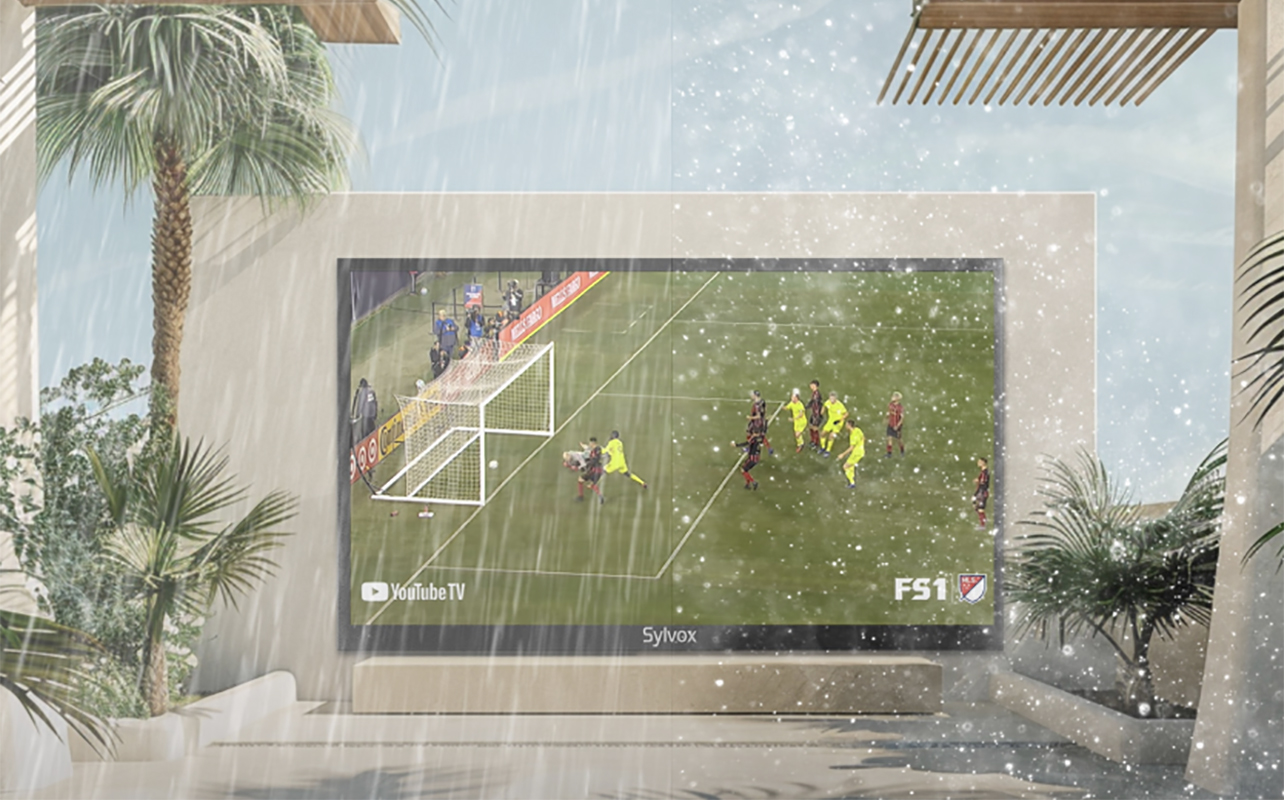
Even though outdoor TVs are built for the elements, taking a few extra precautions can extend their lifespan.
Mounting and placement tips
Proper placement makes a big difference. Whenever possible, install the TV in a shaded location such as under a patio roof, pergola, or covered deck. This helps reduce direct sunlight on the screen and minimizes exposure to rain. The direction the TV faces also matters. Avoid mounting it where the sun will shine directly on the display during peak viewing hours.
Covers and weatherproof accessories
Many outdoor TV owners also use protective covers when the TV is not in use. A weather-resistant cover adds another layer of protection against rain, snow, dust, and debris. This is particularly helpful during long periods when the TV isn’t being used, such as winter months. Usually, manufacturers offer fitted covers for each TV model but they are sold separately. They can be expensive, but they are worth it. Keeping the TV covered any time it’s not being used, or during the off-season, can help prolong its life.
Cable and power safety
Outdoor electrical setups require proper planning. All cables, outlets, and connections should be rated for outdoor use. Weatherproof cable covers and sealed electrical boxes help prevent moisture from entering the system. Proper grounding and surge protection are also recommended to protect electronics during storms.
Alternatives to outdoor TVs
If you’re interested in backyard entertainment but working with a tighter budget, there are alternatives to consider. Some people attempt to use indoor TVs outside with protective enclosures. While this can offer some protection, it still carries risk because indoor electronics aren’t designed for humidity or temperature fluctuations. This is why experts generally advise against relying on indoor TVs outdoors long term.
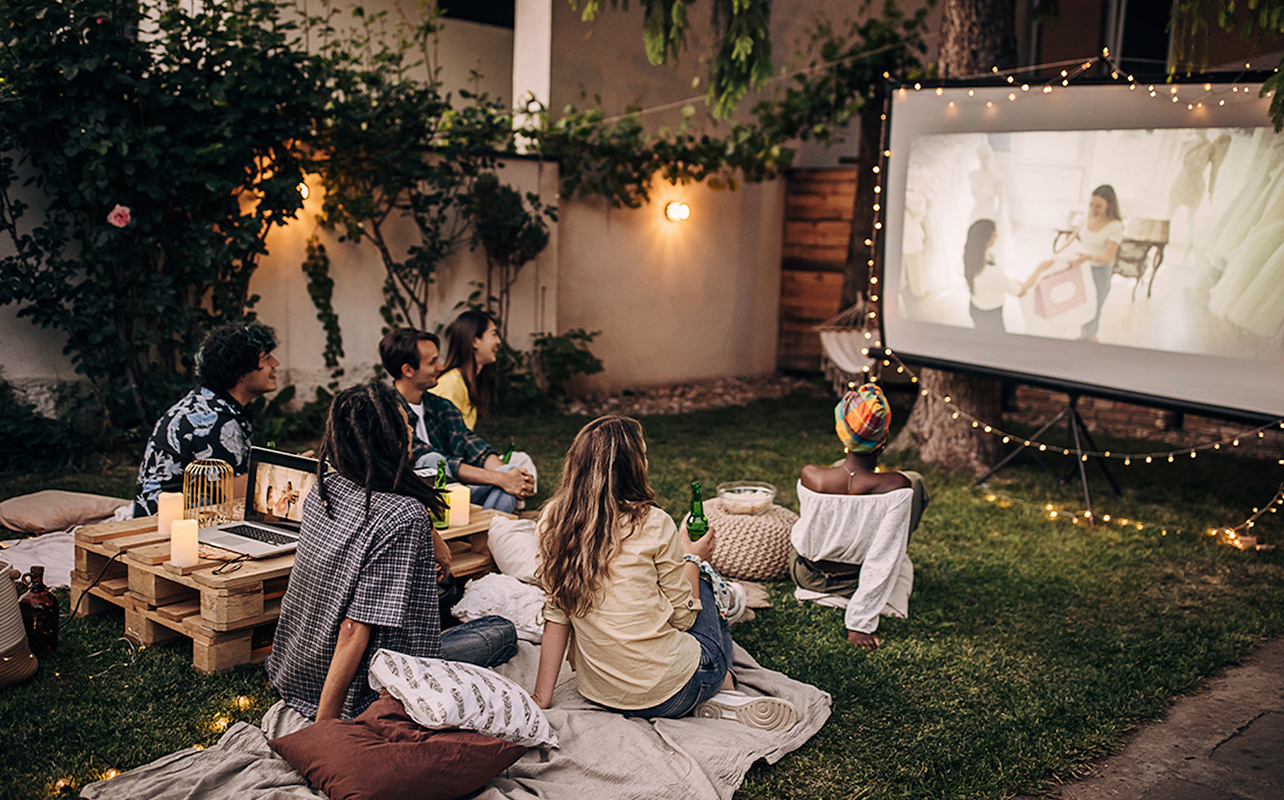
Another option is an outdoor projector setup. If you’re up for a backyard movie night with large a screen, a projector can be more affordable depending on the setup. However, they work best after sunset since daylight can wash out the picture. Plus, you need a projector screen as well, or a plain white or light-coloured surface on which to project.
Outdoor TV FAQs
Got more question on outdoor TVs? Here are some frequently asked ones:
What size outdoor TV should I get?
Choosing the right size depends on viewing distance and seating layout. Outdoor seating areas often place viewers farther from the screen compared to indoor living rooms. Because of this, larger screen sizes usually work better outside. Ambient light also reduces perceived screen size. A TV that looks large indoors may feel smaller in an open outdoor space. When planning your setup, consider the typical distance between seating and the screen, as well as the overall layout of the patio or backyard.
Can you leave an outdoor TV outside in the winter?
Most outdoor TVs are designed to tolerate cold temperatures. However, the exact range varies by manufacturer. In Canadian climates, it’s a good idea to use a protective cover during winter months. If extreme conditions are expected, some homeowners choose to remove the TV temporarily and store it indoors. Always check the manufacturer’s recommended temperature range before leaving an outdoor TV exposed to freezing conditions. But in most cases, the outdoor TV is made to withstand these elements.
Can you use an indoor TV outdoors?
Technically, you can temporarily move a television outside for an event or short-term use. However, indoor TVs are not designed to handle moisture, temperature changes, or direct sunlight. Over time, exposure to these elements can damage the screen or internal electronics. Bright sunlight also makes indoor TVs difficult to see. Using an indoor TV outside may also void the manufacturer warranty. For permanent outdoor installations, a purpose-built outdoor TV is strongly recommended.
Can you mount an outdoor TV like a regular TV?
Yes, outdoor TVs can usually be mounted similarly to indoor televisions. However, the mounting hardware must be designed for outdoor use. Weatherproof mounts made from stainless steel or corrosion-resistant materials help prevent rust. Proper wall sealing and cable management are also important to keep moisture from entering the structure. In some cases, professional installation is recommended to ensure the setup is safe and properly weather-sealed.
Is an outdoor TV better than a projector?
Outdoor TVs and projectors serve different purposes. Projectors are great for occasional movie nights and can produce very large images when paired with a screen. However, they typically struggle in daylight because brightness levels are measured in lumens and aren’t strong enough to compete with sunlight.
Outdoor TVs are much brighter and designed to remain visible in daylight. They’re also weather-resistant and can stay mounted outside permanently. Projectors, on the other hand, usually need to be stored indoors when not in use and require additional setup each time. For everyday viewing such as sports, news, or streaming shows, outdoor TVs are often the more convenient option.
How do you get content on an outdoor TV?
Outdoor TVs are generally smart TVs just like your indoor ones, but you will need a Wi-Fi signal that reaches them in order to stream content. If your Wi-Fi network doesn’t reach outside where you plan to place the TV, you might want to consider upgrading or getting a Wi-Fi extender or Wi-Fi 6, 6E, or 7 router and mesh system that can extend your Wi-Fi to the outdoors. Alternatively, you can connect a device like a flash drive to the TV’s sealed port to watch content saved to it without needing a Wi-Fi connection.
Find a wide selection of outdoor TVs at Best Buy Canada.

This article was drafted using AI technology and then reviewed, fact-checked, and revised by a member of our editorial team.