
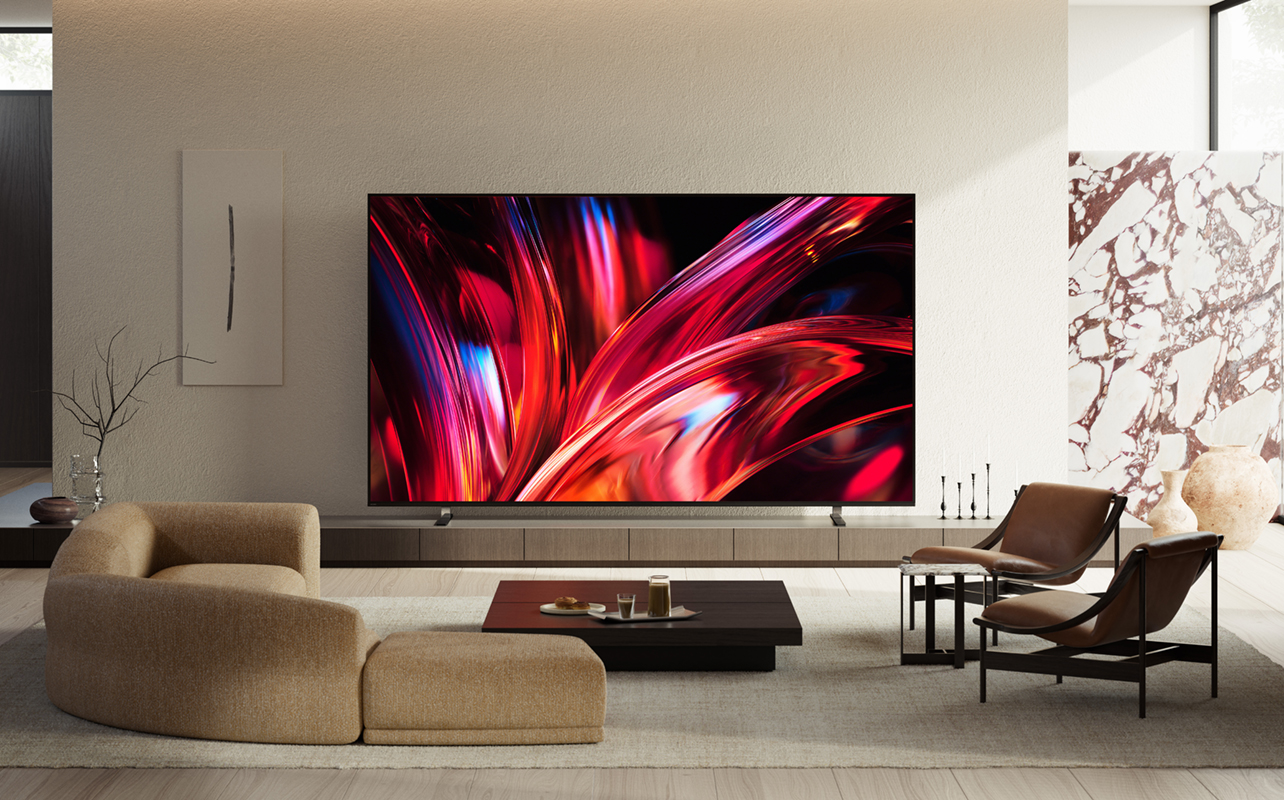
Sony is taking its own approach on RGB LED TV technology by using True RGB as its catch-all take on truly controlling a TV’s backlight. Sony has had prototype versions of this technology in Japan for years, except they couldn’t bring it to market at a consumer price point until now. Every LED television for the past decade has used blue light filtered through nanoparticles to approximate white. Sony’s new sets use independently controlled red, green, and blue LEDs in each backlight zone, contributing colour additively before the image even reaches the panel.
That’s four times the colour volume of a conventional mini-LED TV, up to 4,000 nits peak brightness on the flagship. More importantly, it can display premium HDR content at the brightness levels it was actually mastered for. Sony says no more tone mapping compromises that every previous display has had to make.
Time for an upgrade? Receive free Geek Squad delivery and installation with the purchase of an RGB LED TV.


My first impressions of Sony’s True RGB
Aside from Sony’s OLED TVs—which don’t have a backlight because pixels in OLED panels emit their own light—the company’s LED TV lineup has one thing in common: some form of backlighting. That comes in the form of blue light filtered through a layer of quantum dot nanoparticles or yellow phosphor, which then converts into something closer to white.
That white then passes through colour filters in the LCD panel, discarding most of it and leaving behind the red, green, or blue that forms each pixel on screen. In basic terms, Sony built a process that starts with white, takes away whatever’s deemed unnecessary, all with the hope that enough colour gets through over the course of this journey.
True RGB is designed to do it differently. The new BRAVIA 7 II and BRAVIA 9 II TVs are equipped with a backlight that can independently drive red, green, and blue LEDs per zone within the backlight panel itself. There’s no need to pull it from white and contribute colour more effectively. Sony says this delivers roughly four times the colour volume of a conventional mini-LED TV.
I can’t quantify how accurate those figures are but I did see a bare backlit panel using the technology. The small LEDs change colour based on what the content onscreen needs. Side-by-side with a traditional LED back panel emitting blue light, the contrast between them is super interesting. Since the lights emit colour based on the content playing, they come out with various colours rather than just one.
This means every small LED arrayed in that back panel doesn’t appear as red, green, and blue at all times. Not that you would be able to see it on a finished TV anyway. The premise here is to apply colour based on what the content needs. Without a quantum dot filter, colour accuracy and gradations can appear smoother and richer.
Sony demos can illustrate this further. With the LCD panel switched off, the RGB backlight in these new TVs produces a continuously shifting field of colour that tracks the content behind it. Think blues for sky, reds for warm scenes, greens for foliage. In comparison, a conventional mini-LED backlight under the same conditions produces white. That is the difference the processing and the independent diode control are delivering. From my own eyes, I can tell you it looks pretty interesting.
On the BRAVIA 7 II and BRAVIA 9 II TVs, I could see how how this kind of backlighting actively emits the warm reds and yellows of a sunset. Since the colour comes from the source rather than subtracted from white (through a filter), the colours are not only richer, but gradients also blend in together without blooming, fringing, or banding. That’s just one example but it can apply to just about any scene.
Both TVs include a new My Cinema preset system so users can save combined video and audio settings custom presets. It’s not clear how many presets you can save but its intent is to make using different picture modes easier. This way, instead of selecting specific ones for movies, sports, or gaming, you can easily pick one you created instead.
Upgrading your movies nights? Check out our feature on whether RGB LED TVs are better for watching movies and TV shows.
How Sony’s True RGB improves picture quality
While today’s content doesn’t maximize Rec. 2020 colour space (the standard for ultra-high definition TV), the RGB LED TV technology should have a similar impact to what HDR did years ago. In that case, reduced highlights and lifted shadows made content look cleaner and immersive. In this case, enhanced colour is simply drawing out what’s already there.
It’s one of the more compelling arguments for this RGB: it doesn’t require a new format to show itself. The HDR material already available, like Dolby Vision content from Netflix, Disney+, etc., has been mastered at brightness levels existing TVs can’t reproduce. Home releases sit between 1,000-4,000 nits, with more content pushing higher as studios embrace the standard.
Most TVs on the market, including OLEDs, could never hit 4,000 nits because they tone map the content down to fit within their capabilities. A TV that can actually reach the mastered brightness level doesn’t need to tone map at all. It just displays the signal as it was encoded. While there are nuances to this, it’s true that it’s the reverse in the sense that content has been waiting for TVs to catch up, rather than the other way around.
Even so, the Rec. 2020 colour space represents a wider gamut than current broadcast or streaming standards use. Up to now, almost nothing is mastered in it yet. Sony’s take is that building displays capable of reproducing it helps accelerate studios and creators making compatible content. Not only that, but the company believes colour makes a better case for widespread adoption than resolution does.
A fair point. We’ve had 8K TVs for years yet little content to show for it. A wider colour space requires no additional bandwidth. Plus, you can see the difference on any screen size at any viewing distance. And the HDR streaming pipelines and mastering workflows already exist. The RGB backlight simply allows that signal’s existing headroom to finally reach the screen as the colourist intended.
The Sony BRAVIA 9 II and BRAVIA 7 II are coming to Best Buy
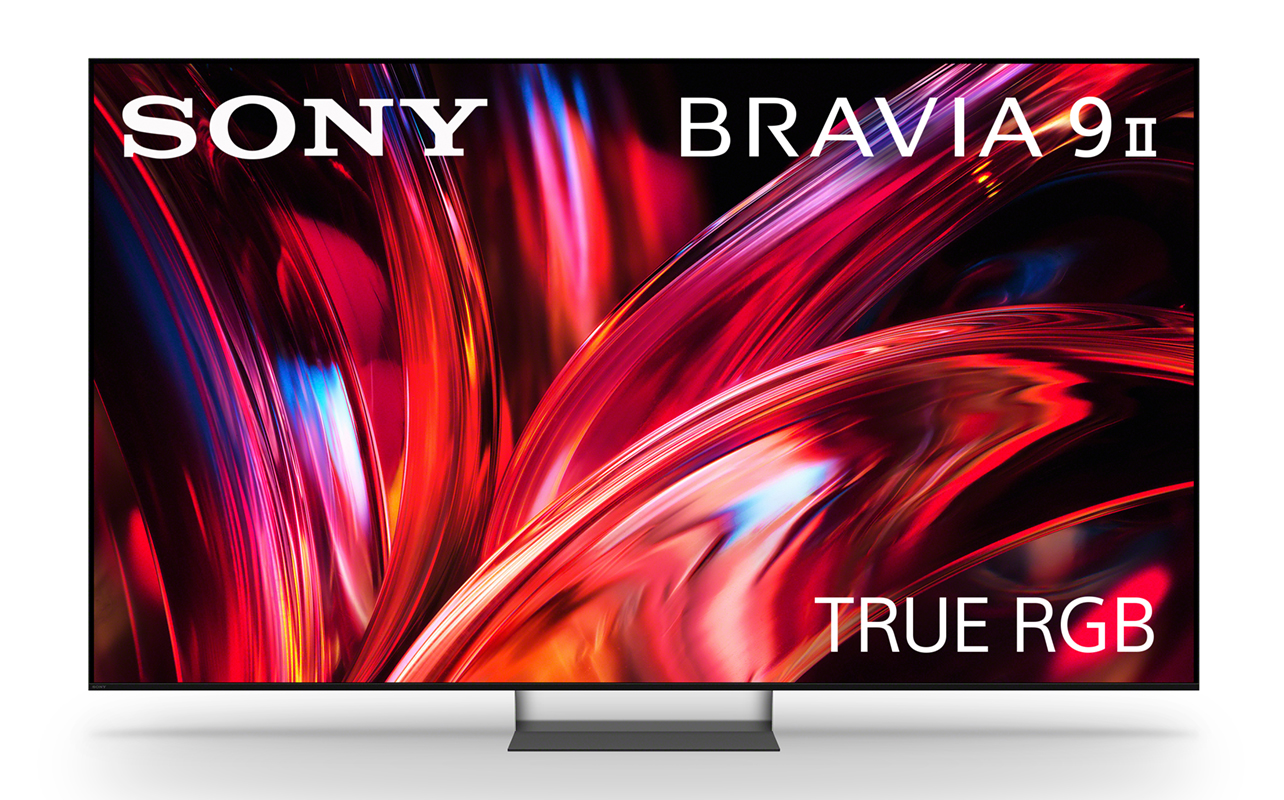
Sony is bringing True RGB to market in two models. The BRAVIA 7 II will be available in 50, 55, 65, 75, 85, and 98-inch sizes, starting at $2,299. The BRAVIA 9 II will come in 65, 75, 85, and 115-inch sizes, starting at $4,999.
Sony BRAVIA 9 II
The BRAVIA 9 II is Sony’s flagship and brightest TV to date. It carries the brand’s full suite of audio technology and picture processing. It comes with a new anti-glare panel coating called Immersive Black Screen Pro, a patent-pending nanostructure that reduces reflections without the fluctuating black levels that affected previous matte coatings. That coating only appears on the 65- to 85-inch sizes, as component constraints prevent Sony doing it for the 115-inch.
The backlight has 15,000 LED elements arranged in clusters of three—one red, one green, one blue. It delivers around 5,000 independent dimming zones. Each zone is also substantially denser than previous Sony flagship mini-LED sets, And that’s what enables the backlight to track the shape and movement of objects rather than simply illuminating broader regions of the screen.
Sony’s Cognitive Processor XR processor drives this, the same chip that’s been core to their flagship range since 2021. It handles the real-time colour calculations required by the RGB backlight while simultaneously managing upscaling, motion processing, and the XR Backlight Master Drive algorithm that Sony uses to control local dimming. The processor’s AI scene recognition also feeds into the system, identifying different types of content (sports, film, animation) in order to adjust what the backlight does accordingly.
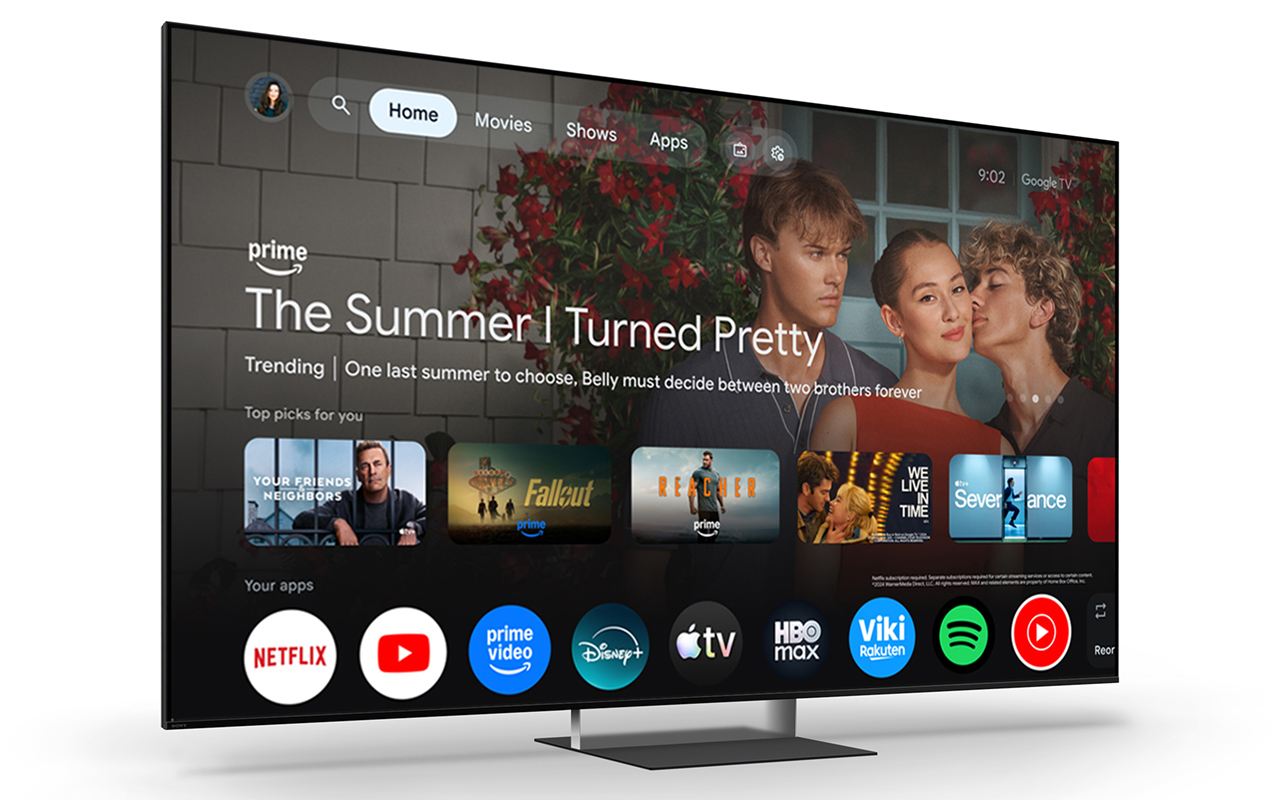
The BRAVIA 9 II runs on Google TV, with Gemini acting as the voice assistant throughout. That means it can access a range of TV-specific features, but we’ll know more about how far that goes soon. Sony says streaming services like Netflix, Prime Video and others will get their own dedicated picture calibration modes. There’s also IMAX Enhanced certification. A full suite of PlayStation-specific features, like Auto HDR Tone Mapping, Auto Genre Picture Mode are also in there, along with the standard optimizations when plugging in a PlayStation 5.
Two HDMI ports are 2.1 supporting 4K at 120Hz, so you can use the full bandwidth of a PlayStation 5 or Xbox Series X on any input. There’s support for Variable Refresh Rate and Auto Low Latency Mode. Sony even says that input lag in Game mode can compete with dedicated gaming monitors at these resolutions.
Sony BRAVIA 7 II
The BRAVIA 7 II uses the same RGB architecture and processing, only with a less dense LED backlight layout. Otherwise, the RGB backlight architecture and processor chip are exactly the same. You get 5,100 total elements for approximately 1,700 effective dimming zones. That means less control and lower peak brightness compare to the BRAVIA 9 II. In real terms, we’re talking 2,000 nits on the 65-inch model and 2,500 nits on the 75- and 85-inch sizes.
While you still get the full benefit of the colour space, there’s no anti-glare coating here and that might be more obvious in brightly lit rooms.
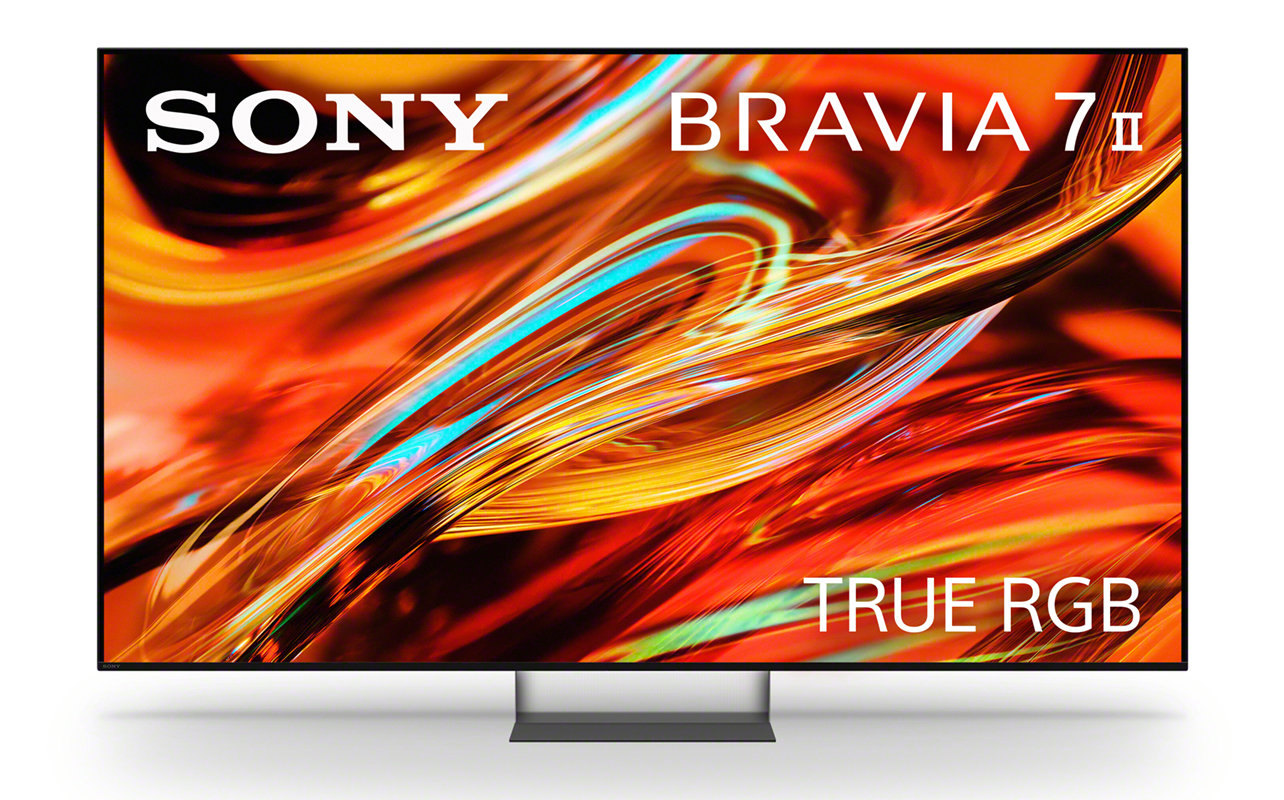
In practical terms, the BRAVIA 7 II isn’t quite able to hit the full 4,000-nit ceiling of the current Dolby Vision standard the way the BRAVIA 9 II can. It will need to apply some degree of tone mapping to the most demanding HDR content. Despite that, the additive backlight contributes saturated colour directly to the image rather than relying entirely on the panel’s filters.
Like the BRAVIA 9 II, the BRAVIA 7 II runs Google TV on the same Cognitive Processor XR, includes Dolby Vision and Atmos support, two HDMI 2.1 ports, PlayStation optimizations, and the new My Cinema preset system. Basically, both models include the same software and smart TV infrastructure, leaving the differences entirely in the panel, the backlight density, and the anti-glare treatment.
Where Sony’s RGB LED TV is closing the gap
Sony is making clear that it’s not positioning RGB as an OLED replacement. OLED remains the benchmark for deep black levels in dark-room conditions and wider viewing angles. Backlit LCD technology also can’t match the precise per-pixel control OLED delivers. In a pitch-black room, even Sony’s own reps acknowledge OLED may still be the right answer.
RGB is just closing the gap in areas where OLED has historically dominated. Taking away the quantum dot sheet with fewer conversion layers between the backlight and your own eyes makes a noticeable difference compared to conventional mini-LED TVs. OLEDs employ automatic brightness limits in brighter environments that wouldn’t be an issue with these TVs.