
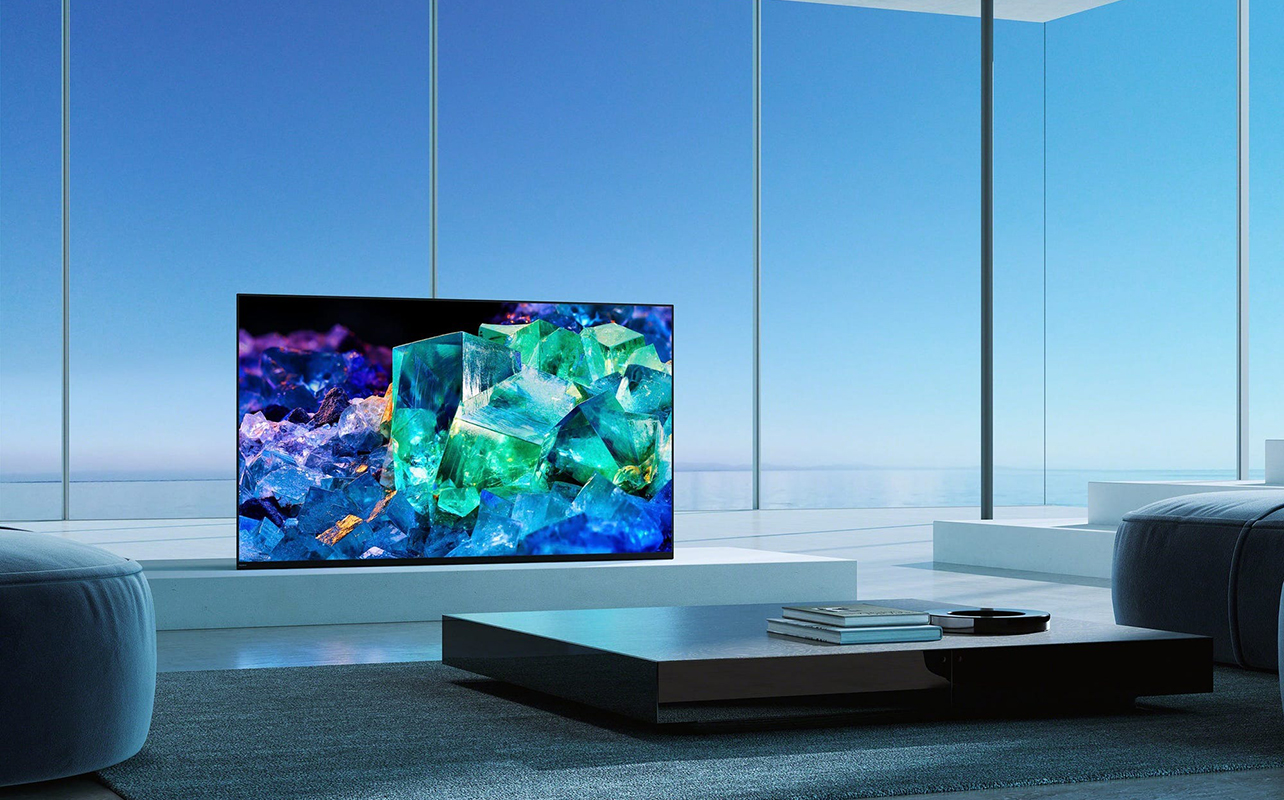
RGB LED TVs are expected to be the biggest advancement in televisions this year. While OLED has built a strong reputation for cinematic picture quality, offering a movie theatre-like experience at home, RGB LED is designed to address some of the limitations of traditional LED TVs while pushing brightness and colour performance even further. In this guide, we’ll break down how RGB LED TV stacks up against OLED TVs by examining the factors that matter most, from brightness to black levels and colour performance.
Time for an upgrade? Receive free Geek Squad delivery and installation with the purchase of an RGB LED TV.


How are RGB LED TVs different from OLED and other TVs?
In this Talk Nerdy To Me episode, we break down what makes RGB LED TVs different, how they compare to OLED, and why they’re a breakthrough in TV technology.
What is an RGB LED TV?
An RGB LED TV is a new type of LCD-based display that replaces the traditional white backlight used in most LED TVs with separate red, green, and blue LEDs. The idea is simple: instead of shining white light through colour filters to create the image, RGB LED technology generates individual colour directly from the backlight itself. RGB LED TVs combine the brightness of LED TVs with improved colour accuracy and contrast.
Two types of RGB LED TVs
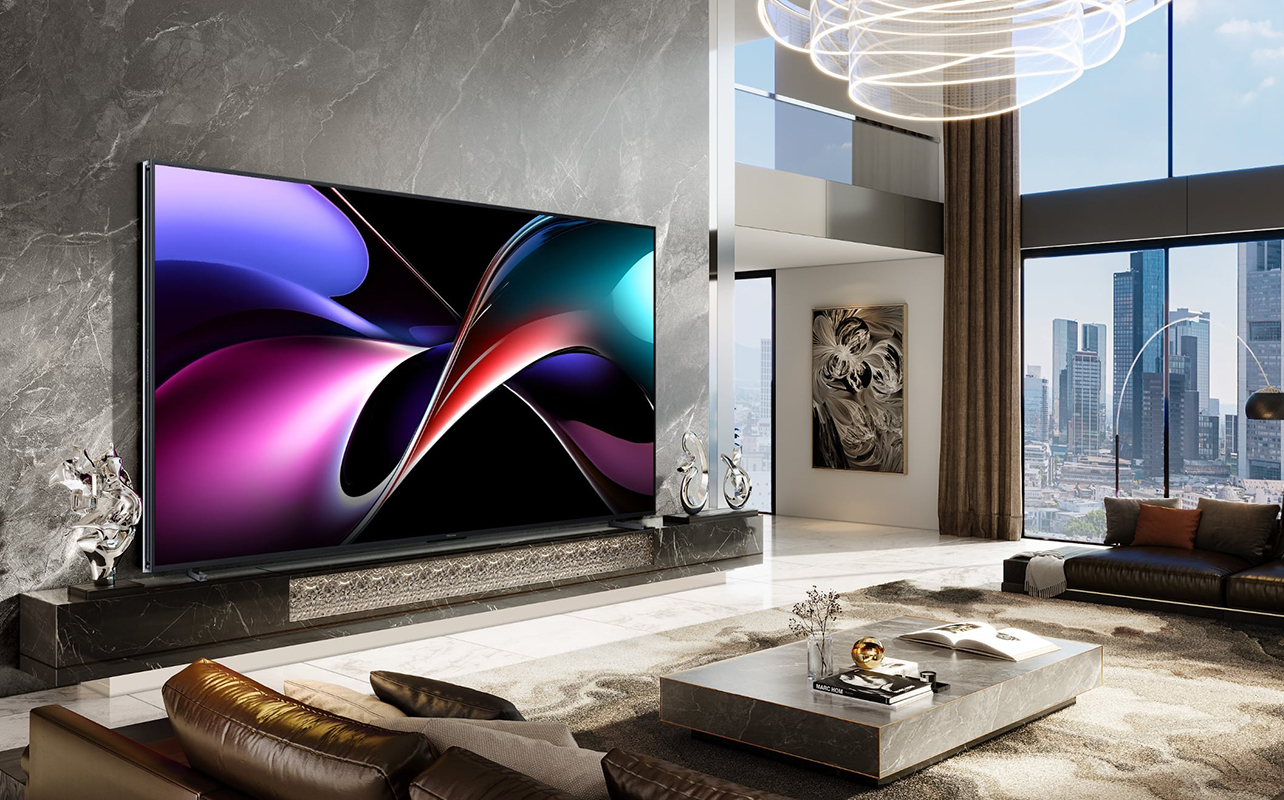
You’ll hear a few different names used for RGB LED TVs. Brands like Hisense call the technology RGB Mini-LED or RGBY Micr-LED, while Samsung uses the term Micro RGB. Despite the different branding, these TVs share the same basic idea: using red, green, and blue LEDs directly in the backlight of an LCD TV. The main difference comes down to LED size:
- RGB Mini-LED TVs: Use very small red, green, and blue LEDs behind the LCD panel as the backlight.
- Micro RGB TVs: Use even smaller RGB LEDs, often measuring under 100 micrometres, allowing more LEDs to fit behind the display for finer local dimming control and improved colour precision.
Remember, Micro RGB TVs are not the same as true Micro-LED displays. Micro-LED panels are self-emissive, meaning each pixel produces its own light. Micro RGB TVs are still LCD TVs with an advanced RGB backlight system.
How RGB LED differs from traditional LED TVs
To understand the benefits of RGB LED, it helps to look at how conventional LED TVs work. Most LED TVs today use white LEDs as their backlight source. The panel then uses red, green, and blue colour filters to shape that white light into the colours you see on screen. That process introduces two limitations. First, colour filters reduce brightness because some of the light gets blocked. Second, the TV has less direct control over colour intensity because the white light source is shared across the image.
RGB LED technology removes that limitation. Instead of white light plus filters, the display uses dedicated red, green, and blue LEDs behind the panel. These can be controlled independently, allowing the TV to produce more vivid colours and potentially reach higher brightness levels without sacrificing colour quality.
With RGB LED TVs, you get improved colour volume. Colour volume refers to how well a TV can maintain rich colours even when the picture becomes very bright. Imagine watching a daytime hockey game in a sunlit living room. On some TVs, very bright scenes can look slightly washed out. RGB LED technology aims to maintain vibrant colours even at extremely high brightness levels.
Dive deeper into this new TV display technology. Check out our blog on what is an RGB LED TV.
What is OLED?
For many home theatre enthusiasts, OLED is still the benchmark for premium picture quality.
OLED pixels are self-emissive, which means each pixel produces its own light. Instead of relying on a shared light source behind the panel, each pixel can independently brighten, dim, or turn off. This individual control allows the screen to render images with exceptional precision. There’s also no backlight behind the screen. Traditional LED TVs rely on a backlight that shines through layers of the panel to create the image. OLED eliminates this step entirely, which helps produce a thinner display and more accurate light control.
Because OLED TVs are self-emissive, they do such a good job at reproducing blacks and contrast. When part of the image needs to be black, the corresponding pixels simply shut off. Because no light is emitted at all, blacks appear truly dark rather than slightly grey. As for contrast, bright highlights and deep shadows can appear side by side without affecting each other. The result is a more lifelike picture, especially in movies and dramatic scenes with strong contrast. Because OLED panels control light at the individual pixel level, they also deliver incredibly detailed shadow performance.
However, OLED technology also has a few known limitations. First, OLED TVs generally cannot reach the same extreme brightness levels as high-end LED-based displays. This can matter in bright rooms with lots of sunlight. Second, there is a small risk of image retention or burn-in if static images remain on the screen for very long periods. OLED TVs available today include many protections to reduce this risk, but it’s still a factor to consider.
You can read more about OLED TV technology from its full breakdown of its benefits to frequently asked questions.
RGB LED vs OLED: picture quality comparison
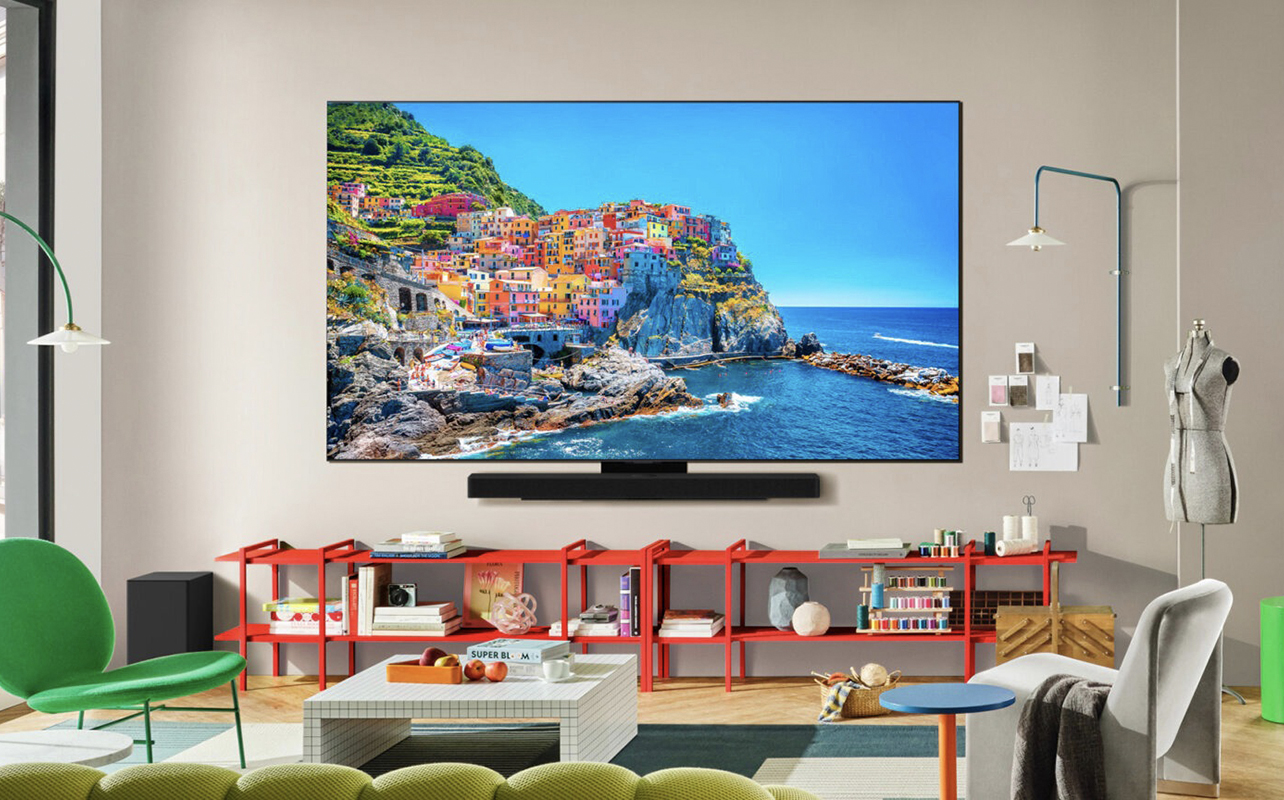
When comparing RGB LED vs OLED, the differences come down to how each display produces light.
| Feature | RGB LED | OLED |
|---|---|---|
| Backlight | RGB LED backlight | No backlight (self-emissive) |
| Peak brightness | Higher potential | Moderate |
| Black levels | Very good | Perfect |
| Burn-in risk | No | Possible |
| Best for | Bright rooms | Dark rooms |
While both technologies aim to deliver premium picture quality, they excel in different areas from brightness to colour accuracy:
Brightness
One of the biggest advantages of RGB LED technology is peak brightness potential. This can make a noticeable difference in real-world viewing situations. Imagine watching a daytime soccer match in a living room with large windows. If sunlight hits the screen, a brighter TV helps preserve image clarity and colour saturation. OLED TVs can still perform well in bright spaces, but their brightness ceiling is generally lower. Brightness is one of RGB LED’s biggest strengths.
Black levels and contrast
This is where OLED still holds a major advantage. Because OLED pixels emit their own light, they can turn completely off when displaying black areas of an image. This creates true black levels with no light bleed. RGB LED TVs, by contrast, are still backlit displays. Even with thousands of dimming zones, some light may remain behind dark areas of the image. The difference is most noticeable in very dark scenes. When watching an action or horror movie or playing an intense and dark video game, OLED can render details like stars against a perfectly black sky. A backlit display, even an advanced one, may show a slight glow around bright objects, which is called a halo effect. That’s why many home theatre enthusiasts still prefer OLED for cinematic viewing.
Colour accuracy and colour volume
This is another area where RGB LED technology could potentially compete strongly. Because RGB LEDs produce red, green, and blue light directly, they may achieve higher colour volume at extreme brightness levels. If you’re watching a scene with bright fireworks against a dark sky, or a nature documentary with colourful foliage and animals, an RGB LED display may keep those colours vivid even at very high brightness levels.
OLED, on the other hand, is known for excellent colour accuracy and tone mapping, especially in darker scenes. Because each pixel can control its own light output, OLED displays can render subtle shades and gradients very precisely. This helps scenes look more natural, like when a sunset slowly shifts from orange to deep red, or when shadows reveal fine details instead of appearing flat or crushed.
Burn-in risk
Burn-in is a potential concern with OLED TVs. This occurs when a static image, such as a news channel logo or gaming HUD, remains on screen for many hours over long periods of time. Many OLED TVs now include safeguards like pixel shifting and screen refresh cycles to minimize the risk. For most households, it’s unlikely to be a problem. However, RGB LED technology does not carry the same risk because it uses traditional LED backlighting. If burn-in is a concern, RGB LED TV might be the best for you.
Best viewing environment
The viewing environment often determines which technology performs best.
In bright living rooms, RGB LED TVs may have an advantage due to their higher brightness potential. If your TV sits in a space with large windows or lots of daylight, a brighter display helps prevent the picture from looking washed out. Watching a hockey game on a sunny Saturday afternoon? The extra brightness can keep the ice looking crisp and the uniform colours vibrant even with sunlight in the room.
In dark home theatre rooms, OLED still delivers unmatched contrast and shadow detail. If you like watching movies at night with the lights dimmed, OLED’s ability to produce perfect blacks can make scenes feel more cinematic. Dark sequences, like nighttime cityscapes or space scenes, look deeper and more immersive because there’s no glow from a backlight.
Who should buy an RGB LED TV?

The RGB LED TV will likely appeal to several types of viewers:
- If you watch TV in a bright room, an RGB LED TV could work well for you. The higher brightness helps the picture stay clear and colourful even when sunlight or indoor lighting reflects off the screen.
- If you watch a lot of sports, you may appreciate the brightness and strong colour performance. Fast-moving games like hockey, soccer, or basketball can look crisp and vibrant, even when large bright areas fill the screen.
- If your TV stays on for many hours each day, an RGB LED TV can provide peace of mind. News channels, sports broadcasts, and streaming interfaces often display static graphics, and RGB LED technology avoids the burn-in concerns sometimes associated with OLED.
In general, RGB LED technology is designed to deliver strong performance across a wide range of everyday viewing situations.
Who should buy an OLED TV?
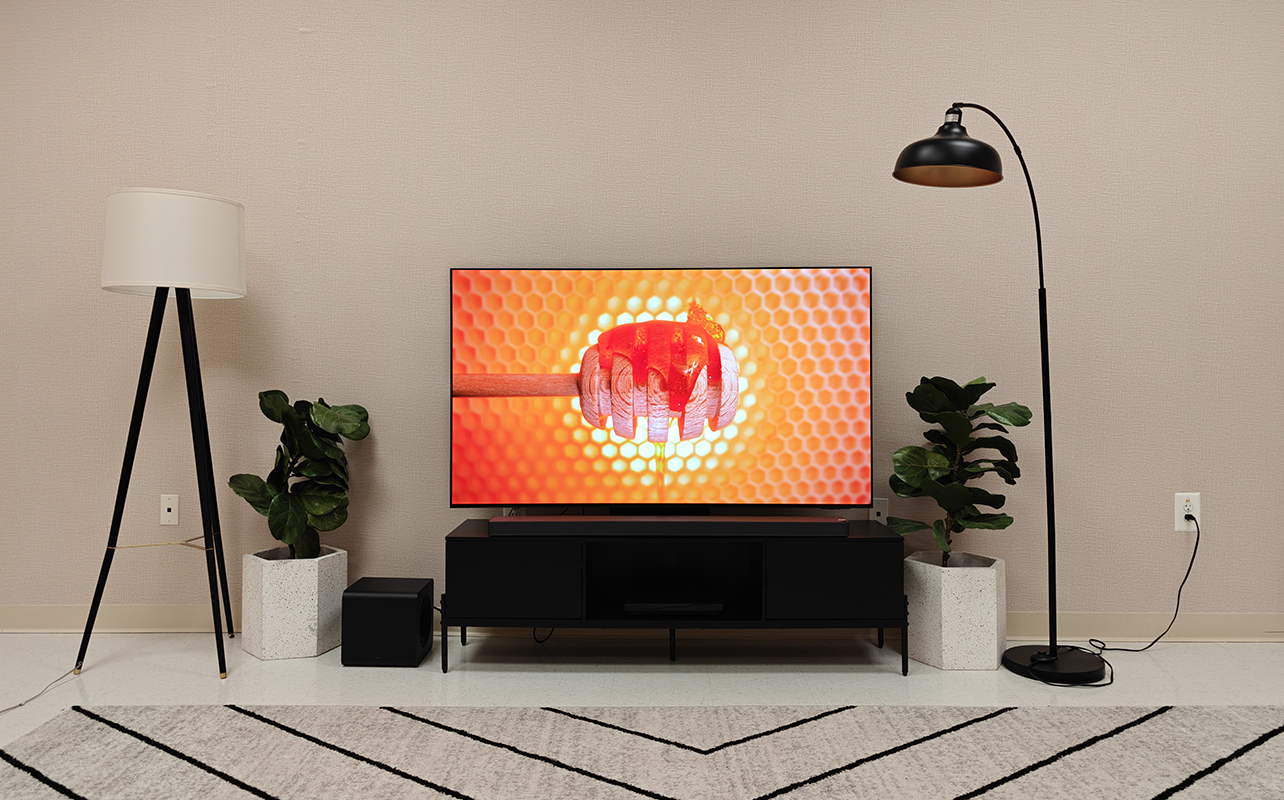
OLED still offers some clear advantages:
- If you’re building a home theatre setup, OLED may be the better choice for you. The ability to produce perfect blacks creates dramatic contrast that makes movies feel more cinematic.
- If you love watching movies in a dim or dark room, OLED’s strengths become even more noticeable. Dark scenes retain subtle detail, and shadows look rich instead of slightly grey.
- If you value picture realism and immersion, OLED’s pixel-level light control can make images look especially natural. Whether you’re watching a dramatic film or a high-end streaming series, the picture can feel more lifelike and visually engaging.
For viewers focused primarily on contrast and cinematic picture quality, OLED remains one of the most impressive display technologies available.
Is RGB LED better than OLED?

Each technology has its strengths. RGB LED TV is designed to push brightness and colour performance further than traditional LED TVs while avoiding burn-in concerns. This often makes RGB LED appealing for bright rooms and everyday viewing. OLED, however, leads when it comes to pure contrast and cinematic picture quality. For movie lovers and home theatre setups, OLED’s pixel-level lighting continues to deliver some of the most realistic images available.
As new models arrive and technologies evolve, the gap between these display types will continue to close. For now, the best choice depends on how and where you watch TV. If your living room is bright and you want the highest possible brightness and colour performance, an RGB LED TV could be an exciting option. If you prioritize deep blacks, cinematic contrast, and a premium movie-watching experience, OLED remains a fantastic choice.
Along with RGB LED and OLED TVs, explore our wide selection of TVs at Best Buy Canada.

This article was drafted using AI technology and then reviewed, fact-checked, and revised by a member of our editorial team.





So, where do quantum dot and mini quantum dot TVs fit is this conversation? What about Neo quantum dot? It’s getting Rey confusing.