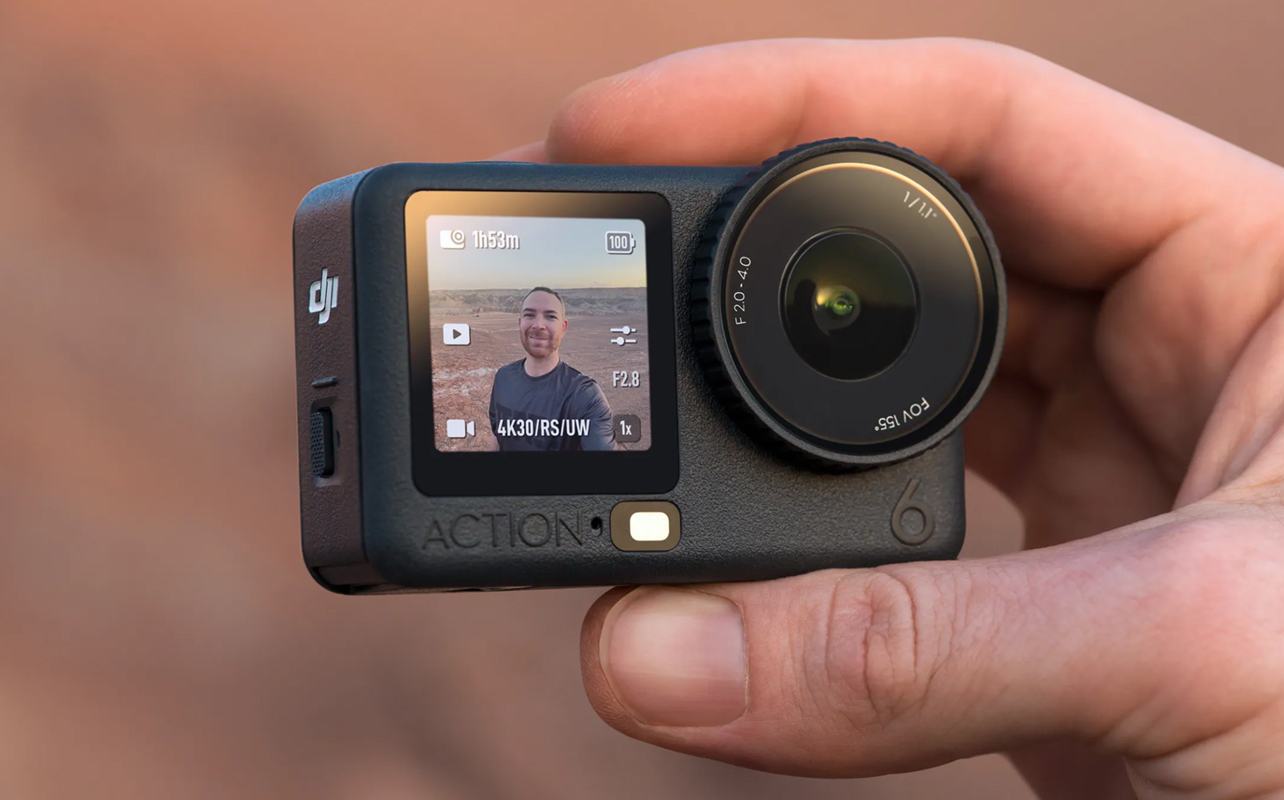
An action camera doesn’t always have to capture action, but when it does, like the DJI Osmo Action 6 does, durability and versatility should come together. As the successor to the Osmo Action 5 Pro, DJI’s latest flagship action camera goes beyond simply increasing the resolution and calling it a day.
The Action 6 introduces a new 1/1.1-inch square sensor, a variable aperture (a first for an action camera), a new 4K Custom shooting mode, 8K video, 50GB of usable internal storage, upgraded stabilization, and a growing collection of creator-focused features. Let’s break down what all of that can lead to.

Design and build
From a design standpoint, the Osmo Action 6 very much falls in line with its predecessor. It’s the same compact DJI build with a touchscreen on both the front and rear. The camera’s dimensions (72.8 × 47.2 × 33.1mm) and weight (149 grams) maintain the excellent portability action cameras like it are known for. You can mount this on a helmet, bicycle, motorcycle, car, backpack, or selfie stick without any real issues.
Both screens are OLEDs, with the front display at 1.46 inches, while the rear one is a larger 2.5-inch. As with its predecessor, the two screens give you a live view on either side of the camera, though you’ll likely have an easier time seeing the rear one in brighter sunlight because peak brightness is higher there.
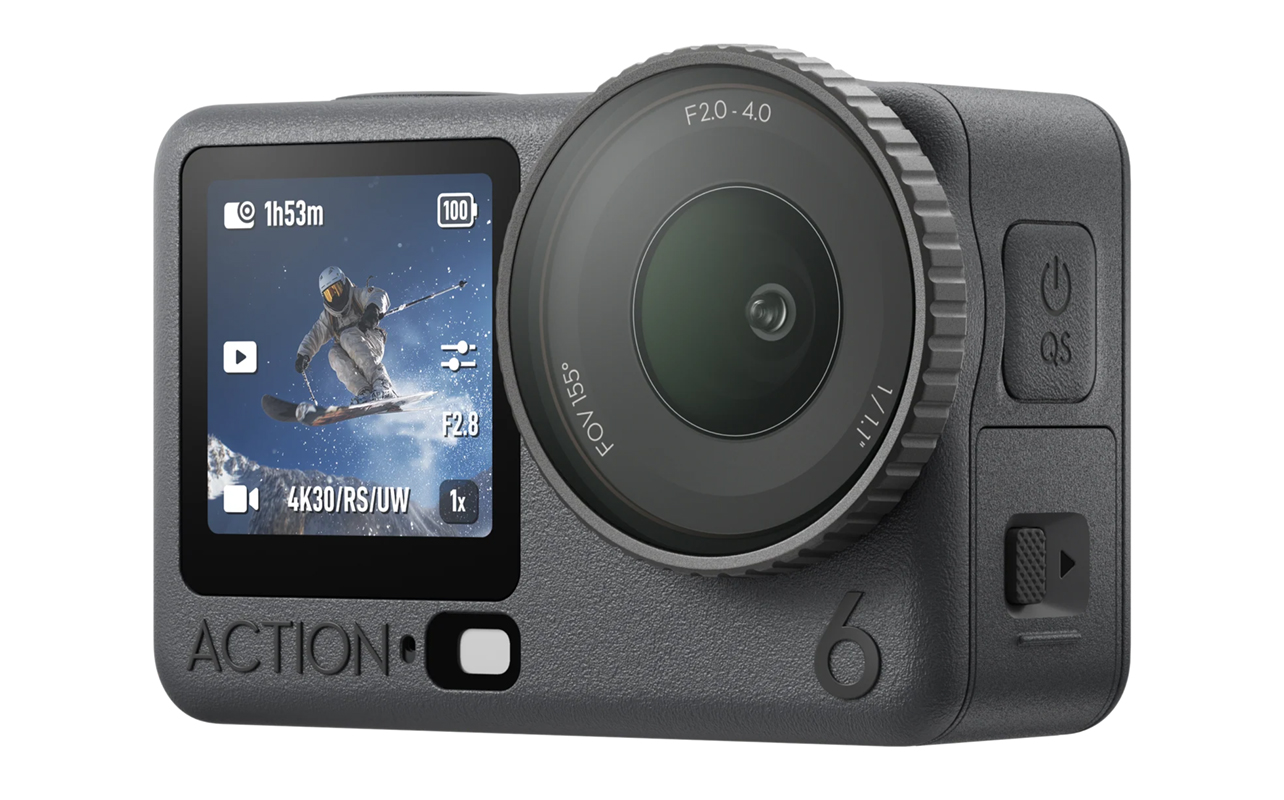
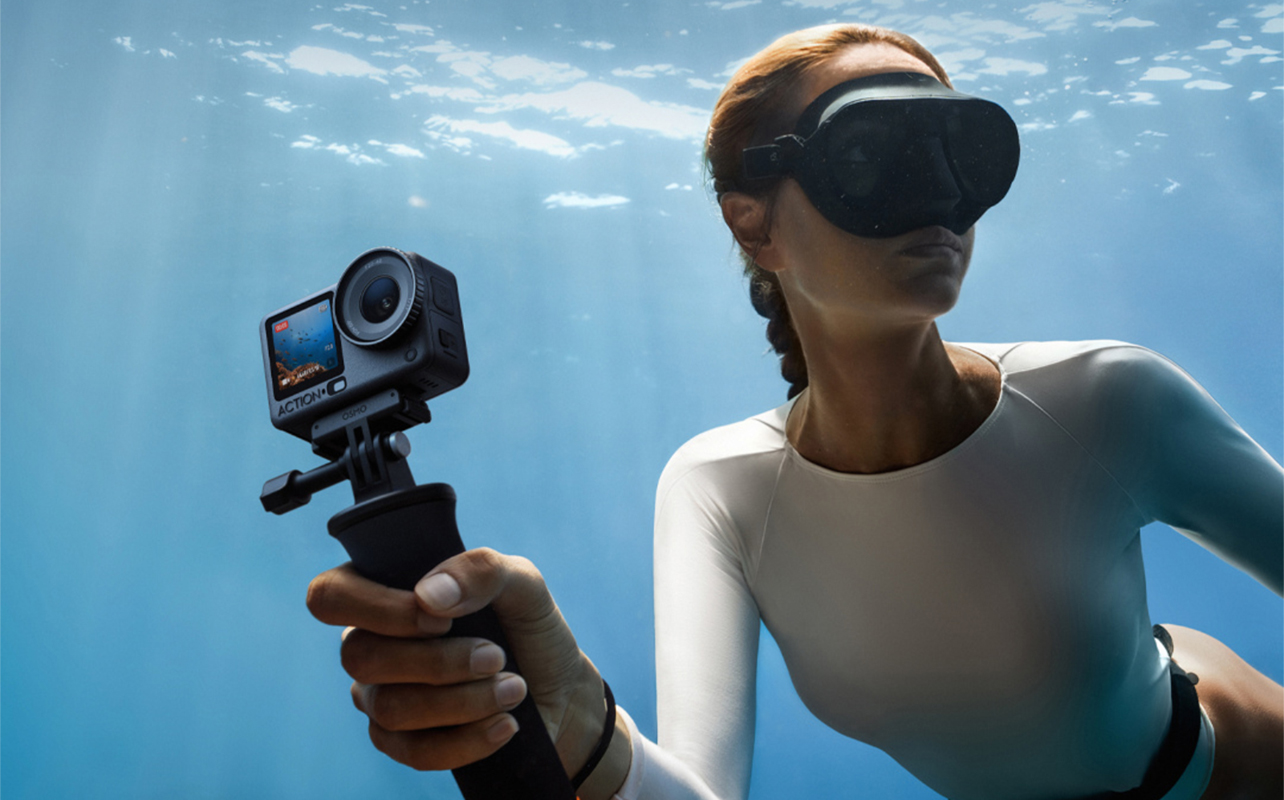
The environmental side is a key aspect to the Action 6 since it’s essentially a year-round device. Waterproof down to 20 metres without a case and up to 60 metres with DJI’s Waterproof Case (rated at IP68), the company also gives it an operating temperature range of -20°C to 45°C. None of that is especially new since it matches what the Osmo Action 5 Pro could handle, but it reinforces that it’s particularly well suited for the four distinct seasons in Canada. Winter sports or summertime adventures are basically fair game with this camera in tow.
While the Glass Lens Cover is new in that it comes off, it doesn’t swap out the lens entirely. There is, however, some customization since DJI sells lens attachments, like a Macro and FOV Boost Lens, for instance.
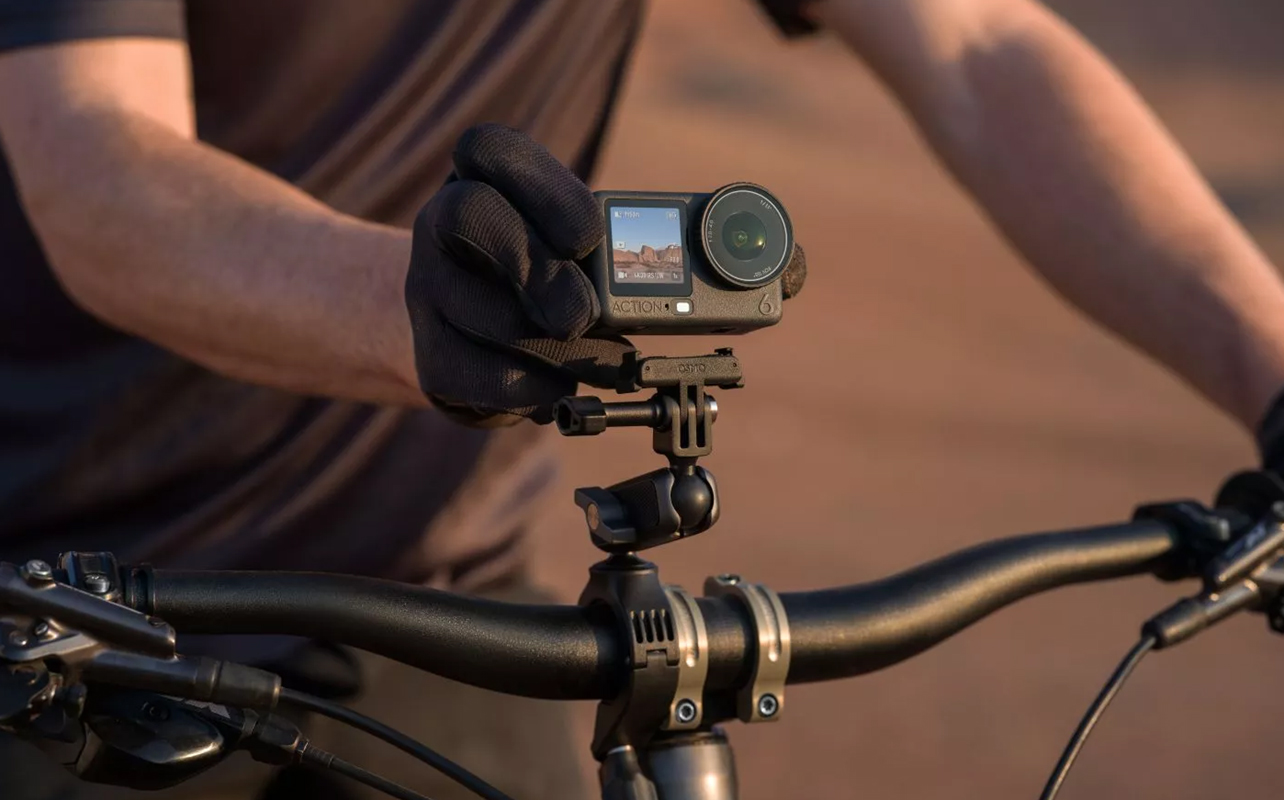
Fortunately, the same magnetic mounting system returns, making the Action 6 compatible with a fairly wide range of accessories. That also goes for GoPro accessories, opening up an endless array of gear made for that product line as well. And since the mount exists on both the bottom and side (of the protective frame), mounting works in either landscape or upright orientation.
A square sensor changes how you shoot
One of the most interesting changes isn’t immediately obvious from the outside. DJI goes with a 1/1.1-inch square CMOS sensor in the Osmo Action 6 that it claims has 2.4 μm pixels and can deliver up to 13.5 stops of dynamic range.
Why go square? The camera’s new 4K Custom mode records at 3,840 × 3,840 and up to 60fps. Instead of deciding before you shoot whether your final video needs to be horizontal, vertical, or square, you can capture a square image and crop it later for whichever platform or need you have.
By essentially offering different aspect ratios in the same square sensor, this makes it easier to publish the same content to different platforms. For example, shooting a video for YouTube could be cropped to 16:9, whereas you can repurpose the same footage on TikTok or Instagram at 9:16. You don’t have to necessarily pick one or the other off the bat—just figure it out later.
Thanks to a software update after launch, the Osmo Action 6 can also record 8K video at 24, 25, or 30fps only in 16:9 aspect ratio. This is more about resolution than anything else because certain features aren’t available when shooting in this mode. For instance, Film Tone and Quality Priority are greyed out, and electronic stabilization is limited to RockSteady and RockSteady+. Moreover, if you want to edit the footage on the DJI Mimo iOS app, you can only do so on an iPhone 15 Pro or later. It must be a Pro series iPhone, so the other non-Pro models don’t apply.
You have more 4K options, with up to 120fps, as well as a 4:3 mode for action and slow-motion shots. You can go even slower at 240fps but resolution drops to 1080p.
The variable aperture is the big upgrade
That brings us to the variable aperture. This isn’t a common feature on any action camera, and so it is DJI’s first attempt at implementing it, giving you a range of f/2.0 to f/4.0. Since it’s mechanical, as it is on, say, a mirrorless camera, the amount of light coming through to the sensor is based on the size of the hole.
At f/2.0, more light reaches the sensor, which is useful when you’re shooting in dimmer conditions. Closing the aperture down toward f/4.0 helps when dealing with brighter conditions. By no means does this make the Osmo Action 6 equivalent to a mirrorless camera; it just brings in a level of manual control not typically seen in an action cam.
The larger 1/1.1-inch sensor also gives it more flexibility when dealing with scenes containing both bright highlights and darker shadows. Good dynamic range should avoid blown-out highlights or blacked-out shadows, but again, it all depends on what the conditions look like.
You can record in 10-bit colour or go with DJI’s D-Log M colour profile for more flexibility when you want to colour-grade footage afterward. DJI describes D-Log M as a flat profile designed to preserve greater information across bright and dark areas for post-production. As a casual user, you don’t have to fuss with that as much since you can simply record in a standard colour mode and start editing from there. Six built-in film presets come included, but what you can access depends on resolution, frame rate, and aspect ratio.
Performance under varying circumstances
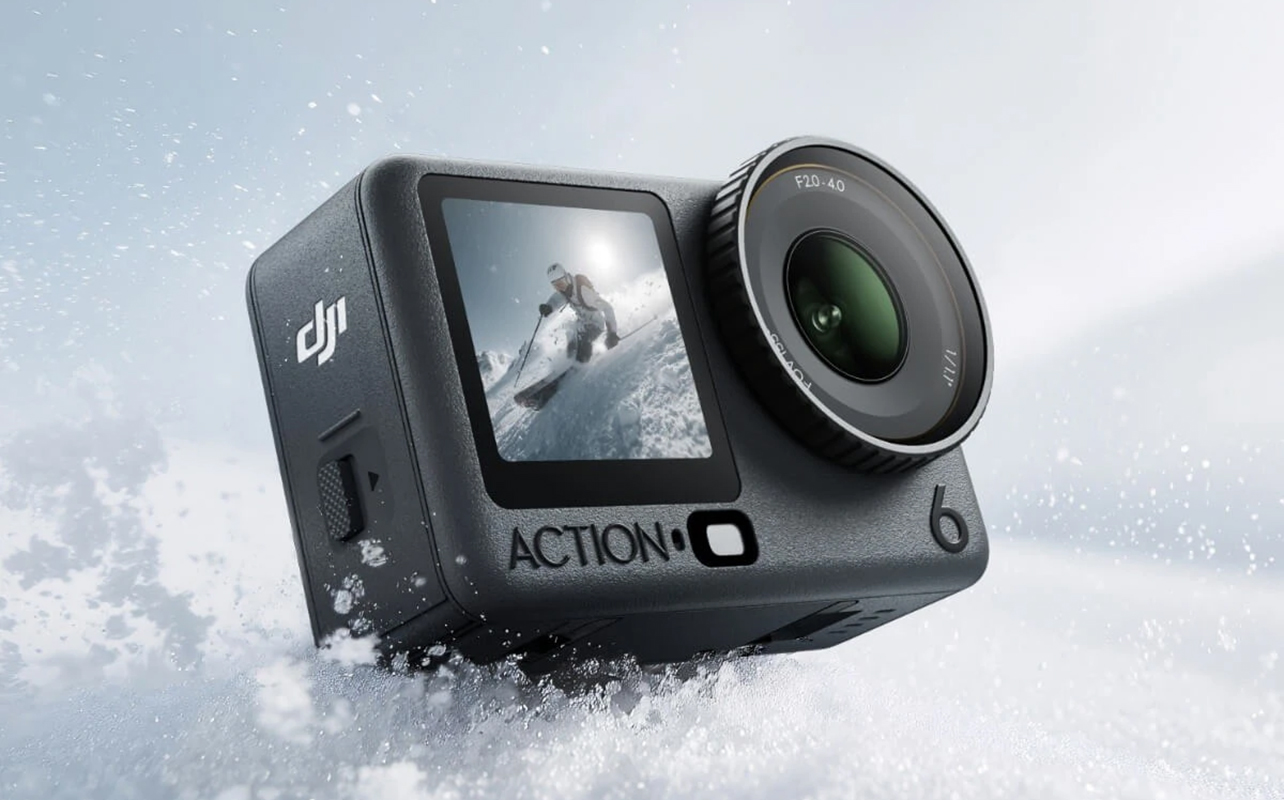
DJI brings much of the same subject-tracking technology from its other cameras to the Action 6. It can keep a person centred in the frame while they’re moving, which is useful for activities like cycling, skiing, snowboarding, and motorcycling. You can use tracking for footage up to 2.7K at 60fps and it focuses on human subjects rather than pets, animals, or other objects, but you can apply focus manually by tapping on the screen to force it.
For stabilization, the camera supports RockSteady 3.0, RockSteady 3.0+, HorizonBalancing, and HorizonSteady. While all these will be familiar to previous Osmo Action owners, one improvement is that HorizonSteady now works in 4K up to 60fps. That’s pretty significant for first-person perspective shots, like cycling, skiing, snowboarding, riding, and even driving.
In challenging low-light settings, you could give SuperNight mode a try. It can record at up to 4K/60fps with RockSteady 3.0 or RockSteady 3.0+ available. DJI even recommends it for night-time urban environments. The one catch is that the resulting footage has to go through more computational processing to brighten things up, so while results are likely to look impressive, the level of processing may be noticeable on larger screens.
The Action 6 has three built-in microphones, but the bigger audio advantage may be DJI’s OsmoAudio ecosystem. You can simplify your setup by connecting the camera with up to two compatible DJI mic transmitters without requiring a separate receiver. You might like that as a vlogger doing interviews, travel videos, documentary commentary, and other situations where you want to mount the camera away from whoever’s talking.
Taking still photos
The Osmo Action 6 is primarily a video camera, but like previous models, you can still use it to take photos as well. The relatively large sensor helps the cause, capturing 38-megapixel images in JPEG or RAW. You can even take a burst of up to 30 images in three seconds.
There is only the one camera, so the 2x zoom is a hybrid crop, though DJI considers it “lossless”, save for 38MP/34MP photo mode, SuperNight, Subject Tracking, Slow Motion, and Timelapse. Newer firmware subsequently added Portrait mode and 4K Live Photo, further expanding what the camera can do beyond conventional action footage.
Storage and battery life
For storage, there is 64GB built-in, though roughly 50GB is what’s actually available for your files. You can also expand storage with a microSD card up to 1TB.
DJI rates the Action 6’s 1,950mAh battery for up to 240 minutes, so basically four hours. Mind you, this is based on DJI’s testing conditions, so your mileage will vary—especially in 4K or 8K. Like previous models, you’re not likely to run out of juice easily, and swapping in backup batteries is super easy. The Action 6 uses the exact same battery as its predecessors.
Available now
The DJI Osmo Action 6 comes with some meaningful upgrades, like the 1/1.1-inch square sensor, variable aperture, 4K Custom mode, 4K HorizonSteady, usable internal storage, and expanded creator features. It supports a pretty robust mounting system and, unlike phones or gimbal cameras, it maintains a durable pedigree, including in rugged weather conditions.
The Standard Combo is the basic package if you already have mounts and accessories or simply want the camera itself. The Adventure Combo gives you a more complete setup by including the 1.5-metre Extension Rod, a battery case, and extra mounting bases.
Check out all the other DJI products available now, along with other action cams on Best Buy Canada.