
Gaming TVs are having a major moment. And with so many incredible video games arriving this year, it is easy to see why. Forza Horizon 6 is already giving racing fans a gorgeous new open world to explore, while 007 First Light and Saros are bringing cinematic action and stylish set pieces to the screen. Now is the perfect time to look at what your TV is actually doing for your games. A powerful console or PC is important, but your screen is what transforms that performance into colour, motion, contrast, and full-on immersion.
The RGB LED TV is one of the newest premium TV technologies. It feels built for how many people actually game: bright rooms, big screens, colourful worlds, long sessions, and a mix of console, PC, sports, streaming, and family use. If you are looking for the best TV for gaming or the best TV for PS5 or Xbox Series X, RGB LED deserves a serious look for all the features it brings to the table.
Time for an upgrade? Receive free Geek Squad delivery and installation with the purchase of an RGB LED TV.


What is an RGB LED TV?
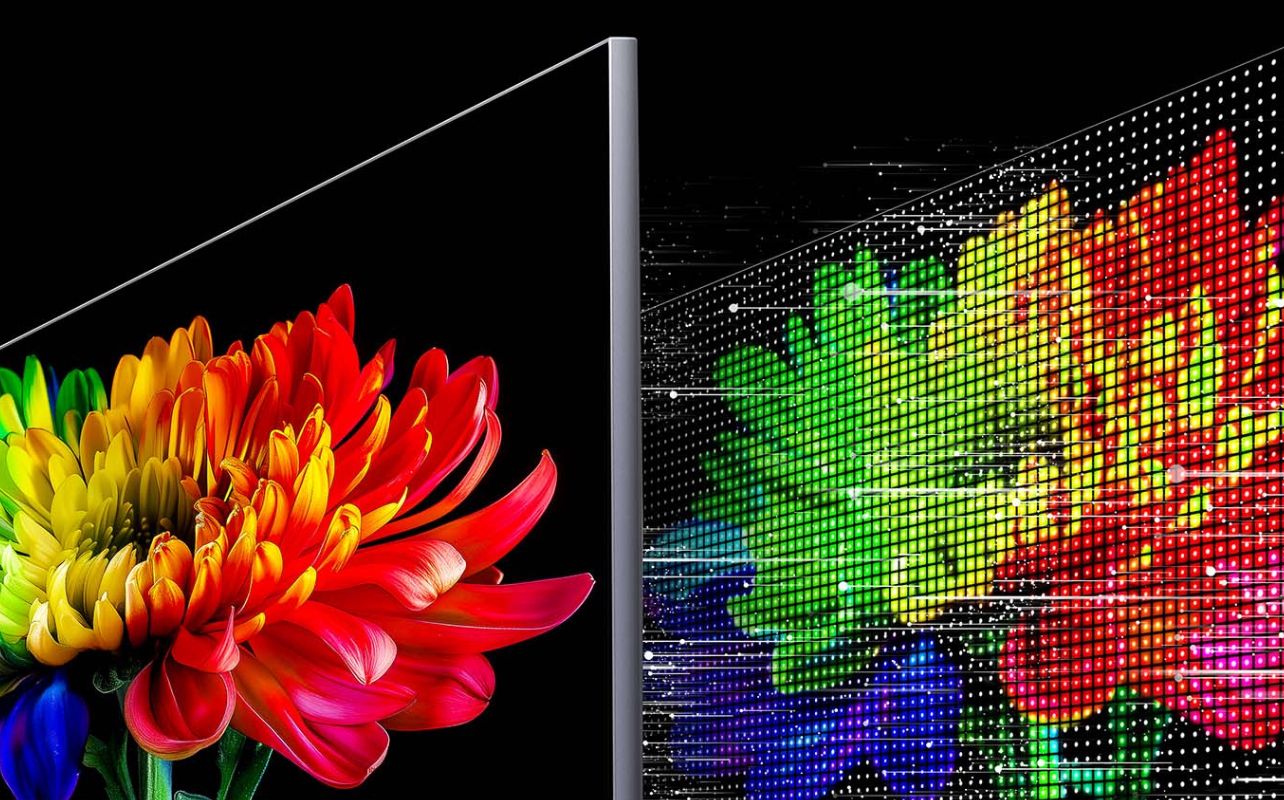
RGB LED TVs are still LCD TVs, but they use red, green, and blue LEDs in the backlight instead of a traditional white or blue colour. That helps the TV create more precise colour expression before the image even reaches the LCD panel.
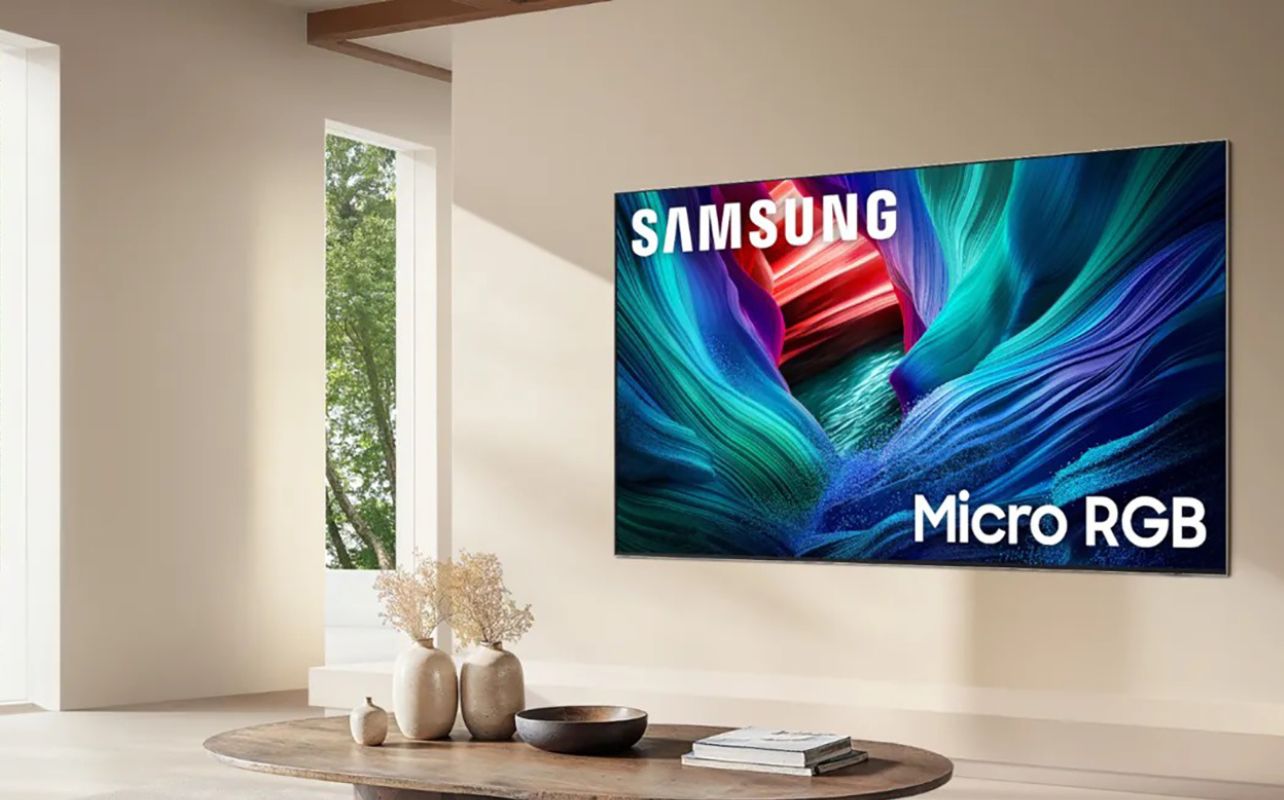
In simple terms, RGB LED TVs are designed to deliver stronger colour volume, higher brightness, and more advanced local dimming than many traditional LED TVs. You may see terms depending on the brand. Samsung uses Micro RGB in models like the R85H Micro RGB and R95H Micro RGB; LG has introduced Micro RGB evo; Sony has been showcasing its True RGB approach, and Hisense offers this technology in its UR9SG Mini-LED line. The exact features vary by model, but the goal is similar: more accurate colour, brighter highlights, and a more premium picture.
RGB LED vs OLED TVs
RGB LED is not the same as OLED. OLED pixels create their own individual light, which is why OLED TVs are famous for perfect blacks. RGB LED TVs still use a backlight, but the big advantages are brightness, colour punch, large-screen flexibility, and no OLED-style burn-in concerns.
For more background, read the Blog’s helpful explainer on what RGB LED TV is, along with a deeper comparison of RGB LED TVs vs. OLED.
Why RGB LED TVs are excellent for gaming
RGB LED TVs bring together brightness, colour, and performance in a way that makes your favourite games look and feel better. From punchy HDR highlights to smooth, responsive gameplay, they’re built to enhance every session.
Brightness makes HDR games pop
One of the biggest reasons RGB LED could become a favourite TV for console gaming is brightness. I play a lot of my games during the day with a lot of natural light that pours into my living room. I deal with sunlight and overhead light, and a brighter TV is a welcome addition to my setup. RGB LED TVs can keep HDR highlights looking exciting without the picture feeling washed out.
It makes a big difference in racing games, sports games, and open-world adventures. Think about sunlight hitting the road in Forza Horizon 6, neon signs in a city at night, or bright outdoor maps that also have dark areas with high contrast in a shooter like Call of Duty. RGB LED TVs hold onto colour at higher brightness levels, so games can look vivid without losing clarity.
Big-screen gaming feels more immersive
Another reason RGB LED TVs are a strong fit for gaming is screen size. Many RGB LED models are being offered in large-screen options, which makes them especially appealing for living rooms, home theatres, and shared family spaces. A bigger screen can make open-world games feel more cinematic and racing games feel faster, putting you closer to the action.
This is also useful for local multiplayer. If you are playing split-screen games or party games, a larger screen gives everyone more room to see the action clearly. For gamers who want one premium TV for solo play, family gaming, streaming, and sports, RGB LED’s big-screen flexibility is a major advantage.
Wide-angle viewing helps when everyone is watching or playing
Wide-angle viewing is another key benefit. Not everyone watches or plays from the perfect centre seat. You might have friends sitting off to the side during a party game, family members spread across the couch, or someone watching from the kitchen while a game is on. That is where wide-angle performance and anti-reflection features can make a real difference.
Some RGB LED TVs include wide-viewing-angle technology, glare-reduction panels, or anti-reflection coatings that help keep the picture easier to see from different seats in the room. It’s still important to compare specific models, because viewing angles can vary, but it’s a practical feature for households where the TV is used by more than one person at a time.
Smooth gameplay with 4K/120Hz, VRR, and low input lag
Many of the RGB LED TV models are already built with premium gaming specs in mind. Rather than treating 4K/120Hz or higher refresh rates as rare extras, several RGB LED TVs offer refresh rates designed for smoother motion, faster response times, and better handling of high-action games.
For example, Samsung’s R85H Micro RGB supports up to 144Hz, while the step-up R95H Micro RGB supports up to 165Hz, making both strong options for gamers who want smoother motion in racing games, sports games, shooters, and PC gaming.
Hisense’s UR9SG RGB Mini-LED series goes even further with a native 180Hz refresh rate and gaming-focused features such as VRR, ALLM, FreeSync Premium Pro, Dolby Vision Gaming, and HDR10+ Gaming. LG’s MRGB95 Micro RGB Mini-LED also includes a 120Hz refresh rate, VRR support, HDMI 2.1a connectivity, and Dolby Vision support.
Refresh rates are important because today’s consoles and gaming PCs can benefit from TVs that support higher frame rates. For PlayStation 5 and Xbox Series X, 4K/120Hz support can make compatible games feel smoother and more responsive. VRR helps reduce screen tearing when frame rates shift, while ALLM can automatically switch the TV into a lower-latency gaming mode. If you also play on PC, higher-refresh-rate models can give you even more headroom.
If you play Call of Duty, Fortnite, sports games, or racing games online, input lag matters too. The lower the delay between your controller and the screen, the more connected the game feels. That makes high refresh rate RGB LED TVs especially appealing for players who want a premium screen for both cinematic games and competitive play.
No OLED burn-in concern during long sessions
OLED TVs are excellent for gaming, and modern OLED protections are strong. Still, some gamers worry about static HUDs, scoreboards, health bars, or streaming overlays staying on screen for hours.
RGB LED TVs avoid burn-in concerns because they use an LED backlight rather than self-emissive OLED pixels. That gives extra peace of mind if you play marathon sessions, share one TV with the whole family, or use your TV as a PC display.
RGB LED vs OLED for gaming
OLED is still incredible. Perfect black levels, instant pixel response, and cinematic contrast make OLED amazing for story-driven adventures, horror games, and dark-room play. RGB LED makes its strongest case when brightness, screen size, and mixed-use gaming matter most.
RGB LED may be better for bright family rooms, sports games, daytime play, big-screen setups, and gamers who want peace of mind during long sessions. OLED may still be better for dark-room cinematic gaming, deep blacks, and moody single-player games.
Here’s a chart to break everything down at a glance:
| Feature | RGB LED | OLED |
| Bright room gaming | Excellent | Good to excellent |
| Black levels | Very good | Perfect |
| HDR brightness | Very strong | Excellent, model dependent |
| Burn-in concern | No OLED-style concern | Possible, but protections are strong |
| Large screen gaming | Excellent | Excellent, often pricier |
| Competitive gaming | Excellent, model dependent | Excellent, model dependent |
For another angle, the Blog’s guide to whether RGB LED is best for watching movies and TV shows is useful because most of us are not buying a gaming-only screen. The best gaming TV often needs to be a great movie, sports, and streaming TV too.
Best features to look for in an RGB LED gaming TV
When shopping for an RGB LED gaming TV, there are also other factors to consider with the panel technology. RGB LED refers to how the TV creates and controls light and colour through its backlight. The complete gaming experience, however, still depends on the specific model and its full feature set.
- Start with the gaming basics: Look for HDMI 2.1 or HDMI 2.1a ports, 4K/120Hz support or higher, VRR, ALLM, low input lag, and a dedicated game mode or game bar. These features help your console or PC communicate properly with the TV and can make gameplay feel smoother and more responsive.
- Double-check for specific HDR features: HDR support is also worth checking closely. RGB LED TVs deliver strong brightness and richer colour, which are both important for HDR. However, HDR support is still model-specific. Some RGB LED TVs support HDR10+, some include Dolby Vision or Dolby Vision Gaming, and others use their own HDR processing to improve contrast, colour, and highlights. For gaming, it is especially useful to look for HDR10+ Gaming, Dolby Vision Gaming, or strong HDR tone mapping features, depending on the console, PC, and games you play.
- Check FreeSync or G-Sync compatibility: These features can help keep motion smoother when frame rates fluctuate, making the TV more versatile across consoles, gaming PCs, streaming, movies, and sports.
Best Buy has a dedicated RGB LED TVs collection where you can compare current models.
Who should buy an RGB LED gaming TV?
RGB LED TVs make a lot of sense for modern console and PC play, especially if you game in bright rooms, love HDR games, or want one premium TV that can handle gaming, movies, and sports.
They’re also a great fit for households that need a large, versatile screen. If you play during the day, enjoy fast-paced competitive games, or worry about static gaming elements like HUDs, maps, and health bars, RGB LED is an easy technology to recommend.
It’s especially strong for players who jump between different types of games. One night you might be racing through Japan in Forza Horizon 6, the next you might be exploring an open world in Crimson Desert, and later in the week you might be playing on the Nintendo Switch 2 with family. RGB LED TVs are built for that kind of mix: bright, colourful, fast-moving content that benefits from strong brightness, vivid colour, and smooth motion.
Is RGB LED automatically better than OLED?
No, and that’s what makes the TV space so fun right now. OLED remains stunning for cinematic contrast and perfect blacks. But for many gamers looking for the best gaming TV for PS5, Xbox Series X, PC, or a bright living room, RGB LED may be the more flexible choice.
Is RGB LED the future of gaming TVs?
RGB LED TVs feel like one of the most exciting TV upgrades for gamers. They combine practical benefits with premium picture quality. You get the brightness and big-screen impact LED TVs are known for, better colour control than traditional LED designs, and no OLED-style burn-in worry.