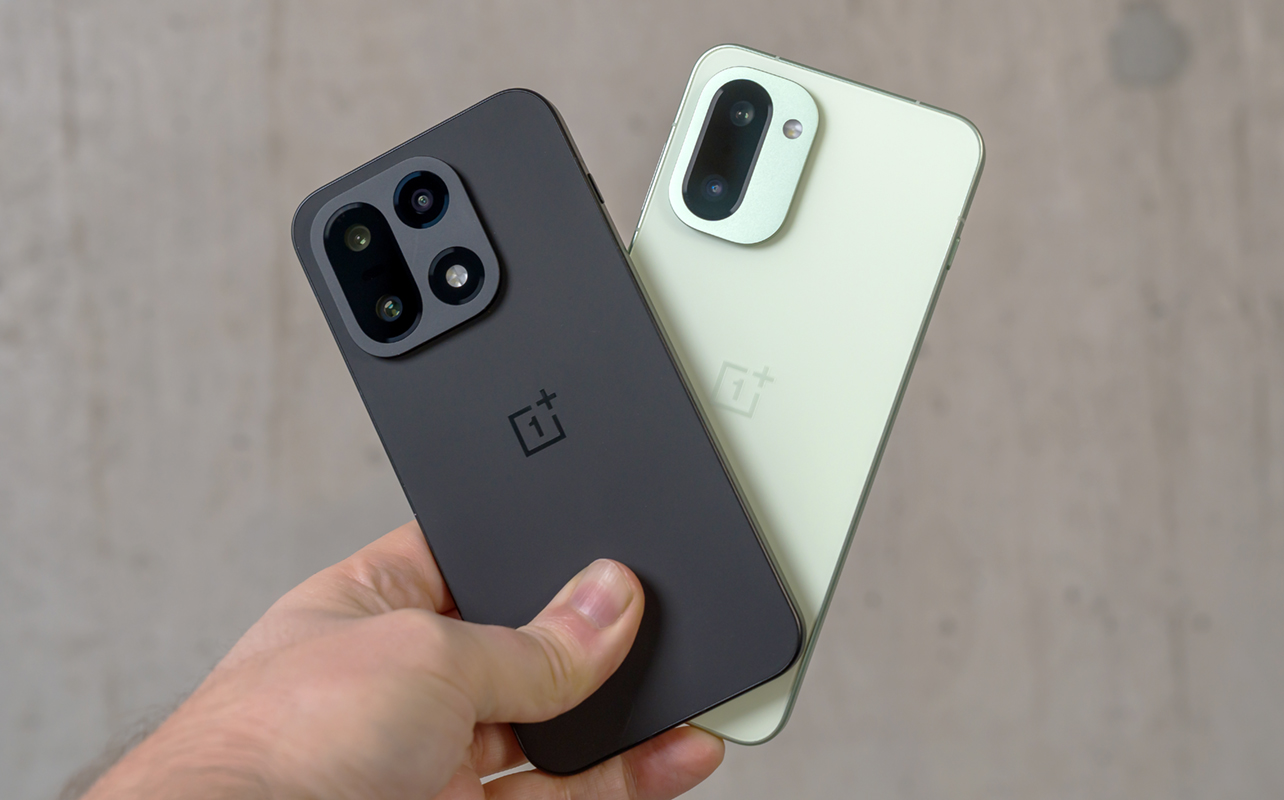
The OnePlus 15 and OnePlus 15R look alike but are not the same phone in some key respects. Choosing between them comes down to what you feel you need and which features matter most.
To start, the 15 is the premium flagship, while the 15R is the mid-range model offering high-end performance with certain trade-offs to bring the price down. With both running the same software and sharing some specific traits, there’s a lot to like about them. Let’s unpack the differences and see why they stand out separately.

Subtle divergences in design and display
Both adopt a similar look, which is to say OnePlus abandoned the rounded camera modules of the past and went with a more standard rectangular design. The body in either case is pretty durable, sharing the same IP68/IP69/IP69K ratings for dust and water resistance. However, materials differ in that the OnePlus 15 uses a “ceramic-like” textured matte finish for the Infinite Black version, and tactile fibreglass for the Sand Storm variant. The 15R uses a more conventional glass back for both the Charcoal and Mint Breeze models.
At first glance, you would think the two use the same 6.8-inch AMOLED screens but that’s not entirely the case. The OnePlus 15 has a 6.78-inch LTPO display that is capable of hitting refresh rates of up to 165Hz. What’s key is that the refresh rate is adaptive here, meaning it switches between 1-120Hz wherever necessary, ramping up to 165Hz for gaming.
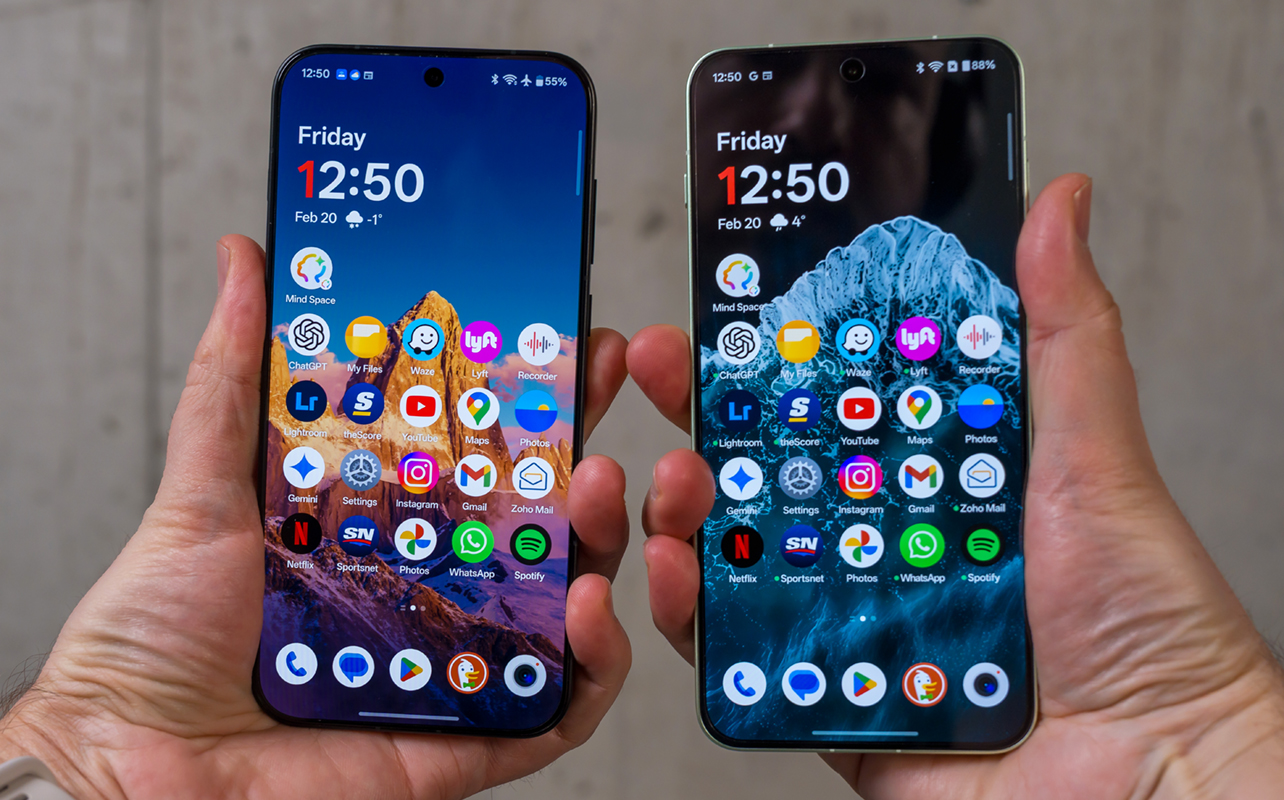
The OnePlus 15R has a 6.83-inch LTPS display that delivers the same 165Hz peak refresh rate, only it doesn’t drop lower than 60Hz. So, even though they each have 1,800 nits peak brightness, the 15 holds an edge because knocking down the refresh rate as low as 1Hz (depending on content) can better conserve battery life.
In practice, you’re not likely to notice some of these nuances with your own eyes. We’re talking more efficiency advantages than anything else since screen quality and resolution are basically the same. Read text or view photos, scroll through menus—all of it looks vibrant and feels pretty smooth.
Even dimensions and weight leave little to nitpick. The 15R is millimetres taller and a tad heavier, reflecting its larger battery and slightly broader footprint. One key addition is the Plus Key on the left edge that plays a role as a shortcut on both devices.
Spec comparison table
Let’s see the full breakdown for these two devices.
| OnePlus 15 | OnePlus 15R | |
| OS | Android 16, OxygenOS 16 | Android 16, OxygenOS 16 |
| Colours | Infinite Black, Sand Storm | Charcoal, Mint Breeze |
| Screen Sizes | 6.78-inch | 6.83-inch |
| Screen Resolution | 2,772 x 1,272 | 2,800 x 1,272 |
| Refresh Rate | 1-165Hz | 60-165Hz |
| Processor | Qualcomm Snapdragon 8 Elite Gen 5 | Qualcomm Snapdragon 8 Gen 5 |
| RAM | 12GB, 16GB | 12GB |
| Storage | 256GB, 512GB, 1TB | 256GB, 512GB, 1TB |
| Cameras | 50MP main, 50MP telephoto, 50MP ultrawide, 32MP front | 50MP wide-angle, 8MP ultra-wide, 32MP front |
| Battery | 7,300mAh | 7,400mAh |
| Dimensions | 161.4 x 76.7 x 8.1 mm | 163.4 x 77 x 8.1 mm |
| Weight | 215 grams | 219 grams |
I’ve also done an in-depth review of the OnePlus 15.
Flagship power versus value silicon
Things start to diverge in what’s happening under the hood. The OnePlus 15 runs on the top-class Qualcomm Snapdragon 8 Elite Gen 5 processor, enabling it to deliver stronger sustained performance. In contrast, the OnePlus 15R uses the Snapdragon 8 Gen 5—a generation removed from the Elite—making it an older, yet still robust piece of silicon.
Demanding apps and games benefit from the extra horsepower but the biggest differences are largely based on things like peak benchmarks and efficiency. You aren’t likely to notice any of that when it comes to everyday tasks, like messaging, social media, email, media streaming, and casual games.

Both systems use the same RAM and storage, except the 15 expands configuration for both up to 16GB of RAM and even 1TB of storage. The 15R maxes out at 12GB of RAM with 256GB or 512 GB of storage. Again, these are differences but they don’t necessarily mean a major shift one way or the other. It largely depends on the demands of the app, game, or task running on the device.
Neither device feels slow. Both handle multitasking smoothly. Gaps open in more sustained workloads, be it prolonged gaming sessions, complex photo editing, significant video editing, or heavy multitasking without closing background tasks. That’s where the 15 pulls ahead. But when you’re spending time on your phone going through the daily motions, performance won’t disappoint, either way.
There’s also not much space between them in connectivity. Both have 5G, Wi-Fi 7 and Bluetooth support, so you don’t lose out on networking features despite chipset differences.
OxygenOS is a steady hand
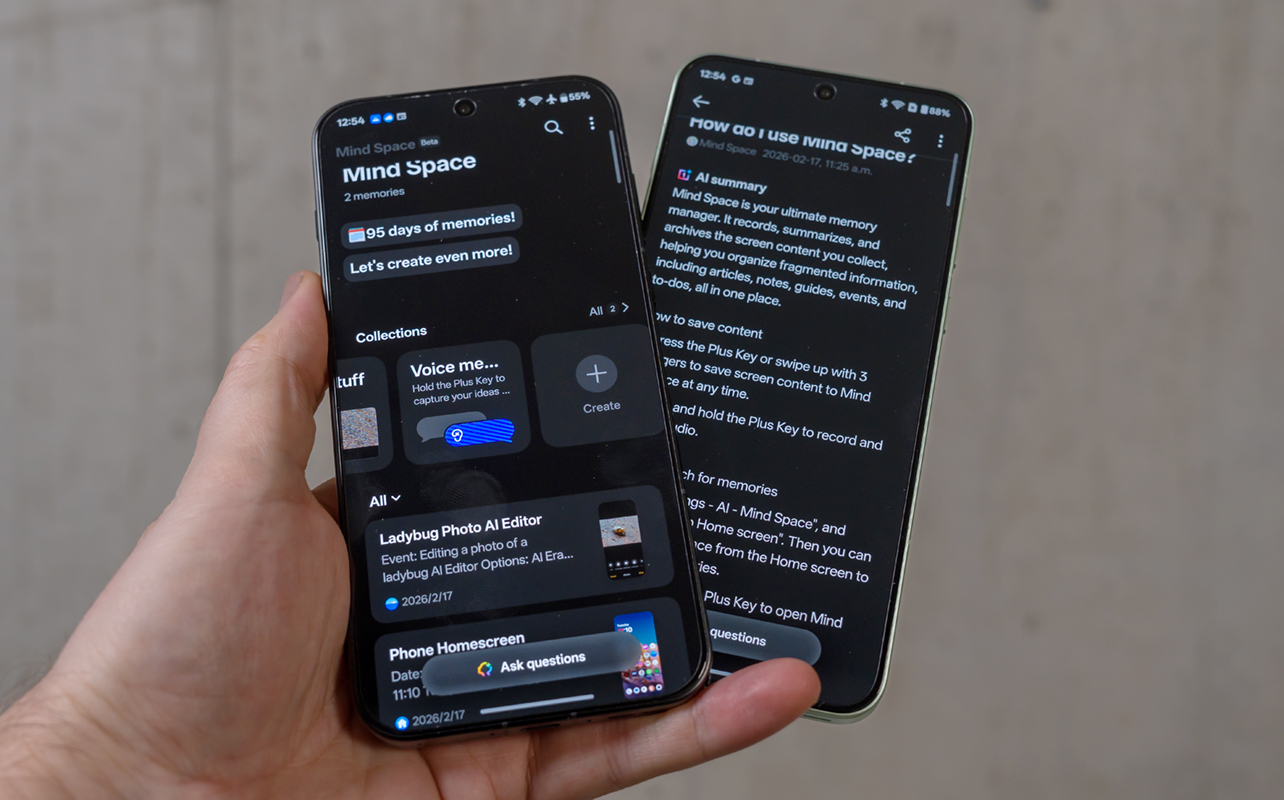
While both run on Android 16, they also run OxygenOS 16 on top as the skin or overlay. That means you get the same look and customization options, making animations and organizing apps highly similar. In that same vein, security updates and platform features generally align in the same exact timeframe.
OxygenOS 16 introduces Mind Space AI, a centralized AI space where you can save screenshots, voice memos and other content to organize and reference later anytime. This area ties into broader AI tools and appears on both phones.
That also goes for how Google Gemini integrates into the device. You can use it anytime to help with a variety of things as a much smarter AI. Mind Space and Mind Assistant give it the ability to access and reference information contained in the saved files. Other AI productivity tools are also in the mix for both, like AI Writer, AI Translate, AI Search, and AI VoiceScribe.
While not AI-driven, Live Alerts turns the front-facing camera cutout into a contextual space, not unlike the iPhone’s Dynamic Island. Swipe up on either screen and Shelf appears with a card-based layout of widgets. Smart Sidebar is a great way to not only access certain apps quickly but copy and paste files and text into the File Dock. Both the 15 and 15R also offer floating app windows (Flexible Window) and split-screen modes.
OnePlus commits to four years of Android updates and six years of security updates for both phones.
A telephoto camera is missing in one of these
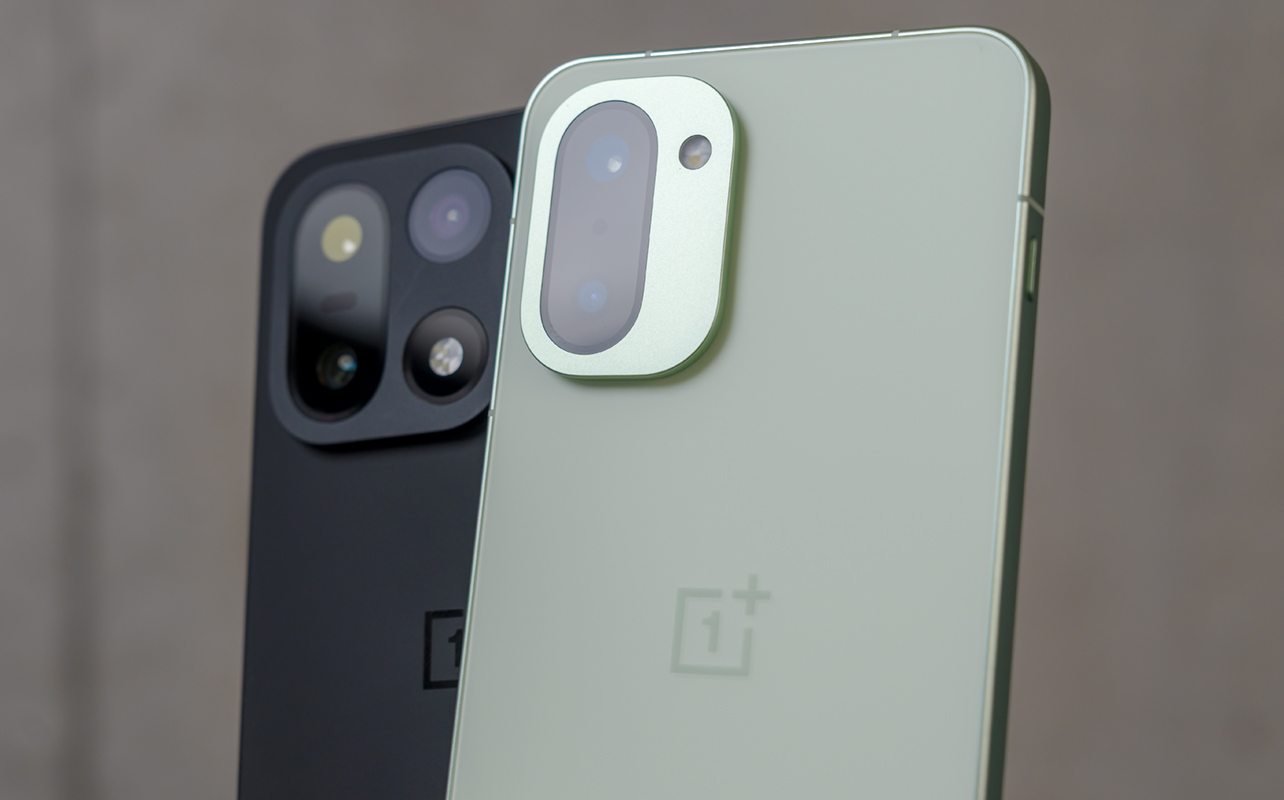
The camera situation is clearly different in that the 15R doesn’t have a telephoto lens like the 15 does. That 50-megapixel telephoto gives it a big edge in versatile photography simply because you can zoom in on a subject. Both phones use the exact same 50-megapixel image sensor for the main camera, and coupled with the same OnePlus DetailMax Engine image processing, photo quality doesn’t change between them.
The 50-megapixel ultra-wide camera on the 15 is noticeably better than the 8-megapixel ultra-wide on the 15R. It’s not really because of the megapixels, it’s actually more because of the respective sizes of the two image sensors. It’s the same story with the 32-megapixel front cameras on both phones. They may produce the same number of pixels but the 15’s front camera uses a bigger sensor. Hence, you’ll notice quality differences between their photos.
Based on these details, you can expect better photos to come from the OnePlus 15. The main cameras may be the same but once you need to zoom in or go ultra-wide, you sacrifice some of that versatility with the OnePlus 15R. The practical effect is straightforward: while the 15R can still capture wide angles and solid day-to-day photos, it won’t match the flagship’s range or flexibility in challenging compositions or zoomed shots.
Equally notable is that neither phone benefits from OnePlus’ prior collaboration with Hasselblad, the storied Swedish imaging brand. That changes image processing, even compared to the previous OnePlus 13 and OnePlus 13R, which both use the Hasselblad-infused processing.
Battery life and charging for days
You get generous battery life on both sides here. The 15R holds a slightly larger 7,400mAh cell compared with 7,300mAh in the OnePlus 15. It’s not a big discrepancy between the two on paper, but what matters more is how the extra capacity plays a key role for either device. Battery life lasts for well over a day of heavy usage, often outpacing rival Android phones with time to spare.
A lot of this depends on what you’re doing on the phone but there’s no wrong choice between them because neither leaves you hanging. Plus, charging speeds are faster compared to competitors. Each phone comes with an 80W charger and cable capable of fully charging from 0-100% in about 40 minutes for the 15, and about 60 minutes for the 15R.
One big discrepancy is that only the 15 supports wireless charging, which is capable of handling 50W chargers like the AirVooc. Conversely, the 15R doesn’t support wireless charging at all, taking away that convenience.
Another key point is MagSafe support. You can only make use of that with a case supporting it since neither phone has it built-in. OnePlus actually makes its own magnetic cases to serve that purpose and I do recommend trying one because it also opens up opportunities to use all sorts of other MagSafe accessories.
Which OnePlus phone should you buy?
The OnePlus 15 and OnePlus 15R are more alike than not, especially when placing them together side by side. Both sport modern designs with vibrant displays, along with robust battery life. But the flagship OnePlus 15 stands out through its powerful chipset, more capable camera system, and broader feature support. On the other hand, the 15R dials back on select areas to focus on matching performance with value.
While the two share so much in both hardware and software, their respected distinctions draw the line to help you decide which way to go. The best part is there is no bad option between them. Though the broader OnePlus 15 lineup could be better on the camera side, if that’s not a major consideration for you, chances are results will satisfy you either way.
In the end, the choice between these two devices comes down to priorities. If ultimate capability and versatility matter most, the flagship 15 may be the way to go. If balanced performance and value do the trick, then the 15R model does that well. The best way to know for sure is to put them in your own hands at a Best Buy or Best Buy Mobile location. You can also explore some special launch offers.
Check out the OnePlus 15 and OnePlus 15R available now.
Update: Here’s everything you need to know about OnePlus exiting North America and what it means for existing customers.