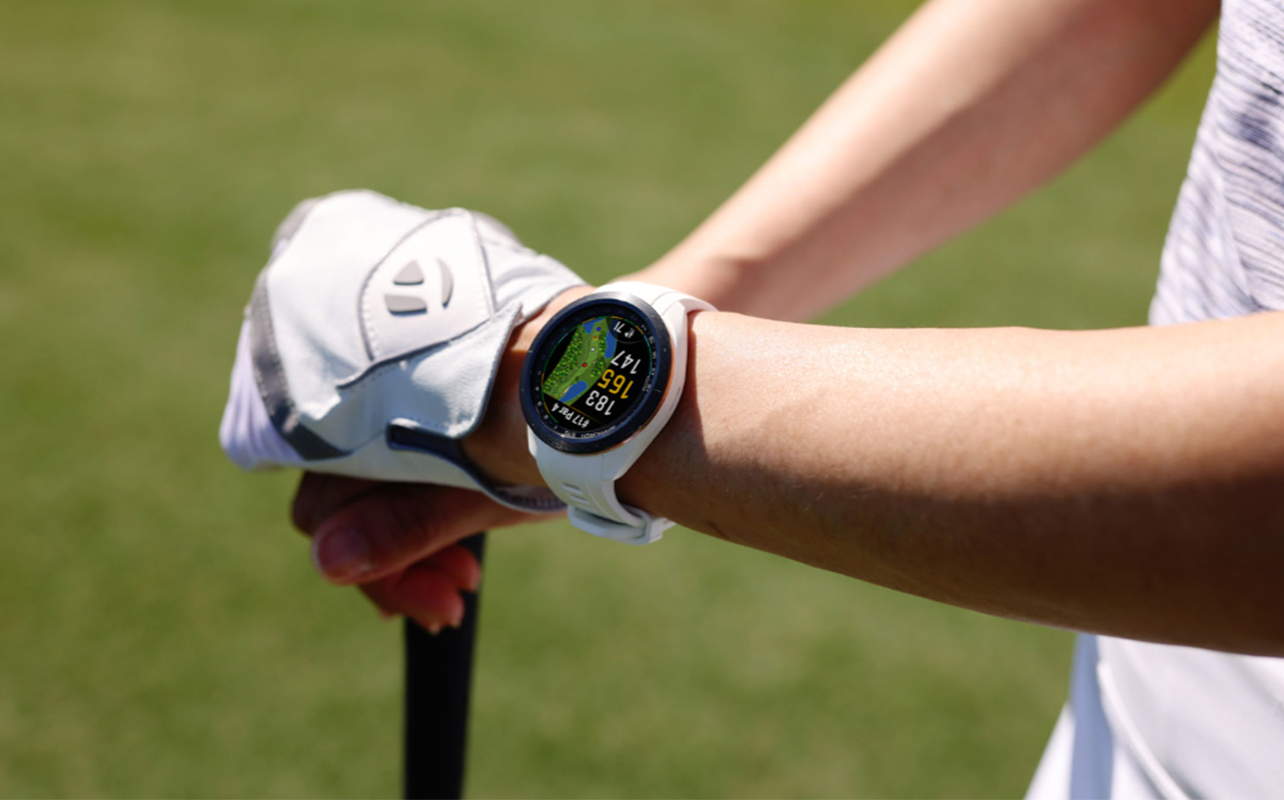
A golf watch or golf smartwatch could bridge the gap between amateurs and pros—at least enough to analyze your game and to do so in a mere fraction of the time. You won’t have to guess how far you hit the ball, nor which club might be best for the next swing. These specialized watches are also packed with information about the courses you play on, giving you a better idea of what you can expect once you hit the links.
In this guide, we’ll explain what golf watches are, how they work, and how accurate they are. Plus, we’ll also talk about how they compare to rangefinders, and what to look when shopping for the best golf watch that makes sense for you—whether you’re a beginner or pro.

Table of contents
- What is a golf watch?
- Key golf watch features
- Best golf watches by type
- How to choose the right golf watch
- Frequently asked questions

What is a golf watch?
A golf watch is a GPS-enabled wearable designed specifically to help you play smarter on the course. In a sense, a golf watch is kind of like a virtual coach and caddie. It certainly won’t carry your clubs from one tee to another, but it will give you key information during a round.
Unlike a standard smartwatch, a dedicated golf GPS watch is built around course data and distance tracking. Most models come preloaded with tens of thousands of courses worldwide, including Canadian favourites from coast to coast.
What can a golf watch do?
Golf watches use GPS to:
- Measure distances to the front, middle, and back of the green: Instead of guessing yardage, you get instant numbers that help you commit to your shot. It gives you a reliable reference point for club selection, especially since pin positions change daily.
- Show hazards like bunkers, water, and doglegs: That means you can see how far you need to carry a fairway bunker or how much room you have before trouble starts. It’s not just about aiming at the green—it’s about managing the entire hole strategically.
- Track your shots and round statistics: Depending on the watch, this can include recording where you hit from, how far each shot travelled, and how many putts you took. Over time, that data helps you identify patterns, strengths, and areas to improve.
- Keep your score: Scorekeeping is handled digitally right from your wrist. Instead of juggling a scorecard and pencil, you can enter strokes as you go and review your totals instantly. After the round, your stats are stored and ready to analyze through a companion app.
Some premium models also include advanced features such as shot detection, swing-tempo tracking, club tracking using optional sensors, wind data when connected to a smartphone, and detailed course maps.
Who should use a golf watch?
A golf watch isn’t just for scratch golfers chasing tournament wins. Beginners benefit from simple distance guidance and easy scorekeeping, which builds confidence and speeds up decision-making. Casual golfers appreciate how it keeps rounds moving and improves consistency. Competitive players value the deeper shot tracking and performance data that can sharpen strategy. And if you frequently play unfamiliar courses, having hazard and layout information on your wrist can make a big difference.
How GPS works on a golf watch
A golf watch determines your position by communicating with GPS satellites. It’s really no different than how GPS in a car works, with traffic or toll roads among the obstacles to reaching a destination quickly. On a golf course, the watch will highlight bunkers, water, or trees that may complicate hitting the ball cleanly down the fairway or onto the green.
Most modern golf watches are accurate within roughly 3–5 yards under normal conditions. Distances to the centre of the green and major hazards tend to be the most reliable because they’re based on fixed, mapped coordinates. Exact pin position can be slightly less precise unless manually adjusted, since flag placement changes daily. Shot distance tracking can also vary depending on whether it’s automatic or manually confirmed. Overall, golf watch GPS accuracy is more than sufficient for club selection and course management for the vast majority of golfers.
GPS vs laser rangefinder
It’s true that GPS on a golf watch won’t match the pinpoint precision of a golf laser rangefinder. A rangefinder measures distance by shooting an invisible laser at a target—usually the flagstick—and calculating how long it takes for the beam to bounce back. This gives you exact yardage to that specific point.
A rangefinder shines, like the Garmin Approach Z82, in scenarios where exact flag distance matters most. For example, if you’re attacking a tucked pin over a bunker, trying to carry water by a narrow margin, or competing in a tournament where one or two yards could influence club choice, a laser gives you that added confidence. It’s also ideal for experienced players who prefer aiming at the stick rather than playing to the centre of the green.
Keep in mind there are advanced features that many tournaments don’t permit. With the Garmin Approach Z82, for example, its Tournament mode turns on the external indicator light to let other players know it’s enabled. So make sure to check tournament rules.
On the other hand, a golf watch works differently. Instead of aiming at a target, it communicates with satellites to determine your location and calculates distances to pre-mapped areas like the front, middle, and back of the green, as well as hazards and layup zones.
A golf watch is often better suited for overall course management. If you’re playing a new course, dealing with blind landing areas, or simply want fast decisions without pulling out another device, a watch keeps the round moving. It also tracks score and performance stats, which a rangefinder doesn’t do.
For many golfers, the convenience and broader information make a golf watch more versatile, while a rangefinder remains the tool of choice for exact pin-hunting situations.
Here’s a quick table comparing these two devices in terms of their key features:
| Feature | Golf watch | Laser rangefinder |
| Distance to green | Yes | Only if aimed |
| Distance to flag | Approximate (mapped) | Exact |
| Hazard distances | Yes | Must manually aim |
| Score tracking | Yes | No |
| Shot tracking | Yes (select models) | No |
| Speed of use | Instant | Requires aiming |
| Works in fog/heavy rain | Usually yes | Can struggle |
| Requires steady hands | No | Yes |
Consider a golf watch if you want convenience, full-course awareness, and score tracking. Choose a rangefinder if you prioritize exact pin distance and play competitively. Some advanced golfers carry both.
Why GPS accuracy is enough for most golfers
Most golfers don’t need an exact number to the flag. It’s usually better to know the general distance to the middle of the green. Even skilled golfers don’t hit every shot the exact same distance. A typical amateur’s shot might land 10–20 yards shorter or longer depending on how well they strike the ball. Because of that natural variation, knowing you’re 152 yards to the middle of the green is more useful than knowing you’re exactly 149.3 yards to the flag.
That’s why many golfers focus on the middle of the green instead of the exact flag location. Aiming for the centre gives you a safer target and reduces the risk of missing short or long if the flag happens to be near the front or back edge. In other words, a reliable general distance helps more than an ultra-precise number most players can’t realistically use.
GPS also works instantly without requiring you to steady your hands or aim at the flag which keeps play moving. Unless you’re competing at a very high level where exact pin placement is critical, golf watch GPS accuracy is more than sufficient.
Golf watch software and ecosystems
Unlike an Apple Watch or Wear OS device, most golf watches run on proprietary operating systems developed by their manufacturers. For example, Garmin models like the Garmin Approach S12, Garmin Approach S44, and Garmin Approach S70 operate on Garmin’s own platform. This means you won’t have access to a traditional app store filled with third-party apps, but you do get deeply integrated golf functionality designed specifically for on-course performance.
The advantage of proprietary software is focus. Golf features are built directly into the system rather than added through downloadable apps, and software updates come straight from the brand to improve course data, battery efficiency, and tracking capabilities.
Golf watch apps and third-party support
Companion apps significantly extend what your golf watch can do. For example, Garmin watches sync with the Garmin Golf app to provide advanced stat tracking, including strokes gained-style data on compatible models. This allows you to break down performance by driving, approach play, short game, and putting.
Virtual tournaments and leaderboards add a social dimension, letting you compete with friends or other golfers even if you’re playing different courses. This keeps rounds engaging and encourages consistent play.
Most golf watches now sync seamlessly with both iOS and Android smartphones using companion apps. The Garmin Golf app, for example, is available on iPhone (iOS) and Android devices. Typically, you don’t need to carry your phone during your round—the watch works independently—but syncing afterward allows you to analyze stats, join leaderboards, and update course maps.
The main limitation compared to Apple Watch or Wear OS devices is reduced third-party app access and fewer smart assistant features, but for golf-focused use, the ecosystem is streamlined and purpose-built.
Key golf watch features
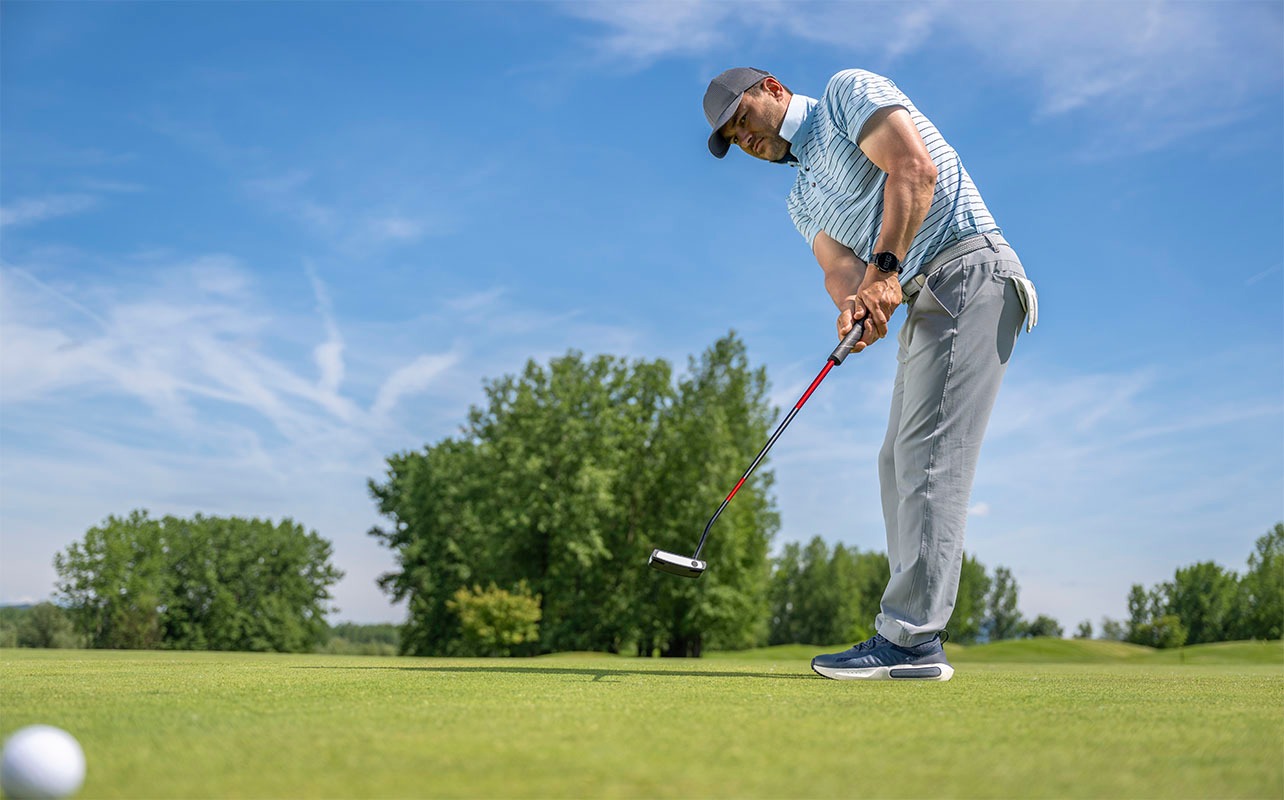
There are various features that make golf watches unique, and they have everything to do with playing the game better. They do vary from one device to another, so you may not see every one of these apply to every watch. But most are often readily available to you.
Distance tracking
Distance tracking is the foundation of every golf watch. It automatically calculates how far you are from key targets on the hole, including the front, middle, and back of the green. Many models also detect how far each shot travels, building a history of your actual carry distances rather than relying on guesswork. Over time, this creates a personalized yardage profile, helping you choose clubs based on real performance instead of assumptions.
Club tracking
Club tracking adds another layer of precision. This feature requires optional sensors attached to the grips of your clubs, which pair with compatible watches. Without sensors, you can still manually input which club you used after each shot. With sensors installed, the system can automatically record which club was used, calculate average distances, and highlight tendencies such as consistently missing left with a specific iron. For players who want data-driven improvement, this can reveal patterns that would otherwise go unnoticed.
Note that club sensor compatibility varies by model, so check specifications before purchasing.
Seeing the green
Most golf watches display a scaled layout of the green, allowing you to see its shape and depth before you hit your approach. You can manually adjust the pin position if it has been moved for the day. This is particularly helpful on longer greens where front-to-back distance makes a major difference in club choice. Understanding green depth can prevent coming up short or flying it long.
Playing a blind shot
On hilly or tree-lined courses, you won’t always have a clear line of sight to the green. A golf watch can show both direction and distance even when the target is hidden. This feature is especially useful on unfamiliar courses, helping you avoid hazards and stay positioned for a better next shot.
Keeping score
Digital scorekeeping eliminates paper scorecards and simplifies tracking. You can enter strokes hole by hole and review totals instantly. Many watches also log fairways hit, greens in regulation, putts, and total strokes. After syncing to your phone, you can analyze trends over multiple rounds and see where your game is improving—or where it needs attention.
Style, display, and durability
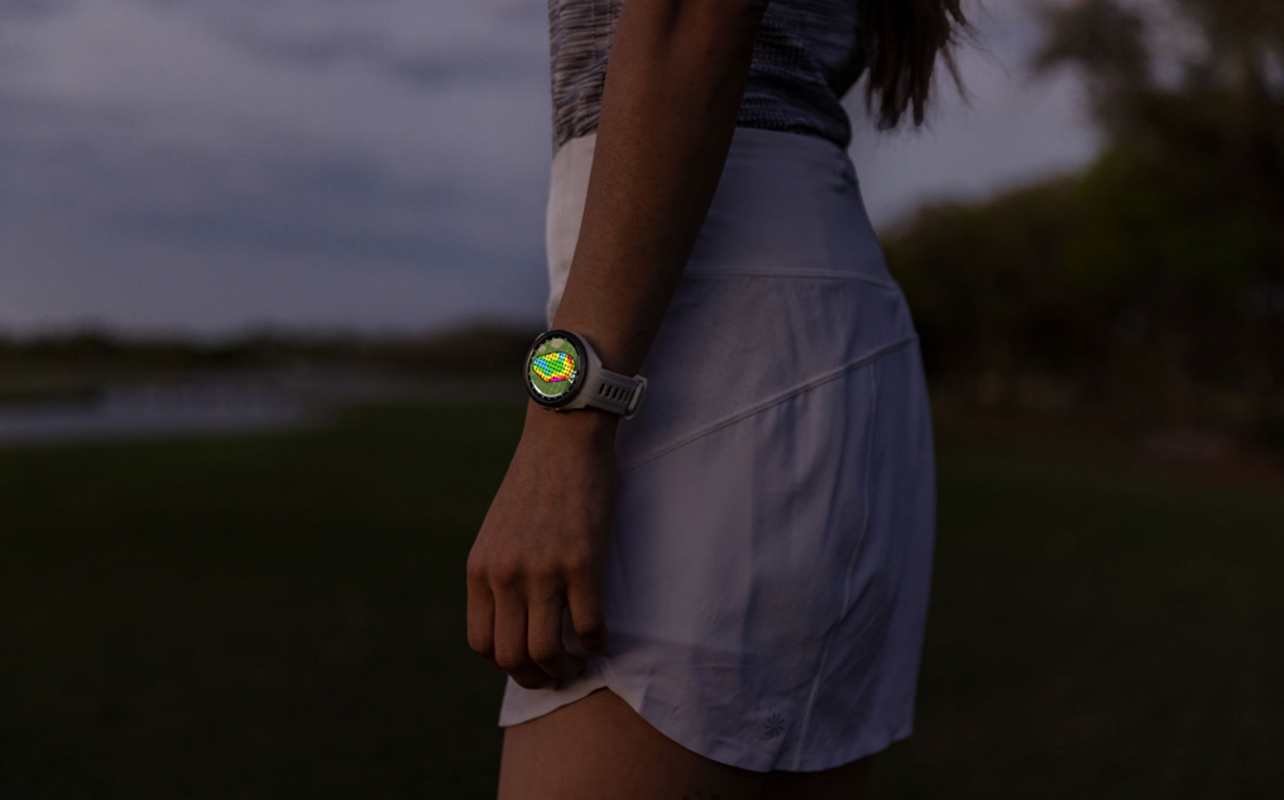
Golf watches are, well, watches, so you could expect there will be some flexibility to change the look and feel to suit your comfort and taste. There are ways to do that, and they apply to both the hardware and software.
Watch bands
Some golf watch manufacturers make their watches compatible with other bands if you want to change up the style or colour. Garmin golf watches use the same clipping mechanism as the company’s other smartwatches do, and you can easily swap them out to get the look you’re after.
They also come in a variety of materials and textures, including silicone, nylon, leather, metal, and titanium. Styles also vary within each of these materials, adding another thing to consider when you decide what will fit best with your preferences whenever you want to play a round.
Watch faces
If the default watch face isn’t doing it for you, switch it out for another one. Much like other smartwatches, Garmin’s Connect IQ store offers a number of alternatives, including the ability to use one of your own photos from your smartphone as a custom background. Changing the watch face can also adjust the information displayed, such as steps, heart rate, or quick-access golf data.
From a usability standpoint, watch faces are more than cosmetic. Some are optimized for high contrast and large numerals, making them easier to read in bright sunlight on the course. Others prioritize at-a-glance stats like battery life or next tee time. Choosing the right face can improve visibility, reduce distractions, and make your round feel more seamless.
Water resistance
For the most part, golf watches tend to have more rugged designs, with the durability to work perfectly fine in contact with rain, water, and sand, as well as temperature changes. It’s the kind of protection that will serve you well during an 18-hole round, though you can also rely on its durability if you choose to wear it during a wide range of other activities. Golf watches that include additional activity tracking very much fit those use cases. You just have to make sure they can handle both clear and saltwater.
Durability and glass
You don’t expect a golf watch to come into dangerous contact, but that doesn’t stop manufacturers from fortifying them. It’s common to see Corning Gorilla Glass on a variety of golf watches to ward off wear and tear, and also keep scratches at bay. You do still have to be careful as the glass isn’t indestructible, but these watches owe some of their ruggedness to the quality of the glass.
Smart features and smartphone notifications
Some golf watches blur the line between dedicated sports device and everyday smartwatch. Higher-end models may include step tracking, sleep tracking, and heart rate monitoring, allowing you to monitor overall fitness in addition to golf performance. This can be helpful if you’re using golf as part of a broader health routine.
Smartphone notifications are also common, letting you see incoming texts, calls, and calendar alerts directly on your wrist. You typically can’t respond to messages like you would on a full smartwatch.
However, these watches do not offer the same expansive app ecosystems as Apple Watch or Wear OS devices. Voice assistants like Siri or Google Assistant are generally absent, and payment options such as Garmin Pay may not support all Canadian banks. The trade-off is a system optimized specifically for golf rather than general-purpose apps.
Best golf watches by type
Here’s a simplified comparison to help narrow your options.
| Type of user | Ideal for |
| Beginner | Simple distances & scoring |
| Casual golfer | Style + golf features |
| Advanced player | Shot tracking & data |
Best golf watch for beginners
If you’re new to the game, simplicity is key. Look for a golf watch, like Garmin Approach S12, that offers clear front, middle, and back green distances, hazard yardages, and straightforward digital scorekeeping. You don’t need advanced swing analytics or club sensors right away—what you need is confidence and faster decision-making. A clean display, easy navigation, and strong battery life will make the learning process smoother and less intimidating.
Best golf watch for casual golfer
Casual players often want balance. You may care about style and comfort just as much as on-course features. Look for a watch that blends core golf functionality with everyday usability, such as step tracking and smartphone notifications. A slimmer design, interchangeable bands, and a bright display can make it something you’re happy to wear beyond the course. At the same time, reliable GPS distances and basic stat tracking will help you improve without feeling overly technical.
Best golf watch for advanced player
More competitive or data-driven golfers should prioritize deeper analytics. Features like automatic shot detection, compatibility with club tracking sensors, detailed performance stats, and advanced green mapping can provide valuable insight into strengths and weaknesses. A higher-resolution display can also improve readability of detailed hole layouts. For advanced players, the goal isn’t just yardage—it’s identifying patterns, optimizing strategy, and gaining measurable improvement over time.
How to choose the right golf watch

Choosing the right golf watch comes down to understanding what matters most to you on the course.
1. Set your budget
Entry-level watches focus on core GPS distances and basic scorekeeping, which may be all many golfers need. Premium models add advanced analytics, AMOLED displays, and expanded health tracking. Knowing your budget helps narrow options quickly and prevents paying for features you may never use.
2. Match the watch to your skill level
Your experience level should guide your feature selection. Beginners often benefit from simplicity and clarity rather than deep performance metrics. More competitive players may want club tracking, shot detection, and advanced statistical breakdowns. Being honest about your goals helps ensure the watch supports your development rather than complicating it.
3. Prioritize battery performance
Battery life affects convenience. Most golf watches last two to three rounds in GPS mode on a single charge, but some premium models extend that significantly. If you travel for golf weekends or prefer charging less frequently, longer battery life becomes a major advantage.
4. Choose the right display type
Display technology impacts readability and battery life. Memory-in-pixel screens offer excellent visibility in bright sunlight and superior efficiency, making them practical for long rounds. AMOLED displays provide sharper graphics and more vibrant colours but may use more power. If you play frequently in bright daylight conditions, screen visibility should be a key consideration.
Golfing without a watch
If a watch isn’t your style, there are devices that offer very similar features without strapping over your wrist. These GPS trackers are pocket-sized and have larger displays compared to watches. Hand-held golf GPS devices, like the Garmin Approach G20, offer the same distance tracking capabilities, view of course hazards, as well as club tracking when paired with the Approach CT10 club tracking sensors (sold separately).
Frequently asked questions
Are golf watches legal in tournaments?
Yes, in most amateur and many professional tournaments, GPS devices are allowed as long as slope compensation is disabled (if available). Always confirm local rules.
How accurate are golf watches?
Modern models are typically accurate within 3–5 yards. For most golfers, that’s more than sufficient.
Do they work without a phone?
Yes. A golf watch works independently during play. A phone is only required for syncing data and updates.
Can golf watches replace a rangefinder?
For many golfers, yes. If you want exact pin distance, a rangefinder is more precise. If you want full-course data and score tracking, a golf watch offers more versatility.

This article was drafted using AI technology and then reviewed, fact-checked, and revised by a member of our editorial team.