
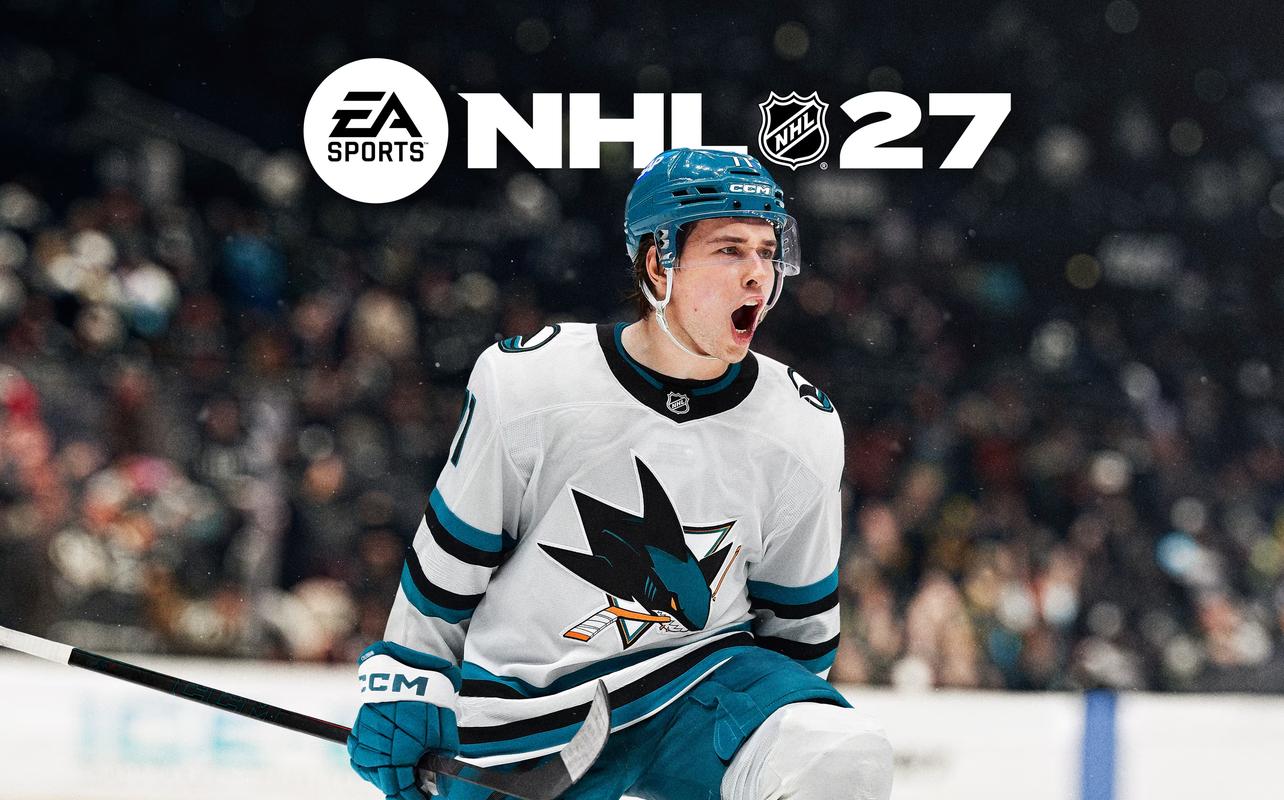
After playing NHL 27, the biggest change I noticed was around the action instead of on the puck. Skating onto the ice now carries more of the energy I expect on game night. The crowd reacts with more life, arenas have more personality, and the presentation doesn’t rush past everything between whistles. The hockey itself remains very familiar, and that’s where my hesitation starts.
If you played a lot of NHL 26, NHL 27 isn’t a major jump in how the series plays. If you skipped last year’s game, there’s considerably more here for you. Let’s get into what’s actually different this year.

NHL 27 details
Platform(s): XBOX Series X|S, PlayStation 5
Developer(s): EA Vancouver
Publisher(s): Electronic Arts
Genre: Sports
Modes: Single player, multiplayer
ESRB Rating: Everyone 10+ (E10+)
Arena atmosphere brings NHL 27 closer to a TV broadcast
NHL 27 does a much better job of separating one arena from another. Team-specific details make each rink easier to recognize before and during a game. Goal horns and music carry more personality because the crowd reacts around them instead of fading into the background.
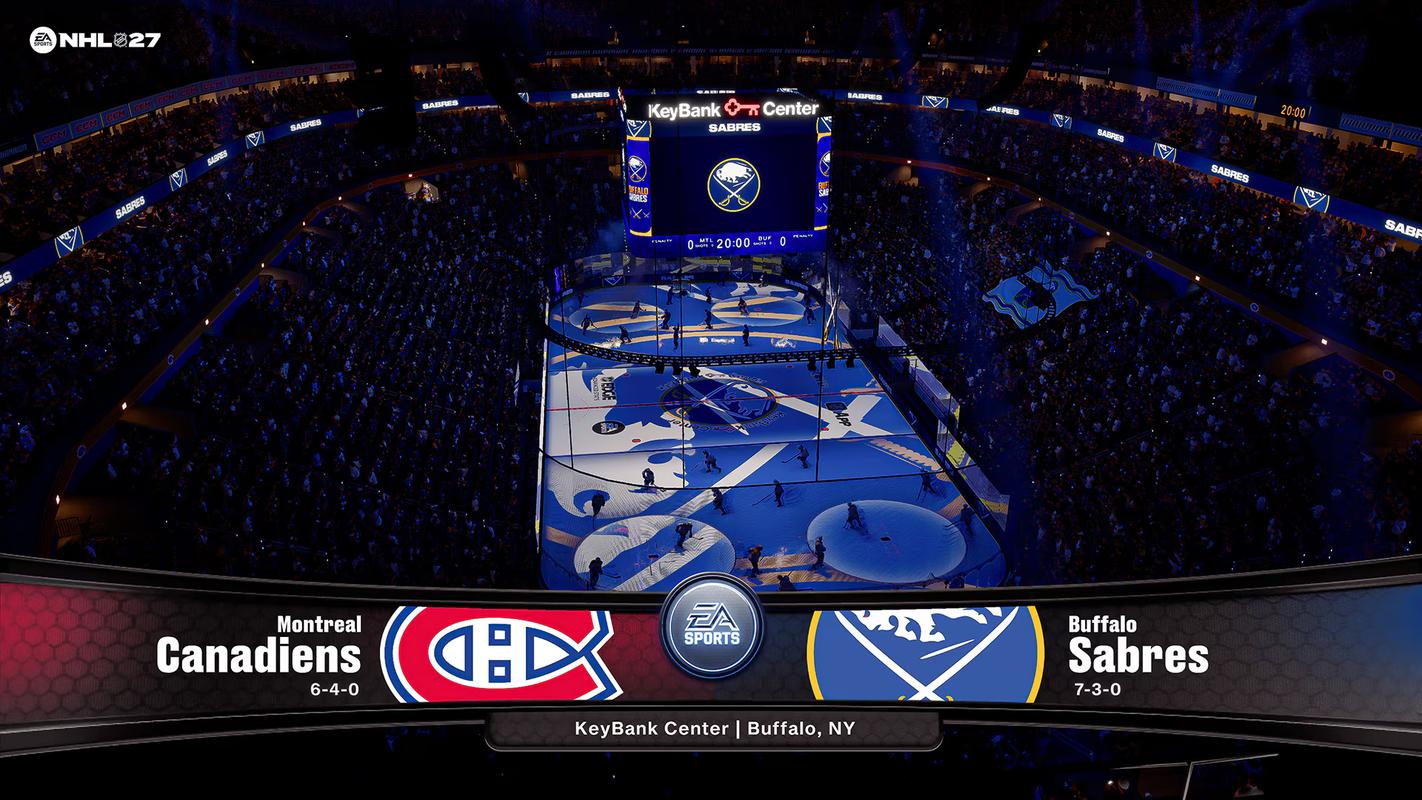
Over a season, the arenas don’t blend together as quickly. The game also spends more time establishing where you’re playing before the next faceoff. Lighting makes the ice, players, and uniforms easier to distinguish.
John Buccigross and Darren Pang take over the commentary booth. Their calls react to what’s happening on the ice, and the new broadcast package looks much closer to an NHL telecast. The commentary doesn’t always sound completely natural, but it works well with the rest of the game-night presentation.
Crowds react more directly to the game instead of looking and sounding disconnected from the play. I found that the added energy made close games more intense, especially when control started shifting toward one team.
Menus are also quicker to move through, which sounds minor until you’re managing rosters or jumping between modes. NHL 27 has better lighting and arena detail, although some character models remain behind the rest of the game. The sound does even more to sell the atmosphere, especially when a hit connects or an arena erupts after a goal.
NHL 27 plays good hockey, but Team Playbooks blur together too often
Once I got on the ice, I had a lot of fun with NHL 27. Checks connect with a hard impact, and goalies respond differently as pressure builds. Keep the attack alive in the offensive zone and you can wear a goalie down, opening chances that weren’t there earlier. You’re better off working the puck around the zone and keeping the attack going instead of waiting for one clean shot.
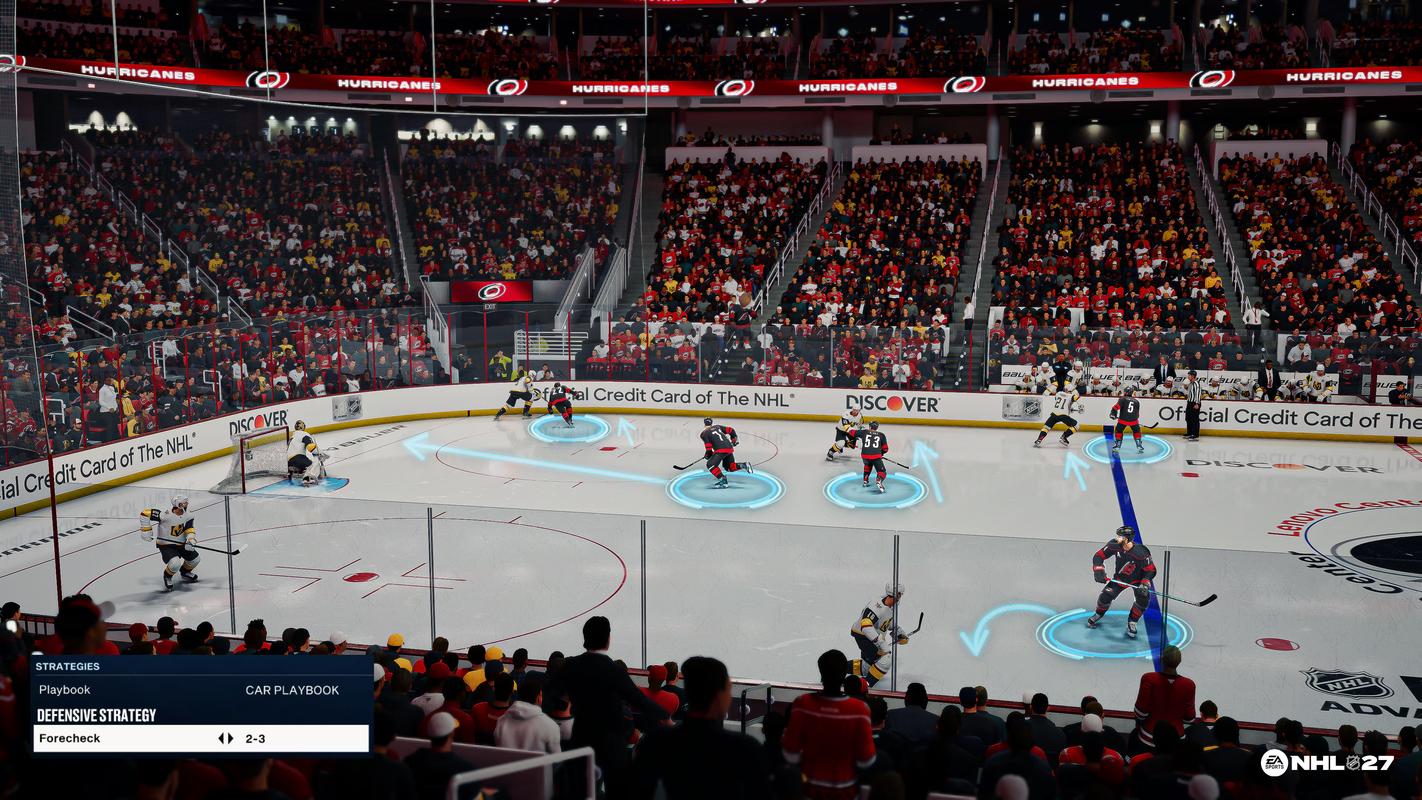
Team Playbooks use NHL EDGE data to shape how each team attacks and defends. Defensive positioning and team behaviour can change depending on who you’re facing. I noticed those differences more on defence than offence. Some teams close space more aggressively, but the offensive side doesn’t always create the same clear identity.
Each opponent should force you to approach the game differently. In practice, those differences can be subtle enough that player ratings seem to have a larger effect. The bigger problem is that you’re locked into your chosen playbook once the game starts. For example, if an opponent starts stretching your defence and creating too many chances, that’s normally when you’d change how your team is set up. You can’t switch the full Team Playbook you chose before the game, which limits how much you can react when the matchup starts going in a different direction.
Passing can derail a good rush
Passing remains one of the areas that frustrates me most. Moving the puck quickly should be dependable in a hockey game, yet the normal passing logic can send the puck to a teammate you weren’t trying to hit. Icon Passing is more reliable because it lets you choose the intended receiver directly, but relying on it means holding RT and choosing the receiver by icon for passes that should feel routine. That can also get in the way when you’re trying to move quickly into a one-timer, shot, or check.
Faceoffs also need another look because they haven’t kept pace with the improvements elsewhere on the ice. These problems don’t ruin NHL 27, but they become obvious because the hitting, skating, and goalie play work much better. A good rush can lose its momentum quickly when something as basic as moving the puck doesn’t respond the way you expect.
If you played NHL 26, most modes are familiar
NHL 27 carries forward the same broad set of modes, but this year’s updates are concentrated in only a few places. Be a Pro and regular Franchise received their bigger updates in NHL 26. If you played last year’s game, you’ll recognize most of what you’re coming back to.
Coming back after skipping NHL 26 is different. Those Be a Pro and Franchise updates are already part of NHL 27, so you’re catching up on more than this year’s additions.
Connected Franchise focuses on your league group, not full franchise management
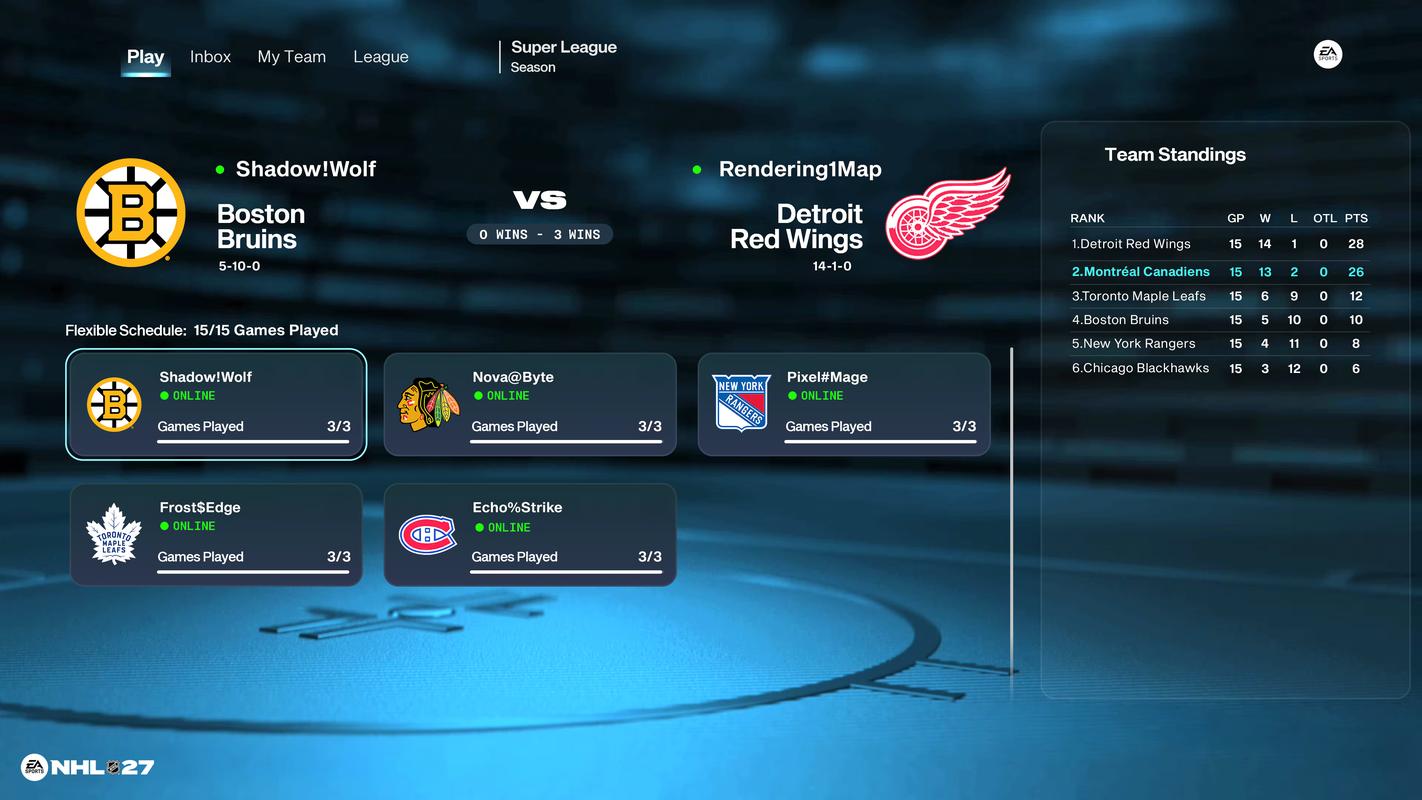
Connected Franchise lets groups of three to 32 people build an online league and manage their own teams across a season. Trades and free-agent bidding keep the league active between games.
I like seeing online franchise play return, but the current version doesn’t include the same long-term management as regular Franchise mode. Player development and aging aren’t part of Connected Franchise right now. The focus is much more on running an online league with friends.
If Connected Franchise was one of the reasons you were looking at NHL 27, its restrictions are hard to ignore. You need other people who want to commit to the league, and it isn’t a replacement for the full Franchise experience. EA Vancouver can build on the mode from here, but right now I wanted more from what happens between one season and the next.
Be a Pro and HUT change less this year
Be a Pro gets some new story and draft presentation, but most of the work happened in NHL 26. The new material changes the beginning of your career, then the experience returns to the same general structure. I wouldn’t buy NHL 27 just for another major Be a Pro overhaul because that isn’t what this year provides.
Hockey Ultimate Team, or HUT, now includes authentic coaches and Team Playbooks. They let you shape how your lineup approaches a game, but they don’t address my larger problem with the mode. Building a competitive collection still puts too much emphasis on packs and a long grind for collectibles.
If HUT is already where you play most, the new tactical options may interest you. If packs and the collectible grind frustrated you before, those frustrations are still here.
NHL 27 makes more sense if you skipped last year
I enjoyed NHL 27, but I wanted a bigger step forward after NHL 26. The hockey works well, and the arena work changed a full game more than I expected. Hearing each rink come alive around the action gave me more reason to pay attention to where I was playing instead of treating every matchup the same.
Connected Franchise and Team Playbooks give NHL 27 two important additions, but neither completely changed how I played. Connected Franchise is a welcome return for online leagues, yet its long-term management is limited. Team Playbooks can change defensive behaviour, but the differences on offence aren’t always clear enough from one opponent to the next.
| Pros | Cons |
|---|---|
| Arena atmosphere makes games more distinct | Connected Franchise lacks long-term tools such as player development and aging |
| Core hockey remains enjoyable with checking that connects cleanly and improved goalie behaviour | Passing remains frustrating |
| New broadcast presentation brings more energy to games | Several returning modes change very little |
| Team Playbooks add some tactical differences between opponents | Team Playbooks don’t create enough consistent team-to-team variation |
If you haven’t played since NHL 25 or earlier, there’s much more waiting for you. You’re getting the larger mode updates from NHL 26 along with this year’s arena work and Connected Franchise. If you were playing NHL 26 regularly last year, I’d look more closely before upgrading. The decision comes down to how much the new atmosphere and online franchise play matter to you.
Passing and faceoffs are reminders that the on-ice game still needs more attention. They didn’t stop me from enjoying NHL 27, but they were harder to ignore because hitting and goalie behaviour work much better.
Overall assessment of NHL 27
Gameplay: 3.7/5
Graphics: 3.7/5
Sound: 4/5
Lasting appeal/Replayability: 3/5
Overall rating: 3.6/5 (72%)
NHL 27 gave me plenty of enjoyable hockey, and the game-night atmosphere is the best reason to come back this year. I just wanted more of that same progress across the modes and the hockey underneath. If you’re returning after a year or two away, there’s a lot here to catch up on. If NHL 26 is still getting regular play, this year’s upgrade is a much closer call.
Ready to hit the ice? Shop NHL 27 at Best Buy Canada and experience the livelier arena atmosphere, Connected Franchise, and Team Playbooks for yourself.





Wow. Cool write up. It makes me want to look into NHL27. The last one I played was NHL24 gifted from Père Noël. Go Habs Go!
This aligns a lot with what I’ve heard.
My husband used to buy NHL every year. He stopped after a while when new iterations felt more like they should have been DLCs, and worse, like they lost good features. He was excited when 26 came out and enjoyed playing. As much as crowd atmosphere is a nice bonus, it doesn’t justify a full game price. But players who don’t already have 26 would benefit from 27, as you stated. These are the years when EA misses out on a lot of purchases and should reconsider DLCs to update previous versions. The smaller price tag, I think, would bring in more profit. Thanks for the great article, Jon, as usual!