
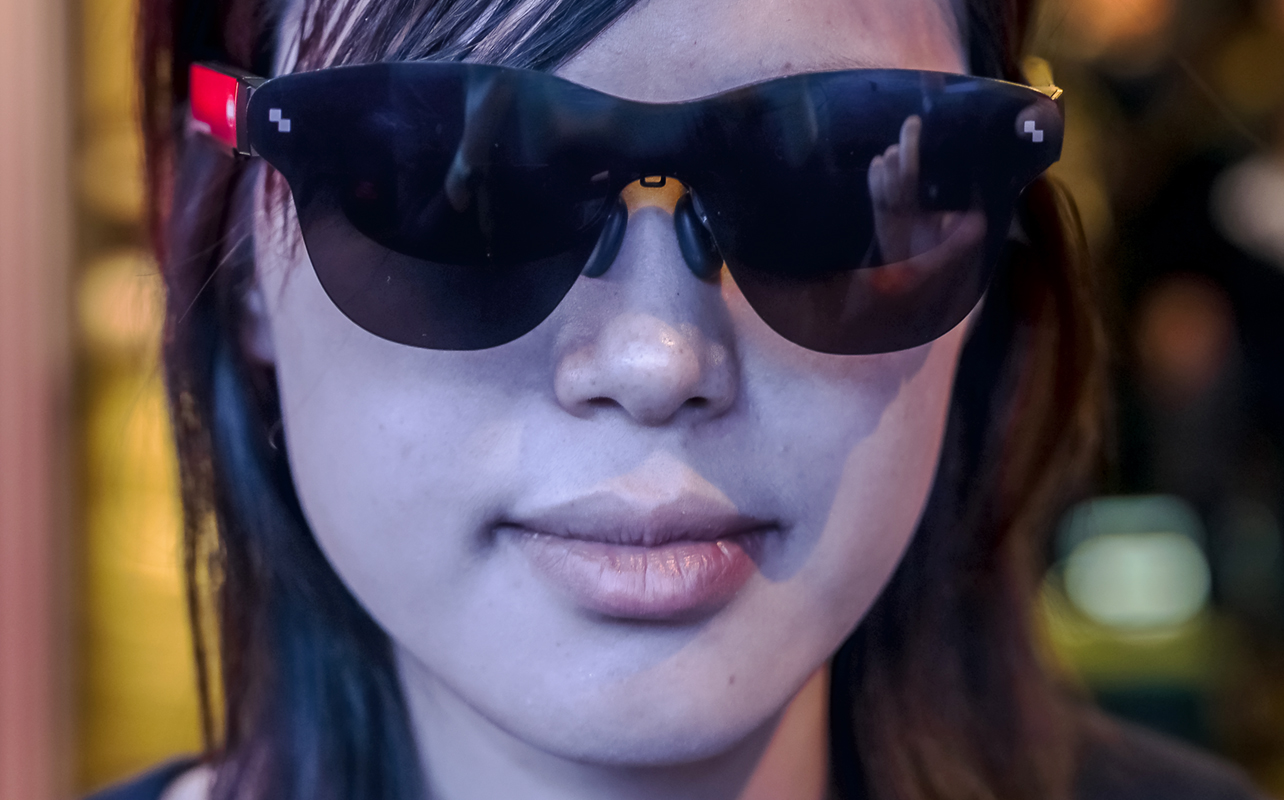
You don’t have to look too far to see one brand or another showcasing a pair of smart glasses at CES this year. Some brands that aren’t even solely specializing in the category are getting in on the action, though there’s an important distinction over and above that: what makes glasses “smart” isn’t the same across the board.
Some will project a screen in front of you when plugging into a device like your phone. Others have built-in transparent displays where you can read messages, news, weather forecasts, and notifications. Some purely focus on audio experiences, and even some meant to help the vision impaired. Sports represent another key point of interest. I saw a pair of smart swimming goggles and another pair for skiing.
The term “smart glasses” will likely evolve into wearable devices that can do different things depending on what components they’re equipped with. Not unlike smartwatches and how they’ve changed over the years. With that in mind, here are some of the standout smart glasses at CES 2026.

XREAL 1S and R1
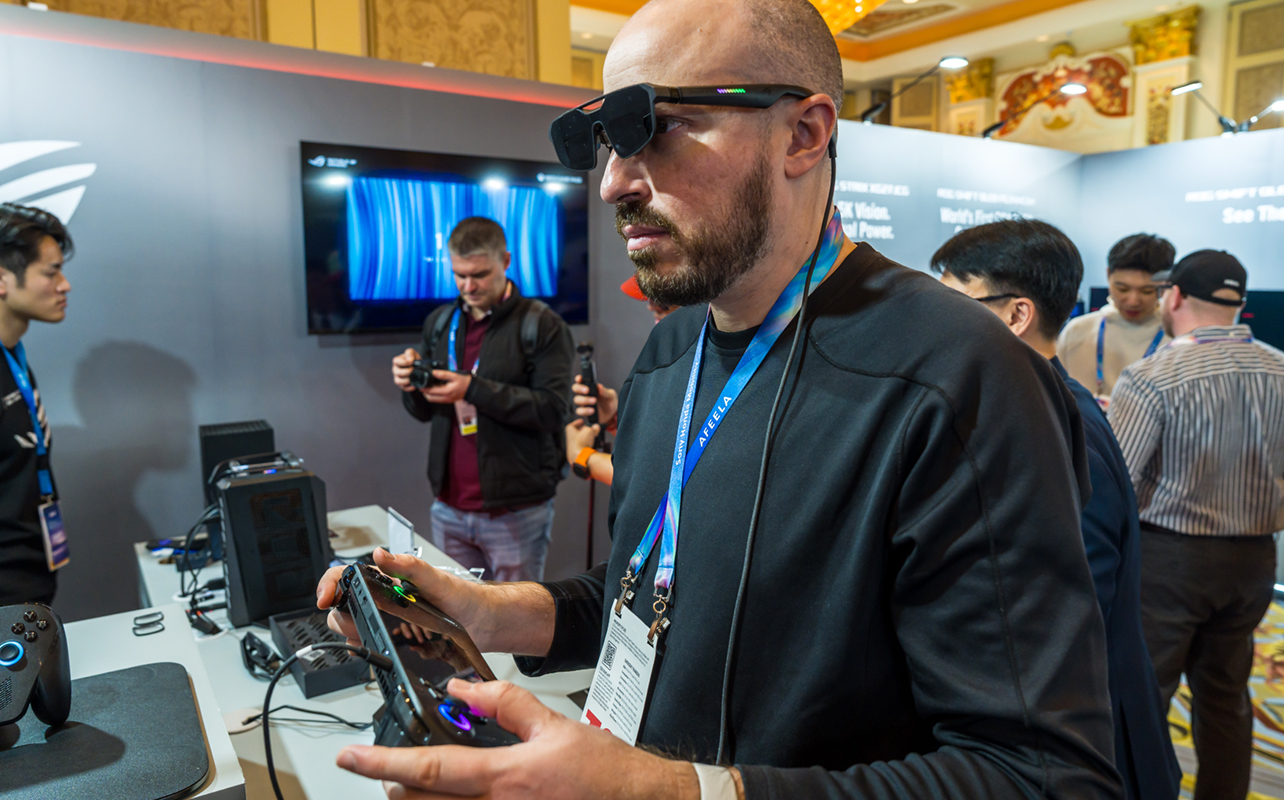
The XREAL 1S are lightweight glasses with a general purpose AR display, featuring a 1080p HD virtual screen with a 120Hz refresh rate, a 52-degree field of view, and automatic dimming for different lighting conditions. Audio comes from Bose-tuned built-in speakers, with support for headphones or earbuds when connected to phones, tablets, laptops, or handhelds over USB-C.
Powered by XREAL’s X1 spatial computing chip, the 1S supports low-latency visuals and 3DoF head tracking, letting the virtual screen follow your view or stay anchored like a TV, all in an 82-gram frame.
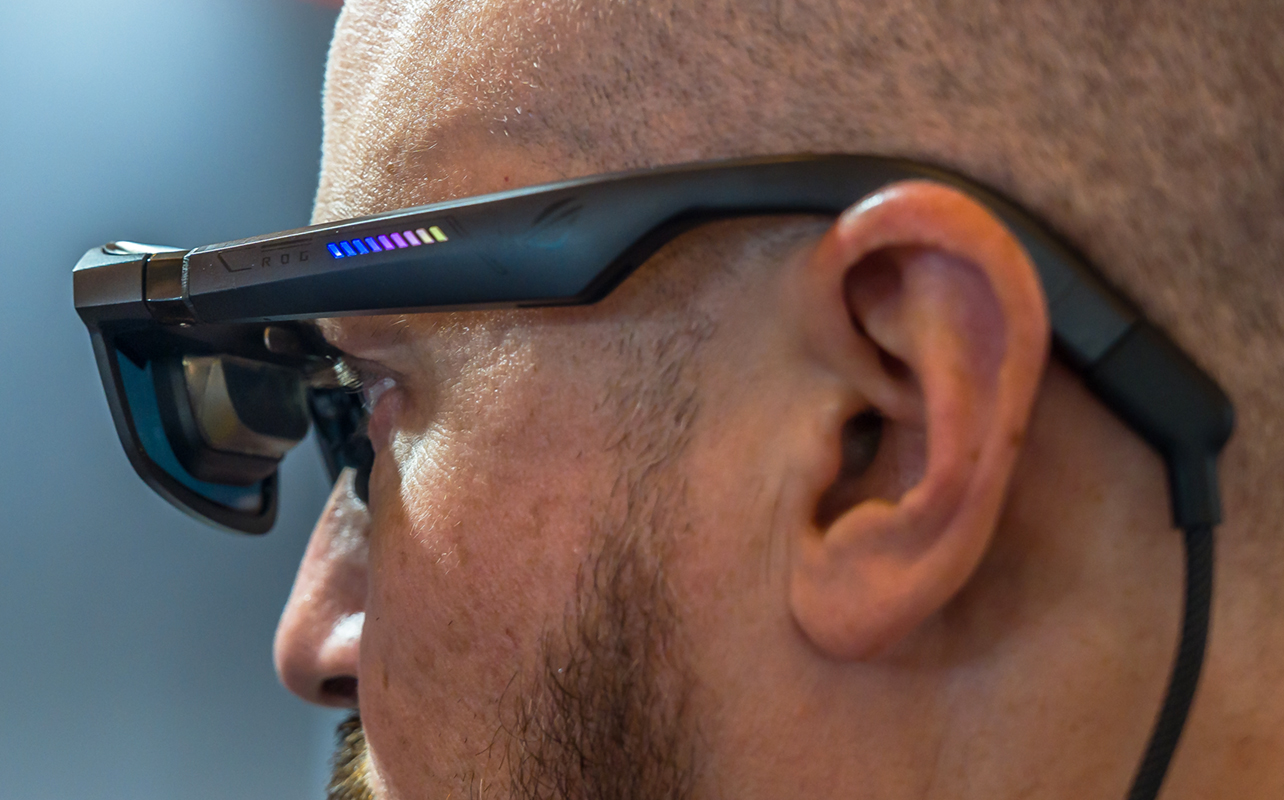
For gaming, XREAL’s tech extends into a partnership with ASUS on the ROG XREAL R1, designed to pair seamlessly with the ROG Ally X. A single USB-C connection delivers a 171-inch virtual display while keeping the Ally’s native controls intact. The R1 upgrades the experience with 240Hz micro-OLED displays and a wider 57-degree field of view, and when paired with the ROG Control Dock, it can easily switch between PCs, consoles, and handhelds for a versatile AR gaming setup.
MemoMind One
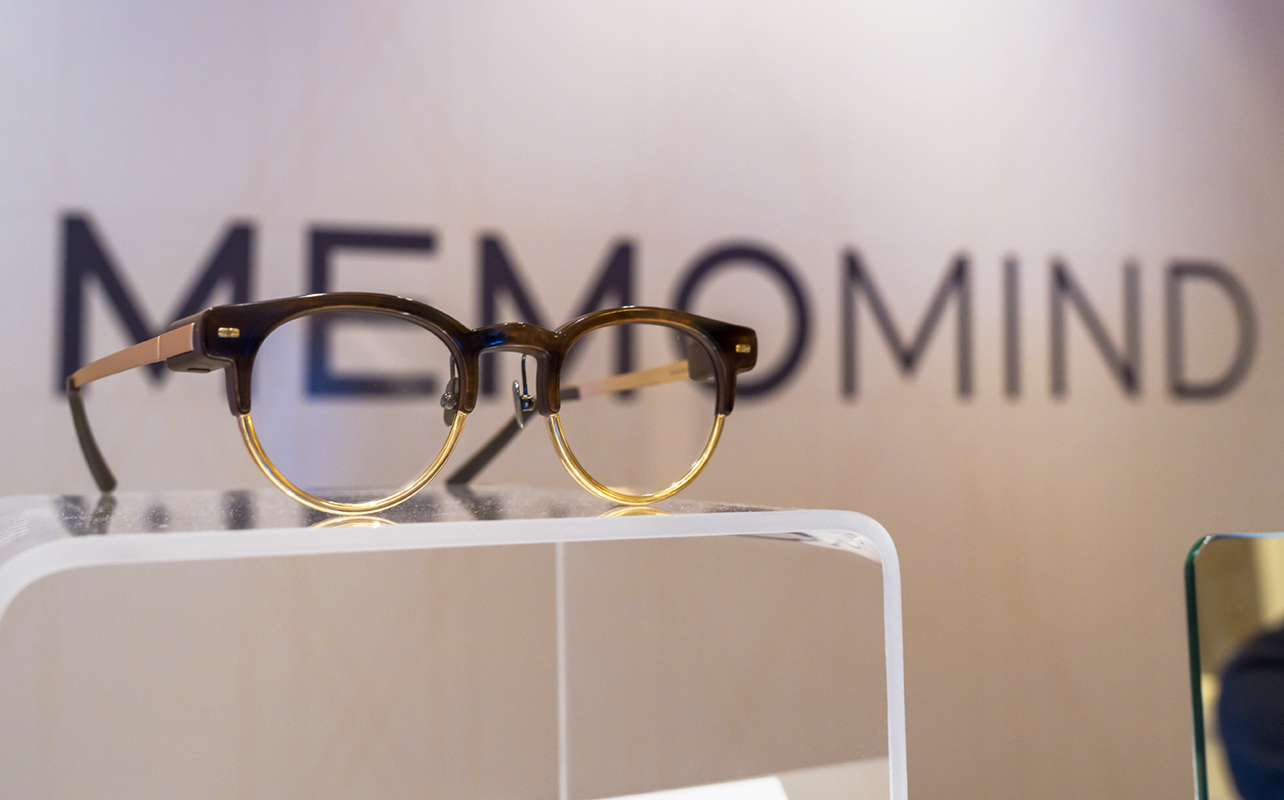
MemoMind is a brand that falls under XGIMI, a company that’s made a name for itself with portable projectors. These are designed to be glasses you can wear throughout the day, so your prescription details can apply here. Basically, there’s a dual-eye display, where you can see an interface with green text laid out in front of you. You can then cycle through features like AI note-taking, translation, navigation, a teleprompter, notifications, and song lyrics.
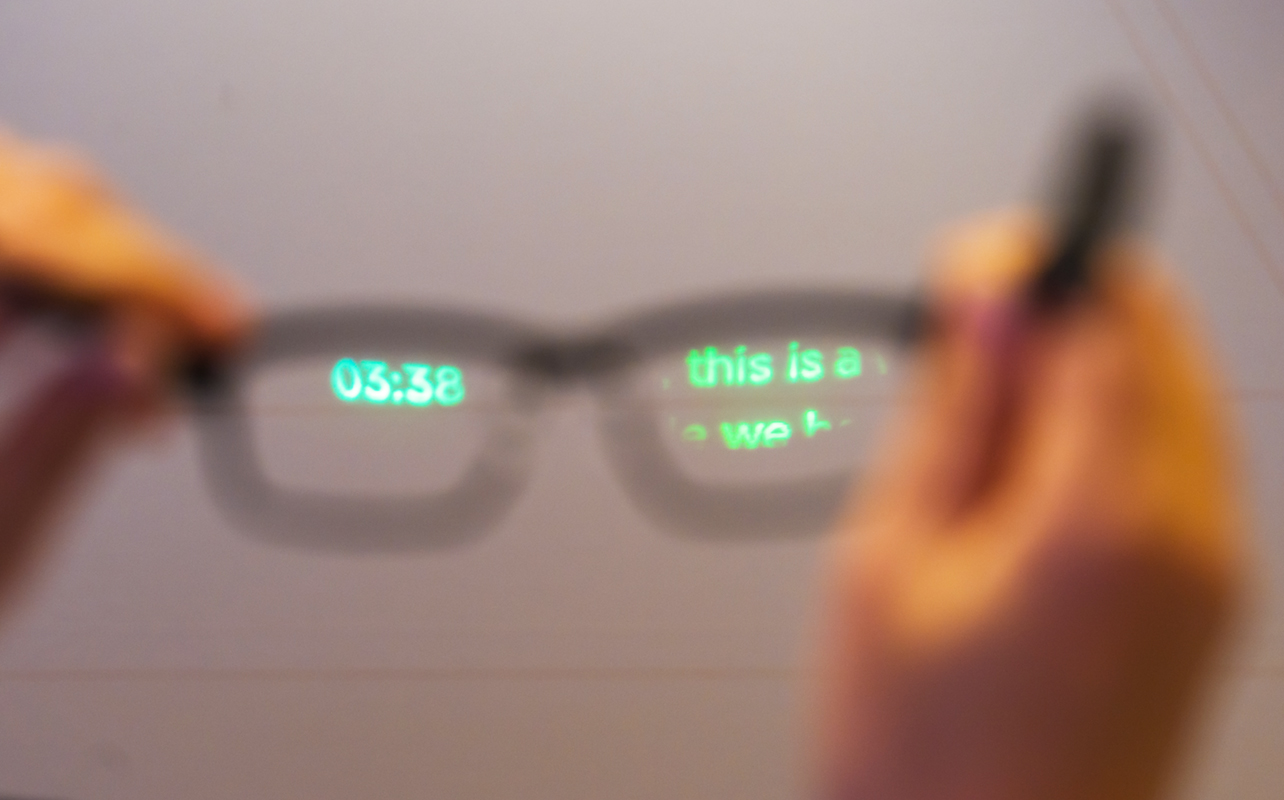
MemoMind One runs on a hybrid multi-LLM AI system that intelligently switches between models like OpenAI, Azure, and Qwen. These glasses also have built-in speakers that aren’t bad, but are also considerably unique given how many frame styles and colours are part of the lineup. Not only are the frames customizable, but also interchangeable with other temple designs.
Even Realities G2

Even Realities G2 glasses use a very similar concept to the MemoMind, only the implementation and integration makes them quite different. Here, too, you get green text laid out in a dual-display, only this system uses a combination of buttons and a touch-sensitive slider to navigate the interface.
Teleprompt is more unique here because it syncs text while listening to your voice, dimming it as you speak so you know where you are. There are 30 languages ready to translate, along with a news feed you can cycle through as well.
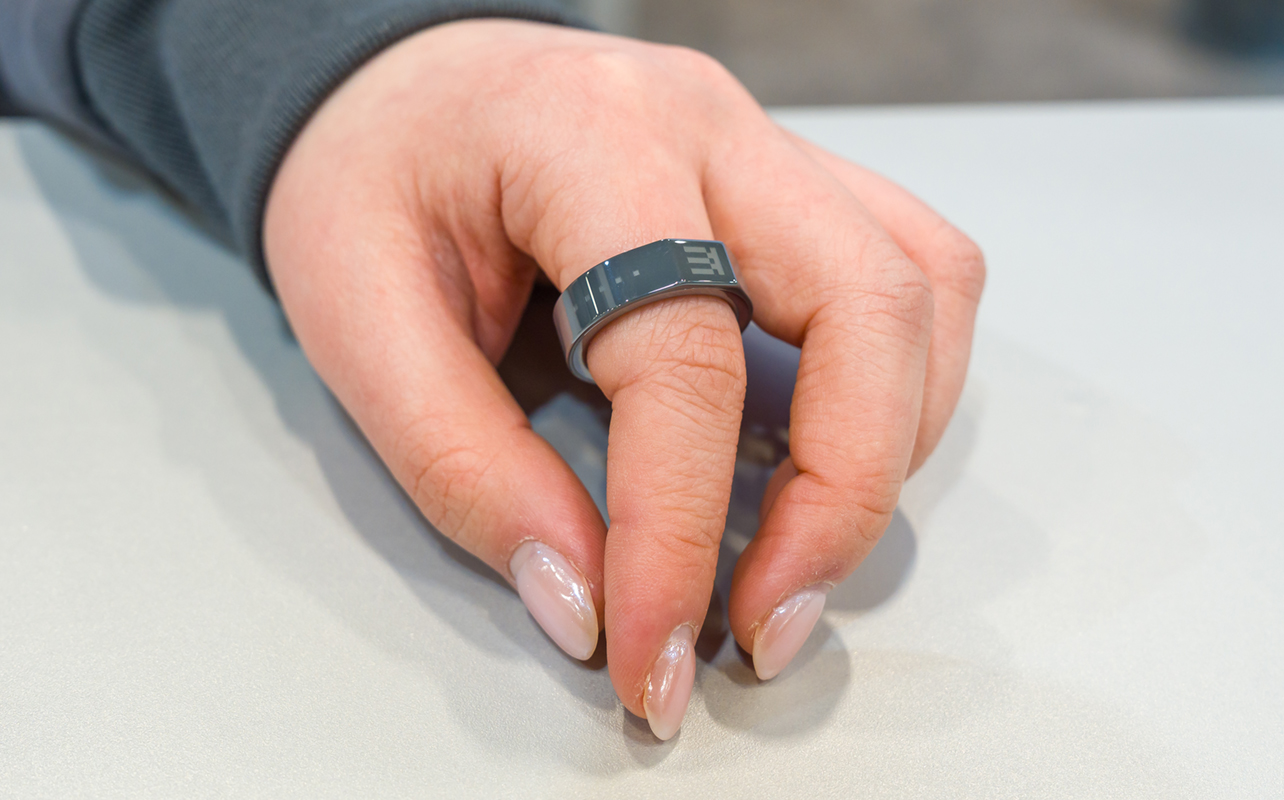
Conversate is a cool feature that will display written content using AI based on the topic discussed. This would have to be something more general like a person, place, or thing but it wouldn’t otherwise know about anything personal between you two. Like the MemoMind, you can also adjust both the height and distance of the content onscreen, adjusting for those with different heights and vision preferences. Even Realities plans to also include a smart ring with its own touch slider to control the interface, all while tracking health and fitness like other rings do.
Chamelo
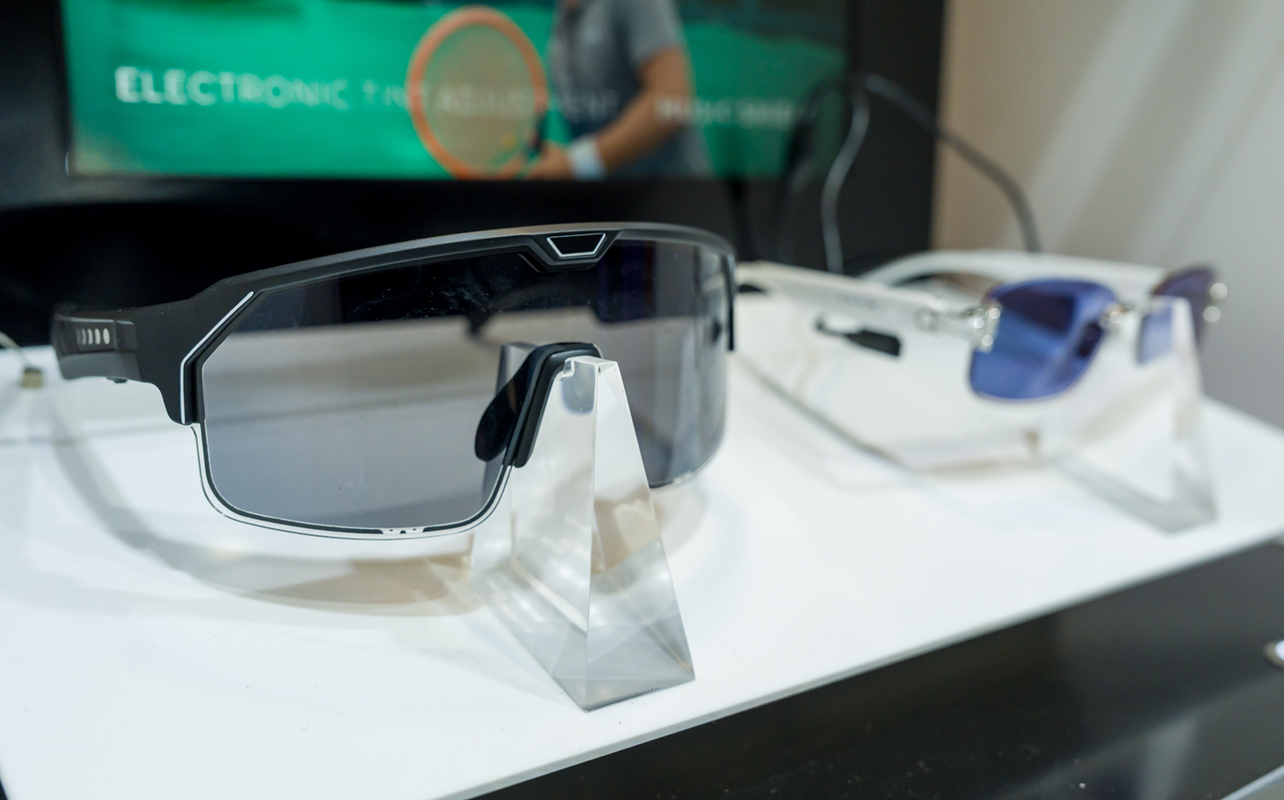
Rather than just one pair, Chamelo has several styles, including the ski/snowboarding goggles I mentioned earlier. The Music Shield are one of the newest pairs, though the Dusk have been a personal favourite of mine for the last couple of years, mainly because I can manually change the tint on them across multiple polarities. The Shield also have adjustable electrochromic tint and blend in open-ear audio with built-in speakers to manage music and calls without headphones or earbuds. The sound isn’t amazing due to the lack of bass but it is audible.
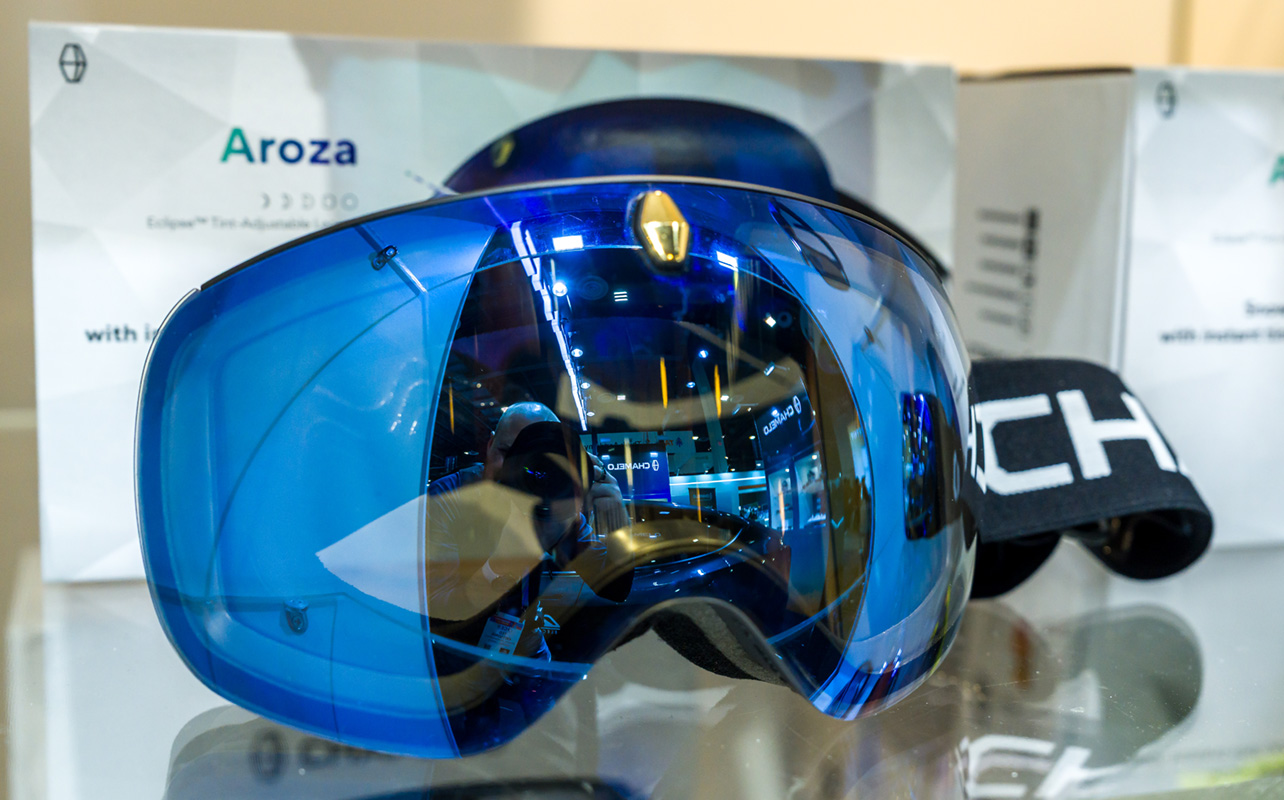
The Aroza take a similar approach with winter sports, making the goggles change tint the same way. There are multiple tint levels that you can switch between on the fly to match varying light on the slopes, with anti-fog construction and optimized ventilation to maintain clarity in cold environments. No need to swap physical lenses in harsh conditions, and good battery life can get through a full day without a problem.
Lucyd
On the more fashionable side, Miami-based Lucyd has a range of smart eyewear that includes built-in speakers and AI-driven functionality that let you play music, take calls, and activate voice assistants without pulling out your phone. Some models can set up ChatGPT access through the companion app, while others have Bose speakers inside, reminiscent of the Frames Tempo it released in 2020.
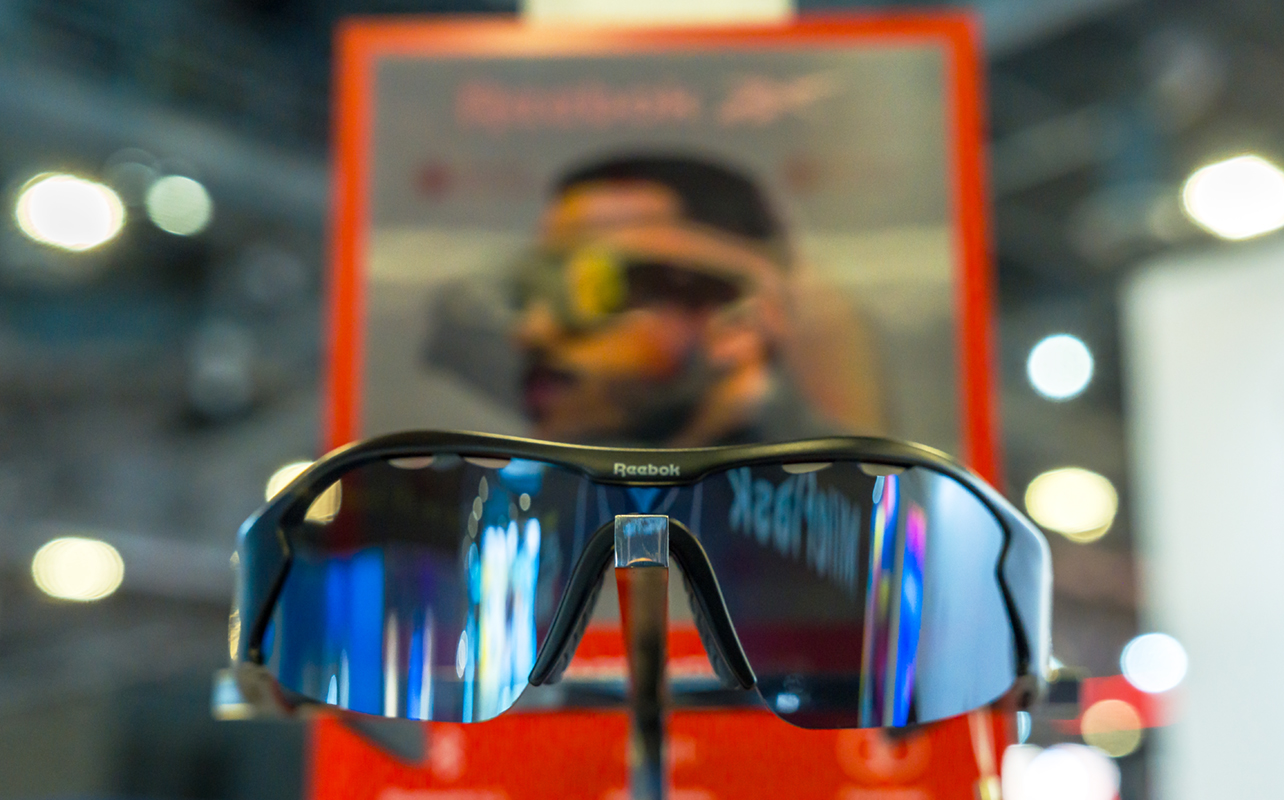
This is a brand that cares about style given options like the fashion-forward Millennia Cat Eye Bluetooth smart glasses and Voyager XXL smart sunglasses for enhanced audio and longer battery life. Many of the models support prescription lenses and photochromic or polarized lenses for eye protection, making them suitable for daily use across work, travel, and leisure. Sporty models like the Flash and Octane, plus safety ones like the Armor, round out an extensive list. Not to mention Reebok, Nautica, and Eddie Bauer are among the brands making up the styles for certain pairs.
A category that will continue to grow
Smart glasses are in that odd stage where brands are trying different things to figure out what users want. That leads to variances in both design and functionality, which is what this list ultimately demonstrates. There are other available pairs, like those from RayNeo and concepts like the one Lenovo demoed at the show.
Explore CES 2026 highlights and emerging tech trends.