
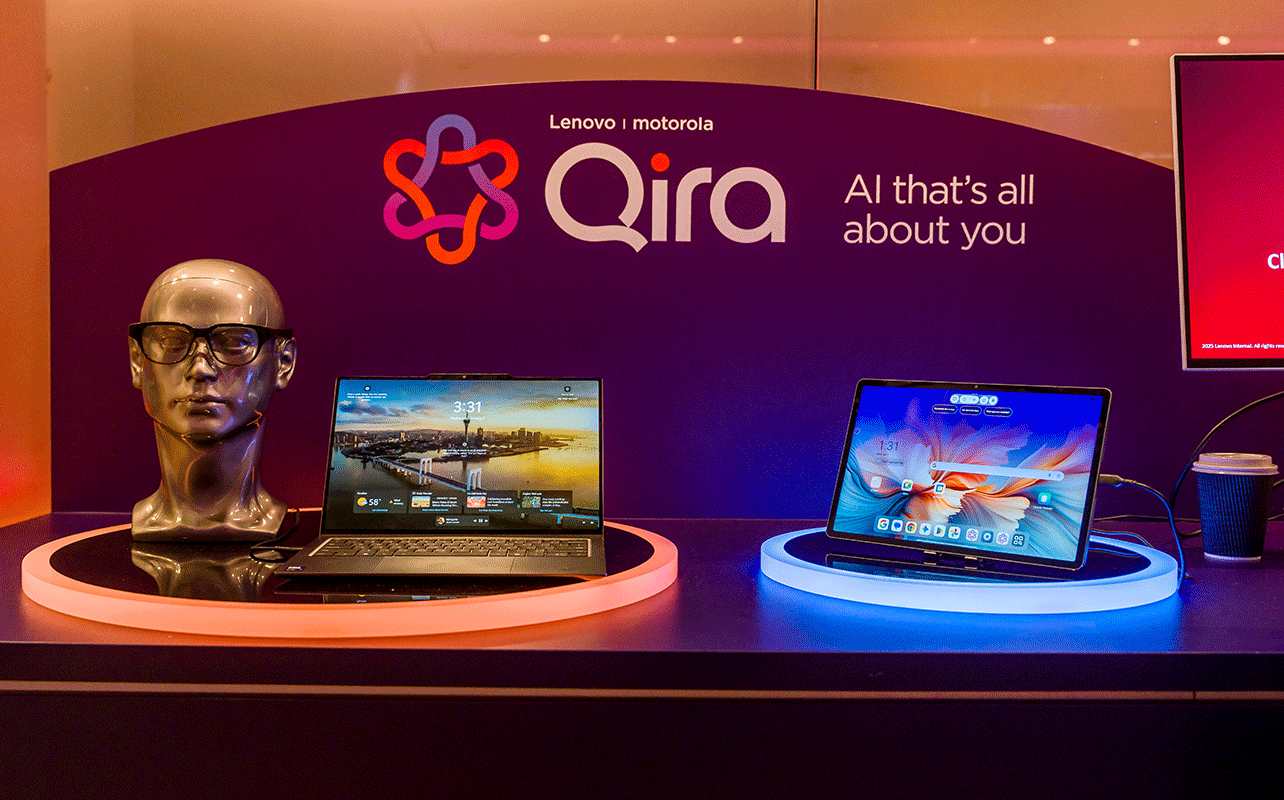
Lenovo is showing an array of new products at CES that include unique laptops and a new AI platform called Qira as part of its broad strategy for 2026. All of it falls under its “Smarter AI for All” campaign to develop or integrate AI deeper into its devices, apps, and experiences.
Much of that begins and ends with Qira as an “intelligence super agent” built to work across PCs, smartphones, tablets, and wearables. It won’t function like traditional assistants that you have to activate every time since Qira is embedded at the system level, learning context, anticipating needs, and acting with user permission. Think of it as a unifying voice across all your devices.


What Lenovo Qira can do
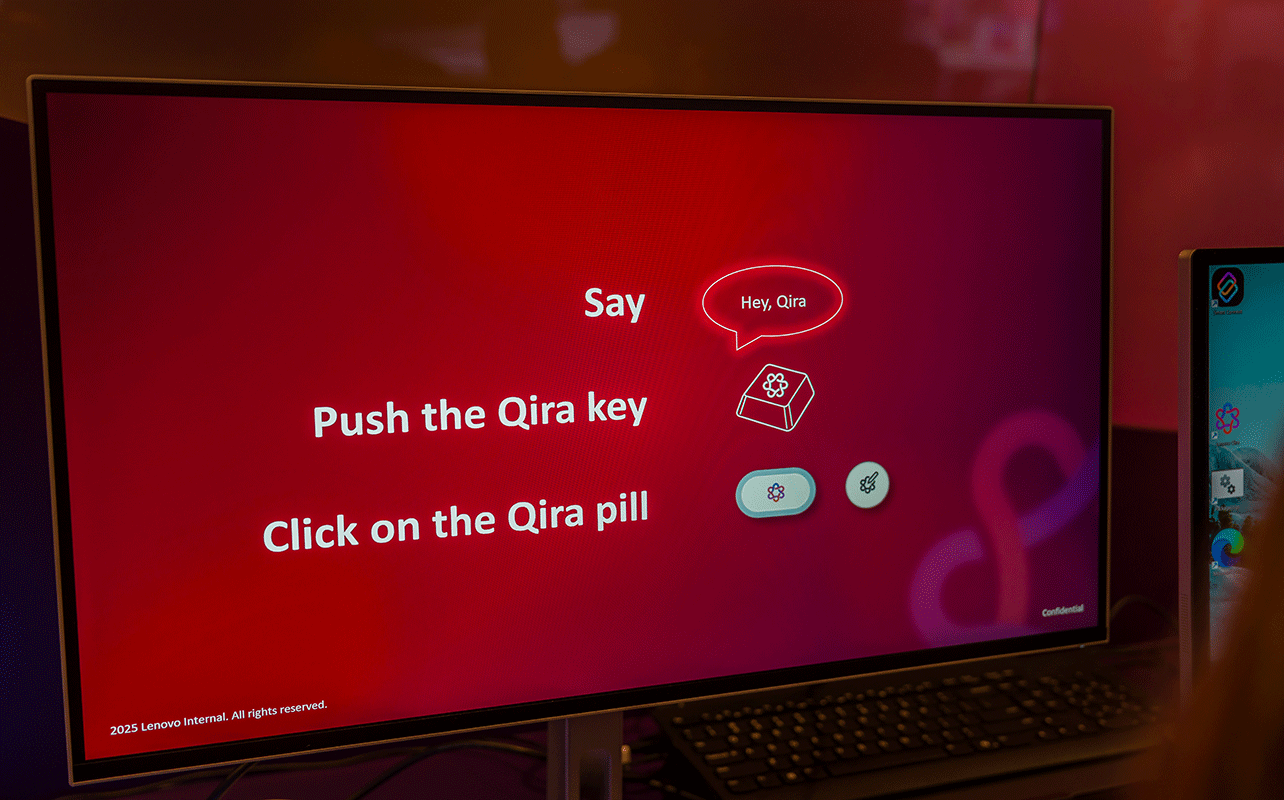
Let’s start here because Qira is a cornerstone of what Lenovo will try to do going forward with these upcoming devices. This new “personal ambient intelligence” is supposed to be smart enough to know when to get involved. No need to open a separate app or interface. It knows what you’re doing in the moment, anticipates what you might need, and then acts on it with context in mind.
For instance, it can help you catch up on activities and notifications you missed after stepping away, draft emails or documents that adapt to your tone and intent, and provide proactive suggestions for what you should do next given the task or workflow you have lined up. That includes transcribing and translating during live interactions or meetings, regardless of language barrier.
Lenovo is setting up Qira to do this across an entire suite of devices, so that what you do on your PC is relevant to what you want to do on a tablet, smartphone, or future wearables. Much of this will run through on-device processing via the device’s own NPU to maintain privacy where possible, while shifting to the cloud for more complex tasks. For instance, its ability to help with day-to-day tasks like those I already mentioned could run on-device, whereas generating content would usually require help from the cloud.
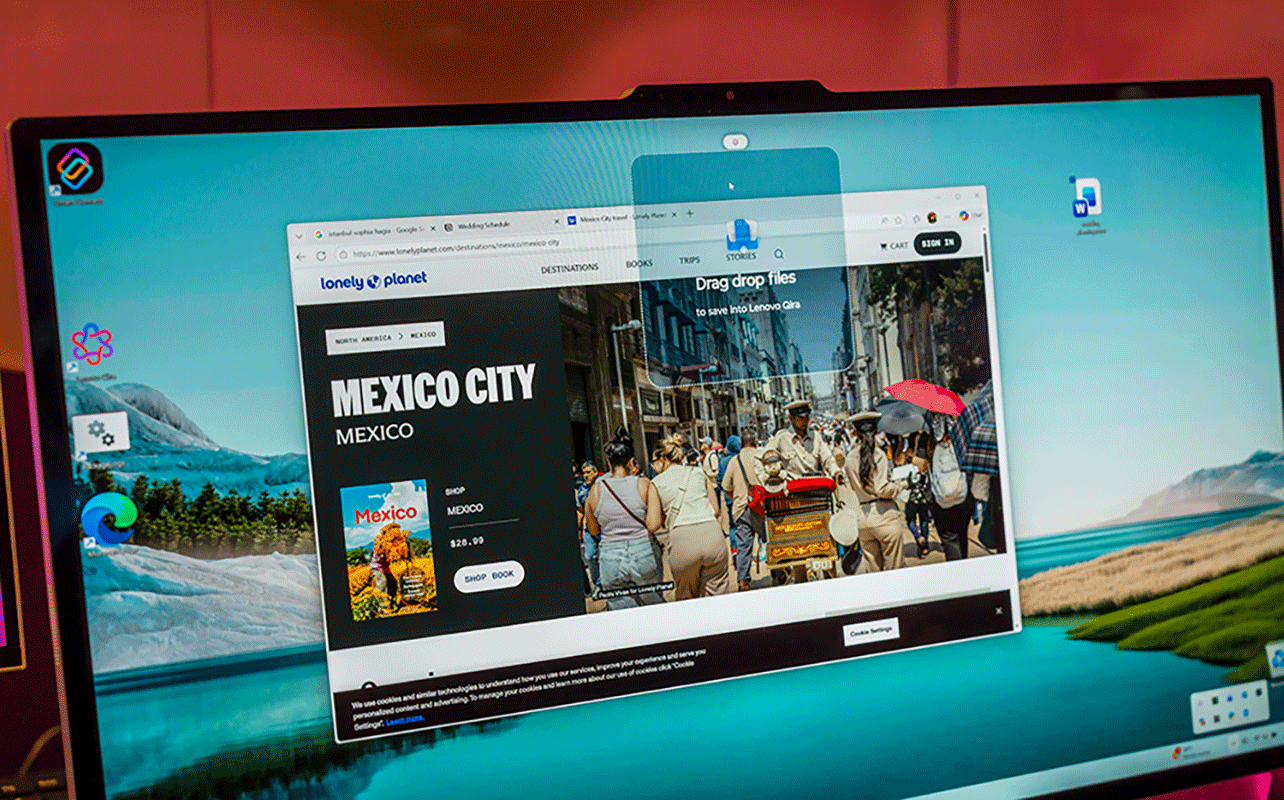
To make this easier, Lenovo breaks it down to set experiences that keep things focused. Next Move uses predictive intelligence to figure out what you might need based on what’s on your screen. Catch Me Up collects missed notifications and highlights in a day to summarize and remind you of what you left behind. Write For Me basically writes for you by adapting your own tone and purpose, be it in an email, comment, or message. Pay Attention is the one that handles the transcription and translation, though also taps into details and points from past usage as well. This way, if you need to reference something during a call, Qira can aim to get it for you.
An example of the ecosystem integration is how Next Move works. Let’s say you’re searching for travel spots to check out on your Motorola Razr. Qira recognizes the content and will present a “Next Move” option on your Yoga laptop to deliver that content to continue on without forcing you to manually transfer files first.
Qira will work backwards and sideways, to a point
Lenovo also says it won’t leave behind users using select laptops. It will release an over-the-air update to unlock Qira on those devices. While future laptops will get a dedicated Qira key (similar to Copilot+ on other PCs), previous models will be able to access it by voice or special keyboard shortcut. Compatible laptops will need an NPU to get the full experience.
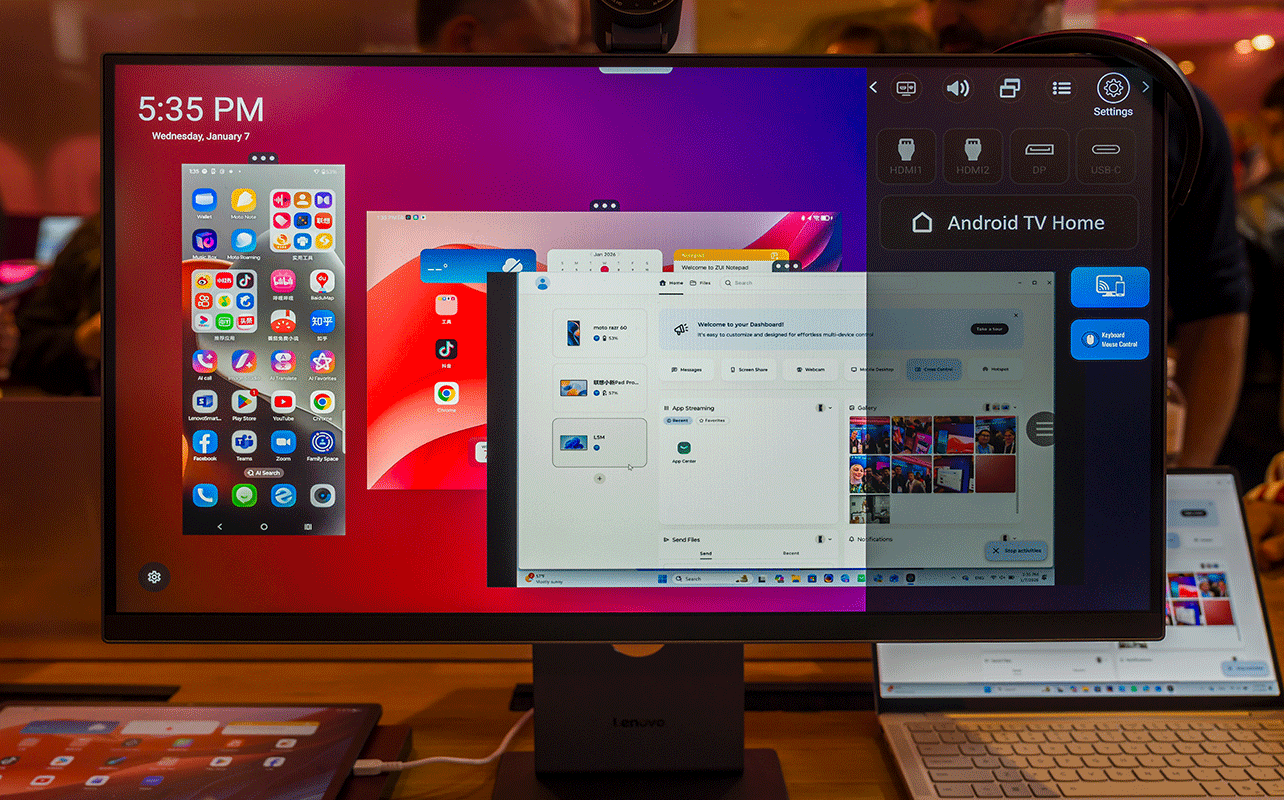
Depending on the specific hardware, particularly what CPU, NPU, and RAM is on the device, the balance between on-device and cloud processing could sway further to the latter to ensure a similar experience. The catch with all this continuity within the ecosystem is that they need to be in the family. Basically, Lenovo laptops, tablets, and Motorola phones.
Despite the initial compatibility limitation—at least when it comes to full Qira capability—Lenovo is opening the door wider to integrate with Apple’s iOS via its Smart Connect feature. This means media sharing, copy and paste, and cross-device interactions could work between Lenovo PCs and iOS devices, effectively making a mixed ecosystem possible. It could also work in reverse between a Motorola phone and Mac, for instance. We’ll have to see how all this works in practice once it all launches in the coming months.
New laptops across all lines: Yoga, IdeaPad, ThinkPad
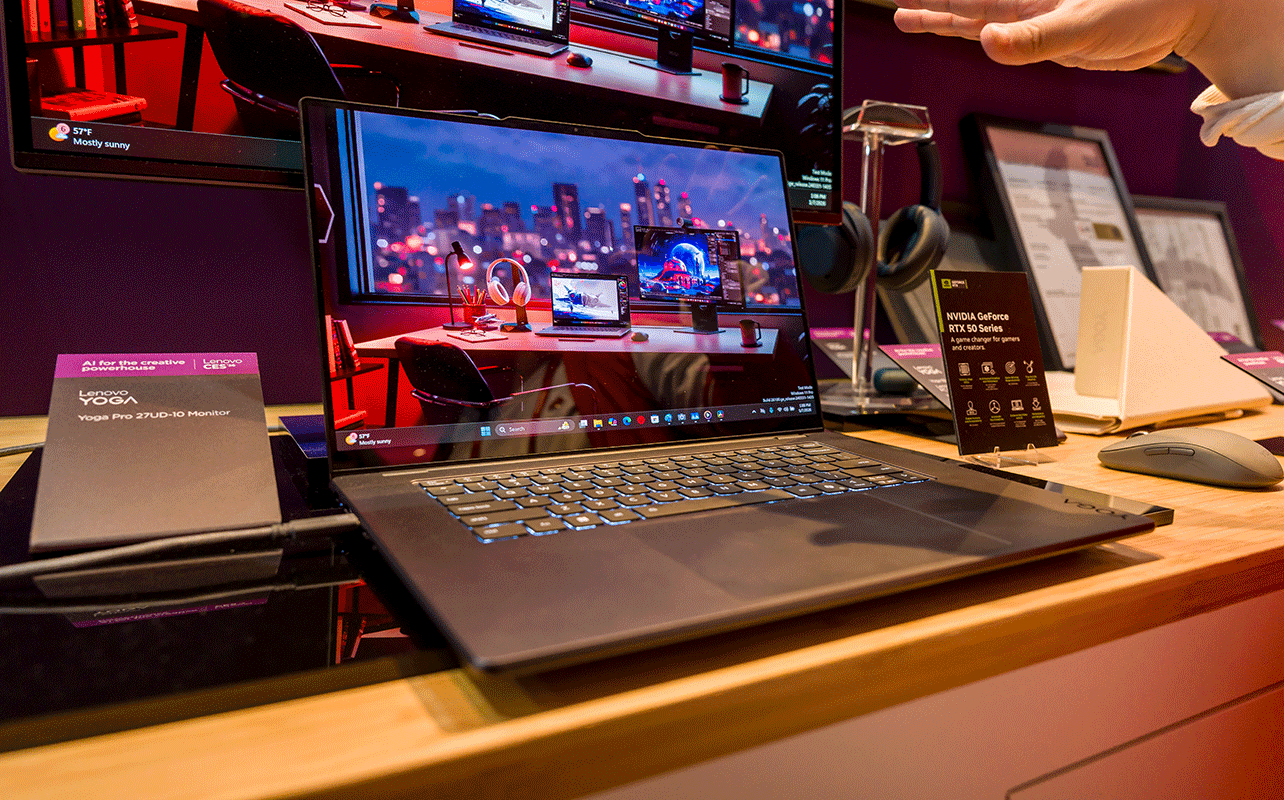
Lenovo’s AI-driven PC lineup sees a number of new models coming this year. The Yoga Pro 9i Aura Edition leads the charge as a robust Copilot+ PC equipped with Intel Core Ultra processors and NVIDIA-powered graphics for creative workflows. Configurations vary but it stands to be one of the company’s flagships for 2026.
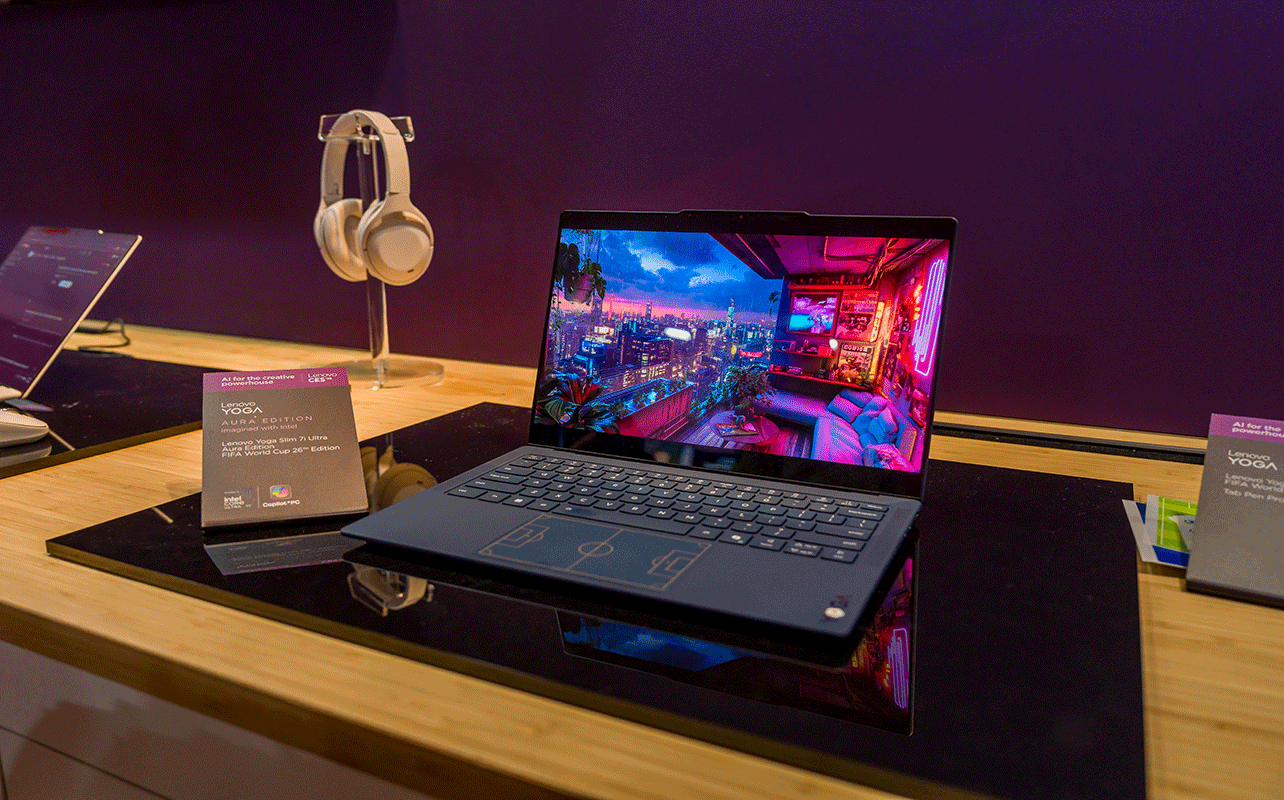
The rest of the Yoga portfolio also includes lightweight ultrabooks like the Yoga Slim 7i Ultra Aura Edition, convertibles like the Yoga 7a 2-in-1, and and a pair of Yoga Slim 7 models running on either the Qualcomm Snapdragon X2 (7a) or AMD Ryzen AI chipsets. There’s also a specialized monitor in the Yoga Pro 27UD-10 designed to sync color pipelines with laptops for seamless workflows. Colour accuracy between the laptop and monitor sync together in real time, so creators won’t feel fooled by one or the other when working on projects.
The IdeaPad series will see 2-in-1 convertible models ranging in size from 13-16-inches, slim IdeaPad Slim 5x laptops, and the Lenovo Chromebook Plus i, combining productivity and entertainment with built-in AI features. Cross-device experiences like Lenovo Smart Connect now support iOS alongside Android and Windows, easing sharing and continuity between phones, PCs, and peripherals like keyboards, mice, chargers, and power banks.
The ThinkPad lineup gets a new slate led by the Aura Edition Copilot+ PCs in the flagship X1 series and the powerful ThinkPad X9 15p Aura Edition, both leveraging Intel Core Ultra processors and enhanced displays and I/O for modern hybrid work. Then there’s the ThinkPad Rollable XD concept that uses a motorized rollable OLED display that expands vertically to provide more screen real estate without increasing the device’s footprint. It’s designed to demonstrate how future ThinkPads could dynamically adjust to multitasking, document work, and AI-assisted workflows. No word on when the device might come to market, if at all.
There will also be limited edition devices across the ThinkPad, Yoga, Idea, and Legion lines with FIFA World Cup 26 branding, as the company is a major sponsor of the tournament.
Proofs of Concept and Future Form Factors
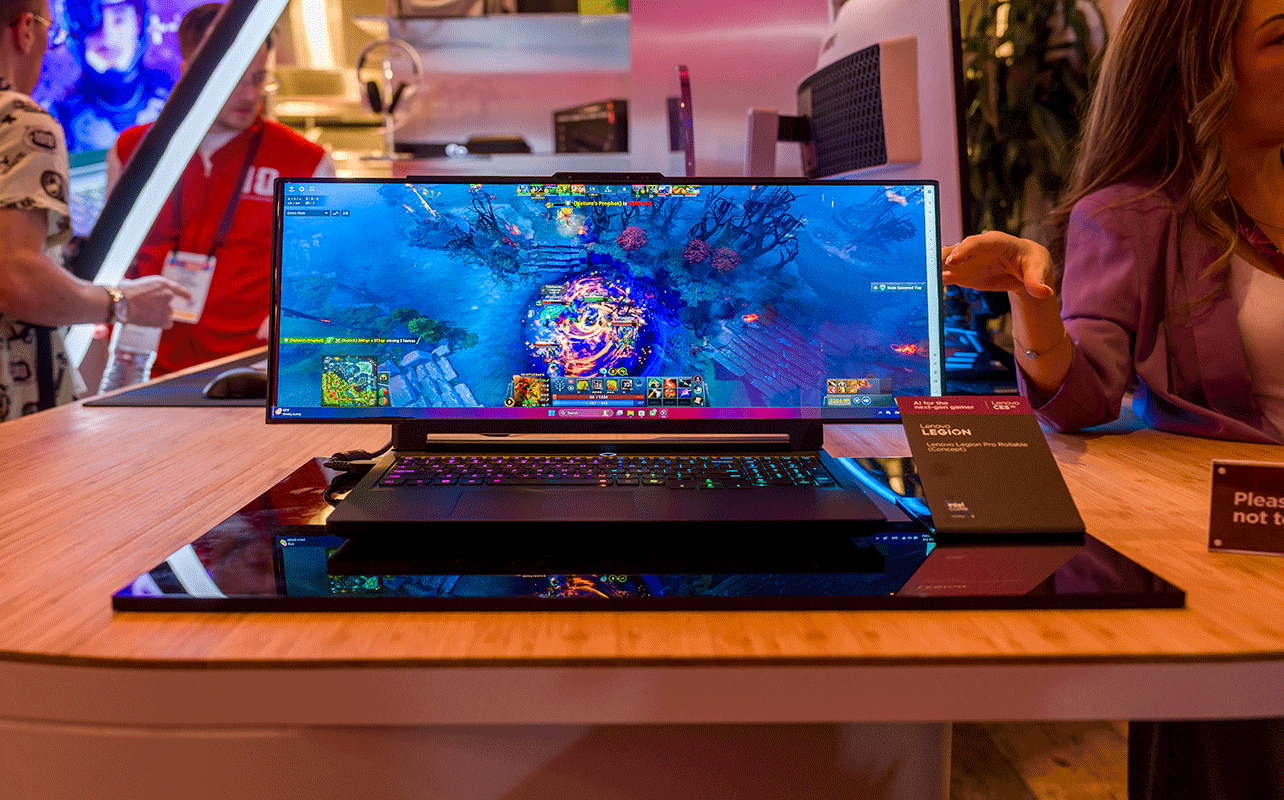
The concepts didn’t end there. The Legion Pro Rollable gaming laptop prototype begins as a 16-inch device only to physically expand its OLED screen outward to become a much wider display. It can roll out to 22-inch “Tactical Mode” and 24-inch “Arena Mode” to cater to different gaming scenarios. This is a PureSight OLED panel equipped with a dual-motor, tension-based mechanism to deliver the ultrawide aspect ratios consistent with desktop monitors.
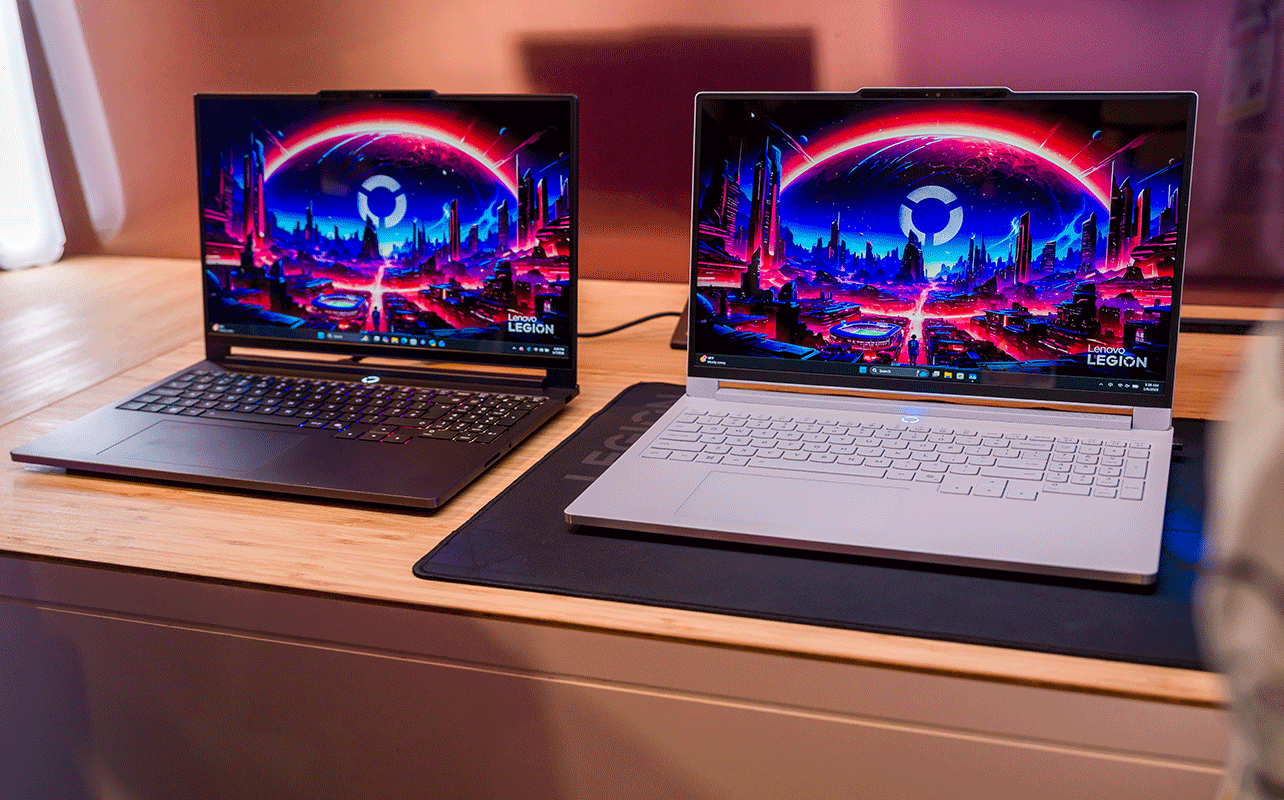
Lenovo built it using the Legion Pro 7i chassis with high-end Intel Core Ultra processors and Nvidia RTX 5090 Laptop GPU, though being a concept, there’s no word on what final specs might be. There’s no firm commitment to release it nor pricing.
Other Lenovo concepts include AI Perceptive Companion, AI Glasses, and Smart Sense Display, all of which focus on context-aware interactions. Project Kubit is a personal AI hub concept, while Motorola’s Project Maxwell, suggesting Lenovo will go further to tighten AI integration into daily life.
Coming soon
This was a big showcase for Lenovo at CES—probably the biggest. AI certainly dominated the overall conversation but there’s plenty of hardware coming this year. Most of the laptops will be released within the first half of 2026, though availability may vary for each model. Check out all the latest Lenovo laptops and Motorola phones available now.
Explore CES 2026 highlights and emerging tech trends.