

Recording action isn’t always synonymous with capturing sports in action but you still need a camera to do both. Action cameras generally fall into this space by default because they’re made for speed, first-person POV (point-of-view), and a wide field of view. Seeing the action unfold from a close-up perspective is what makes the result look so thrilling.
It just depends on what you have in mind. Some sports make this trickier than others, which is why not every model is the right fit for every situation. This list breaks down different use cases and lays out which one slots into the lineup at the right time.

At a glance: The best action cameras for capturing sports 2026
| Action camera model | Key specs | Features to highlight |
|---|---|---|
| Overall sports camera: DJI Osmo Action 6 | Variable f/2.0–f/4.0 aperture | Versatile option with dual screens, quick-release mounting, and 20m waterproofing. |
| Cycling & running: GoPro HERO13 Black | 5.3K/60fps; HyperSmooth 6.0; rated for about 1.5 hours of continuous 4K or 5.3K recording, and up to 2.5 hours at 1080p | Lightweight 159g camera with horizon lock and extensive mounting options. |
| Extreme sports: GoPro MISSION 1 Pro | 8K; 4K/120fps Open Gate; 1-inch, 50MP sensor | Larger 207g camera designed for high-quality footage and subject tracking. |
| Team sports & training: XbotGo Chameleon | 4K/60fps; AI tracking; around 8 hrs | Smartphone tracking mount that automatically follows teams and players. |
| Hands-free recording: Insta360 Go 3S | 4K; FlowState stabilization; 38 min or up to 140 min with Action Pod | Compact wearable camera with stabilization, voice control, and 10m waterproofing. |
| Best 360 sports camera: DJI Osmo 360 II Limitless Riding Combo | 8K/60fps; 4K/240fps; DJI claims it runs for 100 minutes at 8K/30fps | 360 camera bundle with a heavy-duty clamp mount for cycling and motorcycling. |
Looking for more options? Check out our best action cameras guide to find the right camera whatever your adventure.
Best overall sports camera: DJI Osmo Action 6
Sports don’t wait for good light and the Osmo Action 6 is built for that. It’s the first mainstream action camera with a variable f/2.0 to f/4.0 aperture that’s also paired with the biggest image sensor in its class. Open up to f/2.0 for an early-morning trail run or an indoor rink, then stop down to f/4.0 under bright snow or a summer sun. The tighter aperture also deepens your depth of field, which helps keep a fast-moving rider or skier sharp from front to back. Two screens let you frame shots facing either direction, letting you film yourself or the action ahead.
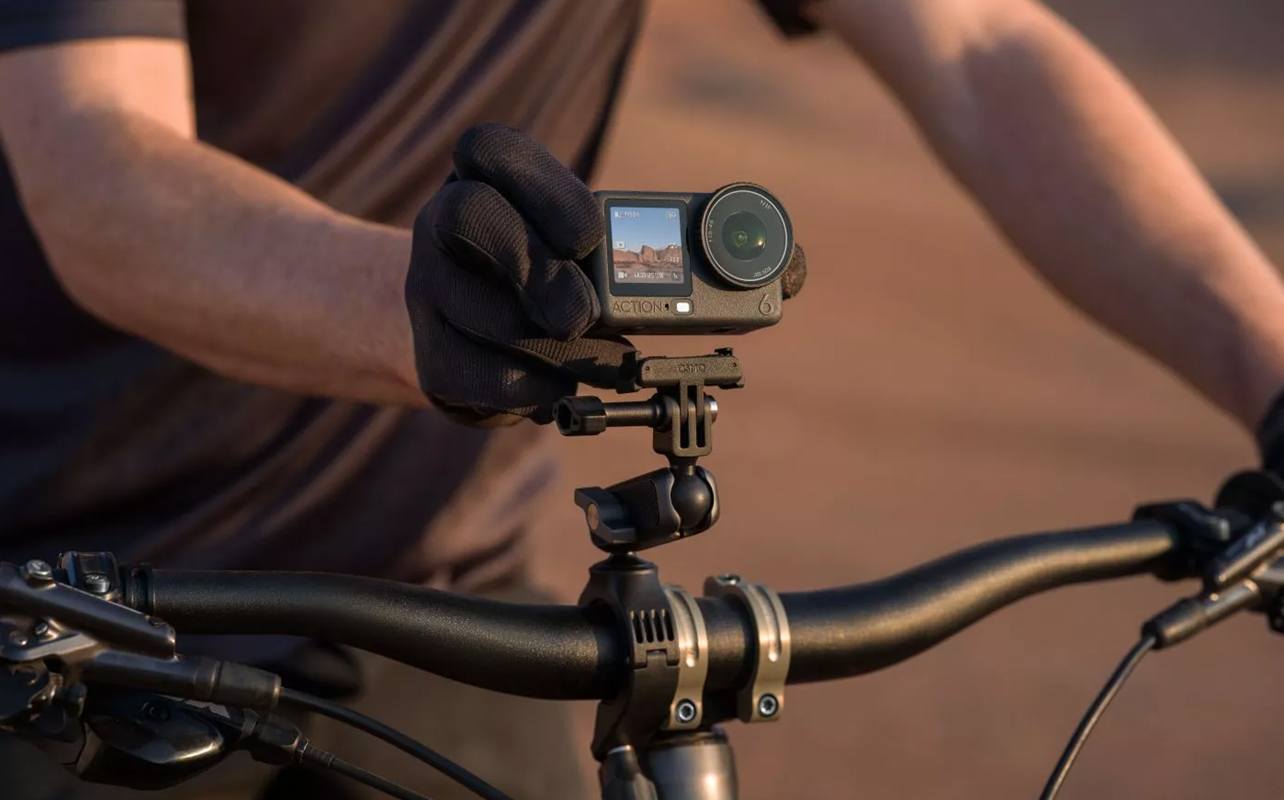
The magnetic quick-release mount is where it earns its keep, especially on the hill. It snaps on and off in a second for an easier swap from helmet to chest mount between runs without taking your gloves off. It comes with a mount in the box and you can also use the huge range of third-party sports mounts. The 20-metre (65-foot) dive rating covers surfing, kayaking, and snorkelling without a housing.
The Standard Combo includes both the magnetic and GoPro mounts. For a full day of action, the Adventure Combo adds two extra batteries with a case, more mounts and a 1.5-metre extension rod for getting the shot from a few feet back.
Best for cycling and running: GoPro HERO13 Black
Few cameras have earned their place on handlebars and helmets like the GoPro HERO13 Black. It shoots 5.3K video at up to 60fps and 27-megapixel stills, but the real draw for cyclists and runners is HyperSmooth 6.0 stabilization. AutoBoost adjusts the shot based on your speed and movement, so footage from a rough trail or a cobbled descent stays steady without cropping in too tightly. Built-in 360-degree horizon lock keeps the frame level even when the camera rotates, which is handy on a twisty track.

At 159 grams with the battery in, it’s light enough to wear on a chest harness or a helmet without feeling lopsided. The body includes folding mounting fingers, so it attaches directly to GoPro’s huge range of mounts. The 1.4-inch front screen helps with vlogging-style framing, while the 2.27-inch rear touchscreen handles settings. It’s waterproof to 10 metres (33 feet), so rain and splashes aren’t a problem.
Battery is where the HERO13 Black improves on earlier models. The larger 1,900mAh Enduro battery is rated for about 1.5 hours of continuous 4K or 5.3K recording, and up to 2.5 hours at 1080p, with better performance in cold weather. That should cover most training sessions, though a spare is smart for a long ride or race day. You can also pair it with GoPro’s HB-series lenses for different looks.
Best for extreme sports: GoPro MISSION 1 Pro
When the stunt is big enough to make the footage look more cinematic, the MISSION 1 Pro is ready to roll. It combines a 1-inch, 50-megapixel sensor with 8K video and 4K/120fps Open Gate recording, so you can crop a vertical edit for social media and a wide cut for YouTube from the same clip.
GoPro designed the GP3 processor to improve thermal performance and battery efficiency, which matters when you’re pushing a camera hard in the heat or recording long sessions. The large sensor also helps in low light, helping maintain clarity at dawn or dusk, while subject tracking helps keep a fast-moving athlete in frame.
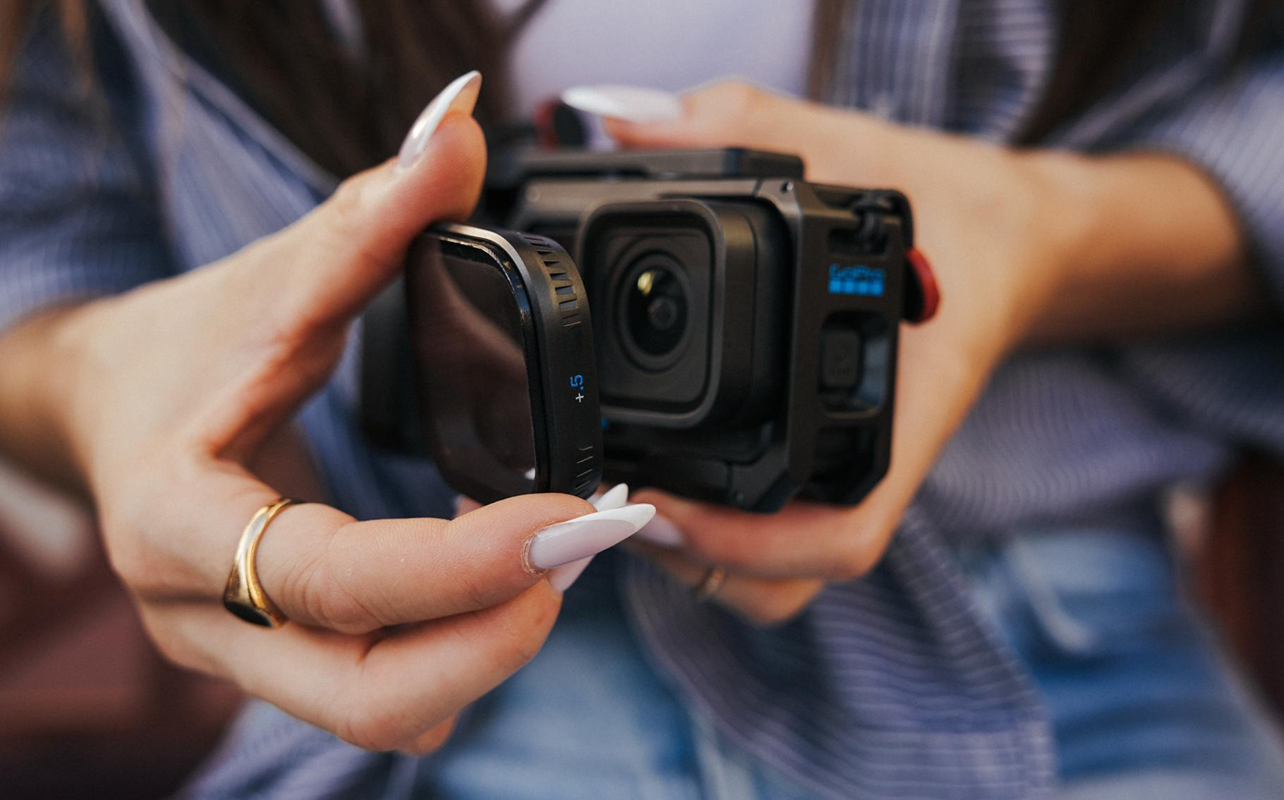
At 207 grams, it’s roughly double the weight of a typical action camera, so think carefully about where it goes. It suits a secure mount on a vehicle or a pole better than a helmet or a wrist. Where it really pays off is when you’re filming other people, and the 1.4-inch front screen and 2.59-inch rear OLED touchscreen make framing easy.
It’s compatible with GoPro’s mounts and accessories, letting you set up for almost any sport. The standard kit is the camera with its battery and case, and the Grip Edition adds GoPro’s Point-and-Shoot Grip. Otherwise, the camera’s specs are identical.
Best for team sports and training: XbotGo Chameleon
Filming your kid’s soccer game or your own team’s practice usually means someone has to stand there holding a camera or mount one on a player. The XbotGo Chameleon takes a broadcasting approach in that it’s not a traditional action camera. Rather it’s an AI-powered tracking mount that holds your smartphone, then pans and tilts to follow the play on its own. Dual cameras and XbotGo’s XbotVision 2.0 AI work alongside your phone’s processing, and the system can pan and track more than 20 sports, including soccer, basketball, hockey, and lacrosse.
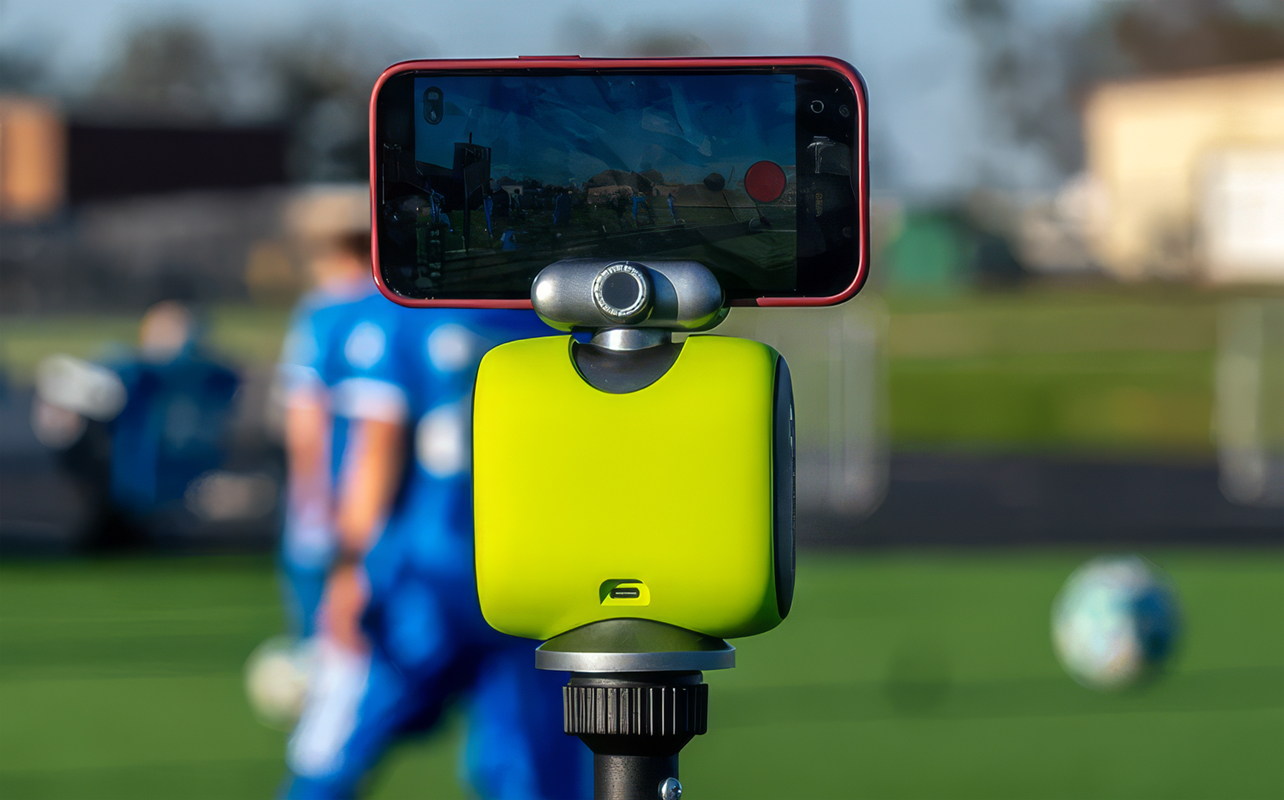
The mount rotates 360 degrees, tilts ±15 degrees and has a 120-degree wide-angle lens. It can cover a full field or court from a tripod. It records up to 4K at 60fps, and it can follow either the whole team or specific players, using details like jersey numbers. After the game, the XbotGo app turns key moments into highlight clips you can share with teammates or coaches. You can also livestream for free so relatives who couldn’t make it can tune in.
XbotGo rates battery life at around eight hours, enough for a tournament day, and it charges easily via USB-C. There’s no monthly subscription for core tracking, and 20GB of cloud storage is included. Keep in mind that it needs your phone to record, and tracking can lose its target if someone walks too close to the lens. Higher-priced bundles add accessories like a tripod and a weather-guard umbrella.
Best hands-free option: Insta360 Go 3S
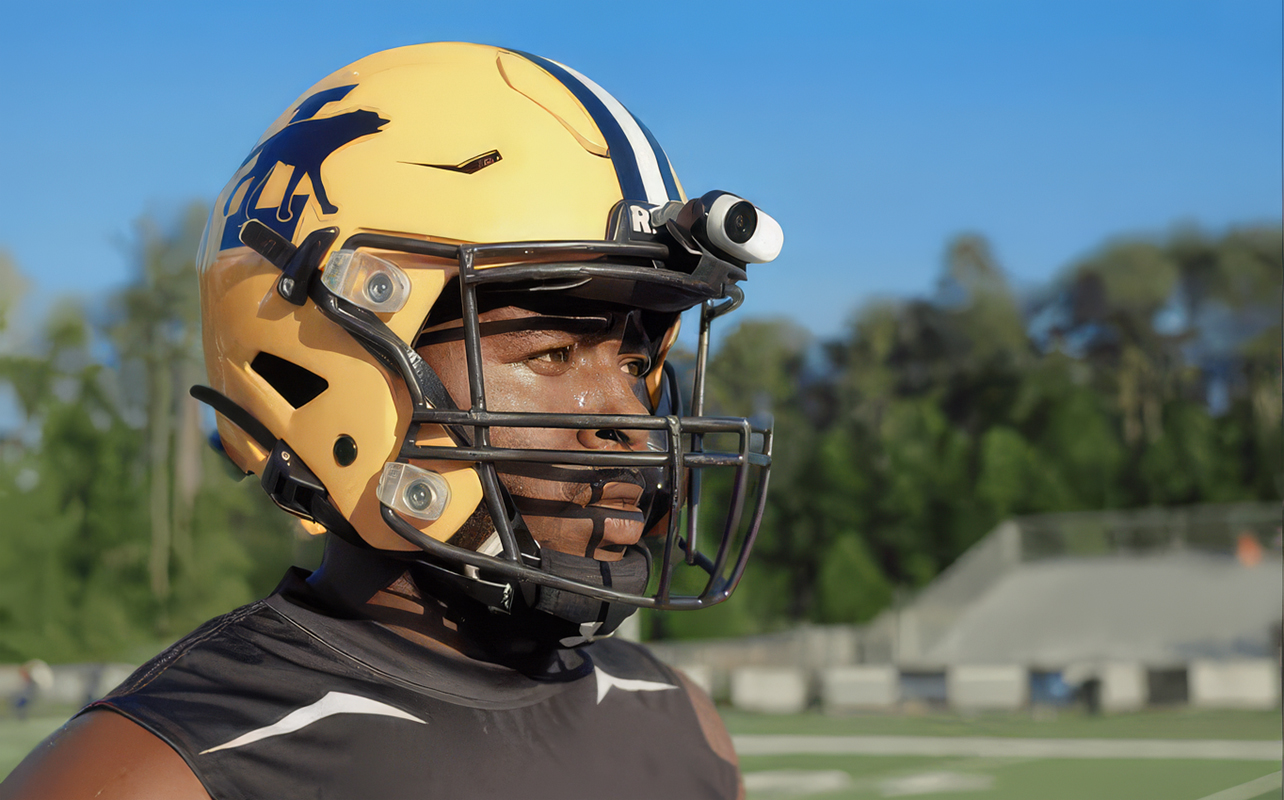
If your sport needs both hands, or you just don’t want a camera bulging off your helmet, the Insta360 Go 3S may be just the right fit. The camera itself weighs just 39 grams and is about the size of a thumb. The magnetic pendant and Easy Clip mean you can wear it almost anywhere, on a cap, a jersey collar or a backpack strap. It records 4K video and photos with FlowState stabilization to smooth out your motion. Voice control lets you start and stop recording without touching it, and Pre-Recording can save the moments just before you hit the button.
The camera is waterproof to 10 metres on its own, so it’s fine getting a little wet when paddling, swimming or playing soccer on a rainy pitch. The included Action Pod serves as a charging case, remote and viewfinder, with a 2.2-inch flip-up touchscreen to frame shots. The Pod is only splash-proof, so leave it behind when you’re in the water.
The trade-off is battery life. The camera records for about 38 minutes by itself, stretching to about 140 minutes when paired with the Action Pod. It also falls behind larger action cameras in low light. The camera’s operating range is -20°C to 40°C. Keep it warm between runs in a Canadian winter. For a first-person view that doesn’t get in your way, it’s hard to beat.
Best 360 sports camera: DJI Osmo 360 II Limitless Riding Combo
A 360 camera captures everything around you, so you don’t need to always point it at the action. Mount it on your bike and you can pick the best angle later, whether that’s the trail ahead, the rider on your wheel or your own face at the bottom of a climb. The Limitless Riding Combo from DJI is a bundle aimed at cyclists and motorcyclists. It pairs the Osmo 360 II with a heavy-duty clamp mount kit that grips handlebars and other rigid tubes, plus an extra battery, a pouch, a silicone lens cap and a charging cable.
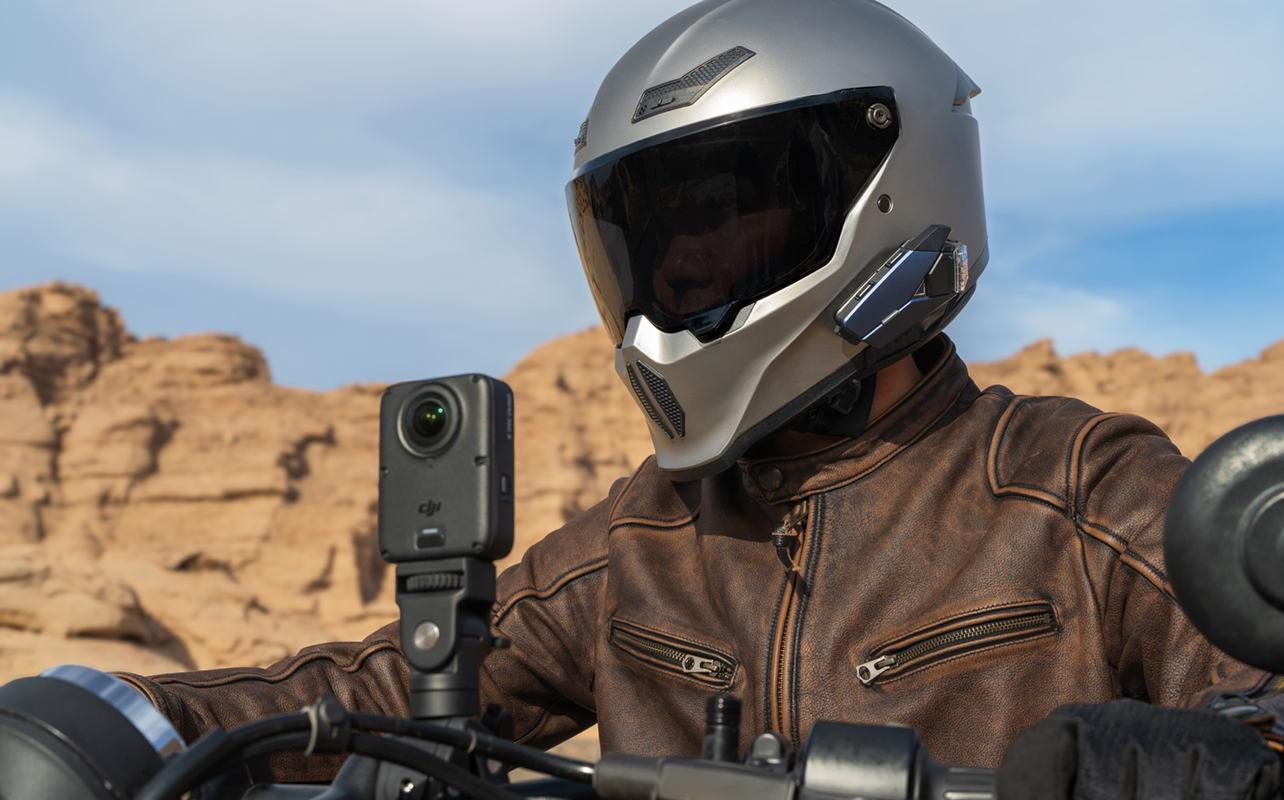
DJI says native 8K/60fps gives smoother motion, which helps when you’re moving fast. Stabilization keeps footage steady over rough ground, and shooting at up to 4K/240fps gives you slow-motion replays of jumps, drops and tight cornering. The more you learn the camera’s modes before you head out, the better you’ll be at getting what you want. You also don’t always have to record at 360 degrees, as you can also capture footage at 180 degrees.
Just make sure you have what you need for a long day. DJI’s claim of 100 minutes at 8K/30fps is conditional, and at 8K/60fps the camera can overheat in under 20 minutes, so consider a third battery as a backup. The files are also large, helping you to start editing on your phone or tablet and finish on a computer. The iOS app is in the App Store, but the Android app has to be sideloaded because it isn’t in the Google Play Store.
Game on, every time
Action cameras are built to capture whatever unfolds and sports are no exception. They may be easier to manage in some sports than in others, but there are few other ways to capture incredible vantage points. It’s not just about them going where you go—or seeing all from the sidelines—but also that you can do it in a cinematic way. Whether that’s straight up or at a 360-degree angle is really up to you.
The variations in this list should give you plenty to consider. Think about where you’ll use it, who will be in the frame, and how much gear you’re willing to carry, then pick the camera that gets you the footage you want.
Check out the latest action cameras available now.
How we decide what’s best
At Best Buy Canada, curating a “Best of” or “Top X” list is a thoughtful and transparent process. We evaluate products based on brand reputation, popularity, customer interest, and relevance within their category. Our bloggers then bring deep product knowledge and hands-on experience to help identify the best options for you.
Testing goes far beyond unboxing—products are used in real-world scenarios, with our bloggers putting themselves in your shoes to better understand how a device or accessory performs day to day and whether it meets expectations. Where possible, they compare similar models and assess key factors such as design, performance, and category-specific features to offer well-rounded, informed recommendations. For niche or new product categories where broader hands-on testing might not be possible within that category as a whole, our skilled bloggers evaluate the products using every objective method they can.
In some cases, a blogger may not have direct experience with a specific product. When that happens, they draw on broader expertise, such as time spent with comparable items, an understanding of the brand’s current lineup, and its overall reputation. We also draw on insights from Best Buy’s in-house category experts and aggregate feedback from both trusted reviewers and customer ratings to make the best selections.
We’ll always be clear about the basis of our recommendations—whether they stem from first-hand testing or extensive research. Authenticity matters to us. Every “Best of” guide is built on objective insights, product knowledge, and a commitment to helping you make confident buying decisions.