
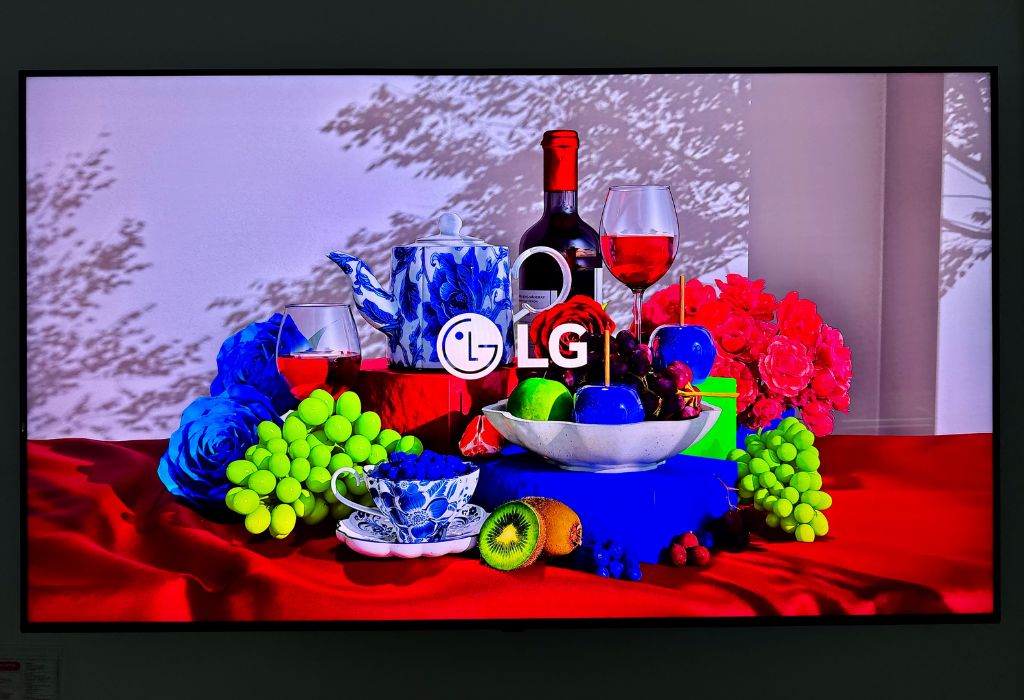
The LG Micro RGB evo TV (MRGB95B) is one of the more interesting premium televisions I have tested this year. It takes exciting new RGB display technology and puts LG’s expertise to work in a very different way from the 2026 OLED models I’ve spent so much time with.
The biggest change is in how the RGB panel functions. Instead of self-lit pixels, this LG TV uses dedicated red, green, and blue LEDs behind its 4K LCD panel. Plus, it’s built with LG’s α11 AI Processor Gen3 to manage everything from upscaling and tone mapping to motion and local dimming. The result is one of the brightest, most colourful LG TVs I’ve tested.
As I spent more time with it, many strengths and a few trade-offs quickly became clear. Let’s explore all the LG Micro RGB evo TV has to offer in my full review.
Time for an upgrade? Receive free Geek Squad delivery and installation with the purchase of an RGB LED TV.

Colour is the star of the show
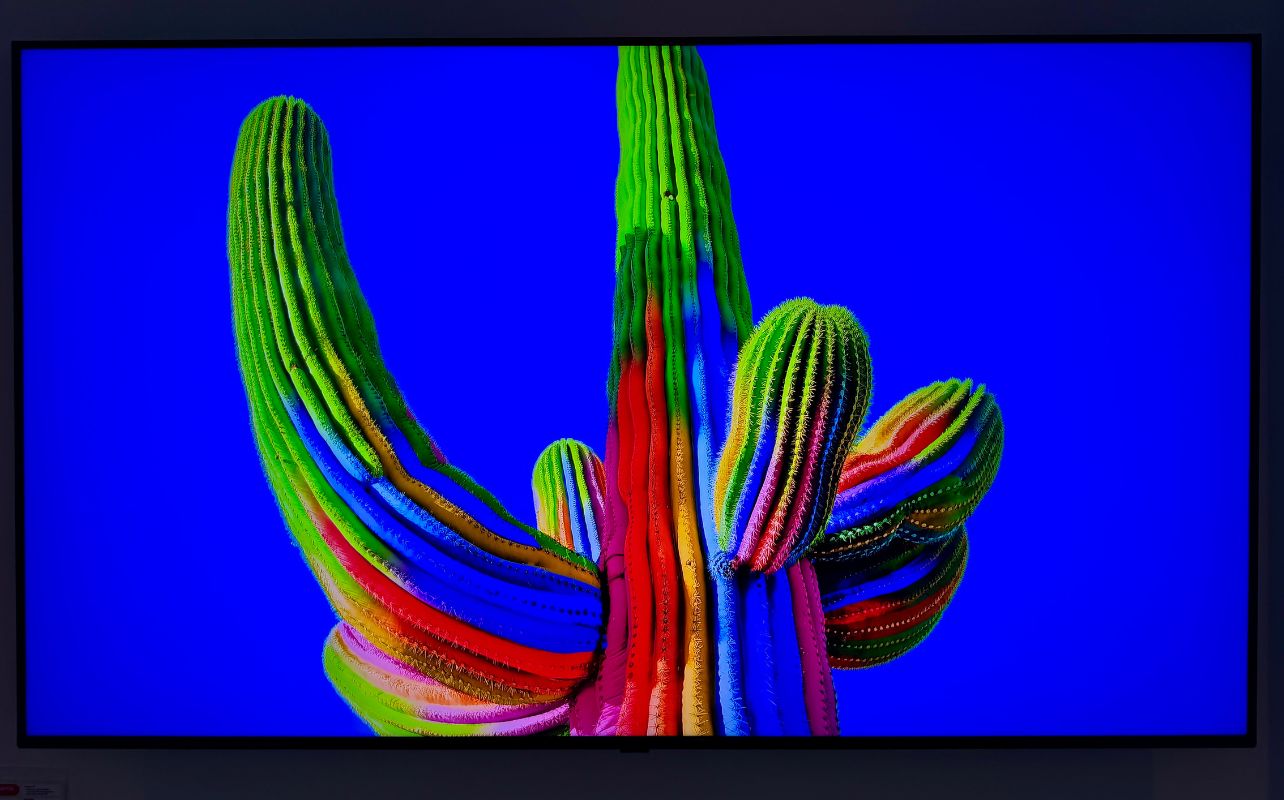
The LG Micro RGB evo TV makes a strong first impression with its incredible colour range. Reds, greens, and blues have excellent intensity. At the same time, the image doesn’t look oversaturated with these bold colours, which is extremely important for great picture quality.
In my testing across multiple forms of media, I found there was a good separation between similar tones, so colourful scenes retain texture and detail, maintaining excellent picture quality. I was able to watch a few nature documentaries, which really helped to show this off. Bright skies, foliage, flowers, and wildlife all have an immediate, eye-catching richness. The same is true for animated movies and video games, where the added colour volume gives highlights more depth and impact.
Impressive Brightness and HDR performance
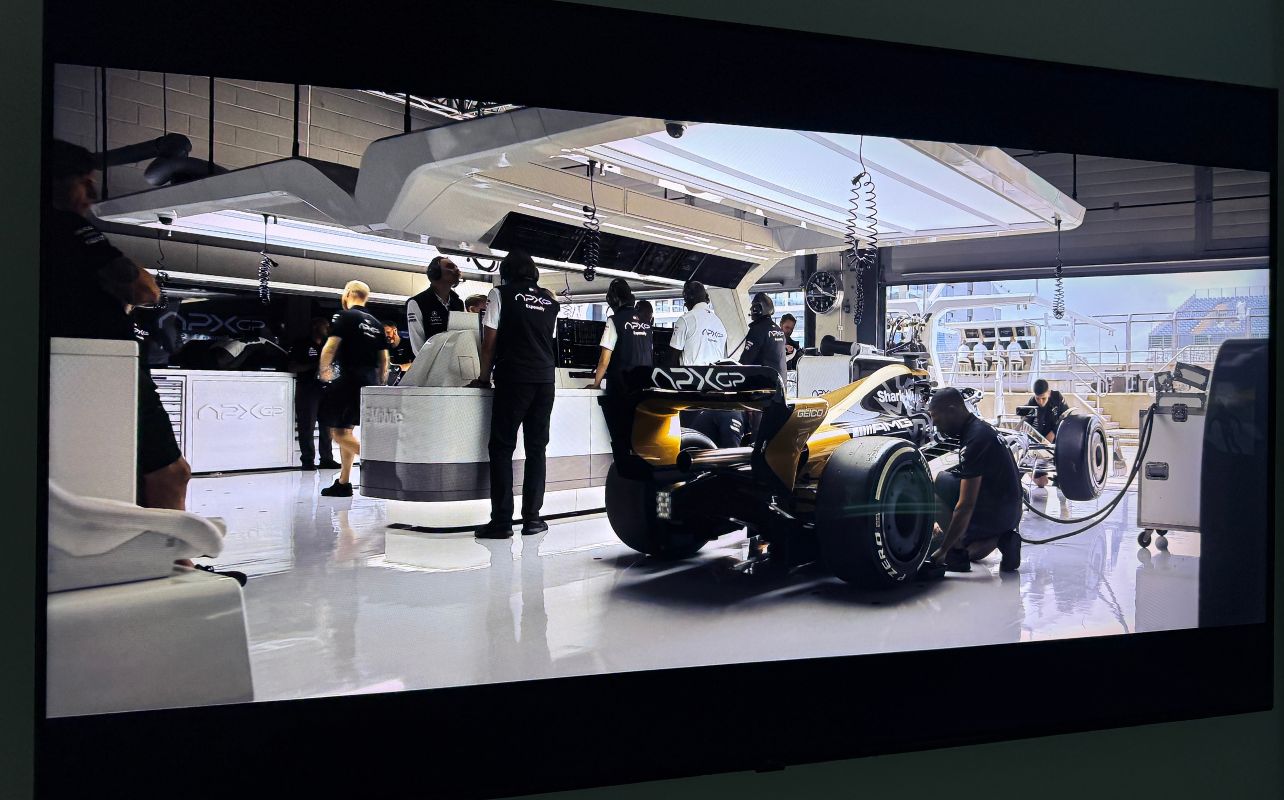
Brightness is another major strength of the LG Micro RGB evo TV. LG’s official specs indicate the panel can output an impressive 4,000 nits, and that power is immediately apparent, especially in a bright room. Even with large windows and plenty of uncontrolled ambient light, I found that the picture remained well-defined and vibrant. That brightness also gives HDR highlights a sharp punch, making scenes like glowing neon signs to fiery explosions leap off the screen. The dynamic range this LG TV delivers really helps action sequences and big moments feel even more cinematic.
Excellent for viewing in brighter spaces
The impressive level of brightness makes the LG Micro RGB evo TV a top contender if you are considering it for brighter viewing areas. LG’s 2026 OLED technology has improved considerably in this area, particularly with the LG G6 OLED TV model, but the MRGB95B can deliver a different kind of visual impact when there is a lot of ambient light in the room.
Dolby Vision content looks especially strong, and LG’s Dynamic Tone Mapping Ultra helps preserve detail in both bright and dark areas without making the picture feel overly processed.
LG’s Filmmaker Mode remains one of my go-to choices when I want a more restrained, faithful picture. It disables processing like motion smoothing and excessive sharpening while preserving the original colour, aspect ratio, and frame rate. It gives you the look the director intended for the movie in the comfort of your own TV space.
I was able to check out a few scenes from John Wick and Avatar, which looked especially impressive, with natural detail, rich colour, and cinematic lighting. I was impressed by how well the TV could still showcase its strengths without making the image feel overly processed or oversaturated.
RGB LED brightness comes with trade-offs
There are still limits. In especially high-contrast scenes, some blooming can appear around bright objects, and shadow detail is not as precise as I am used to from LG’s best OLED TVs. OLED can switch individual pixels off completely, so it still has the advantage for star fields, subtitles over dark backgrounds, end credits, and very dark movie scenes.
The trade-off is that the LG Micro RGB evo TV can get much brighter while maintaining vivid colour.
Black levels are strong
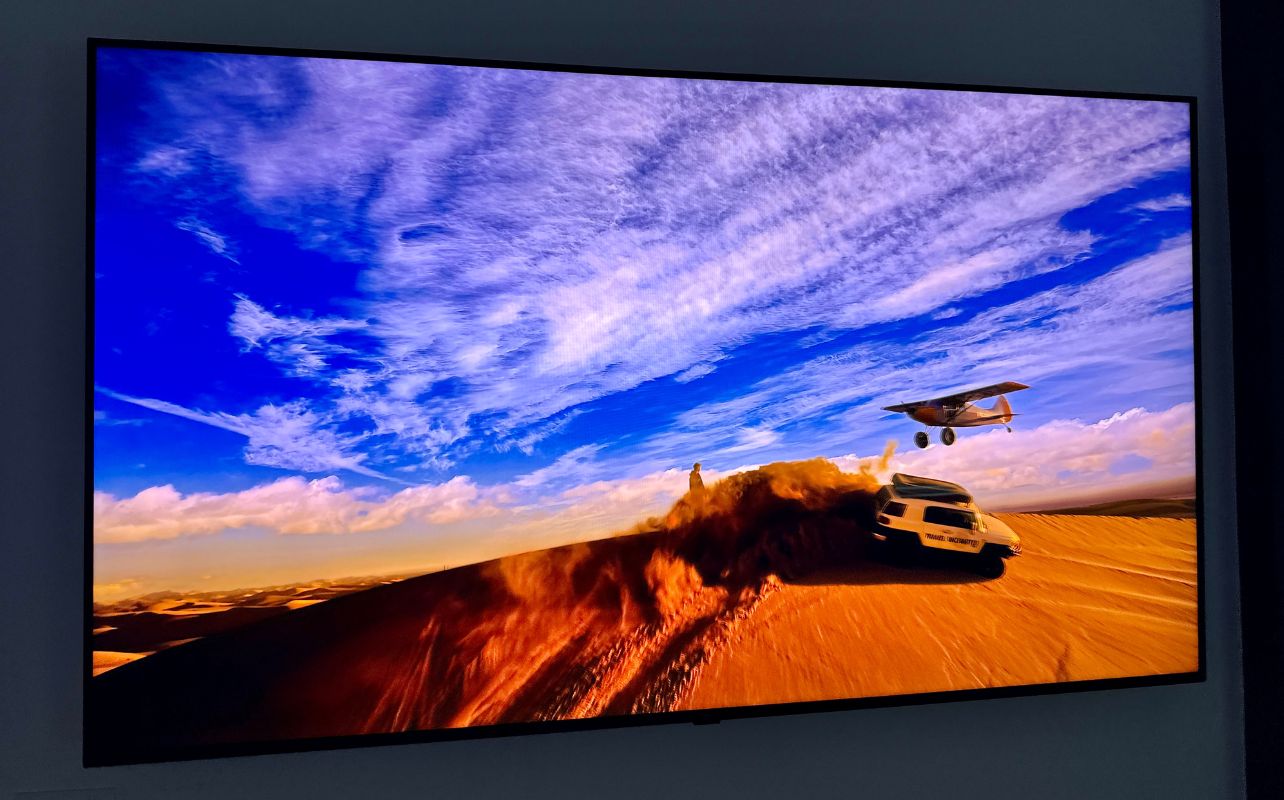
The LG MRGB95B TV uses thousands of dimming zones to control its backlight, and black levels are very good for an LCD television. Dark scenes have convincing depth, and bright objects against black backgrounds can look excellent.
The obvious comparison is with OLED, and this is where the differences between the two technologies become most apparent. If you are curious about the difference between these panels, be sure to check out my article on LG Micro RGB vs LG OLED TVs, where I take a deeper dive into both.
Gaming is one of its best features
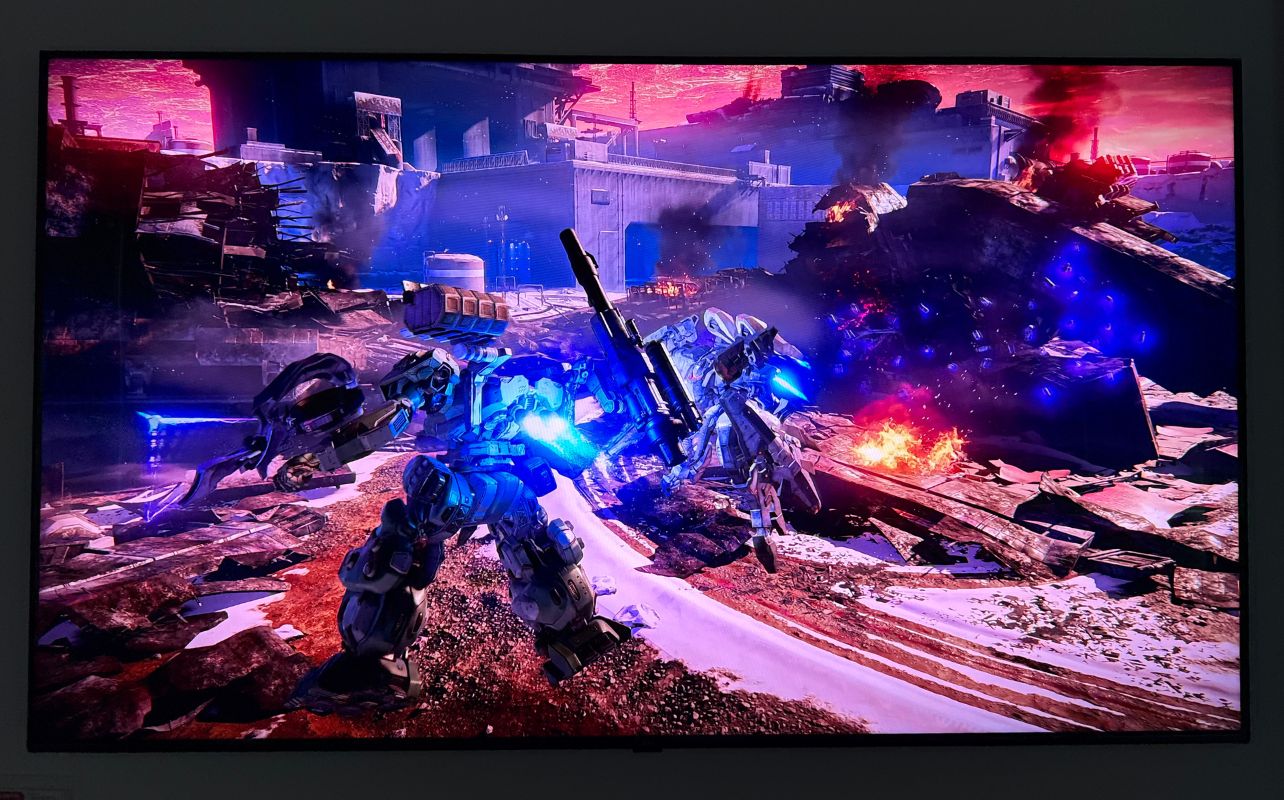
LG continues to make some of the best gaming TVs on the market, and the MRGB95B carries that strength over from the company’s OLED lineup.
The panel has a native 120Hz refresh rate and supports VRR up to 165Hz with a compatible PC, along with AMD FreeSync Premium, ALLM, HGiG, and Dolby Vision gaming at 4K 120Hz.
For PlayStation 5 Pro and Xbox Series X, it checks nearly every box I look for in a premium gaming display. Games feel responsive, but the picture is what really enhances the experience. Bright HDR effects, neon lighting, sunsets, particle effects, and colourful environments all benefit from the extra brightness and colour volume.
LG’s Game Optimizer remains one of my favourite features. It gives quick access to VRR status, frame-rate information, and gaming-specific picture controls without forcing me through the main settings menu. If you are considering this TV for gaming, it’s one of the best performers I’ve tested for 2026.
Is RGB LED TV the best TV for gaming? Read more on how RGB LED TVs can enhance your gaming setup.
webOS 26 and connectivity
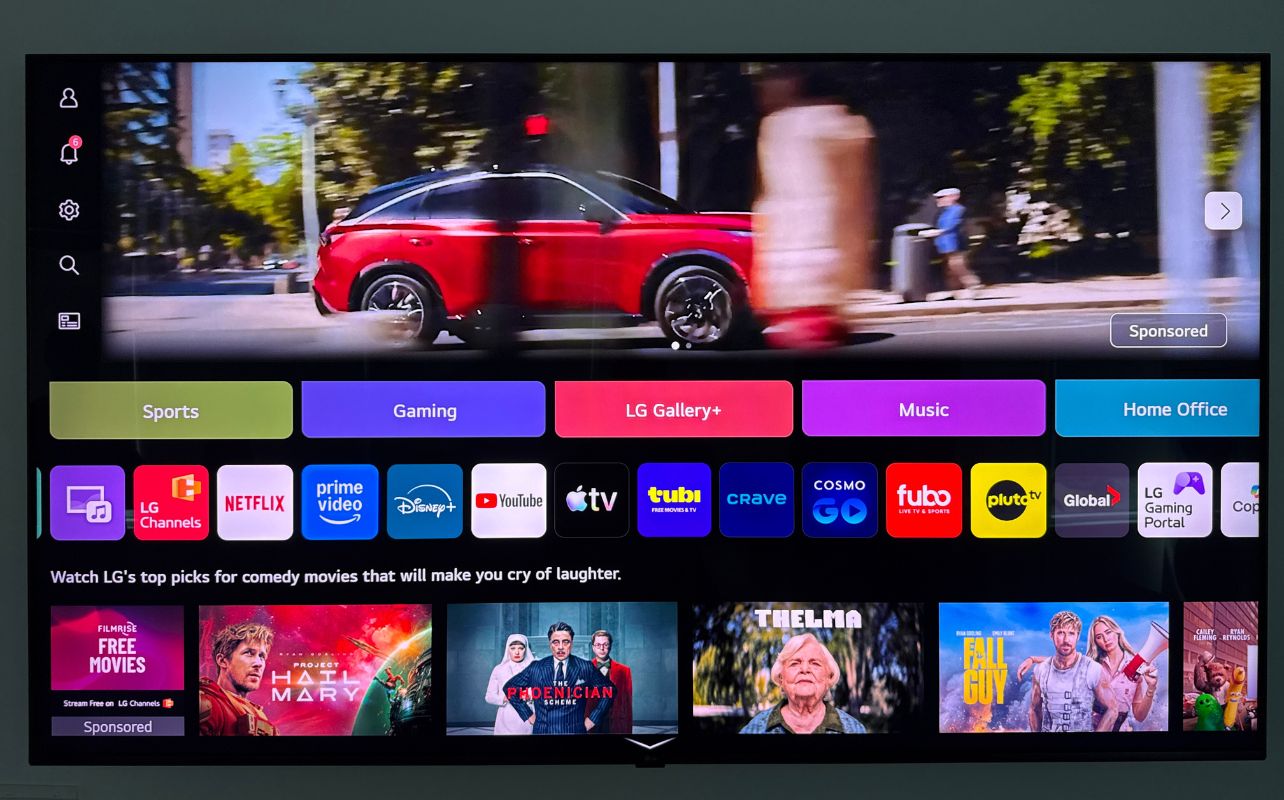
webOS 26 is fast and familiar, with support for major streaming services, Apple AirPlay, Google Cast, LG ThinQ, and smart-home integration. The interface can still feel busy for my taste, but performance is more responsive, and there are enough customization options to reduce some of the clutter.
Plenty of ports for modern devices
Connectivity is excellent on the LG Micro RGB evo TV. There are four HDMI inputs supporting 4K 120Hz, VRR, ALLM, QMS, and QFT, with eARC for a soundbar or AV receiver. There are also two USB ports, Ethernet, Bluetooth 5.3, optical audio, and Wi-Fi 5.
Want to learn more on this new TV tech? Read our RGB LED TV buying guide.
Final thoughts on the LG Micro RGB evo TV
The LG Micro RGB evo TV is an impressive showcase for LG’s Micro RGB technology. Its greatest strengths are easy to see right away: exceptional brightness, excellent colour expression, and punchy HDR performance. OLED still has the edge in absolute black levels, but the MRGB95 offers significant upside overall, especially if brightness is a key priority for you.
This feels less like an attempt to replace OLED and more like a strong alternative for viewers who value brightness, vivid colour, and daytime light viewing. If those are your priorities, the LG 75MRGB95B is one of the most exciting new TVs I have tested this year.