

While you can’t control the temperature outside, you can keep it cool inside during the hottest, muggiest days and nights with an air conditioner. But as you shop for one, you might notice that not all cooling units are the same. To cool your space properly, one of the most important factors to consider is getting the right size air conditioner. This doesn’t necessarily relate to the physical size of the unit, but it’s power and how that factors into your room size. In this handy guide, I’ll walk you through how to make sure you get the right one for sufficient cooling of the entire room or apartment.


Air conditioner sizing chart
Before getting into the nitty-gritty, here’s a handy chart that outlines the British Thermal Units (BTUs) of an air conditioner, which you can find in the specs, and what respective room size it is rated to cool.
| Room Size | BTU Required |
| Up to 150 sq. ft. | 5,000 BTU |
| 150-250 sq. ft. | 6,000 BTU |
| 250-350 sq. ft. | 8,000 BTU |
| 350-450 sq. ft. | 10,000 BTU |
| 450-550 sq. ft. | 12,000 BTU |
| 550-700 sq. ft. | 14,000 BTU |
Adjustment factors to consider
While these numbers are guidelines, there are a few adjustment factors to consider.
BTUs vs. ASHRAE vs. SACC: As noted in our air conditioner buying guide, BTUs can be measured by standards from the American Society of Heating Refrigerating and Air Conditioning Engineers (ASHRAE) or, more recently, the Department of Energy (DOE) Seasonally Adjusted Cooling Capacity (SACC). The SACC figure, as discussed further on in this article, accounts for the heat the unit itself generates, which results in a lower BTU number. If the product has both labels, the SACC number will provide a more accurate figure.
Single-hose portable air conditioners: These can lose from 10-15 percent efficiency, so size up in this case.
Ceiling height: If your ceiling is higher than eight feet in the room you want to cool, you’ll want to size up from 10-15 per cent to account for how the air rises.
Sunny, south-facing room: If the room tends to get a lot of sun, especially with large windows, increase the size by about 10 per cent to counteract this extra heating. National Resources Canada also provides guidance for increasing BTU capacity for places in Canada that experience high humidity conditions.
In or near a kitchen: If the room you’re cooling is your kitchen or nearby it, size up to account for heat generated through cooking on the stove and oven.
High occupancy: Households with more than two residents, or if you frequently have guests, should size up by at least an additional 600 BTU per person since people generate body heat and can quickly warm a room.
How do air conditioners work?
Air conditioners are made up of an evaporator, compressor, condenser, and expansion device. They work by using a chemical inside the unit that cycles inside and outside to remove heat and replace it with cool air.
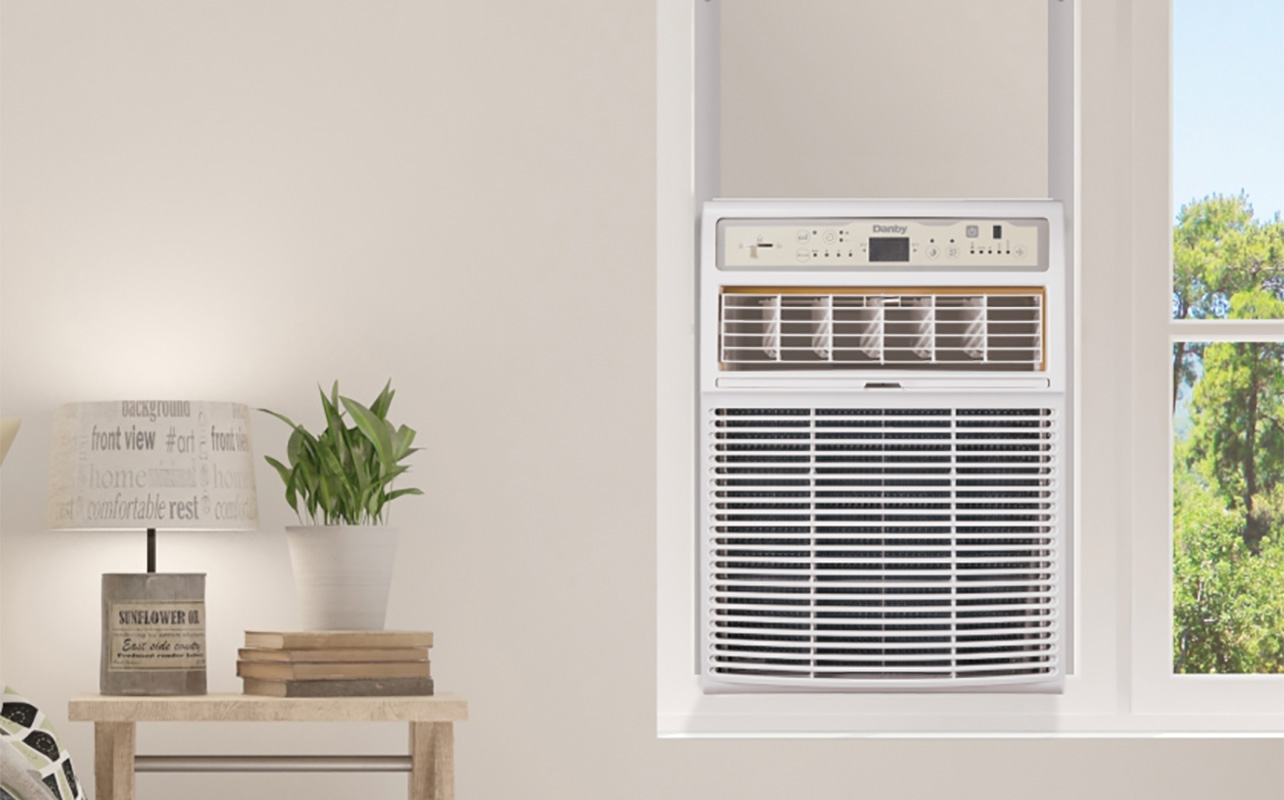
There are three main types of air conditioners beyond central air conditioning. You can find window air conditioners that sit inside the frame of your window, portable air conditioners that you can move from room to room, and mini split air conditioners. Also known as heat pumps, mini split air conditioners can cool your home in the summer and heat your home in the winter.
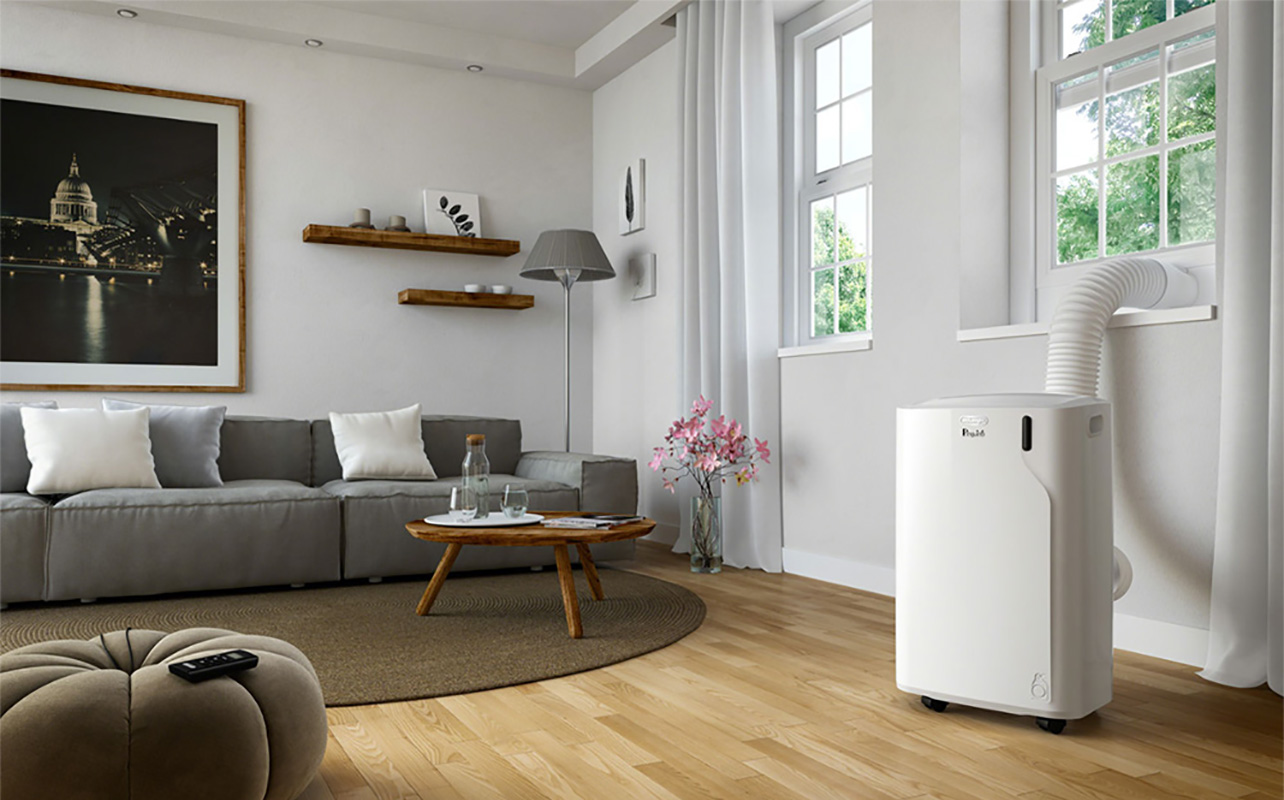
If you plan on choosing a portable air conditioner there’s one thing to note: portable units include an exhaust hose that vent warm air and moisture out a window. To use one, you’ll want to ensure you have a window nearby from which to mount the hose.
Considerations when choosing an air conditioner
No matter which type of AC you choose, from portable AC to window AC or mini split AC, there are a few things to keep in mind to pick the best size cooling unit for your home.
Your AC will remove humidity too
Your AC will remove heat from the air, but it will also reduce humidity. That’s why it’s important to take into account exactly what size of room you’d like to cool. If you choose an oversized unit, it will cool your room more quickly, but it won’t do a good job removing the humidity. Your room could feel damp and clammy. If the room is damp for long periods of time, you could end up with mold and fungus. A good sign is if your air conditioner smells musty.
The size of your space is key
Take a look at the room you’d like to use the air conditioner in. Most rooms are rectangular, so the measurement is simply length times the width of the room. If you have an odd-shaped room, you may have to calculate the square footage by going back to that math you learned back in grad 8: split the room into rectangles and triangles, then take the area of each and add them up for the total.
Does BTU change depending on the air conditioner you choose?
The general guidelines for determining the BTU needed to cool a room are typically the same for mini-split systems, portable AC, and window ACs. That being said, when determining BTU based on not just room size but also air conditioner type, there are a few key things to keep in mind.
Portable air conditioner
Portable air conditioners are anywhere from 10-15 percent less efficient than window air conditioners. So, when choosing the best portable air conditioner, you may want one with more BTUs to properly cool your room. Given the single-hose heat exchange, you’ll want to size up accordingly.
Window air conditioner
You can size a window air conditioner solely based on the square footage of the room. But also note that sizing your window air conditioner requires that it fit in your room’s window frame. So, you’ll want to know the measurements of your window and the measurements of the window AC unit you’re interested in.
Mini-split air conditioner
Mini-split air conditioners should be sized by the zone, not necessarily the single room. If you have a multi-zone set-up, you will need to calculate the size of each room and add them to determine the necessary BTUs.
What should your air conditioner BTU be?
If you’ve already shopped for an AC, you know the cooling capacity has always been measured in BTUs (British Thermal Units). BTU is a term to measure heat, and the higher the BTU rating, the more efficient the cooling power. To get the most out of your unit and ensure it will cool the space you want to cool, you need to be as close to the right BTU as possible.
The first step in determining which BTU is for you is to calculate the size of your space, whether it’s a bedroom under 400 square feet, a living room that’s 400-600 square feet, or a 600 square-foot open space. For all three types of AC, a rule of thumb is that you’ll need 20 BTUs needed per square foot. Just keep in mind those aforementioned factors like how high your ceilings are and how much sun the room gets and adjust numbers fittingly.
The next step is to use the BTU table to determine the standard BTU sizing for the room you want to cool. Verify if the measurement on the model you’re thinking of getting is BTU, ASHRAE, or SACC and adjust for this as well. In most cases, you’ll find you’ll want to size up slightly to account for one of more of the factors noted.
Common sizing mistakes
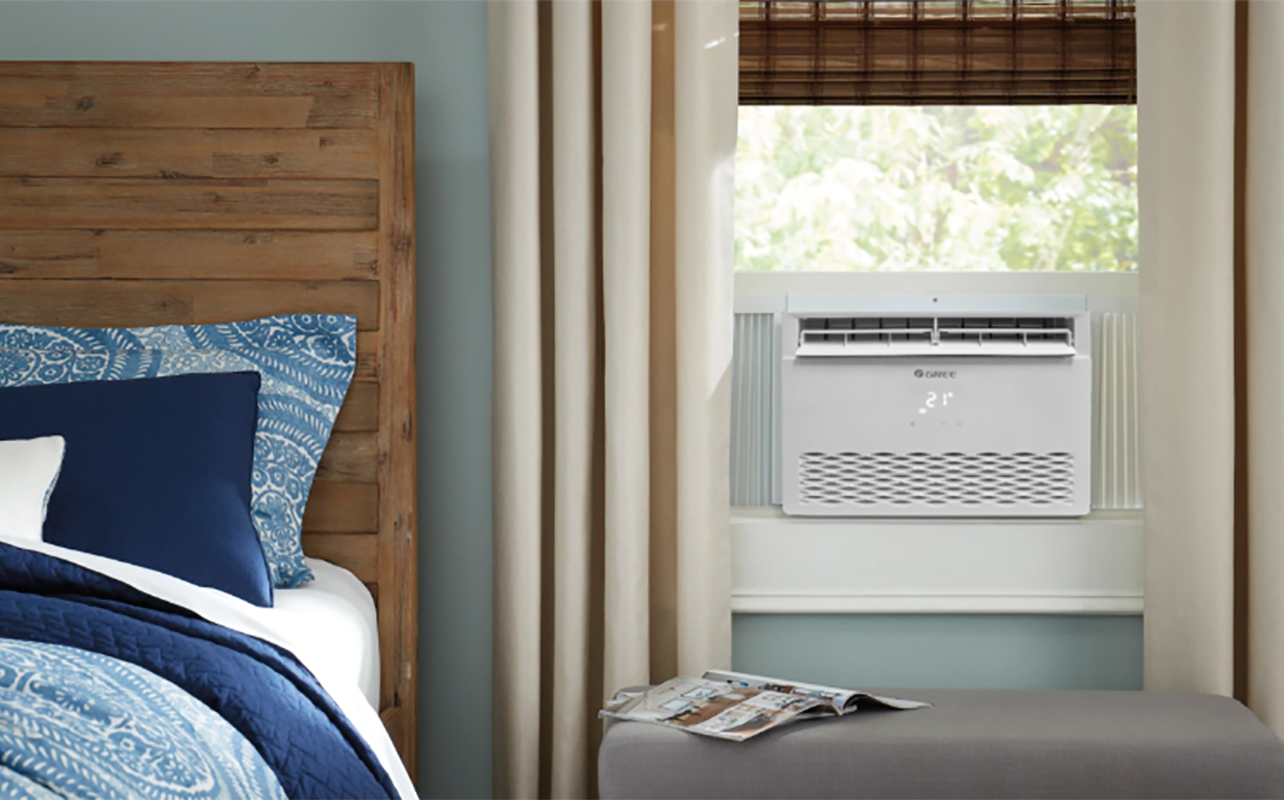
It’s easy to under- or over-shoot the size of an air conditioner, so before you make one of these and other common mistakes, we have you covered.
Oversizing: You might think that you can just get the model with the highest number of BTUs to cover your bases, but this is a mistake. This can cause short-cycling and humidity issues. So, it’s crucial to get the proper size and while sizing up slightly can be helpful, you don’t want to go too high.
Undersizing: Conversely, you might just go by straight BTUs, forgetting to accommodate things like the high ceilings, big south-facing window, and the fact that your kids have their friends over every day. It the unit is too small, it will run constantly and never reach the proper temperature.
Measuring the room incorrectly: Make sure when measuring the room that you measure the floor area, not the wall length. This will provide the most accurate length and width for calculating square footage.
What is an Energy Efficiency Rating?
The last thing you should consider is the EER (Energy Efficiency Rating) of the air conditioner. The EER lets you know how energy efficient the air conditioner is to operate. EER rating is simply calculated by dividing the BTU of an air conditioner by its wattage.
Air conditioners with a high EER rating will use less electricity to create the same amount of BTU’s of output. Another benefit of a higher EER is it likely has a better compressor and runs more quietly than other models.
BTU, ASHRAE, and SACC labels for portable air conditioners
The US Federal Trade Commission (FTA) and the Department of Energy (DOE) made a few changes to the testing and labelling for air conditioners. The DOE’s labels and rating system is designed to more accurately reflect the energy efficiency of each portable air conditioner unit.
Previously, both ASHRAE labels and DOE labels focused on the number of BTUs removed from the room by your air conditioner. However, the newer DOE labelling takes into account something that ASHRAE does not; the portable air conditioner itself can also generate heat. Because of that, all ratings now lower the effective cooling power of the unit. For example, a portable air conditioner rated at 10,000 BTU under ASHRAE will now lower to 6,500 BTU under the newer DOE labelling.
What is the SACC rating?
The new DOE label is called the SACC rating, and the acronym stands for seasonally adjusted cooling capacity. The SACC rating is a weighted average of the portable air conditioner’s performance at different humidity levels and temperatures. While the actual cooling capacity of the unit is still the same, there are no internal changes to the units, and their functionality remains unchanged, all SACC ratings will lower the effective cooling power of the unit. For example, a portable air conditioner rated at 10,000 BTUs will now be listed as a 6,500 SACC BTU under the newer labelling. As you shop for a portable air conditioner at BestBuy.ca you’ll see the BTU listed as well as the SACC rating.
Ready to cool off?
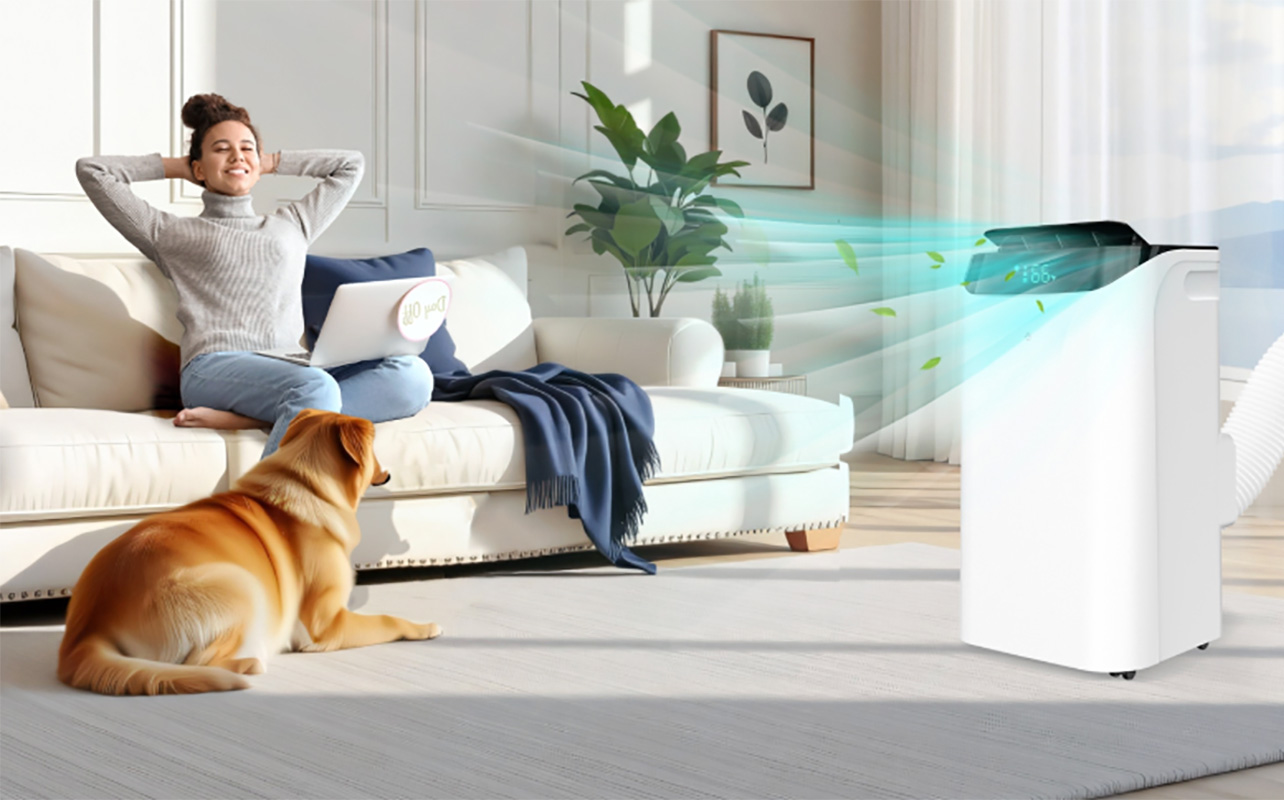
Now that you know what you need to consider when buying a unit to cool your home, you’re ready for a long, hot summer. Check out all of the air conditioners and AC units available at Best Buy, including portable air conditioners, window air conditioners, and mini-split air conditioners. Once you find the right model, read our guide on how to properly install an air conditioner. And don’t forget to clean your air conditioner to keep it in tip-top shape for years to come.
FAQs
Have more questions? We have answers!
How many BTUs do I need for a 12 x 12 room?
An average-sized 12 x 12 foot room would equate to 144 square feet (12 x 12 = 144). This means you should get at least a 5,000 BTU air conditioner. With SACC, it would be equivalent to about an 8,000 BTU unit.
What happens if my air conditioner is too big for the room?
If the air conditioner is too big, it could cause short cycling, when it turns on and off repeatedly because it cools the room so quickly. Because this happens, the compressor turns off before it has the chance to remove moisture, which can lead to humidity issues, potentially even mold.
How do I calculate BTU for an open plan space?
Measure the square footage of the space as if it was a single room. Go for the entire length and width, measuring from the floor. Account for windows, ceilings, and occupancy as well.
Does ceiling height affect what size AC I need?
Yes. If the room has especially high ceiling (eight feet or higher), go up anywhere from 10-15 per cent in BTUs. Conversely, if the ceiling is lower than the standard eight feet, you may be able to size down slightly.
What size air conditioner do I need for a 500 square-foot room in Canada?
You should go with anywhere from 10,000-12,000 BTUs, accounting for all the factors noted above as well as the specific climate depending on where you are in Canada. Southwestern Ontario, for example, can get very humid in the summers while Alberta typically has low humidity, even in the summer.






Great topic, indeed! This blog should be read before buying an AC. Thank you!
I live in a three bedroom apartment building. I am confused as to what air-condition to buy.
3 air conditioners or one? How much hydro am I expected to pay if I have three air conditioners?
Hi Mo,
I sent your question to the appliance team at Best Buy Canada’s head office and will share their response as soon as I get it.
Best regards,
Martin
Hi Mo
The appliance team at Best Buy sent this response:
First it depends on “how much” you want to condition each room. I would suggest window air conditioners (if possible to install in the bedrooms) as the best option since they consume less power. One I like is this Danby 6000BTU unit https://www.bestbuy.ca/en-ca/product/danby-window-air-conditioner-6000-btu-white/14365163
That said, it may be sufficient for you to buy one portable AC and share or place in most central room to see if it disperses enough to the other rooms. For that option I suggest this DeLonghi model https://www.bestbuy.ca/en-ca/product/de-longhi-portable-air-conditioner-14-000-btu-black-only-at-best-buy/12065816
Best regards,
The portable units still need to be vented to the outside. You should not run them without the exhaust hose being vented out a window.
These portable air conditioners are designed to work inside without direct access to outside ventilation. They will work well placing them anywhere inside.
Yes they do they all come with a hide for venting
Not hide hose damn auto correct
This is not true! All of the portable units Best Buy sells need a window to exhaust the hot air (and sometimes the water vapor depending on the model). You cannot just place them in the middle of a room and expect any cooling! OMG If there is no window, you can create a hole through the wall to the outside. But you must vent to the outside in some manner.
Do this portable air conditioner “not window units” require outside ventilation, please let me know
Yes they do