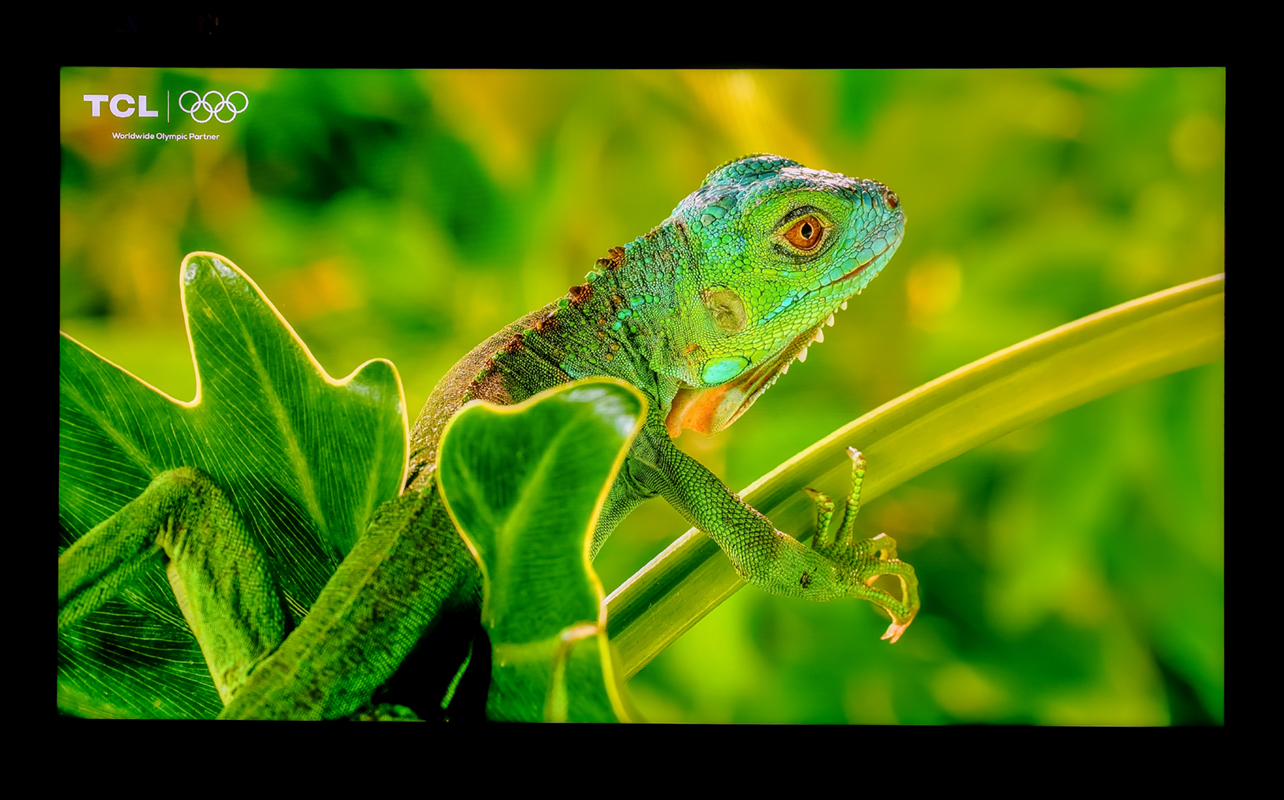
TCL unveiled a new set of TVs, including a new type of TV technology called SQD Mini-LED, at CES with a bold claim on top of it all. According to the company’s representatives, the TCL flagship SQD Mini-LED will be “the best television available in 2026” over any other display technology or brand.
That’s saying a lot given all the other tech on display at the show but the gist of the argument is that picture quality improvements and more effective refinements will back it up. It’s part of what the company calls its “bigger and better” focus. Rather than chasing volume at the low end, the company is leaning aggressively into larger screen sizes and higher-performance display technologies.


Moving forward with Mini-LED
In 2025, TCL introduced panels based on its CSOT HVA and WHVA technologies to offer higher native contrast than IPS or ADS alternatives for deeper blacks and higher dynamic range. Adding wider colour viewing angles was part of the overall strategy for a cleaner presentation.
Even so, today’s TV market still sees 4K UHD as the base, QLED as the step-up, and Mini-LED as the premium LCD option, with OLED being the top performer for sheer contrast ratio. Since TCL doesn’t make those, its LED tech has to compete.
As a refresher, Mini-LED uses full-array local dimming backlights with LEDs typically smaller than 300 microns, combined with a quantum dot layer for colour enhancement. Since the LEDs inside can dim or turn on/off in zones, black levels and contrast improve, while colours appear richer than conventional LCDs. TCL’s technology in this space falls under its Halo Control System, part of what it calls the Precise Dimming Series. TV models like the QM6, QM7, and QM8 largely fall under that.
For TCL it’s about colour in 2026
If 2025 was about brightness and zone count, TCL sees the 2026 narrative around colour. Not to get too technical here, but the idea is to move beyond the DCI-P3 colour space toward full coverage of the much larger BT.2020 standard. This is fairly new territory for TVs because there is no video content capable of hitting that same figure. The RGB TV situation is one that may bear fruit sometime in the near future as content catches up to the new standard.
Thus, three approaches dominate the discussion: RGB Mini-LED, Micro RGB, and what TCL positions as SQD Mini-LED. You’ll be hearing and reading a lot about these terminologies throughout the year.
Not so hot on RGB Mini-LED and Micro RGB
Both of these TV technologies are prominent among TCL’s competing brands, but you won’t find either one here. RGB Mini-LED replaces traditional blue or white LEDs with separate red, green, and blue LEDs in the backlight. This enables dramatically higher colour saturation and, in theory, full BT.2020 coverage.
That leads to significant advantages in increased colour volume and improved viewing angles. TCL reps point out technical challenges, like colour crosstalk. That’s when light from adjacent RGB LEDs overlaps and mixes up hues, delivering inconsistent saturation in mixed-colour scenes, though it can depend on how effectively the system balances LED output and colour filtering. In other words, you may see certain colours or hues bleed into each other onscreen, particularly along edges. It’s entirely unclear how well founded these “risks” are because TCL reps also admit that it can vary by implementation.

As for Micro RGB, the idea is to apply the same principle of Mini-LED, only with smaller LEDs. This sounds similar to existing Micro-LED TVs, where local dimming zones increase in number because the physical LEDs that light up and dim are significantly more numerous. The catch with this technology has always been that black levels and contrast depend more on zone control and processing than LED size alone.
Micro RGB is not the same as Micro-LED because the latter uses LEDs that are self-emissive. They light up on their own independently, whereas Micro RGB uses a backlight arrayed with tiny red, green, and blue LEDs that shine through layers to create the image you see onscreen. The single white or blue ones in Micro-LED light themselves without the extra layer.
Despite all this, TCL plans to also make RGB Mini-LED TVs as part of its 2026 lineup, positioning RGB as “great” and SQD as “greater.”
SQD Mini-LED: TCL’s alternative
Rather than changing the colour of the LEDs themselves, SQD or Super Quantum Dot Mini-LED utilizes a blue-LED backlight and enhances the rest of the colour system. This approach combines newly reformulated quantum dots capable of achieving full BT.2020 coverage with an ultra-precise colour filter and advanced colour purity algorithms. The result is designed to be consistent, with pixel-level colour accuracy and no risk of colour crosstalk.
Since SQD relies on blue LEDs, TCL reps say it avoids overlapping primary colours at the backlight level. So, no colour blooming and tighter optical distances with improved contrast control.
The X11L is the first with this tech
TCL’s 2026 flagship TV will be the X11L SQD Mini-LED. It combines a WHVA 2.0 Ultra panel, zero-border design, and anti-reflection coating with the brand’s new deep colour system. Discrete dimming zones reach up to 20,000 and up to 10,000 nits peak brightness to match the maximum defined by Dolby Vision and HDR standards. Colour coverage reaches 100% of BT.2020.
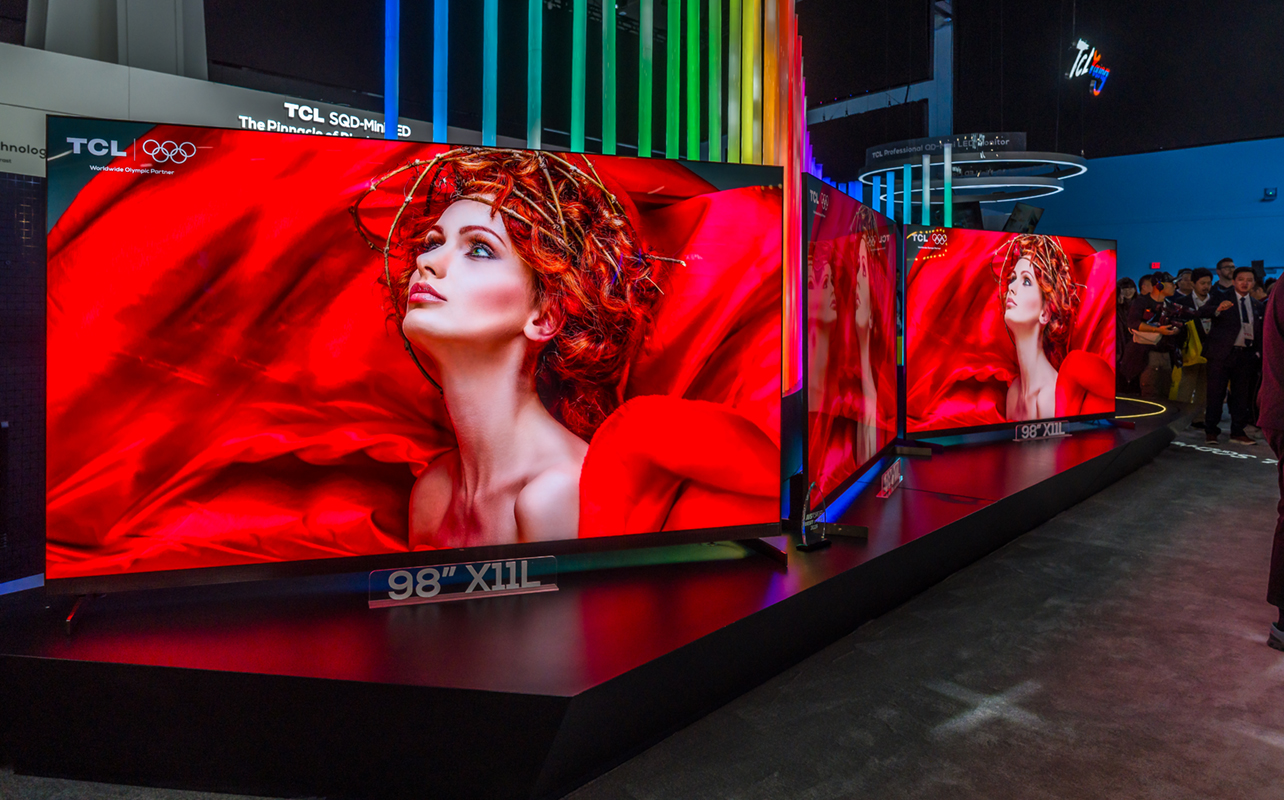
Under the hood, TCL introduced a new TSR AI processor and a 26-bit backlight controller, alongside AI-driven enhancements for colour, contrast, motion, upscaling, and sound.
It will also have built-in Google TV with Gemini AI for more natural language content discovery, smart home control, and generative features. Dolby Vision 2.0 Max introduces bidirectional tone mapping and variable refresh rates for films, allowing directors more control over motion presentation.
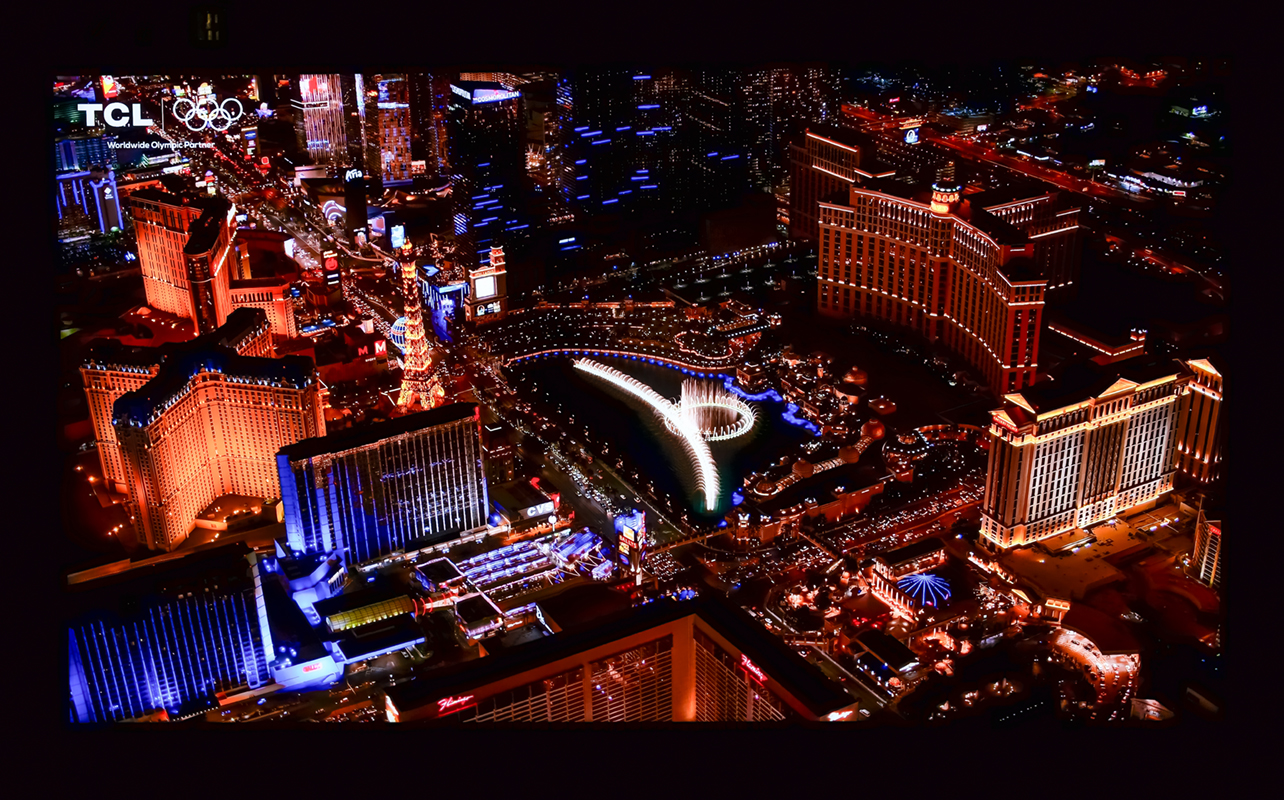
On the audio side, built-in Bang & Olufsen tuning complements an expandable wireless ecosystem, where you can add a subwoofer or Dolby Atmos speakers over time without committing to a full system upfront. As good as TCL claims the TV’s speakers will be, my ears tell me you’ll likely want a system of some kind to get the full audible experience. There’s just not enough power coming out of the TV, especially when it comes to bass.
Another neat feature is native support for Xbox Game Pass, enabling you to simply pair or connect a controller with the TV and play cloud games from the platform. No console required. Just download the app and that’s it.
Coming soon in 2026
Claiming that its flagship SQD Mini-LED will be the year’s best TV is bold, to say the least. It looks good to my eyes but I don’t see it beating the contrast and black levels of an OLED screen. It simply can’t just by the laws of physics. As an alternative, however, it makes a compelling case.
Explore CES 2026 highlights and emerging tech trends.