
If you’re in the market for a new television, you’ve likely encountered the debate of QNED vs. OLED technologies. Both offer premium picture quality, but they each have unique features and advantages. If you’re a movie lover, a casual viewer, or a dedicated gamer, choosing the right display technology can make a significant difference in your viewing experience.
This guide will break down the key differences, benefits, and drawbacks of QNED and OLED TVs, helping you make an informed decision based on your needs.

Table of contents
- What is QNED and how does it work?
- What is OLED and how does it work?
- Key differences between QNED and OLED
- QNED: Pros and cons
- OLED: Pros and cons
- Which one should you choose?
- Final verdict: QNED vs. OLED

What is QNED and how does it work?
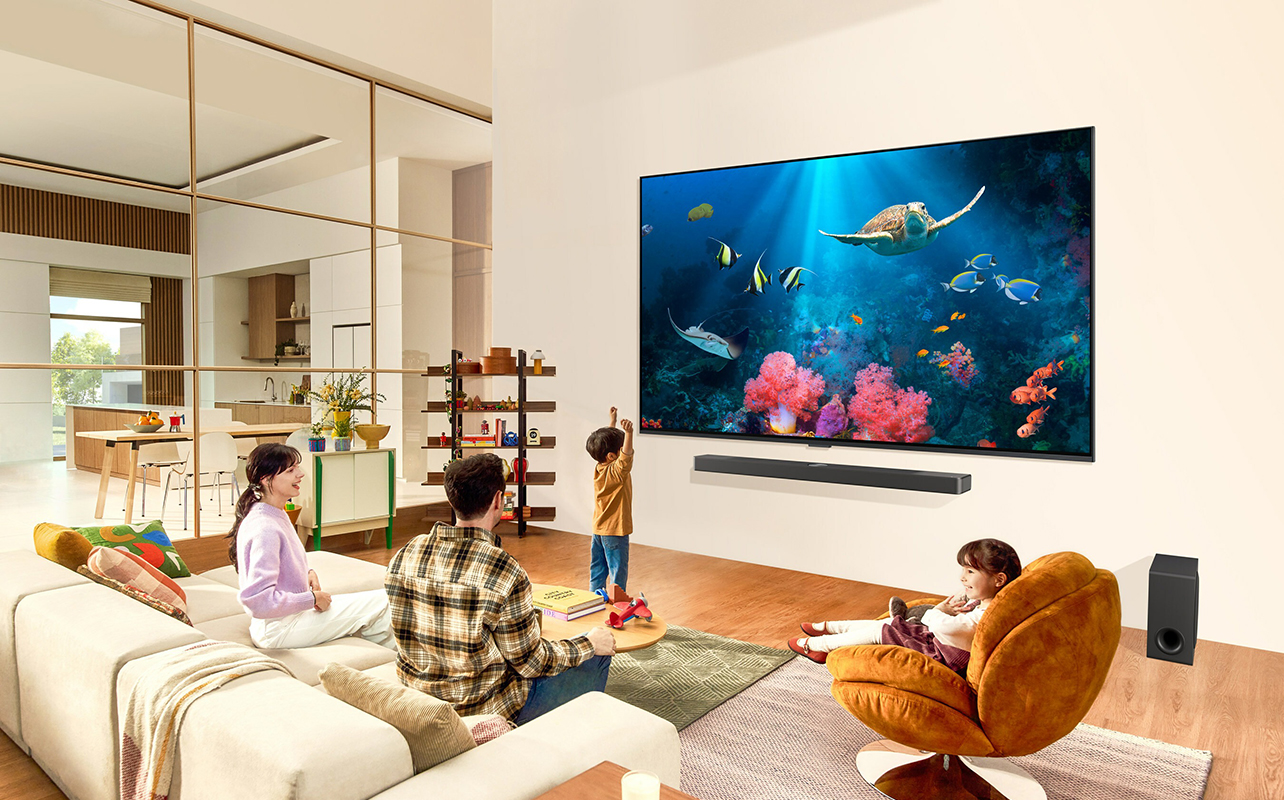
QNED (Quantum Nano Emitting Diode) is an advanced LED-LCD technology developed by LG. It combines Quantum Dot and NanoCell technologies with Mini LED backlighting, creating enhanced colour accuracy, brightness, and contrast. Positioned as a high-end alternative to OLED, QNED delivers superior picture quality compared to traditional LED TVs.
QNED TVs use Quantum Dots to boost colour accuracy and NanoCell technology to filter out impure colours. Plus, the Mini LED backlight system significantly increases brightness and contrast, providing deeper blacks and improved local dimming over standard LED TVs. However, unlike OLED, QNED still relies on a backlight, so it can’t achieve the true blacks that OLED displays are known for.
LG’s newer QNED evo models build on traditional QNED technology with upgraded colour and lighting performance. Featuring Dynamic QNED Color Pro and Mini-LED technology for more precise light control, LG says these TVs are certified for 100% Colour Volume, helping deliver richer, more lifelike colours across a wide range of brightness levels.
For more information about the different TV display technologies, check out our TV terminology and acronyms guide.
What is OLED and how does it work?
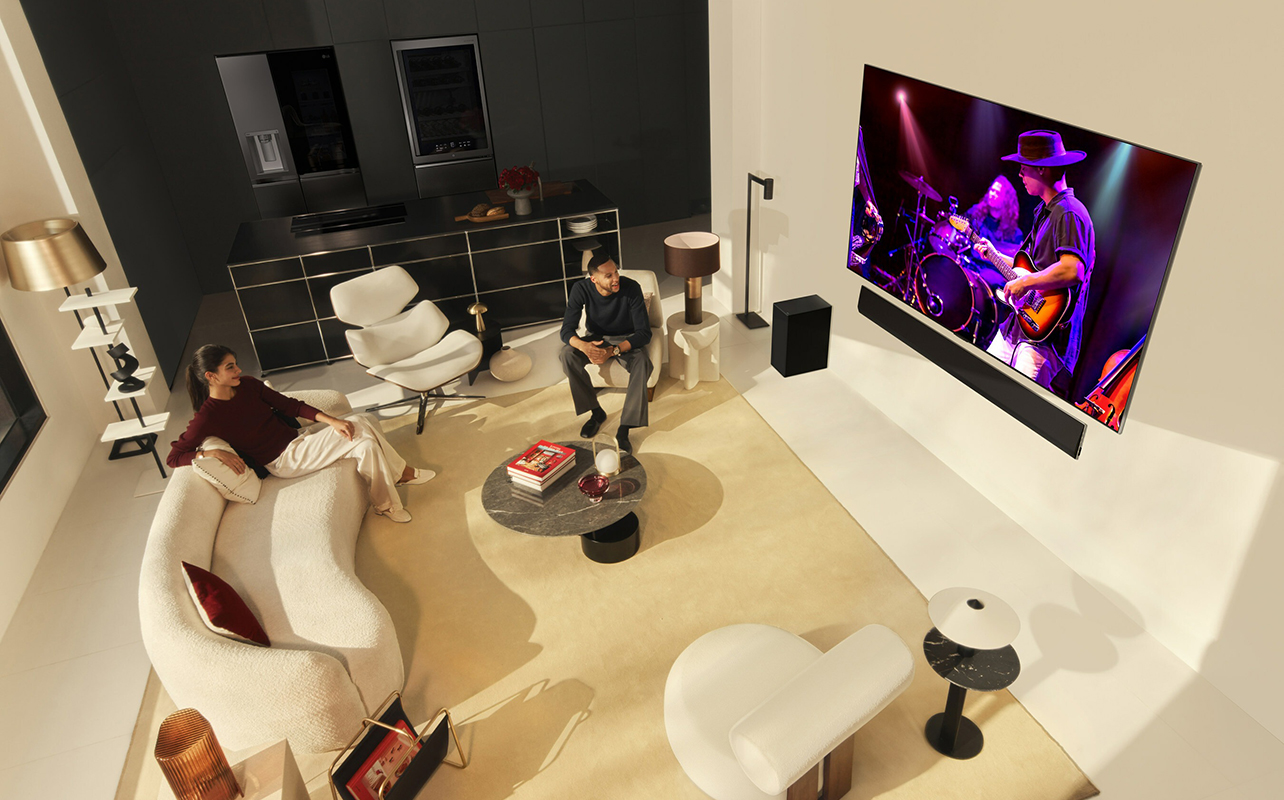
OLED (Organic Light Emitting Diode) is a self-emissive display technology that eliminates the need for a backlight. Each pixel in an OLED TV produces its own light, allowing for true blacks, infinite contrast, and exceptional colour accuracy.
Each pixel in an OLED display can turn on and off independently, producing deep blacks and superior contrast. Since there’s no backlight, OLED TVs can achieve ultra-thin designs and better viewing angles than QNED or traditional LED TVs.
Key differences between QNED and OLED
1. Picture quality
- Black levels & contrast: OLED is the clear winner here, as it can turn off individual pixels completely, achieving true blacks and infinite contrast. QNED, while an improvement over traditional LED TVs, still relies on a backlight, which can cause light blooming. This is when bright sources of light spill over to darker areas of the picture, creating a sort of halo or glow effect.
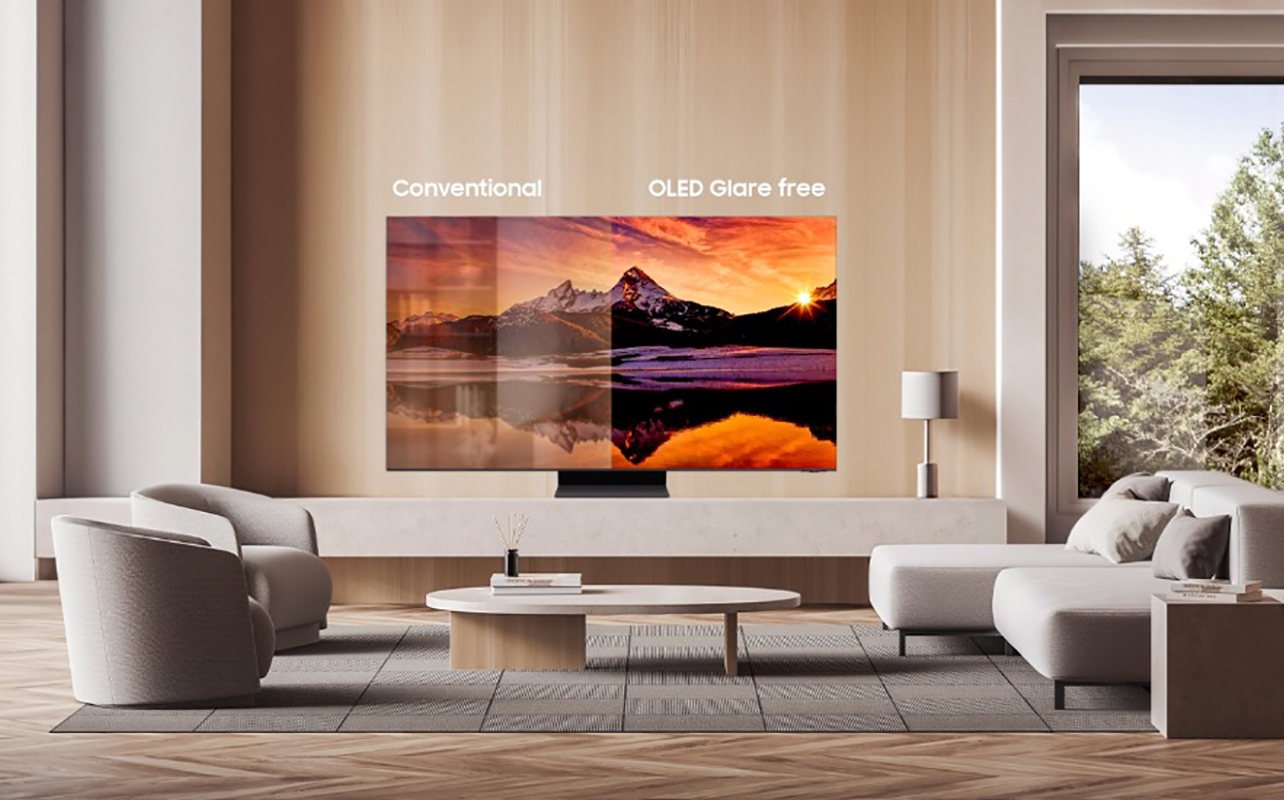
- Brightness: QNED has the advantage in brightness, making it ideal for bright rooms. OLED, while improving, may struggle with glare in well-lit environments. However, brands like Samsung have developed glare-free OLED models.
- Colour accuracy: Both technologies offer excellent colour reproduction, but OLED delivers more vibrant and accurate colours due to its self-emissive nature. You’ll see more true-to-life images that seem like they are jumping out of the screen.
2. Viewing angles
- OLED: You’ll be able to enjoy wider viewing angles with no colour or contrast loss.
- QNED: While better than traditional LED TVs, QNED technology still suffers from colour shift and reduced contrast at extreme angles.
3. Thickness & design
- OLED: Boasting ultra-thin designs, OLED TVs are ideal for wall mounting. They sit flush to the wall such that they blend nicely into the decor with no gaps between the wall and the TV.
- QNED: Slimmer than standard LED TVs, QNED still require more thickness for backlighting.
4. Burn-in risk
- OLED: This technology has a potential risk of burn-in when static images (e.g., news tickers, gaming HUDs) are displayed for long periods. If the image “burns in” to the screen, it will be slightly visible permanently. You can combat this by never leaving the TV on the same channel with a static image (think CP24) for too long.
- QNED: There are no burn-in concerns with QNED due to its LED-based technology.
5. Gaming performance
Both QNED and OLED offer high refresh rates (120Hz) and low input lag, making them great for gaming. However:
- OLED: This technology has the edge in motion clarity and contrast, delivering a smoother and more immersive gaming experience.
- QNED: Thanks to its backlighting, QNED is a safer choice for long gaming sessions due to no burn-in risk.
6. Consideration for the smart home
If you have smart home devices, the decision might come down to which brand of other products you have. QNED technology is exclusive to LG while several top brands make OLED TVs.
- OLED: Available from many brands so you can choose based on which ecosystem you might already use or want to use.
- QNED: Exclusive to LG, QNED may be a great choice if you already have other LG smart tech and appliances in the home. If you’re not tied to a specific brand, it might also be the perfect fit.
Looking for a TV with excellent colour performance? Consider the new RGB LED TVs and read about how it can change your viewing experience.
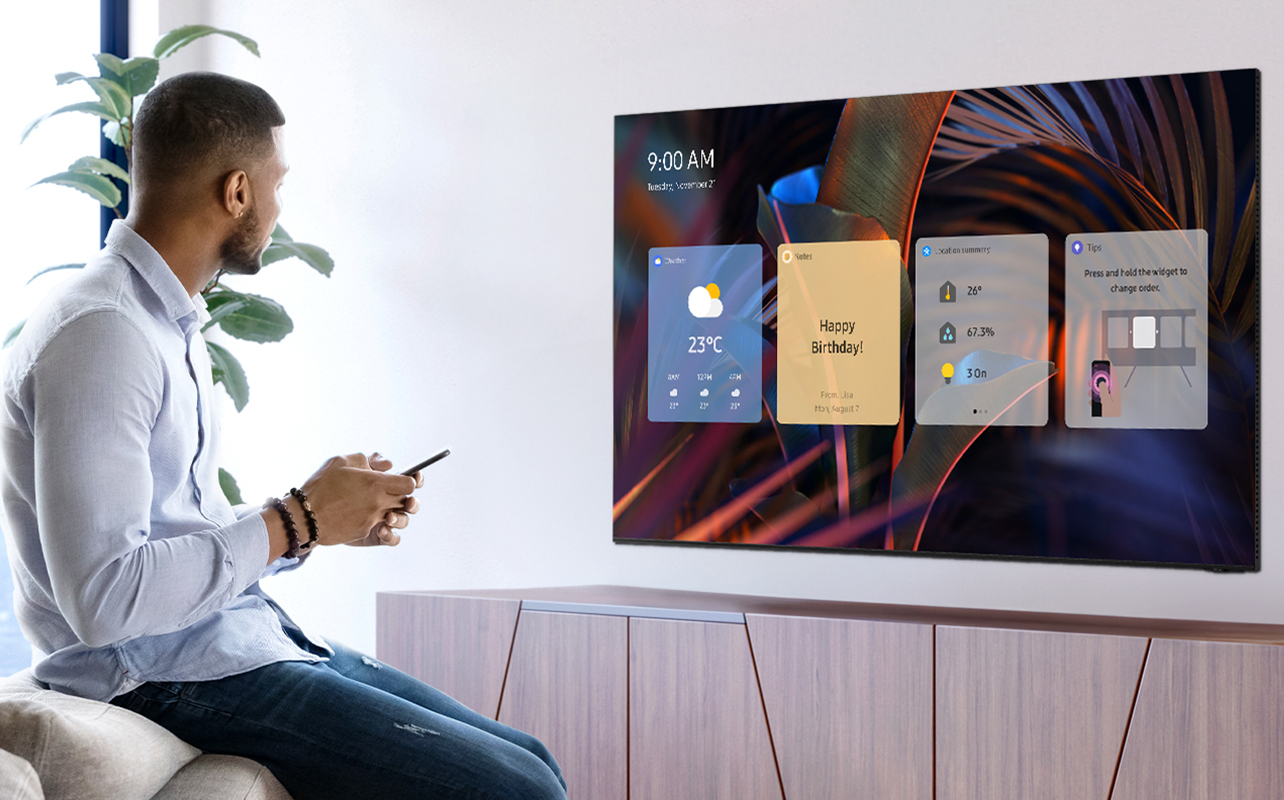
QNED: Pros and cons
Pros of QNED
- Excellent brightness: QNED TVs can reach higher peak brightness levels, making them a strong choice for sunny living rooms or spaces with lots of ambient light.
- More affordable: Compared to OLED, QNED models are generally easier on the wallet, especially at larger screen sizes.
- Strong colour performance: Quantum Dot and NanoCell technologies help deliver rich, vibrant colours with good accuracy.
- No burn-in risk: Since QNED uses LED backlighting, there’s no need to worry about permanent image retention from static content like news channels or gaming HUDs.
- Great for long gaming sessions: High refresh rates and low input lag make QNED TVs gaming-friendly, especially for players who keep static interfaces on screen for hours.
Cons of QNED
- Weaker black levels: Because QNED still relies on a backlight, blacks aren’t as deep or inky as OLED. You may also notice some blooming or halo effects around bright objects.
- Viewing angles are more limited: Picture quality can lose contrast and colour accuracy when viewed from sharp side angles.
- Thicker design: QNED TVs are slimmer than traditional LED TVs, but they still need extra space for the backlight system.
- Not as cinematic overall: While impressive, QNED typically can’t match OLED’s level of contrast, realism, and depth in darker scenes.
OLED: Pros and cons
Pros of OLED
- Perfect black levels and contrast: OLED pixels can switch off completely, producing true blacks and near-infinite contrast for exceptional picture quality.
- Outstanding colour accuracy: Colours look incredibly vibrant and lifelike thanks to OLED’s self-emissive technology.
- Wider viewing angles: The image stays consistent even when viewed from the side, with minimal colour or contrast shift.
- Ultra-thin premium design: OLED TVs are remarkably slim and sit nearly flush against the wall, giving them a sleek, high-end appearance.
- Exceptional gaming performance: Fast response times, strong motion clarity, and deep contrast create a highly immersive gaming experience.
- More brand options: OLED TVs are available from multiple manufacturers, making it easier to choose a model that fits your preferred smart home ecosystem.
Cons of OLED
- Glare can be more noticeable: Bright reflections may affect viewing in well-lit spaces, though newer glare-reducing OLED models help address this issue.
- Higher price: OLED TVs are usually more expensive than QNED models, particularly in larger sizes.
- Potential burn-in risk: Static images displayed for long periods can leave faint permanent marks on the screen over time.
- Lower peak brightness: Although OLED brightness continues to improve, QNED still performs better in extremely bright rooms.
Which one should you choose?
Best for bright rooms
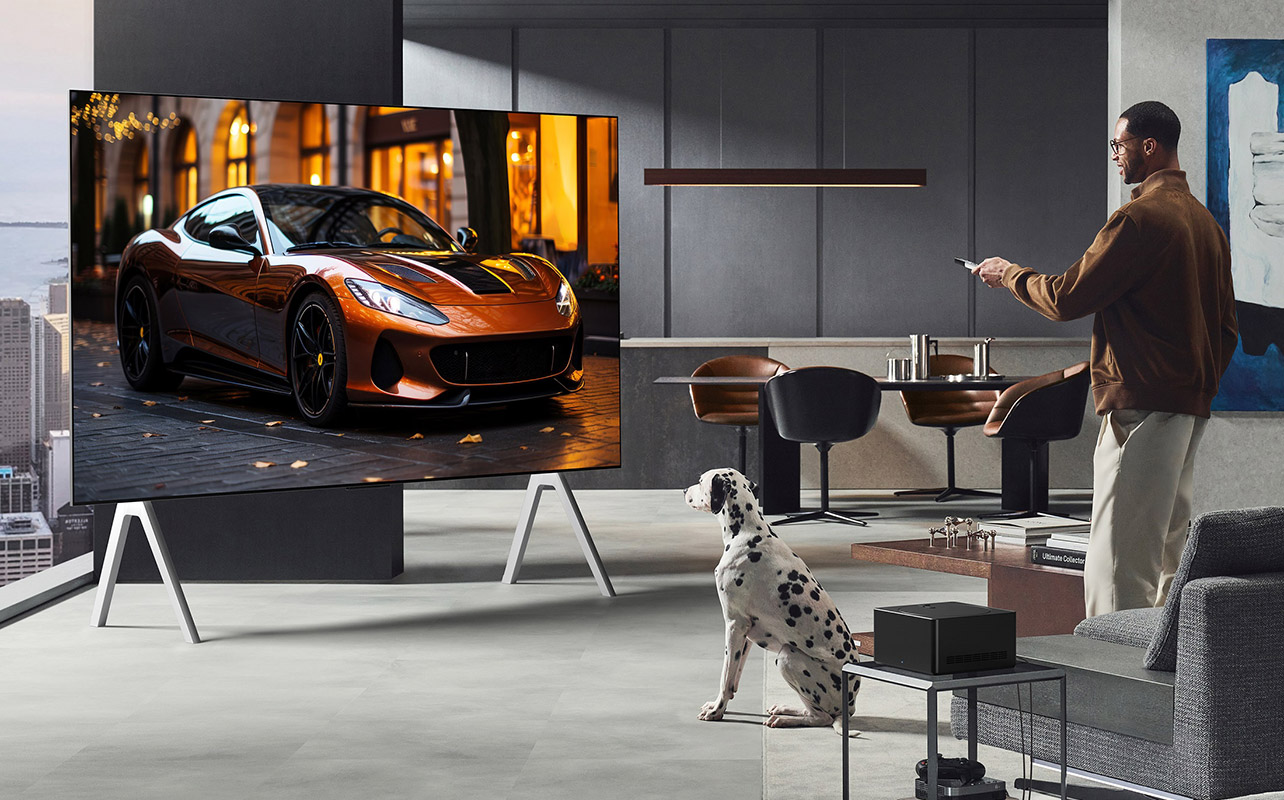
Choose QNED if your TV will be in a well-lit room. The higher brightness and Mini LED backlighting prevent glare and ensure a great viewing experience during the day.
Best for dark rooms and movie lovers
If you love watching movies in a dark room, OLED is the best choice. Its true blacks and infinite contrast create a cinematic experience unmatched by any other technology.
Best for gamers
Both QNED and OLED support high refresh rates and low input lag, but your choice depends on your priorities. OLED offers the best picture quality for gaming but carries a burn-in risk. QNED is a safer long-term choice for gaming due to its burn-in resistance.
Best for budget-conscious buyers
QNED is generally more affordable than OLED while still offering a premium viewing experience. If price is a major factor, QNED provides great value without sacrificing too much in picture quality.
Final verdict: QNED vs. OLED
Both QNED and OLED offer fantastic picture quality, but the right choice depends on your needs. If you prioritize contrast, deep blacks, and a cinematic experience, OLED is the way to go. If you need higher brightness, durability, and affordability, QNED is an excellent alternative.
| Factor | Best choice |
| Bright Rooms | QNED |
| Dark Rooms & Movie Watching | OLED |
| Gaming (Best Picture Quality) | OLED |
| Gaming (Burn-in Resistance) | QNED |
| Budget-Friendly | QNED |
| Ultra-Thin Design | OLED |
Explore your options at Best Buy Canada
Ready to upgrade your TV? Check out the latest QNED and OLED models at Best Buy Canada and find the perfect fit for your home entertainment setup!

This article was drafted using AI technology and then reviewed, fact-checked, and revised by a member of our editorial team.