
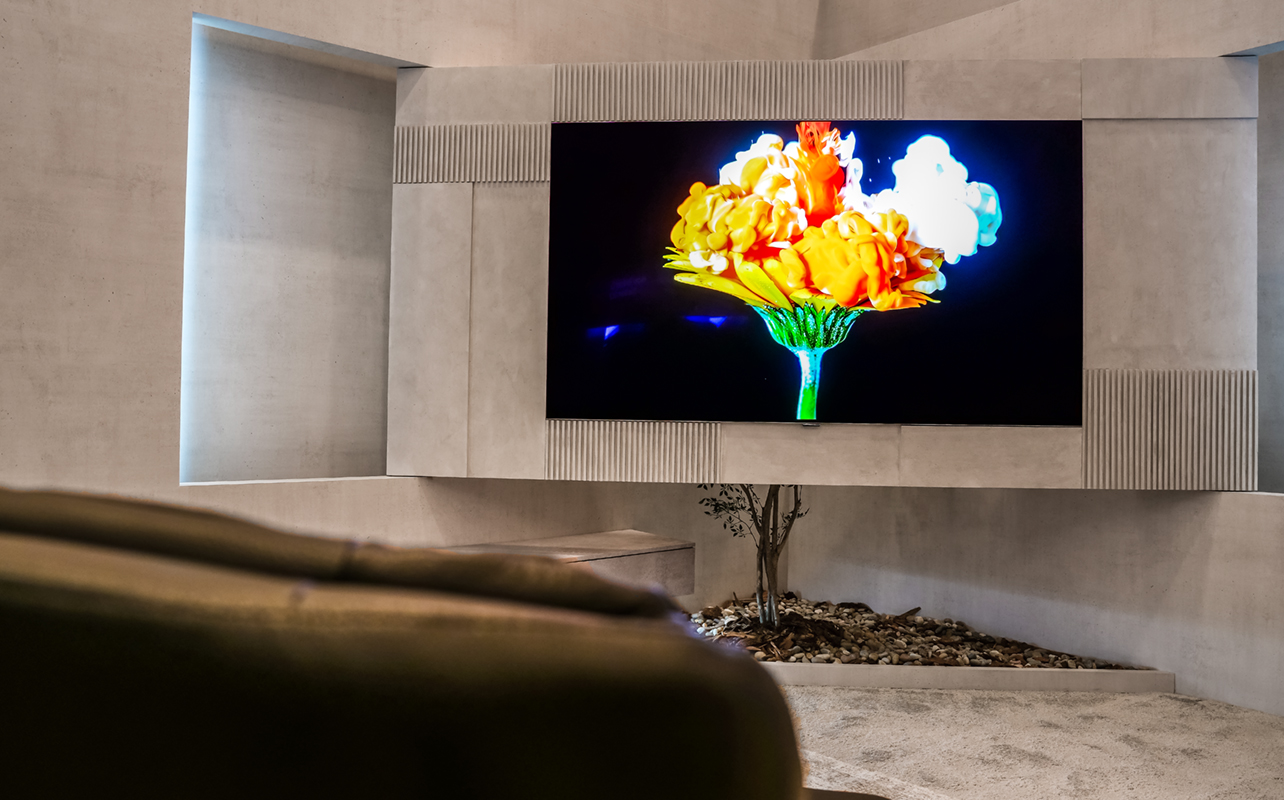
LG’s TV lineup in 2026 is getting a new addition with the LG Micro RGB Evo, a different TV technology focused on colour reproduction, along with a unique OLED making a comeback. This will be the company’s first flagship RGB television and comes alongside new OLED TVs and AI-driven user experiences.

What Micro RGB can do
LG isn’t the only brand introducing Micro RGB technology in its TVs this year, but each has its own take on how to develop it. In this case, LG claims it’s using the smallest individual RGB LEDs it has ever deployed in a consumer TV. First, a little background.
Micro RGB uses an LCD panel, except the big difference is in how the backlight works. Rather than use white or blue LEDs with color filters, Micro RGB uses really small red, green, and blue LEDs directly in the backlight. This allows for more precise color control because each color is generated at the light source itself, thereby producing higher color accuracy and more efficient brightness compared to traditional LED-LCD TVs.
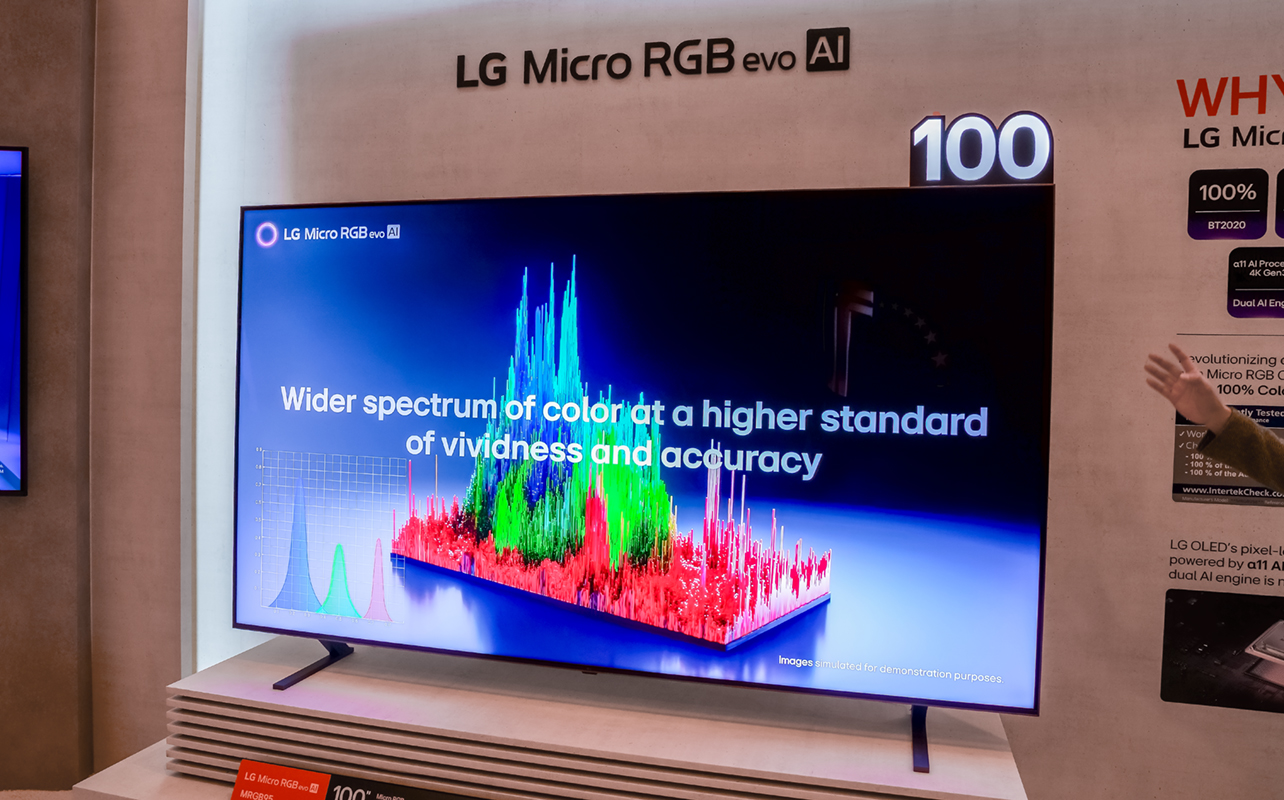
This is meant to be an upgrade over Mini-LED, which has been a staple of LG’s TV lineup for years. That technology has always utilized thousands of tiny white or blue LEDs as a backlight, producing colour through RGB filters within the panel. The benefit has always been high brightness and better contrast but colour accuracy can take a hit, including blooming around bright objects overtop dark backgrounds.
Micro RGB takes a more complex and premium approach, but to my eyes, colour fidelity stands out a little more based on the demos at the show. Local dimming zones still apply, except there’s no per-pixel control because the RGB backlight is designed to deliver finer tonal control and highlights than Mini-LED.
Closer look at the LG Micro RGB Evo
With colour being such a prominent element for the LG Micro RGB Evo, it’s worth nothing that it can achieve 100% coverage of the three highest color spaces—BT.2020, DCI-P3, and Adobe RGB—by marrying the new RGB LED zones with advanced AI processors.
That comes in the form of the Alpha 11 AI Processor Gen 3, a Dual AI Engine LG adapts from its high-end OLED TVs. Basically, the processor simultaneously handles multiple AI upscaling processes while controlling the RGB backlights. LG reps say this combination enables RGB Primary Color Ultra, which is what LG is calling its Micro RGB system, to deliver full-spectrum colour reproduction. While 100% Adobe RGB and DCI-P3 coverage isn’t uncommon, BT.2020 has been a tougher one to achieve on LCD-based TVs.
Micro Dimming Ultra controls the thousands of dimming zones to produce improved contrast, though LG admits the results won’t match what its OLED panels can achieve. For absolute black levels, they’re just not on the same level. So, the company is positioning Micro RGB Evo as sitting between Mini-LED and OLED.
There will also be a preference for larger sizes, with the Micro RGB Evo TV (Model MRGB95) coming in 75-, 86-, and 100-inch screen sizes.
OLED still the premium option
LG executives were careful to reinforce that OLED remains the company’s top-tier display technology, as it continues to sit above Micro RGB Evo in its TV hierarchy. LG isn’t overhauling its OLED Evo G6 series but aiming to refine it by reducing reflections to roughly half of the previous generation. One of the challenges in using an LG OLED TV in brighter rooms has always been maintaining image clarity in spite of lower brightness compared to LCD-LED technology. That should be better now.
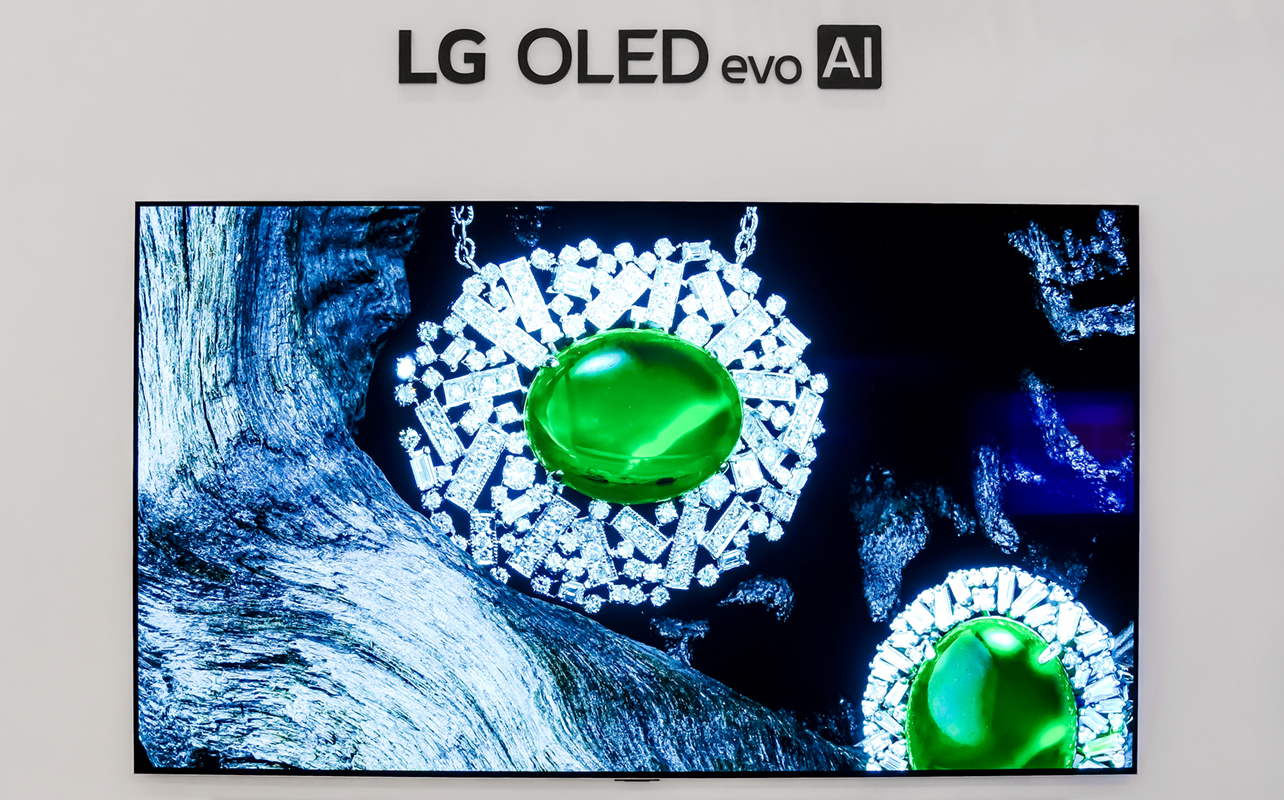
Much of this comes in the form of Hyper Radiant Colour Technology, which LG describes as its most advanced OLED picture system to date. You’ll see it in the new C6 and G6 models, and it looks really nice to my own eyes.
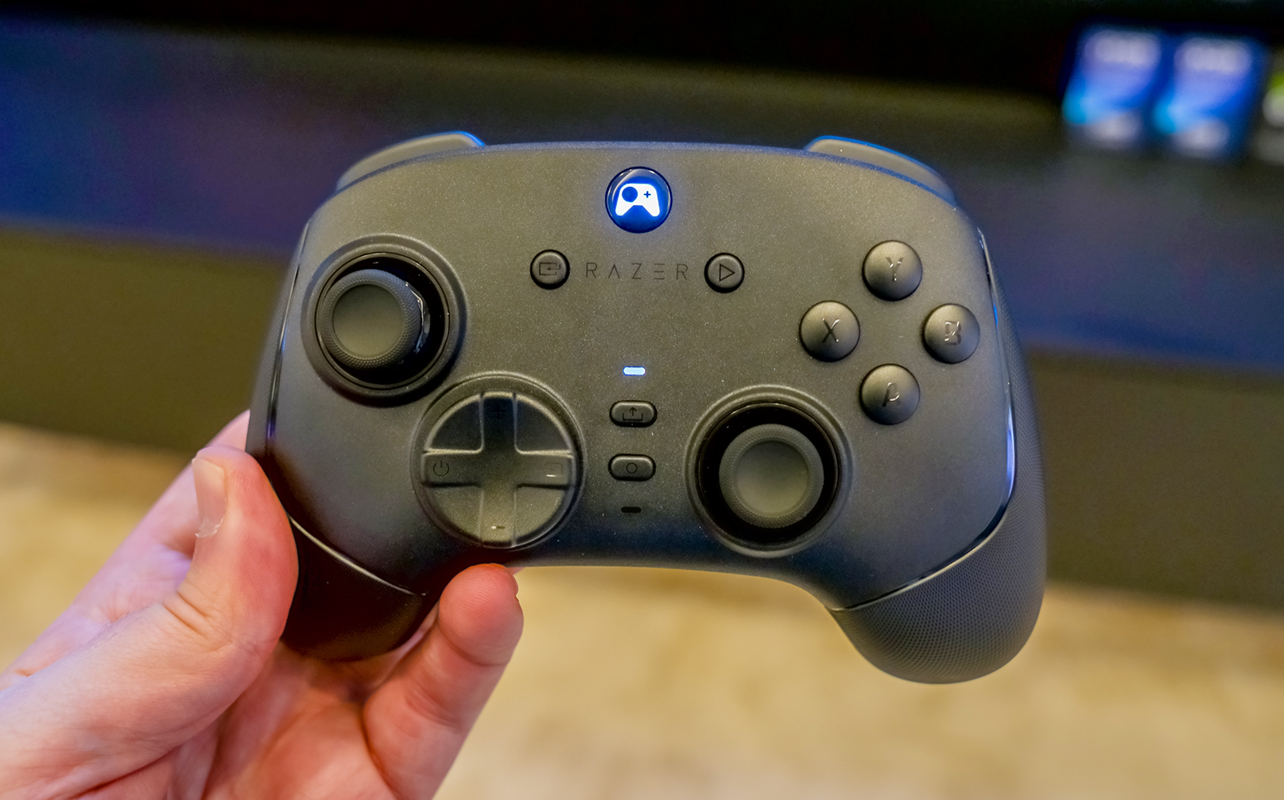
In a nod to gamers, LG’s 2026 OLED TVs will also support 4K 120Hz cloud gaming, plus Bluetooth ultra-low latency support to reduce input lag for controllers. That extends to Bluetooth earbuds, headphones, keyboards, mice, and hearing aids. With all that in check, LG figures the only thing standing in the way of smooth cloud gaming is your internet connection. So, that means console-level gaming without the actual console. LG has also partnered with Razer for a special controller that will only work with select LG TVs.
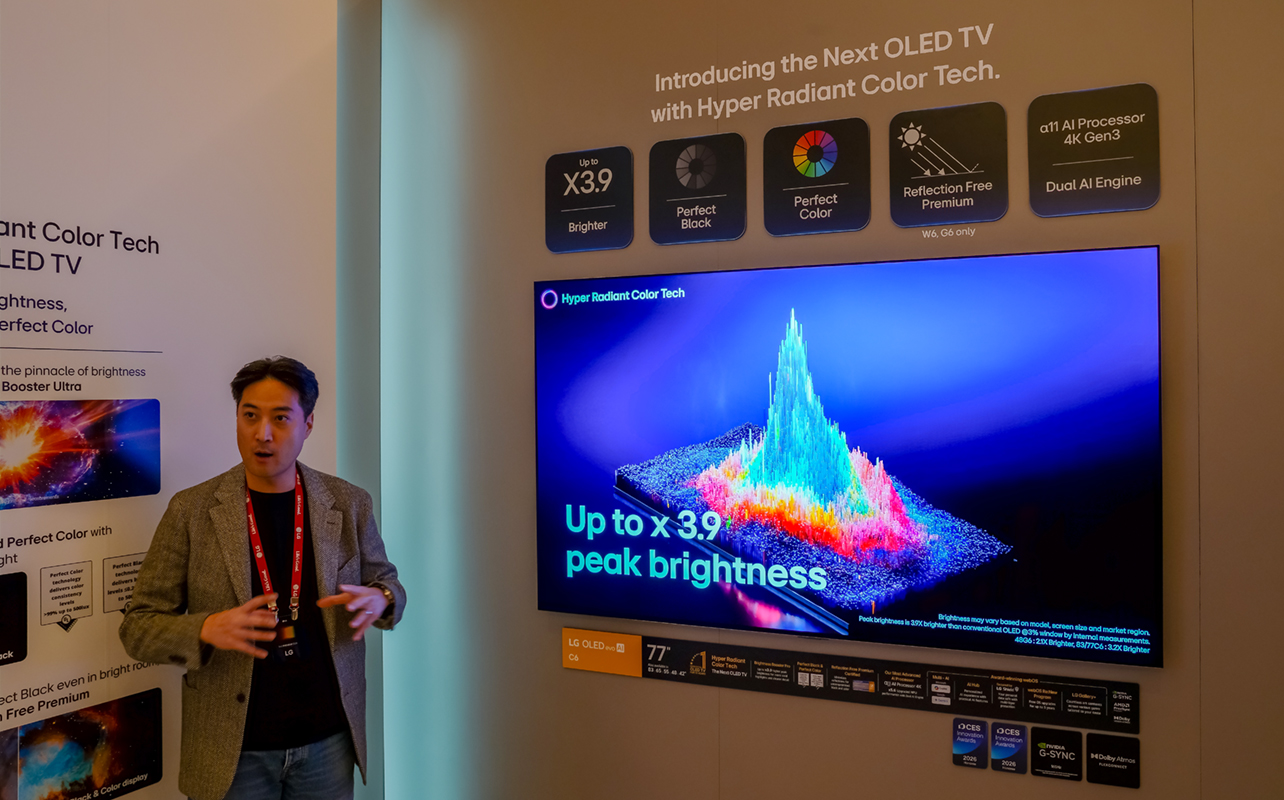
It’s even throwing in Motion Booster, another gaming-focused feature carried over from LG’s UltraGear OLED monitors. The mode makes a functional trade in that lowering resolution from 4K to 1080p bumps refresh rates up to 330Hz. LG is also expanding its Gaming Portal, adding challenge rankings that reward players with points redeemable for content and experiences.
The Wallpaper TV makes a comeback
LG first unveiled a concept Wallpaper TV almost a decade ago at CES and now the idea returns. The big difference this time is that not only does it look way more refined, but also is set to come down in price by a big margin. LG reps won’t say how much but if it cost $30,000 back in 2017, then the expectation here is that it will be closer in range to LG’s latest high-end G6 OLED Series.
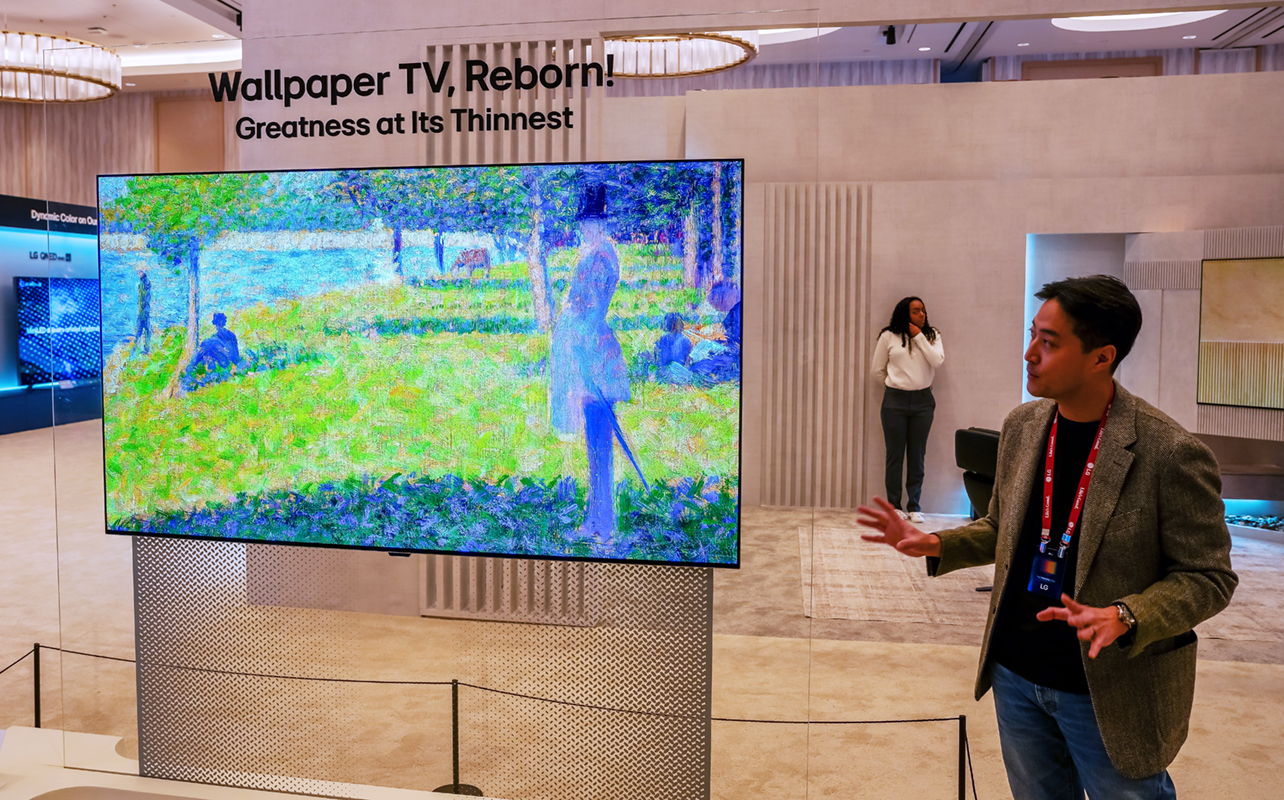
The TV will be called the LG OLED evo W6 and offer a wall-flush design that mounts onto a wall through two proprietary hooks near the top corners, necessitating drilling into wall studs at different points than conventional TV wall mounts. The W6 measures just 9mm thick and that unique wall-mounting system lets it sit completely flush against the wall. All connectivity runs through LG’s Zero Connect Box, which houses all inputs and can still maintain a strong link to the TV from up to 10 metres away. This way, you can wirelessly transmit lossless 4K video and audio from a reasonable distance without plugging anything beyond the power cord into the TV.
The W6 also supports Hyper Radiant Colour Technology achieving up to 3.9 times the brightness of LG’s own conventional OLED panels through Brightness Booster Ultra. Driving these gains is the latest a11 AI Processor Gen3, featuring a significantly more powerful neural processing unit and a new Dual AI Engine. Noise reduction and detail enhancement algorithms run in parallel, where the processor tries to preserve natural textures and improve clarity without the over-processed look common to aggressive upscaling.
Adding to webOS
As always at CES, webOS gets its own set of new features, this time with AI and personalization in mind. A new AI Hub builds on existing Voice ID technology, enabling different family members to have their own custom home screens. As separate profiles, they present personalized calendars, weather, sports scores, and content recommendations, turning the TV into a daily information hub rather than a passive display.
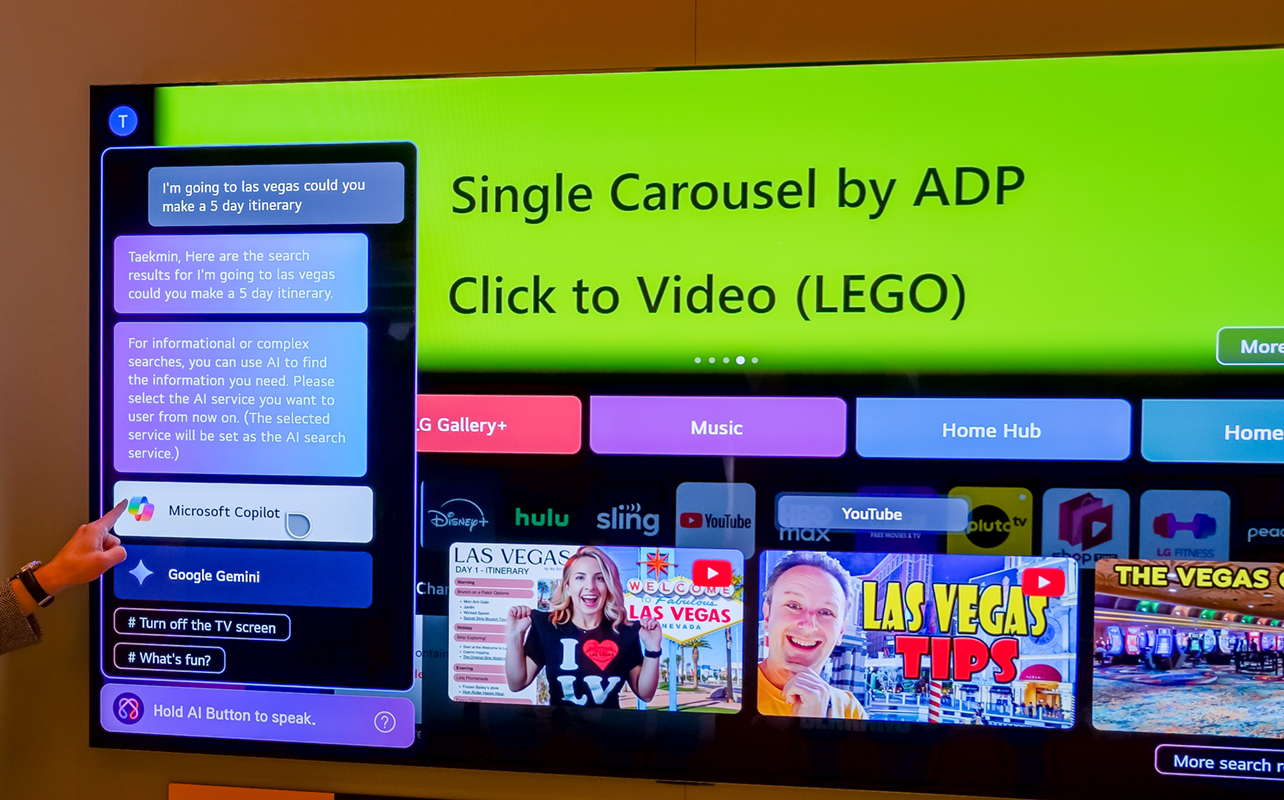
LG also applies some changes to the existing AI Concierge, AI Search, and AI Chatbot features. Generative AI tools will let you create custom images for screensavers via the LG Gallery platform. WebOS will also integrate Microsoft’s Copilot and Google’s Gemini as onboard AI assistants, letting you talk to either one based on whether queries relate to content discovery or general knowledge. AI Chatbot gains deeper system control, proactively identifying issues such as missing signal sources and offering immediate fixes without the need for customer support.
LG TVs will also work ass smart home hubs. Support looks to be pretty extensive now that they will support Zigbee and Thread devices to go with ThinQ, Matter, Google, and Apple ecosystems, eliminating the need for a separate smart home hub.
Gallery+ TV
LG also debuted its Gallery TV, a TV that doubles as an art canvas. Years after Samsung came to market with the same idea with its Frame lineup, LG is finally doing the same function as both a display and a curated art canvas. Designed to fit into any home décor, Gallery TV accesses LG’s broader Gallery+ ecosystem with access to more than 4,500 pieces of visual content intended to turn the TV into a static or rotating art piece. The library refreshes monthly and spans fine art, photography, cinematic visuals, animations, and game-inspired imagery, but you’ll need to subscribe to gain access to it all.
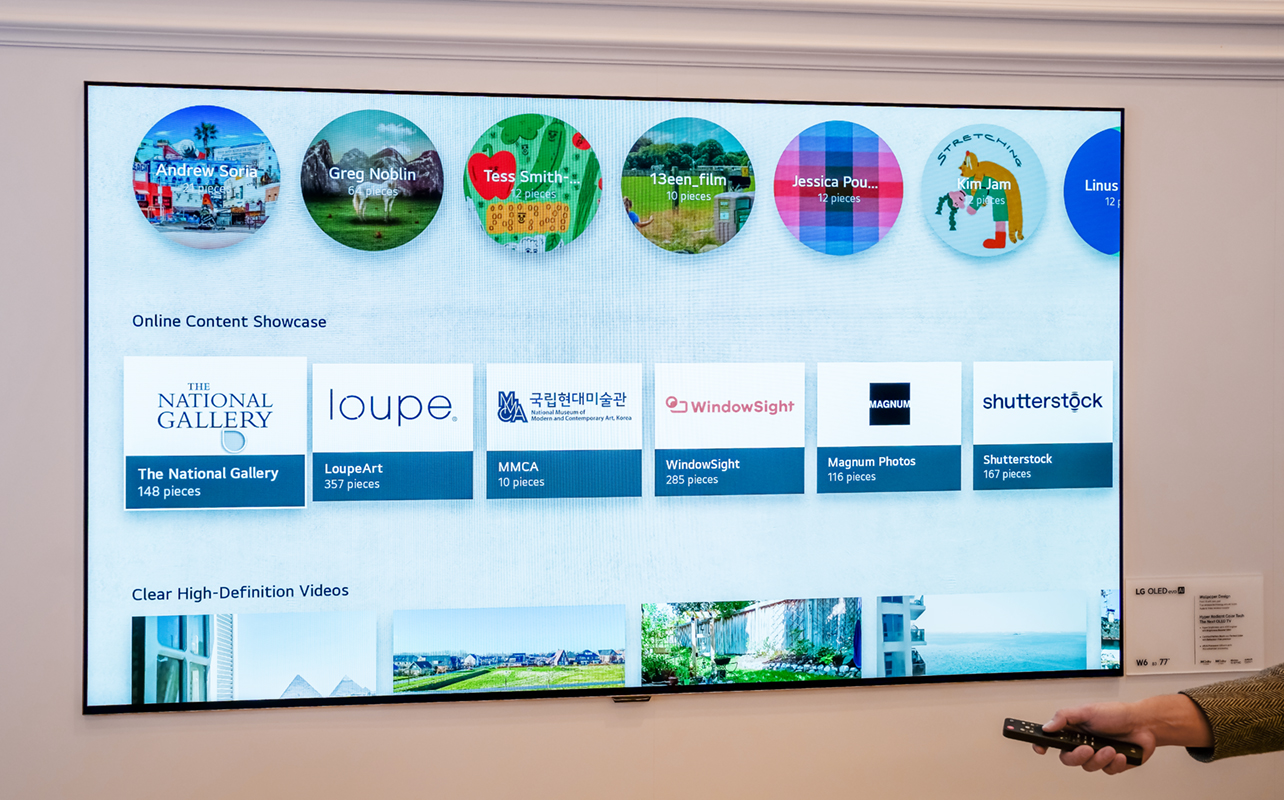
Reps say the company worked with museum curators to develop the Gallery TV, which is why it features a dedicated Gallery Mode to fine-tune color and brightness to better replicate the texture and appearance of original art. The panel uses a specialized screen surface to cut down glare and reflections, so that anything it displays is inherently visible in well-lit rooms, while automatic ambient light adjustment should keep image quality consistent. Available in 55- and 65-inch sizes, the TV adopts a slim, flush-mount design with customizable magnetic frames to line up with a wall.
Under the hood, Gallery TV is based on LG’s Mini-LED technology and runs on the α7 AI Processor, paired with AI Sound Pro virtual 9.1.2-channel audio. Apart from access to Gallery+, it will be possible to use AI tools to generate custom visuals, display personal photos, and add ambient music via built-in tracks or Bluetooth streaming.
Explore CES 2026 highlights and emerging tech trends.