
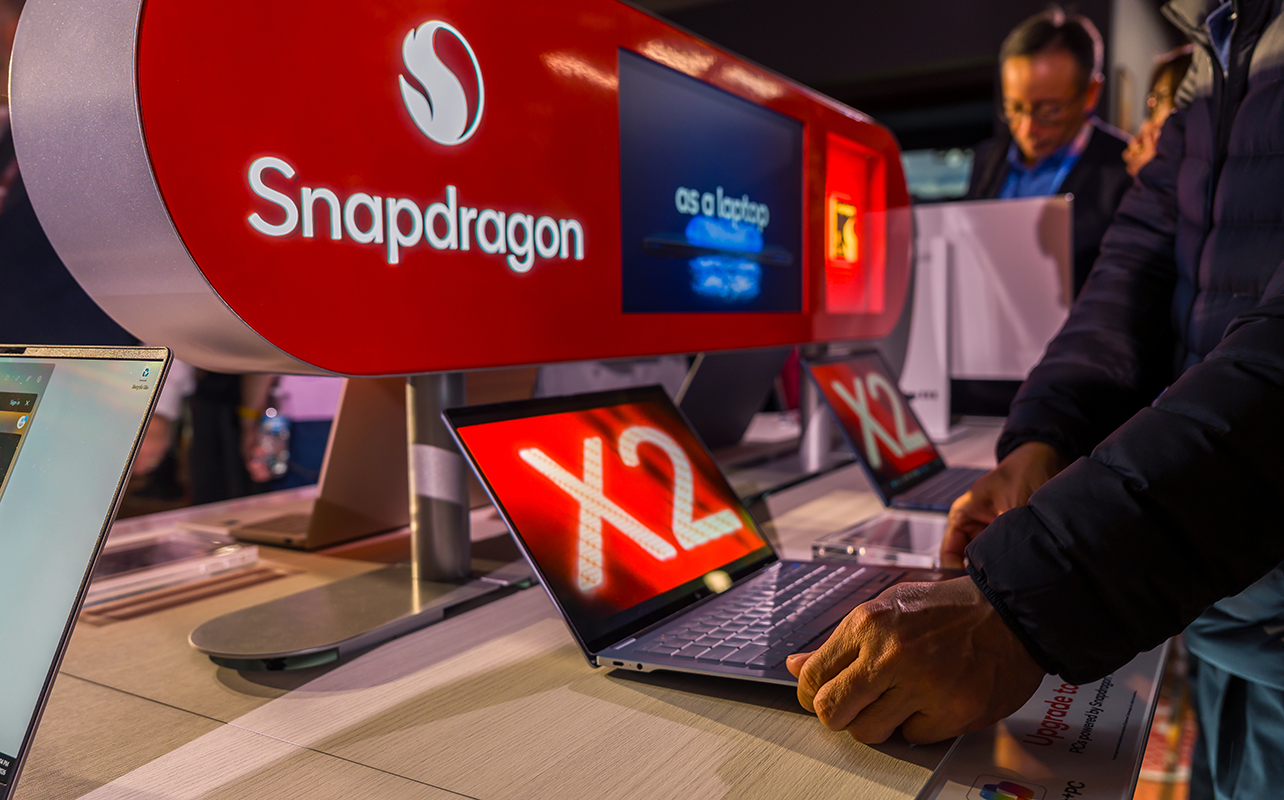
Qualcomm is making a splash at CES 2026 by looking to redefine what an ARM-based PC can do now through its latest Snapdragon processors. The company is quick to say this isn’t a “reset” but rather an “evolution” as it expands to add the Snapdragon X2 Plus chipsets to an existing lineup it first unveiled back in September 2025.
Quick refresher: the Snapdragon X2 Elite Extreme sits at the top of the stack with an 18-core processor designed to challenge traditional high-performance laptop CPUs from the likes of Intel and AMD. Then there’s the Snapdragon X2 Elite coming in both 18-core and 12-core variants. Following that is the X2 Plus the company announced at CES, which includes 10-core and 6-core configurations.

What the new silicon promises to deliver
To be clear, none of the laptops set to use these new Snapdragon processors have hit retail yet. But they’re coming, and when they do, Qualcomm says they’ll feel like a noticeable step up in performance. What that means is a clearer path from flagship-level processors down to more accessible configurations without losing consistency in how they’re developed.

The entire X2 family uses the same Oryon Gen 3 CPU architecture, with clock speeds reaching up to 4GHz. While core counts and frequency scaling differentiate the tiers, the fundamental building blocks remain the same. The lineup shares the same GPU and NPU architectures, leaving performance metrics to be less about any architectural compromises. The idea is to present the X2 family as a coherent platform, not a collection using the same name.
All that is great, but what does that entail in real world situations? Qualcomm sees it as a big jump in broader performance, providing percentage-based projections for different tasks that are impossible to verify without my own testing. The other part of this equation is efficiency—doing the same work using less battery life. In practical terms, the company states that a workload matching the previous generation’s performance can run with 40% less power here.
That also means benefits in graphics output, which will go beyond just gaming-specific optimizations by way of the Snapdragon Control Panel. It’s not fully clear just how much of a difference this makes, though the company believes its chips will do better for more elaborate creative tasks. Plus, company reps say they will be more active in delivering graphics drivers for gaming and creative applications, like Adobe’s suite, for instance.
AI is prominent on Snapdragon X2
The company is also treating AI as a foundational piece to the whole platform. The previous Snapdragon X-series processors featured an NPU capable of delivering up to 45 TOPS. That’s supposed to go up with the X2 family, hitting up to 80 TOPS and almost doubling its predecessors. Since the plan is to keep this part of the family close, NPU output—at least by the numbers—will be the same across the X2 Plus and Elite chips.
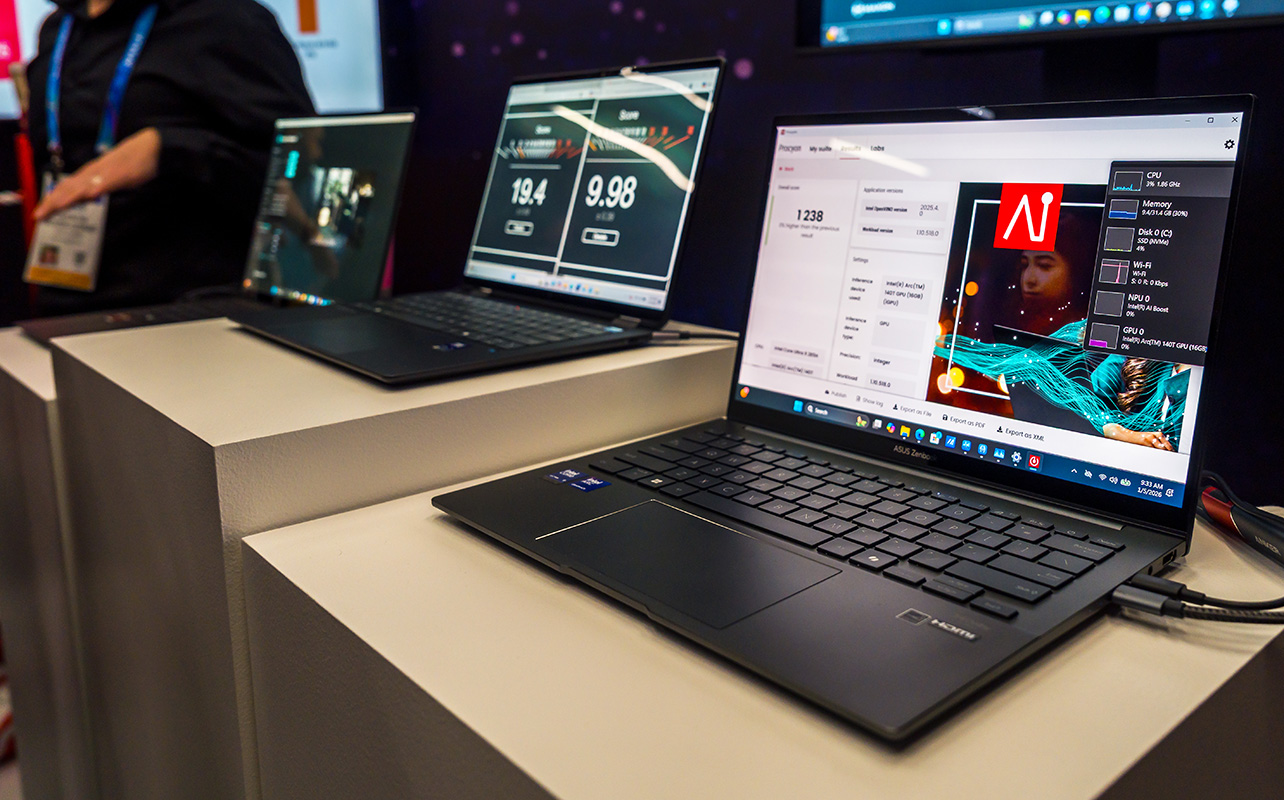
Qualcomm reps claim benchmark results already prove big margins in both raw AI throughput and power efficiency. Use a large language model (LLM) as part of a workflow and you can do it all without worrying about thermal throttling or excessive fan noise. If both consumers and office workers are already utilizing AI tools into their daily routines, as it claims, then on-device AI becomes an important counterweight to constant cloud-based processing.
This is also where Microsoft’s Copilot+ comes in alongside a growing list of third-party applications that offload AI tasks to the NPU. Creative tools, productivity software, and small-business applications should all benefit from local AI acceleration, particularly when latency, privacy, or offline operation matter. Use an on-device LLM on a plane, for instance, and the X2 chip won’t hinder the depth and breadth of its efficacy.
New laptops with X2 coming in 2026
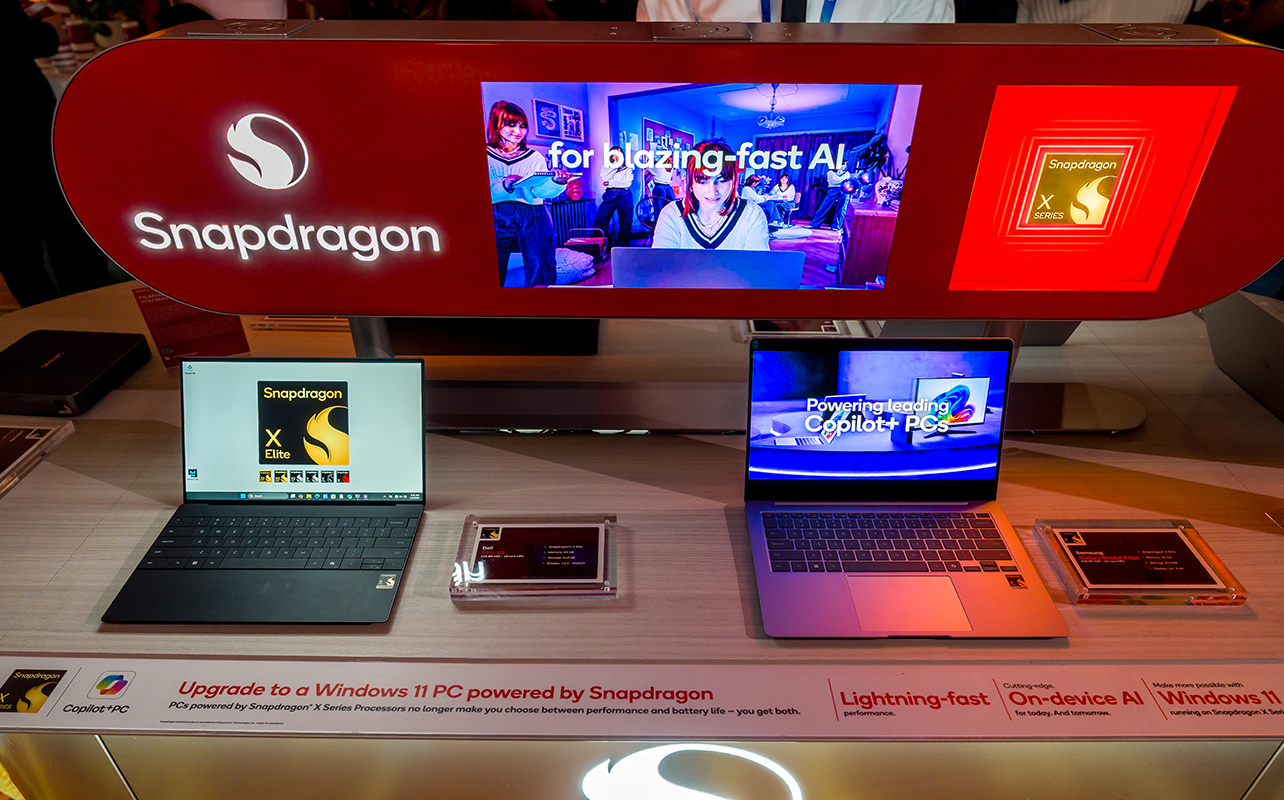
Qualcomm also sees the X2 platform as better positioned to enable thinner, lighter, and even fanless designs, building on early examples already in the market. We’ll be covering whatever X2 laptops we come across at the show, but I can say that the X2 Elite will be the better choice for any creator- or gaming-focused user. The X2 Plus is often about balance.
What’s interesting is that the thermal benefits noted here would presumably also work with handheld gaming devices or platforms outside of Windows. There is no word of anything like that from the show so far, however.
Either way, Qualcomm is clearly serious about its intentions for PC silicon, making ARM-based laptops a category to watch throughout the year. Check out more PC laptops running on Snapdragon chips.
Explore CES 2026 highlights and emerging tech trends.