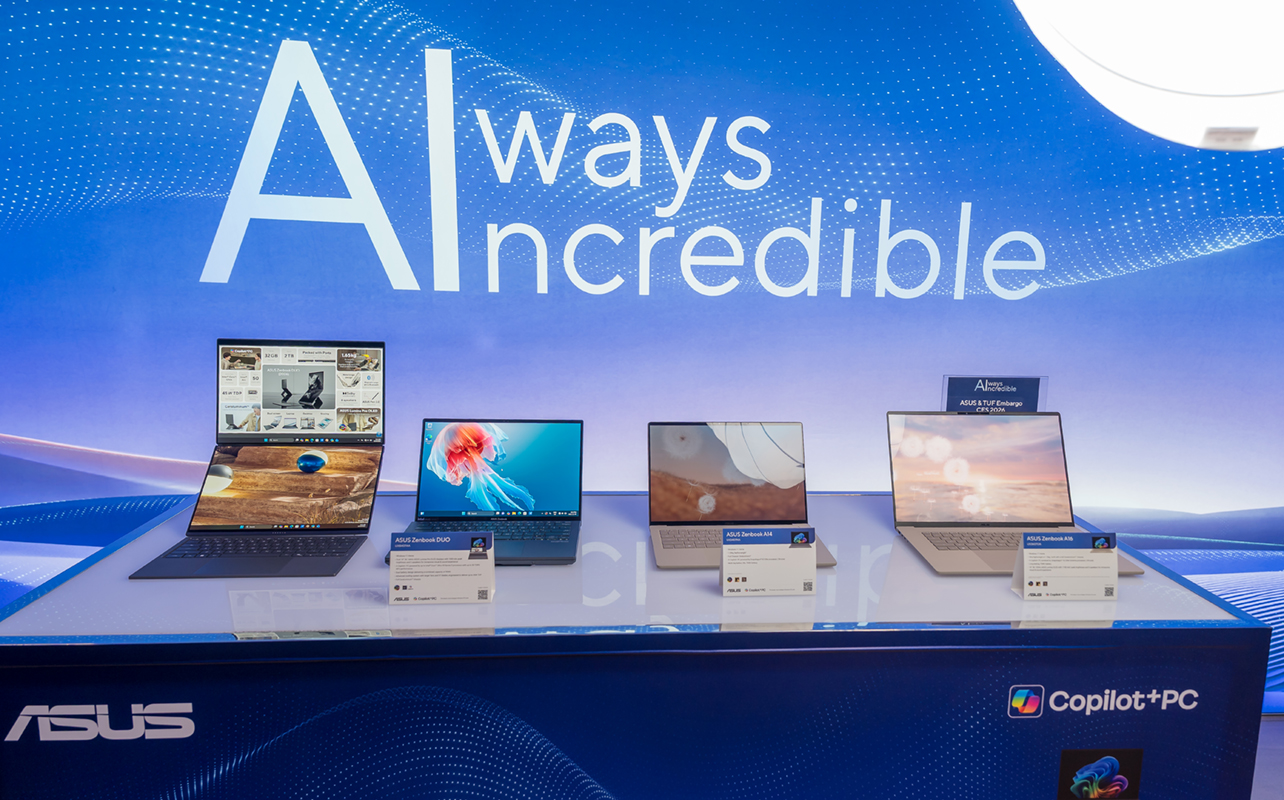
ASUS’s laptops are going through another refresh, all unveiled at CES to showcase what’s ahead from the company in 2026. The key word here might be variety, not just with the models themselves, but also what CPUs they’ll run on, with some running on Intel, AMD, or Qualcomm chips.
Also, the Ceraluminum surface finish ASUS introduced in 2024 won’t be so selectively applied anymore. Moving forward, it will be the primary material in every ZenBook model, finally unifying the line’s design language. Beyond that, here’s what you can expect to come out this year.


The ZenBook Duo gets a refined look
I’ll start here because the ZenBook Duo was a personal favourite of mine in 2024 when it first launched. This iteration isn’t so much an overhaul as it is a series of tweaks and refinements based on the same design language. The chassis now has a new “hideaway hinge” that reduces the gap between the two 14-inch displays, making the whole unit thinner, lighter, and more compact. Cutting the weight down by more than 100 grams from the previous version, with a tougher body to boot.
Both displays are 3K OLED panels with 144Hz variable refresh rates. ASUS uses its own Luna Pro glossy anti-reflective coating to minimize reflections to coat the glossy screens. They’re undoubtedly vibrant, which was the case with the previous versions, too, so no surprise there. The speakers sound better, though not necessarily on par with PC laptops equipped with higher-quality audio.
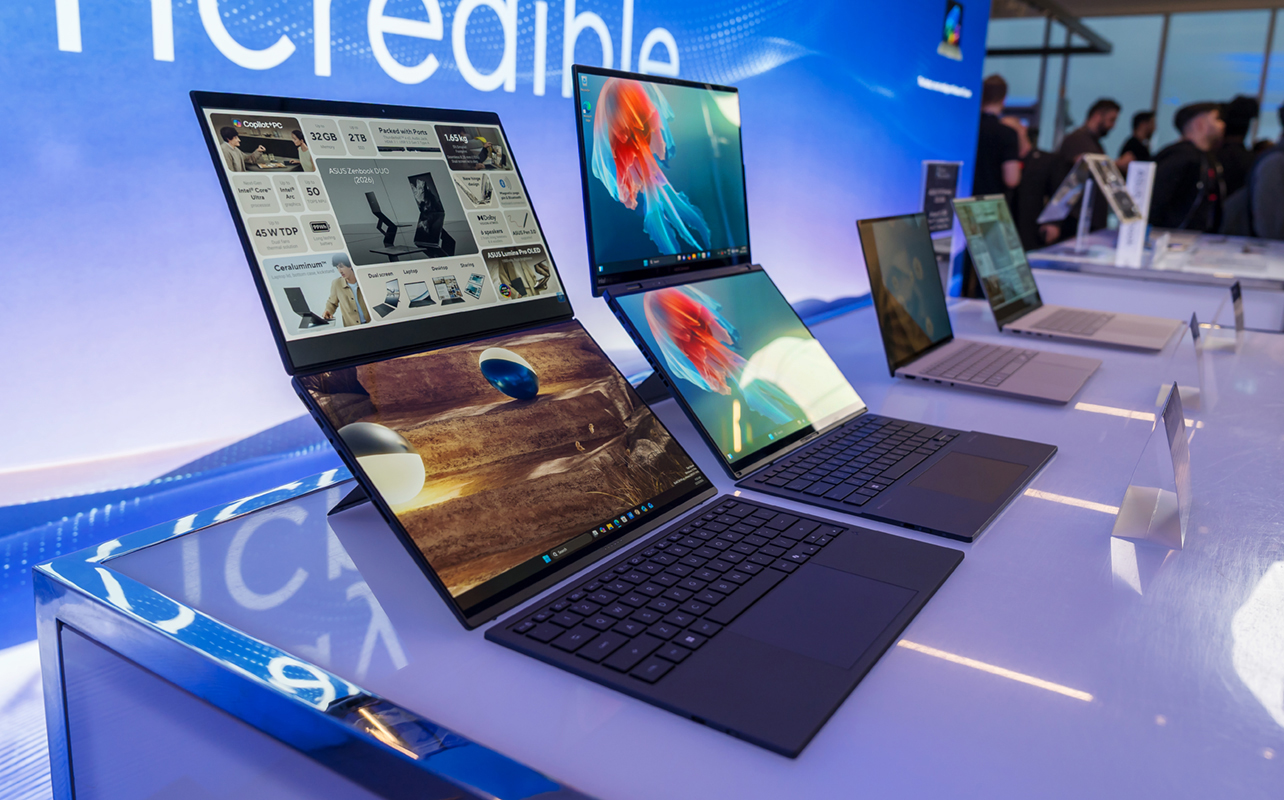
There are two Intel configurations, one running on the Core Ultra 7 355 and the other on the Core Ultra 9 386H. There are integrated Intel Arc graphics, along with an NPU capable of between 48-50 TOPS for AI tasks. Battery capacity increases from 75Wh to 99Wh, split into two sections to improve balance and stability. ASUS says the new platform’s improved efficiency should lead to longer runtimes despite higher power limits.
New software features take advantage of the dual-screen layout, including collaborative modes that allow the device to be folded flat for shared viewing and editing. While this upgraded Duo commands a higher price, ASUS confirmed that the 2025 model (which was a very minor upgrade over the 2024 original) will remain available throughout 2026 as a more affordable alternative running the latest Intel Core Ultra 9 processor with an integrated NPU.
ZenBook S14 and S16
The ZenBook S series is ASUS’s thin-and-light premium laptop line, and the 2026 models will get some decent updates. Visually, the most noticeable change is ASUS removing the CNC-cut monogram previously found on the lid. In its place is a clean, minimalist aluminum surface that aligns more closely with the design language of the ZenBook A series. Be mindful of that in case the S and A lines look a little too similar this year.
A new dark grey color option joins the lineup for an understated alternative that resembles space grey. Under the hood, ASUS reworked the cooling system with bigger vapour chambers and optimized airflow to keep it from heating up as much or as quickly. The company quantifies this as a four-degree reduction in keyboard temperature, which may sound modest on paper, but ASUS reps say it will be obvious in real-world use, particularly during sustained workloads.
The other big distinction between the two sizes (apart from screen size) is the chipset. The ZenBook S14 moves to the Intel Core Ultra 7 355 or Core Ultra 9 386H, while the larger S16 is runs on the AMD Ryzen AI 7 445 or Ryzen AI 9 HX 470 processor. Both models benefit from upgraded OLED displays with 3K resolution, touch support, HDR capability, and up to 1,100 nits peak brightness. Both feature 120Hz refresh rates and improved panel efficiency to reinforce the premium positioning of these machines.
ZenBook A Series expands
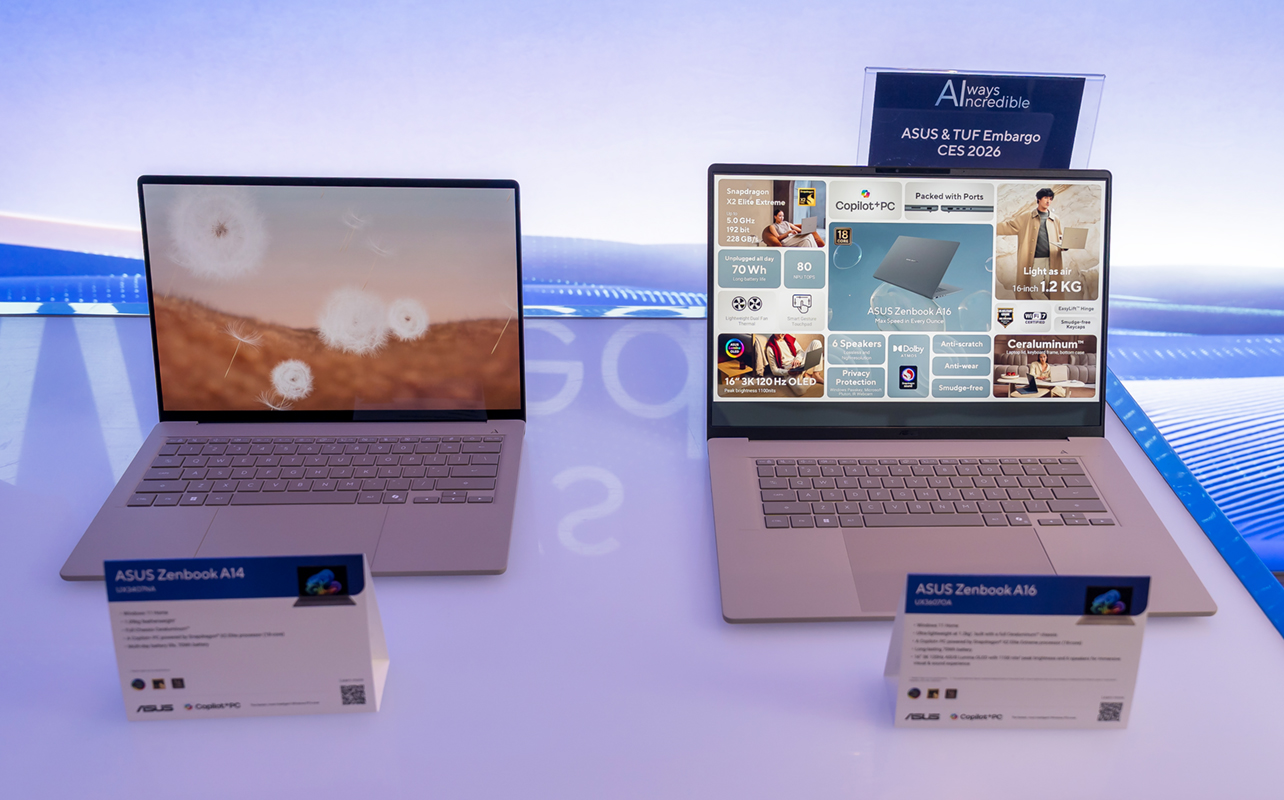
What began as a single ultra-light laptop is becoming a wholly separate ZenBook A series for 2026. The ZenBook A14 remains the entry point as a lightweight model weighing about 2 pounds. Certain regional variants dip even lower, with 900-gram configurations built around aluminum-magnesium chassis designs and Qualcomm’s Snapdragon X platform.
The bigger news is the arrival of the ZenBook A16. ASUS has basically scaled up everything in the A14 and keeping it all in the family, so to speak. The A16 features a 16-inch 3K OLED display with 120Hz refresh rate and 1,100 nits peak brightness, yet the system weighs a modest 3.31 pounds. That’s only slightly more than a pound heavier than the 14-inch model.
The additional internal space allows ASUS to run the Snapdragon X2 Elite X3 processor at much higher power levels. Total system power reaches 82 watts, with the CPU alone operating at up to 65 watts. The wider 192-bit memory bus provides a substantial boost to memory bandwidth, translating into major gains for the integrated GPU. ASUS claims this as its fastest Snapdragon-powered laptop in 2026, confirming it will be the first device to market using this extreme configuration.
For battery life, ASUS estimates up to 21 hours of video playback but the full picture isn’t clear because of “further optimizations” that are supposed to improve overall efficiency. Personally, I like that the A16 has a full-size SD card reader, suggesting that the specs make it good enough to be an option for some content creation.
The Vivobook lineup in 2026 straddles the line
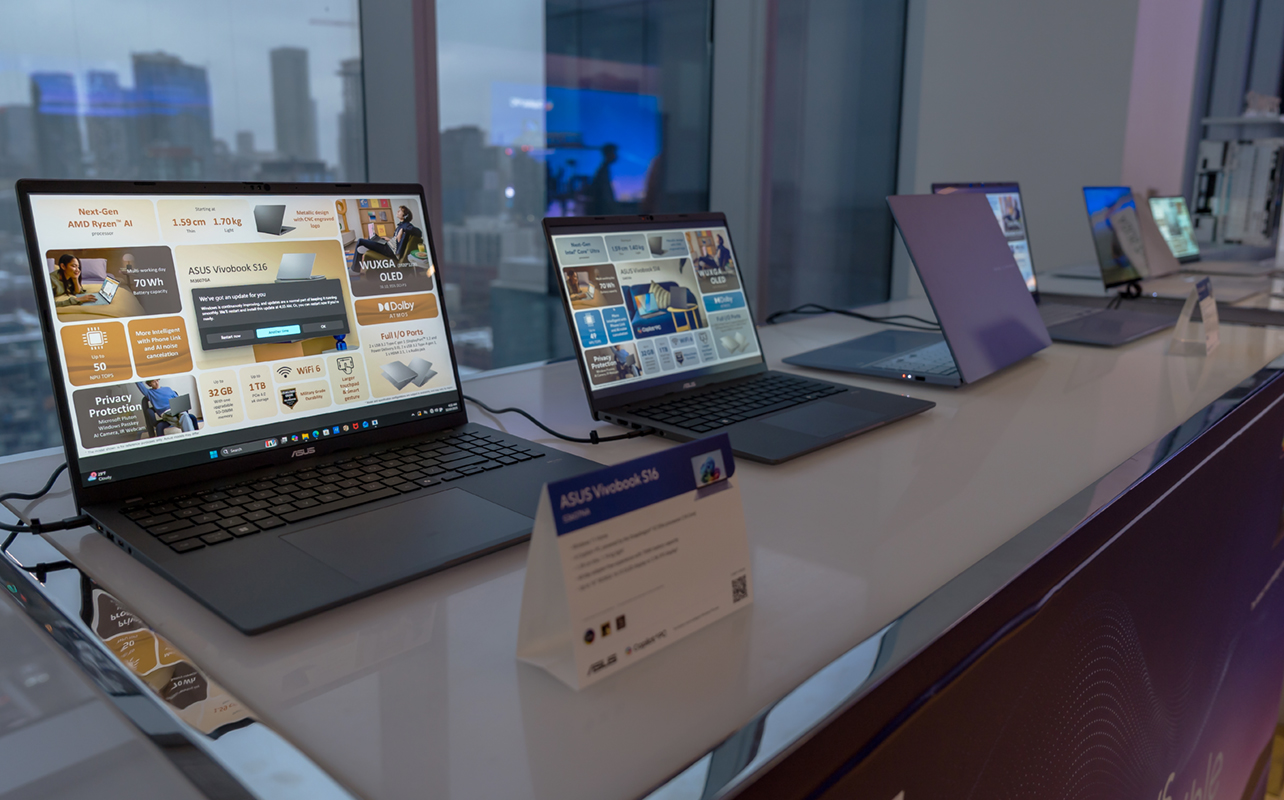
The Vivobook will carry on being the line that offers value through a range of configurations across different materials and platforms, including Snapdragon, Intel, and AMD processors. Case in point, you still get all-metal bodies on Vivobook S models that also cut pretty slim and light profiles, though you can also go a more affordable route with stepped-down specs that also use a hybrid construction with metal exterior panels and a plastic interior.
That’s why the Vivobook lineup is mostly a refresh on the inside in terms of what silicon they’re running. These will range between Intel Panther Lake, AMD’s newest Ryzen platforms, and Snapdragon X2 Elite in select models. The Vivobook S16 stands out as ASUS’s most affordable Snapdragon X2 Elite laptop, positioning it as a strong entry point into Copilot+-class performance for a broader subset of users.
ProArt gets the refined treatment
Technically, ASUS launched its latest ProArt lineup in the months leading up to CES, but I’m including them here because they are the content creator-friendly variety. Hence, display quality, app support, and performance tend to shine more here.
The ProArt PX13 convertible arguably gets the biggest upgrade with AMD’s Strix Halo platform, featuring up to 128GB of shared memory. That’s a big deal and can prove an effective asset to enable advanced local AI workloads, including generating images offline, denoising, stabilization, and frame interpolation. ASUS is also pushing its own creator-focused software suite as a viable toolkit, particularly because it offers AI functionality that can work on-device. The ASUS Dial on the trackpad is a key transit point for shortcuts in a creative workflow, fast becoming a staple in the company’s higher-end laptops.
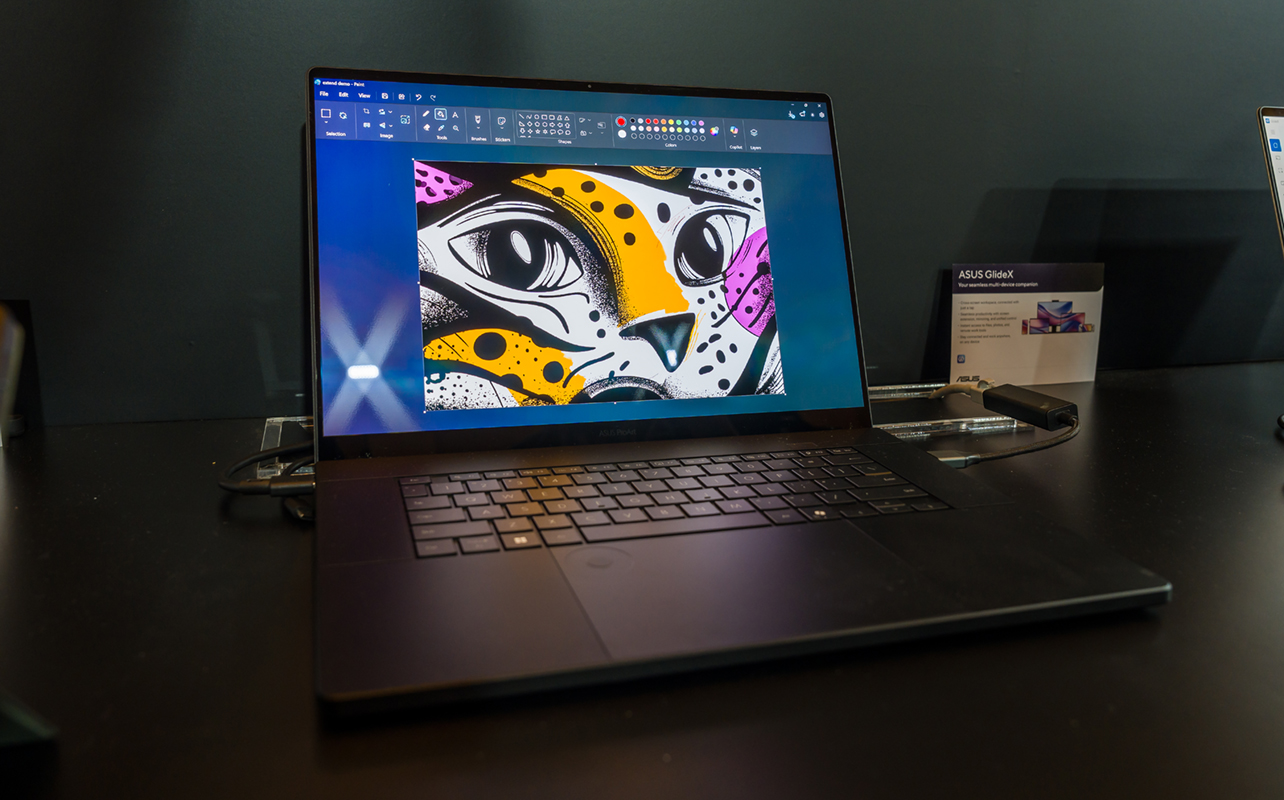
Interestingly, there will be special GoPro variant called the PX13 GoPro Edition. The hardware is the same, otherwise, but reps say they made it for those already invested in the GoPro ecosystem. Through a collaboration between the two brands ASUS will build this distinct model with GoPro camera design influences, along with themed accessories, reusable modular packaging system, and a year of GoPro Cloud Plus Premium.
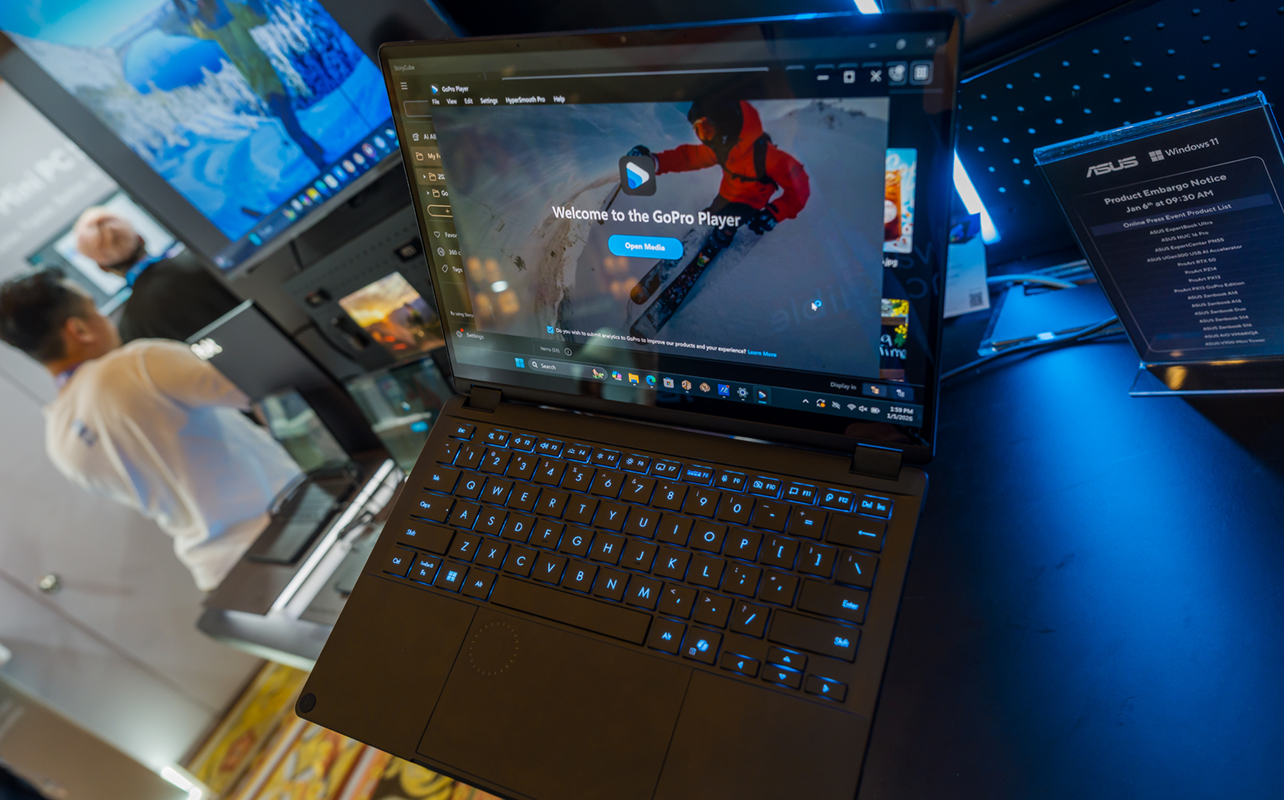
Then there’s the ProArt PZ14 as a detachable tablet concept. It gets bigger with a 14-inch display, yet also manages to drop some weight for a lighter feel. The battery-powered keyboard detaches, has a removable kickstand, and wireless stylus charging integrated into the chassis. The new ASUS Pen 3 introduces haptic feedback to simulate the feel of pencil on paper, while CPU performance leaps from eight to 18 cores. Despite its thin, tablet-like form factor, the PZ14 includes a large 75Wh battery and improved performance headroom.
Coming soon
While ASUS doesn’t do anything too dramatic here, there are design and spec differences further setting certain lines and models apart. And they’re not built to all specialize in the same things, which is why the Zenbook feels like more of a thin-and-light productivity tool than the more elaborate Zenbook Duo or ProArt models. Then there’s the balance of the Vivobooks.
It’s not clear yet which exact models and configurations are coming to Best Buy, though ASUS did also announce a number of gaming laptops under the ROG and Strix brands. Check out more from what ASUS currently has available.
Explore CES 2026 highlights and emerging tech trends.