

Making the switch from a Windows laptop to a MacBook for school is more straightforward than most students expect, but it does come with a learning curve, and a few compatibility questions worth sorting out before you commit. For the vast majority of students, macOS handles everything school throws at it: essays, research, video calls, presentations, and online learning platforms. The adjustment is real, but for most students it’s measured in days rather than weeks.
Where things get more complicated is for students in programs that rely on specific software, certain engineering tools, accounting platforms, or industry applications that were built for Windows and haven’t made the move to Mac. If that’s you, this guide will help you figure that out before you buy, not after.
For everyone else, here’s everything you need to know to switch confidently.

Table of contents
- Is a MacBook a good fit for your program?
- Will your school apps work on a MacBook?
- When you may still need Windows
- What actually changes when you switch to macOS
- How to move your files from a Windows PC to a MacBook
- Is a MacBook worth it for students?
- Which MacBook should students get?
- FAQs

Is a MacBook a good fit for your program?
The honest answer for most students is yes. MacBooks work well across the widest range of academic programs, general arts and sciences, business, humanities, media, design, and coding. Apple Silicon has made the performance gap between Mac and Windows largely irrelevant for everyday schoolwork, and macOS is a stable, well-supported platform that handles the apps students actually use.
The exceptions are narrow but worth knowing. Here’s a quick look at how different student types fare:
| Student type | MacBook suitability | Notes |
| General schoolwork | Excellent | Handles documents, research, and online platforms without issue |
| Business and humanities | Excellent | Microsoft 365 and Google Workspace both run natively on macOS |
| Coding and development | Very good | Popular among developers; most languages and tools are well-supported |
| Creative programs | Excellent | Adobe Creative Cloud runs natively; strong creative ecosystem |
| Engineering and specialty | Depends | Some Windows-only apps may still be required; verify before switching |
| PC gaming | Limited | Mac gaming library is growing but still significantly smaller than Windows |
If your program requires AutoCAD, SolidWorks, or certain enterprise software, read the section on Windows-only software before making a decision. For everyone else, the switch is likely smoother than you’re anticipating.
Will your school apps work on a MacBook?

This is the first question most students want answered, and the short version is: yes, in almost every case. The apps you rely on day-to-day for school documents, spreadsheets, video calls, and online learning platforms all work on macOS without any workarounds or compromises. Where compatibility gets more complicated is with specialized software tied to specific programs, and that’s worth checking before you commit to the switch:
Microsoft 365, Google Workspace, and Zoom
Microsoft 365 apps including Word, Excel, PowerPoint, and OneNote have full native Mac versions that work exactly as you’d expect. There’s no watered-down experience here; the Mac versions are mature and well-maintained. If your school provides a Microsoft 365 licence (many do), it works the same way on macOS as it does on Windows.
Google Workspace Docs, Sheets, Slides, and Drive are browser-based, which means it’s completely platform-independent. It works identically on Mac, Windows, or anything else with a browser. Zoom has a native macOS app that installs and runs without any issues.
Learning management systems and online platforms
If your school uses Canvas, Blackboard, D2L Brightspace, or Moodle, you won’t have any compatibility problems. These are all browser-based platforms that work the same on Mac as they do on Windows. The same goes for virtually any web-based learning tool your institution uses; if it runs in a browser, it runs on a Mac.
Printers, campus software, and specialty tools
Printer compatibility is generally fine, though it’s worth confirming that your campus print system has macOS drivers available. Most modern printers support both platforms, but older institutional setups occasionally don’t.
Where students sometimes run into trouble is with specialty software tied to their specific program. This might be engineering tools, scientific modelling software, certain accounting platforms, or proprietary institutional systems. If your program uses anything outside the standard productivity and collaboration suite, check with your department or IT services before switching.
Here’s a broad compatibility snapshot:
| Software type | macOS compatibility |
| Office and productivity (Microsoft 365, Google Workspace) | Excellent |
| Browsers and LMS platforms (Canvas, Blackboard, D2L, Moodle) | Excellent |
| Coding and development tools | Excellent |
| Adobe Creative Cloud | Excellent |
| Engineering and CAD software | Mixed |
| PC gaming | Limited |
When you may still need Windows
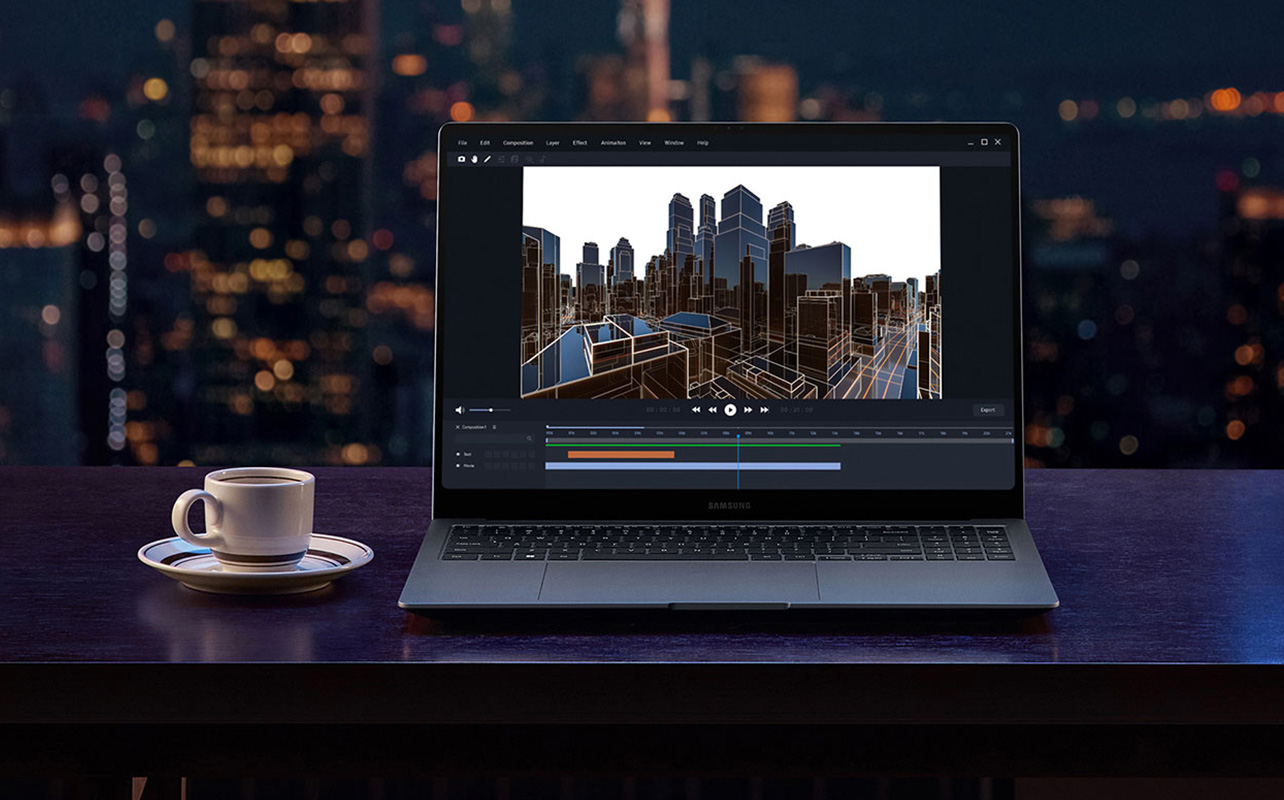
For a specific set of students, a MacBook alone may not cover everything their program requires. This isn’t a deal-breaker for everyone in this situation, but it’s worth knowing upfront.
- AutoCAD has a Mac version, but it’s behind the Windows release in features, and some engineering workflows aren’t fully supported. Many engineering departments still recommend or require the Windows version.
- SolidWorks is Windows-only. There is no native Mac version. Students in mechanical engineering or product design who need SolidWorks will need to find a workaround or use a department computer.
- Most MATLAB functionality works well on macOS, but students should verify any specialized toolboxes or departmental requirements before purchasing. If MATLAB is central to your coursework, confirm with your department which version they support.
Some accounting and ERP platforms, particularly those used in professional accounting or business programs, are Windows-only or have browser versions with reduced functionality.
Running Windows on a MacBook: what your options are
If you need occasional access to Windows software, there are a few routes:
Parallels Desktop and VMware Fusion are both virtualization tools that create a Windows environment running alongside macOS. They handle most Windows software well, though both come at an added cost on top of your laptop purchase.
Microsoft Remote Desktop and Windows 365 let you access a Windows environment through the cloud rather than running it locally. If your school provides remote desktop access to Windows machines—which many institutions do—it can be a simple solution for occasional Windows needs. Check with your institution’s IT services before paying for virtualization software.
If Windows software is central to your program rather than occasional, a Windows laptop may genuinely serve you better.
What actually changes when you switch to macOS

This is where the learning curve lives, and it’s worth being honest about it: macOS feels different from Windows in ways that are occasionally frustrating before they become second nature. Here’s what to expect.
Keyboard shortcuts and key differences
The biggest daily adjustment is the Command key replacing Control for most shortcuts. On Mac, it’s Cmd+C to copy, Cmd+V to paste, Cmd+Z to undo, and Cmd+Tab to switch between apps. Your muscle memory will fight you on this for a week or two, that’s normal.
A few other shortcuts that trip people up:
- Screenshots: Shift+Cmd+3 captures the full screen; Shift+Cmd+4 lets you drag to select an area. This replaces the Print Screen key and Snipping Tool.
- Quitting apps: Cmd+Q actually closes an application. Clicking the red X button (top left, not top right) hides the window but leaves the app running in the background. This catches nearly every Windows switcher off guard.
- Force quit: Cmd+Option+Esc opens the force quit menu, equivalent to Ctrl+Alt+Delete for stuck apps.
Finder, Spotlight, the Dock, and how apps install
Finder is macOS’s file manager, the equivalent of File Explorer on Windows. The layout is different and takes some adjustment, but the core function is the same: navigate folders, move files, and find things.
- Spotlight Search (Cmd+Space) is one of macOS’s genuinely excellent features. It’s a system-wide search bar that finds files, apps, settings, and even does quick calculations. Use it constantly; it’s faster than digging through menus.
- The Dock replaces the Windows Taskbar. It lives at the bottom of the screen by default and holds your most-used apps. Apps that are open show a small dot beneath them in the Dock.
- Installing apps works differently. On Mac, you’ll either download apps from the App Store or download a .dmg file that you open and drag the app icon into your Applications folder. There are no .exe installers on macOS.
For a full walkthrough of the settings and shortcuts worth changing first, see our Essential MacBook tips every student should know.
Window management
macOS handles windows differently from Windows, and this is one of the more persistent frustrations for switchers. The green traffic light button in the top left doesn’t maximize a window the way the Windows maximize button does; it often enters full-screen mode instead, which hides your Dock and menu bar.
macOS Sequoia (the current version of macOS) added window tiling that works somewhat like Windows Snap, but it’s less immediate and intuitive. If you relied heavily on snapping windows side by side on Windows, expect a short adjustment period while you find the approach that works for you.
Trackpad gestures
MacBook trackpads are widely regarded as the best in the laptop industry, and the gestures are worth learning. Two-finger scroll works the way you’d expect. Swiping left or right with three fingers moves between open app windows. Pinch-to-zoom works in browsers and documents. A two-finger click or tap functions as a right-click on most MacBooks, though it’s worth confirming your trackpad settings.
Common frustrations in the first week

Most Windows switchers hit the same handful of friction points. Knowing them in advance makes them much less irritating:
- The red X doesn’t quit the app: It closes the window. To actually quit, use Cmd+Q or right-click the app in the Dock and select Quit. This is one of the most common sources of confusion students find. They have 15 apps running in the background, but they thought they’d closed them.
- External drives may be read-only: If your external drive was formatted on a Windows computer (NTFS format), your Mac can read files from it but can’t write to it without third-party software. Reformatting the drive to exFAT solves this and works on both platforms, but back up the drive first, because reformatting erases everything on it.
- Right-click isn’t automatic: Depending on your settings, a two-finger tap may not be enabled as a right-click by default. Go to System Settings > Trackpad and enable “Secondary click” if it isn’t already on.
- Window snapping takes adjustment: If you habitually snap windows to half the screen on Windows, macOS will feel less immediate at first. macOS Sequoia’s tiling helps, but it takes some getting used to.
- App locations are different: On Mac, apps live in the Applications folder, not the Program Files directory. The Dock shows your favourites, but your full list of installed apps is in Applications (accessible through Finder).
How to move your files from a Windows PC to a MacBook

Getting your files across is usually the part students worry about most, and it tends to be one of the smoother parts of the whole transition. There are a few different ways to do it, depending on how your files are currently stored and how hands-on you want the process to be:
Using Apple Migration Assistant
Migration Assistant is a built-in macOS tool that transfers your files, photos, browser bookmarks, and some settings from a Windows PC to your new Mac. It works over Wi-Fi or a direct cable connection, and it’s the most guided, beginner-friendly option.
One important thing to understand: Migration Assistant does not transfer your Windows programs. It moves your data documents, photos, music, bookmarks, not the applications themselves. If you’re expecting your Windows software to carry over, it won’t. You’ll need to download Mac versions of the apps you use (or find alternatives) separately.
Using cloud storage
For most students, cloud storage is actually the easiest migration path. If your files are already in OneDrive, Google Drive, or iCloud, they’re accessible on your Mac immediately after you sign in. There’s nothing to transfer; just log in, and your files are there.
If your files aren’t already in the cloud, copying them into OneDrive or Google Drive before you set up your Mac makes the transition nearly effortless.
Using an external drive
Copying files to an external drive and moving them across manually works fine. Just keep in mind the NTFS formatting issue mentioned above if your drive was formatted on a Windows machine, you’ll be able to read files from it on your Mac, but not write back to it. Copying your files off it during setup is straightforward; just don’t expect to use it as an ongoing shared drive between Mac and Windows without reformatting to exFAT.
What to check after setup
Once your files are across and your Mac is set up, run through this list before you consider yourself ready for school:
- Confirm your school email and login credentials work in your browser and in Mail if you use it.
- Check that your cloud storage (OneDrive, Google Drive, or iCloud) is syncing correctly.
- Test your campus print access, install any required drivers or apps.
- Set up Time Machine for backups, plug in an external drive, and macOS will offer to use it as a backup drive automatically. Do this early.
- Verify any school-specific software or VPN your institution requires.
Is a MacBook worth it for students?
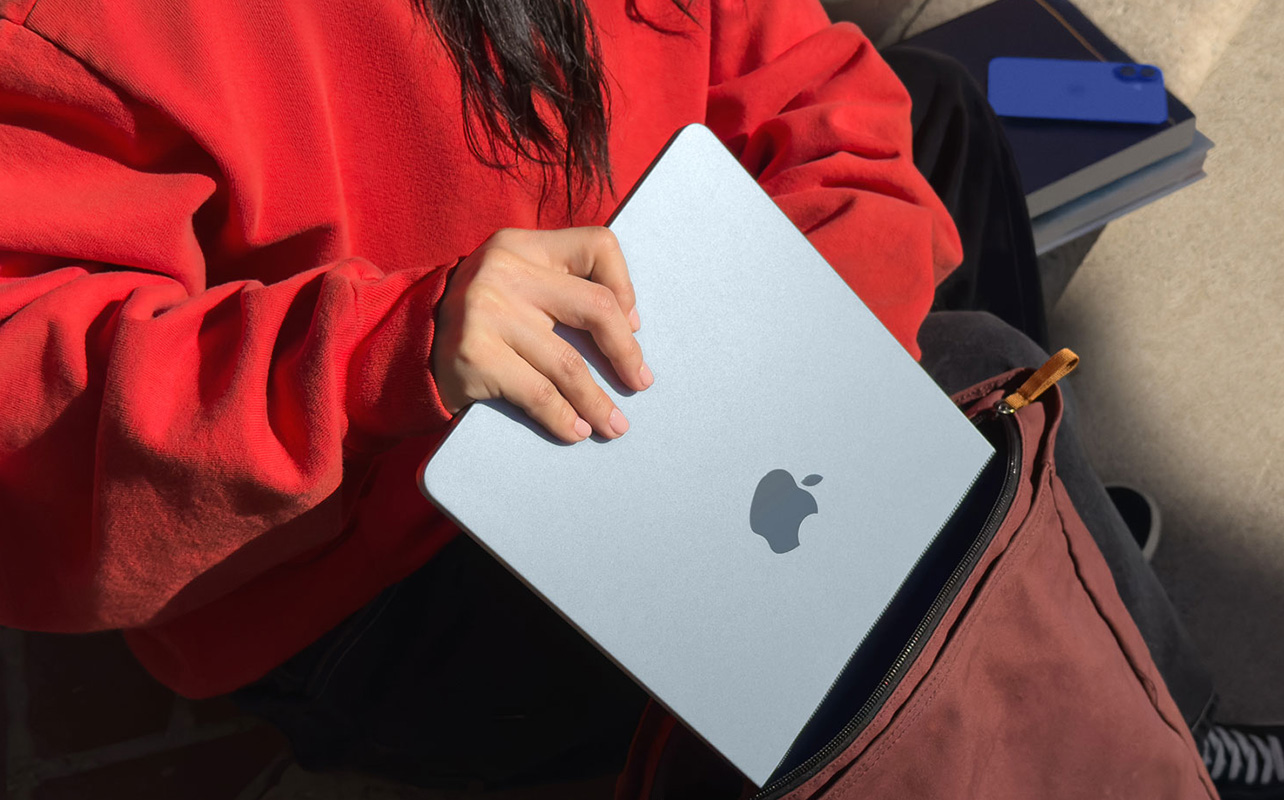
MacBooks carry a higher upfront cost than many Windows laptops, and for students weighing a significant purchase, that deserves a straight answer. The short version is that for most students, the combination of battery life, build quality, and long-term reliability makes the investment hold up well across a full degree. Here’s a closer look at what actually matters.
Battery life and portability
This is where MacBooks genuinely stand apart from most Windows laptops in the same price range. Apple Silicon, the M-series chips in the MacBook Air and MacBook Pro, and the A18 Pro in the MacBook Neo are extraordinarily efficient. Real-world battery life on the MacBook Air and Neo consistently reaches into the mid-to-upper teens in hours, which means a full day of classes, a library session, and an evening of studying without plugging in.
For students moving between campus buildings, that matters more than almost any spec on paper. The MacBook Air and MacBook Neo are both under 1.25 kg, which is lighter than the majority of Windows laptops at comparable performance levels.
Performance for everyday schoolwork
For the kind of work most students do, browser tabs, video calls, documents, presentations, streaming, and note-taking, any current MacBook is more than capable. Apple Silicon handles multitasking smoothly, app launches are fast, and the platform is stable. Students who’ve come from mid-range Windows laptops often notice the difference immediately.
Budget, storage, and the upgrade problem
MacBooks cost more upfront than many Windows alternatives. That’s a real consideration, especially for students on tight budgets, and it’s worth being honest about rather than glossing over. What makes the cost calculus different from a Windows laptop is longevity. MacBooks tend to hold up well over four or five years of school use, and macOS receives software updates for a long time after purchase. The upfront premium can look different when spread across a full degree.
Education pricing helps. Best Buy Canada offers education pricing on select Apple products. It’s worth checking before you buy at full price.
The most important thing to understand before purchasing, however, is that RAM and storage on modern MacBooks cannot be upgraded after purchase. The memory and SSD are soldered to the motherboard. Whatever you choose at checkout is what you have for the life of the machine. This is not a minor footnote; it’s the most consequential decision in the buying process.
For most students, 16GB of RAM and 512GB of storage is the right baseline. Here’s why: macOS uses RAM for its own system functions alongside whatever apps you have open. With a browser, a video call, a document, and a few other tabs going at once, 8GB can feel noticeably constrained. 512GB of storage gives you room for files, downloads, and a few years of accumulation without constantly managing space.
Which MacBook should students get?
Three models are worth considering. Here’s how they break down:
| Student need | Recommended MacBook | Key consideration |
| Budget-conscious, light everyday use | MacBook Neo (A18 Pro) | 8GB RAM ceiling sufficient for basics, limited for heavy multitasking |
| Most students: general schoolwork, multitasking | MacBook Air (M4 or M5), 16GB RAM, 512GB SSD | Best overall value; fanless, light, excellent battery |
| Coding, creative media, demanding workloads | MacBook Pro 14-inch (M5), 16GB RAM | More power than most students need, but future-proof for heavy use |
| Long-term future-proofing for any model | 512GB SSD minimum | Storage cannot be upgraded later |
MacBook Neo: the new entry point worth knowing about

The MacBook Neo launched in March 2026 and is Apple’s most affordable Mac ever. It runs the A18 Pro chip (the same processor found in the iPhone 16 Pro), which delivers solid performance for everyday student tasks: browsing, documents, video calls, streaming, and light creative work.
For students on a tighter budget who need a capable, reliable MacBook for general school use, the Neo is a genuine option that wasn’t available even a few months ago. It’s light, has excellent battery life, comes in four colours, and gets you into the Mac ecosystem at a meaningfully lower price than the Air.
The MacBook Neo comes with a maximum of 8GB of unified memory. For light to moderate use, the kind of schoolwork most students do is workable. For students who regularly run resource-intensive software, keep many browser tabs open simultaneously, or are in creative or technical programs, the Air’s 16GB configuration is worth the extra investment.
Make the switch, then make it yours
Switching from Windows to a MacBook for school feels bigger before you do it than after. The first week involves some adjustment to new shortcuts, different window management, and a slightly unfamiliar file system. That part is temporary. What stays is a laptop that holds its charge through a full day of classes and tends to last well beyond a single degree.
The key is going in prepared. Verify your software requirements, choose a RAM and storage configuration you won’t outgrow, and give macOS a few days before passing judgment. When you’re ready, explore MacBooks at Best Buy Canada, or if you’re still weighing your options, browse the full laptops and MacBooks category to compare what’s available.
Frequently asked questions
What should students know before switching from Windows to a MacBook?
The most important thing is to verify software compatibility for your specific program before you switch, particularly if you’re in engineering, accounting, or a field that uses specialized tools. For most students, the common apps all work. Beyond compatibility, understand that RAM and storage can’t be upgraded after purchase, so choose the right configuration from the start.
Will school apps work on a MacBook?
Yes, for the vast majority of students. Microsoft 365, Google Workspace, Zoom, and all major browser-based learning platforms (Canvas, Blackboard, D2L, Moodle) work on macOS without any issues. Adobe Creative Cloud also runs natively. The exceptions are certain engineering, CAD, and industry-specific tools that may be Windows-only.
Can students run Windows on a MacBook?
Yes, through virtualization software like Parallels Desktop or VMware Fusion, which runs Windows alongside macOS. This costs extra and adds some complexity. Students with occasional Windows needs may find their school’s remote desktop or Windows 365 access, often available for free, is sufficient.
How difficult is it to switch from Windows to macOS?
Most students adapt within a week or two. The keyboard shortcuts, window management, and file system take the most adjustment. The day-to-day experience of using apps, browsing, and doing schoolwork becomes natural quickly.
Which MacBook is best for students switching from Windows?
For most students, the MacBook Air with 16GB of RAM and 512GB of storage is the best balance of price, performance, portability, and longevity. For budget-conscious students with lighter workloads, the MacBook Neo is now a credible starting point. Students with demanding creative or technical needs should look at the MacBook Pro 14-inch.
What accessories might students need for a MacBook?
MacBooks, particularly the Air and Neo, have a limited number of ports, so a USB-C hub is one of the first things worth picking up. It lets you connect external drives, HDMI displays, and USB-A accessories without adapters for each. A laptop sleeve and an external SSD for backups round out a practical student setup.