Razer and LG came together and developed a controller that works closely with select LG TVs, while Razer’s own AI platform begins to take shape. The Wolverine V3 Bluetooth introduces a number of features that make it interesting for cloud gaming, but also as a means to navigate the TV’s interface on top of that.
Project Ava, on the other hand, has been Razer’s own AI pet project going back to CES 2017 when it first appeared as a conceptual robot. It’s been summoned in bits and pieces over the years since, but never as any sort of coherent product. That looks to finally change this year. Let’s go over these two distinct devices.

Razer Wolverine V3 Bluetooth
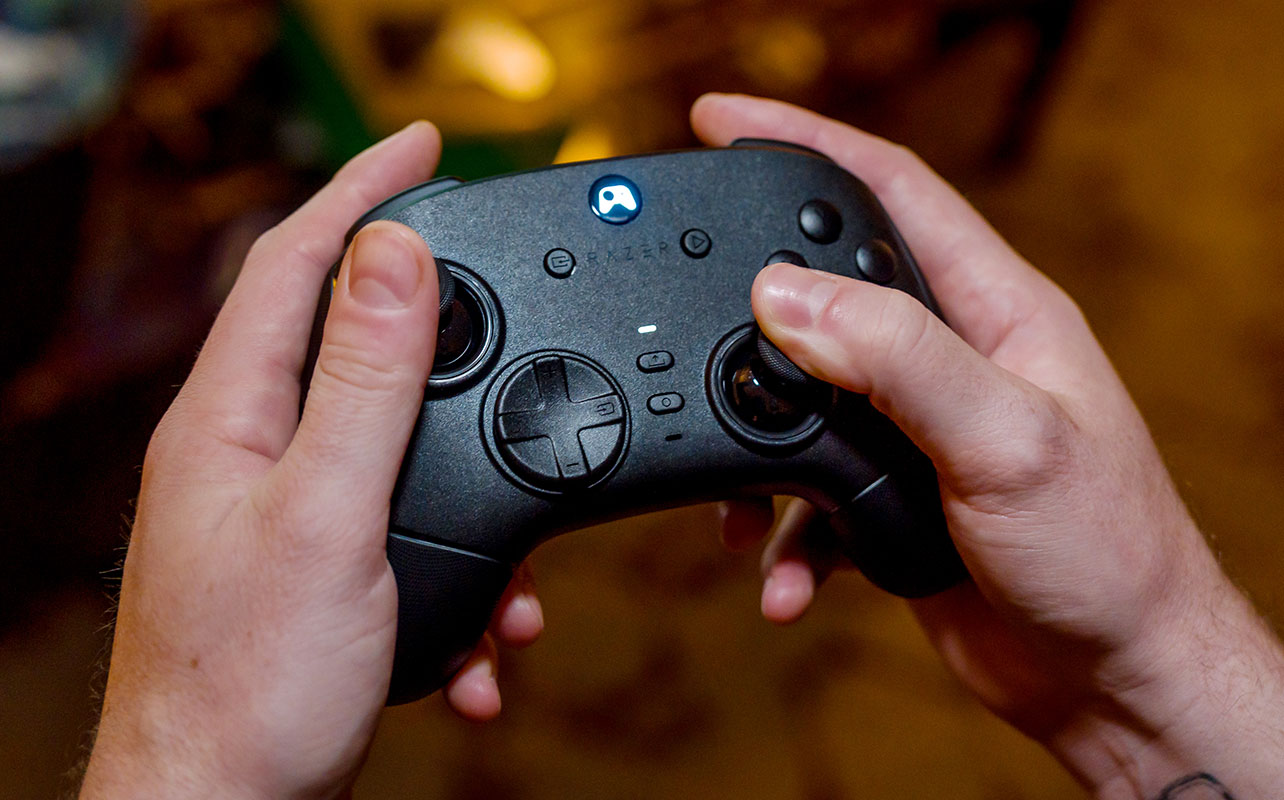
The Wolverine V3 Bluetooth looks a lot like a clone of the V3 Pro because it largely is. The look and construction are virtually identical, save for some key differences that cater to smart TVs. Indeed, this model bears markings confirming that a collaborative effort, like LG’s Gaming Portal logo emblazoned on the top.
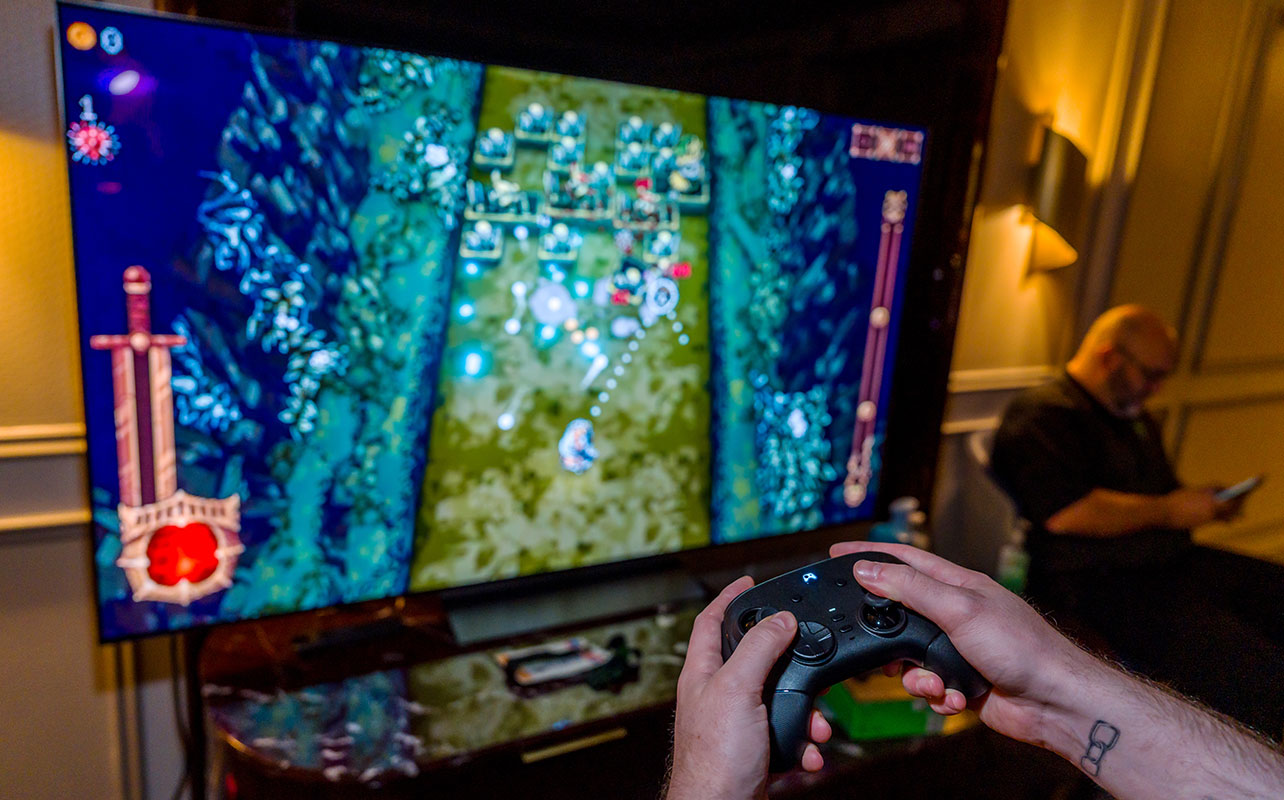
The primary feature exclusive to select LG TVs is ultra-low latency Bluetooth connectivity, which can cut it down to under three milliseconds. This reduction occurs locally, meaning it affects the time it takes for the TV to register controller input. Since the TV supports the feature and the controller can communicate the same way, you get a stable connection that ensures pressing a button doesn’t lead to a delay onscreen.
LG quantifies this as a roughly 10x speed increase in responsiveness compared to conventional Bluetooth connections. While that makes cloud gaming feel incredibly adaptable, the key caveat is that it can’t do anything about the quality of the internet connection to play games streaming from Xbox Game Pass. If there’s lag, it’s probably because the network is lacking, but without this feature, it’s fair to say cloud games might feel more sluggish, particularly during fast-paced gameplay where precise timing is critical.
Another LG-exclusive feature is the dedicated Gaming Portal button built into the controller. Pressing it launches LG’s Gaming Portal app, the centralized hub to access games and related apps on LG TVs. The controller supports cloud-based gaming services like Game Pass and Nvidia GeForce for now, though more may come later. I specifically asked about Netflix and other platforms that offer gaming in some capacity and got a noncommittal response. Since it’s limited to compatible LG TVs, the button does nothing on those TVs.
What’s required to make it work
In order for this to work, the right LG TV must be running webOS 25, and from what LG has told me, that means the QNED series and up for the 2026 lineup, along with the C and G series OLEDs from 2025. Backward compatibility beyond that may be on the roadmap, but I got no guarantees or hints when asking about it.
While the controller can function as a standard Bluetooth device with other TVs from other brands (including older LG TVs), its most distinctive capabilities remain tied to LG’s ecosystem. In those cases, the Wolverine V3 Bluetooth defaults to standard Bluetooth operation.
A built-in IR blaster makes it work with all LG TVs, reinforcing its role as a device tailored specifically for LG’s living room environment rather than a universal controller optimized equally across platforms.
Despite these limits, the Wolverine V3 Bluetooth can still work just fine with other devices like the Steam Deck or ASUS ROG Ally X. Granted, the controller works like a standard Bluetooth accessory under this scenario. For example, because the Steam Deck processes games locally, the only latency involved is the transmission from the controller to the handheld device itself. That makes no ultra-low latency Bluetooth less impactful.
The biggest trade-off of all is the lack of any physical connectivity with the unit itself. You have no way to plug it in and play games using a wired connection. It’s all wireless here.
Project Ava finally gets a final look

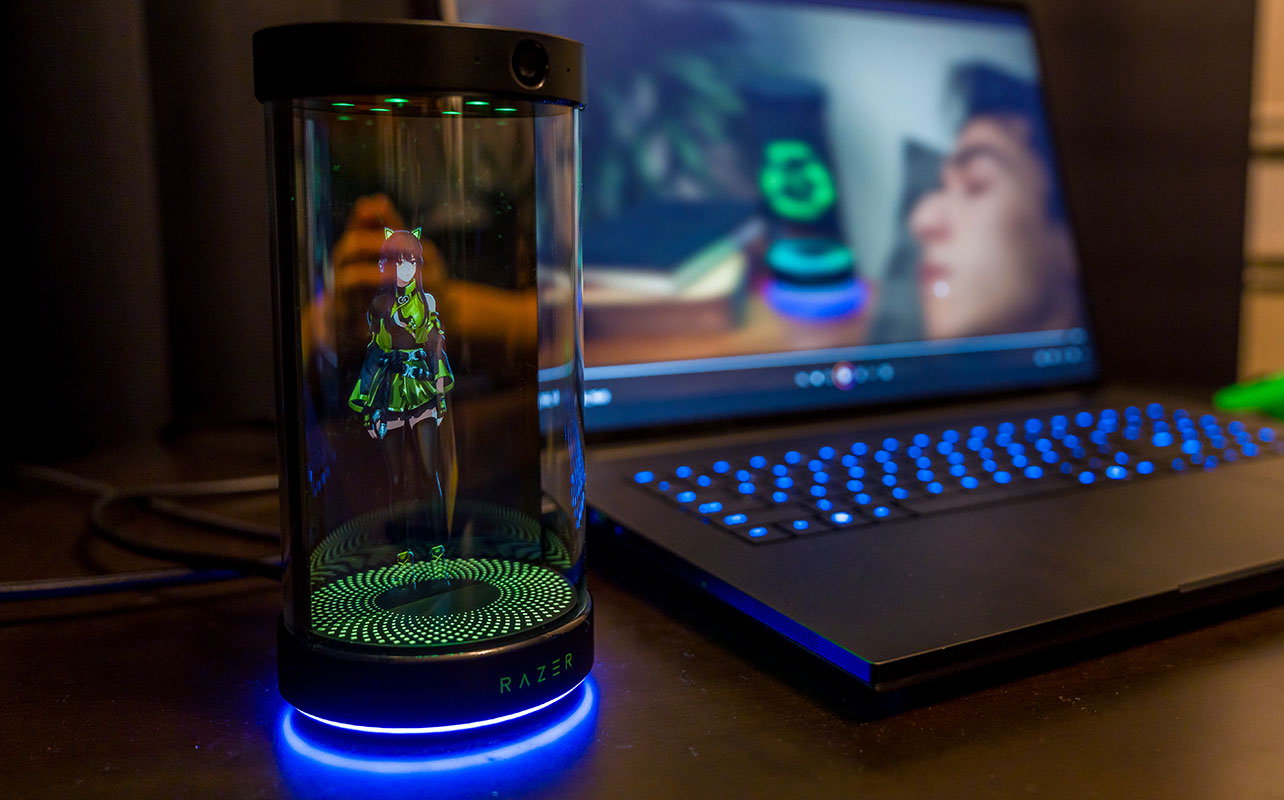
Project Ava was a thing without a face, body, or even physical presence—until now. Last year, Razer presented it as an offscreen gaming coach that chimed in with helpful hints and critiques during gameplay. Now, it’s a physical holographic desk companion that can sit beside your PC or monitor and talk to you anytime.
The 5.5-inch animated 3D hologram projects within a cylindrical base that can take the form of a range of avatars. There are only a handful of AI characters to start, like Ava, the calm and collected one, Kira, an anime-style assistant, Zane, a tattooed strategist, Faker, inspired by the League of Legends esports star, and Sao, a sort of mix of all the others. These holograms talk and act in very personable ways from the demo I saw of Kira (pictured), including eye-tracking, facial expressions and natural motion. A built-in HD camera and dual far-field microphones make this feel like it’s a smart device, only it knows what’s on your screen when connected to your laptop.
Much like the gaming coaching from before, any of these avatars will chime in on your gaming style and what might be worth trying to get out of a sticky situation. Razer calls this real-time assistance PC Vision Mode. In this demo, the AI’s power came from xAI’s Grok model, though Razer reps tell me other AI platforms are likely coming later. Ava’s key purpose is to to make interactions more personalized.
More than just a gaming tool, Razer sees Project Ava as a digital partner for work, life and play. It can help organize your schedule, analyze data you feed it, translate languages, and get creative when you have ideas or suggestions to share.
If you’re looking for the newest additions to elevate your gameplay, don’t miss out—explore the latest gaming accessories and monitors unveiled at CES!
No set dates yet
Razer has yet to announce or confirm any release windows for either of these two products, but knowing the company’s track record, they are likely coming sometime in 2026 (at different times). Check out all the other Razer gear available now.
Explore CES 2026 highlights and emerging tech trends.