
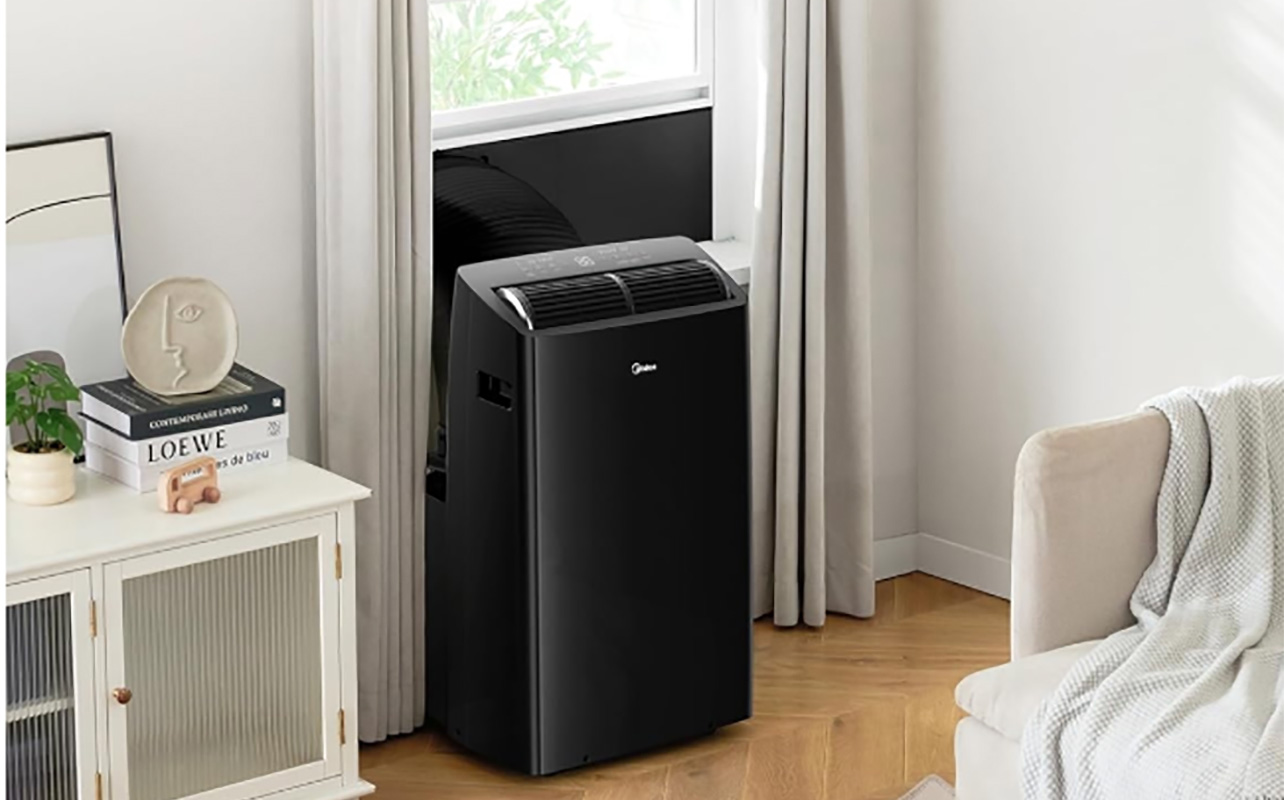
If you’re shopping for an air conditioner, it’s important to get the right type, which includes the right number of BTUs for your space. It’s about more than just choosing a model you think is a good fit or that’s on sale. Consider operational energy costs in Canada over the life of the unit as well. Are you aware of what SEER/CEER ratings are and how ENERGY STAR units can save you money? If you’re not, don’t worry, as this article will tell you everything you need to know, and point you towards top energy efficient air conditioner models at Best Buy.


What do SEER and CEER ratings mean?
The most important figure you need to understand alongside BTUs for sizing an air conditioner is a SEER or CEER rating.
Seasonal Energy Efficiency Ratio (SEER): This tells you how efficiently central air conditioning or a mini-split air conditioner can cool a room or space over an entire season. Logically, the higher the SEER number, the more efficient it is. In the U.S., the minimum standard is 14 SEER. Natural Resources Canada (NRCan) ratings are from 13.4 to 15; units that are 18 SEER and higher are considered very efficient. The latest models have a SEER2 rating, which purports to be more realistic, undergoing more rigorous testing to simulate actual homes and usual conditions.
Combined Energy Efficiency Ratio (CEER): This is the Canadian standard for window and portable air conditioners, replacing the older EER rating. It measures both cooling efficiency as well as standby power draw of the unit. A good CEER rating in Canada is generally a 12 or higher. Effectively, a model needs to consume 10 percent or less energy than standard models to be considered ENERGY STAR certified.
The benefits aren’t just about saving on electricity and thus helping the environment. It’s also about cost savings. The higher the CEER rating of a unit, the less it will cost to run per hour. The savings will largely come down to the hydro rates in your city and province. But if you were to go from a 10,000 BTU air conditioner with a CEER 10 rating to one with a CEER 13.4, you could save up to $60 per season, or $300 over five years.
For central air conditioning or a mini-split, SEER savings could be as much as $1,000 over five years. A general rule-of-thumb is about 10-15 percent savings for every two-point SEER increase.
ENERGY STAR certification in Canada: what it means and why it matters
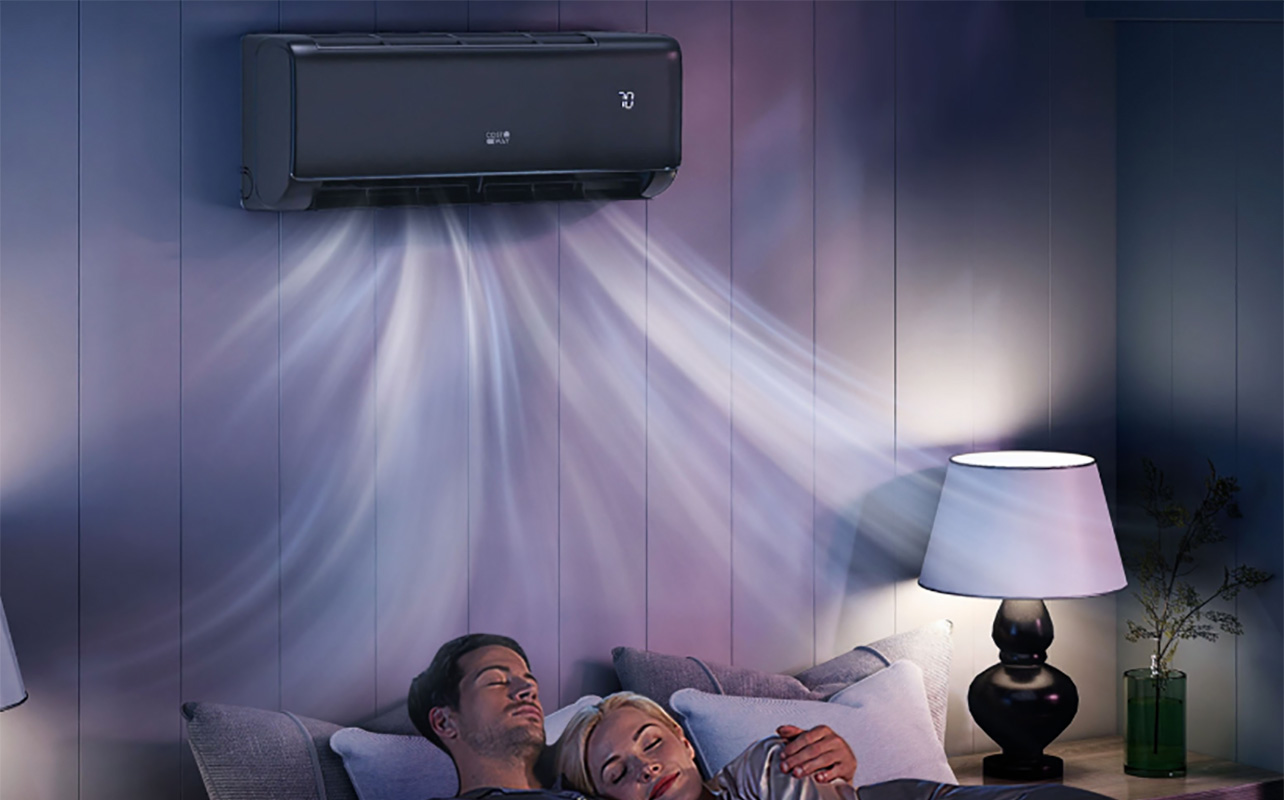
ENERGY STAR ratings are issued in the U.S. by the Environmental Protection Agency (EPA) and Department of Energy (DOE). In Canada, ENERGY STAR Canada is administered by NRCan, which has stricter standards that are set independently of the U.S. for air conditioners. Air conditioners that bear the ENERGY STAR certification logo consume 10-15 per cent less energy than standard models. If you’re looking for potential rebates from your electric company, ENERGY STAR certification is a must to be eligible. All air conditioners that meet ENERGY STAR certification sold through Best Buy are clearly labeled so you know this.
How much does it cost to run an air conditioner in Canada?
While these figures are only estimates and can vary depending on where you live and pricing from your energy company, this chart will give you a ballpark idea of how much an air conditioner costs in Canada, and what you’ll pay per month to operate one in three of the biggest provinces.
The figures are based on usage for eight hours per day for a 30-day period. I’m using current provincial hydro rates, which includes ~$0.13/kWh in Ontario, ~$0.10/kWh in B.C., and ~$0.07/kWh in Quebec. Note that Ontario where I live has time-of-use rates as well: if you run an air conditioner during peak hours when demand is highest, including between 11 a.m. and 5 p.m. on weekdays in the summer, rates are higher. Conversely, when used during off-peak hours, including between 7 p.m. and 7 a.m., they are lower. All times in between are considered mid-peak with rates in the middle.
| AC Type | BTU | Est. Monthly Cost (ON) | Est. Monthly Cost (BC) | Est. Monthly Cost (QC) |
| Portable | 8,000 | ~$35 | ~$20 | ~$15 |
| Portable | 12,000 | ~$50 | ~$30 | ~$22 |
| Window | 8,000 | ~$30 | ~$18 | ~$13 |
| Window | 12,000 | ~$45 | ~$26 | ~$19 |
| Mini-split | 12,000 | ~$40 | ~$22 | ~$16 |
If you know your rates and want to calculate a more specific figure, there’s a simple formula you can use. Take the number of BTUs divided by the SEER/CEER rating to get watts. Multiply this number by the approx. number of hours you run the unit per day and divide that by 1,000 to get the kWh. From there, multiple time kWh by the rate (take the average or mid-peak rate if you’re in Ontario) to get the cost per day. Multiple this by 30 to get the approximate cost per month.
So, for a portable AC with 12,000 BTUs and a SEER/CEER rating of 15 used in Ontario at an average of $0.13/kWh, the formula would be as follows:
12000 ÷ 15 = 800 (watts).
800 (watts) x 6 (hours) = 4,800
4,800 ÷ 1000 = 4.8 kWh
4.8 (kWh) x $0.13 = $0.624 (per day)
$0.624 (per day) x 30 (days in a month) = $18.72
So, the monthly cost to run the air conditioner would be $18.72.
SEER/CEER ratings explained by AC type
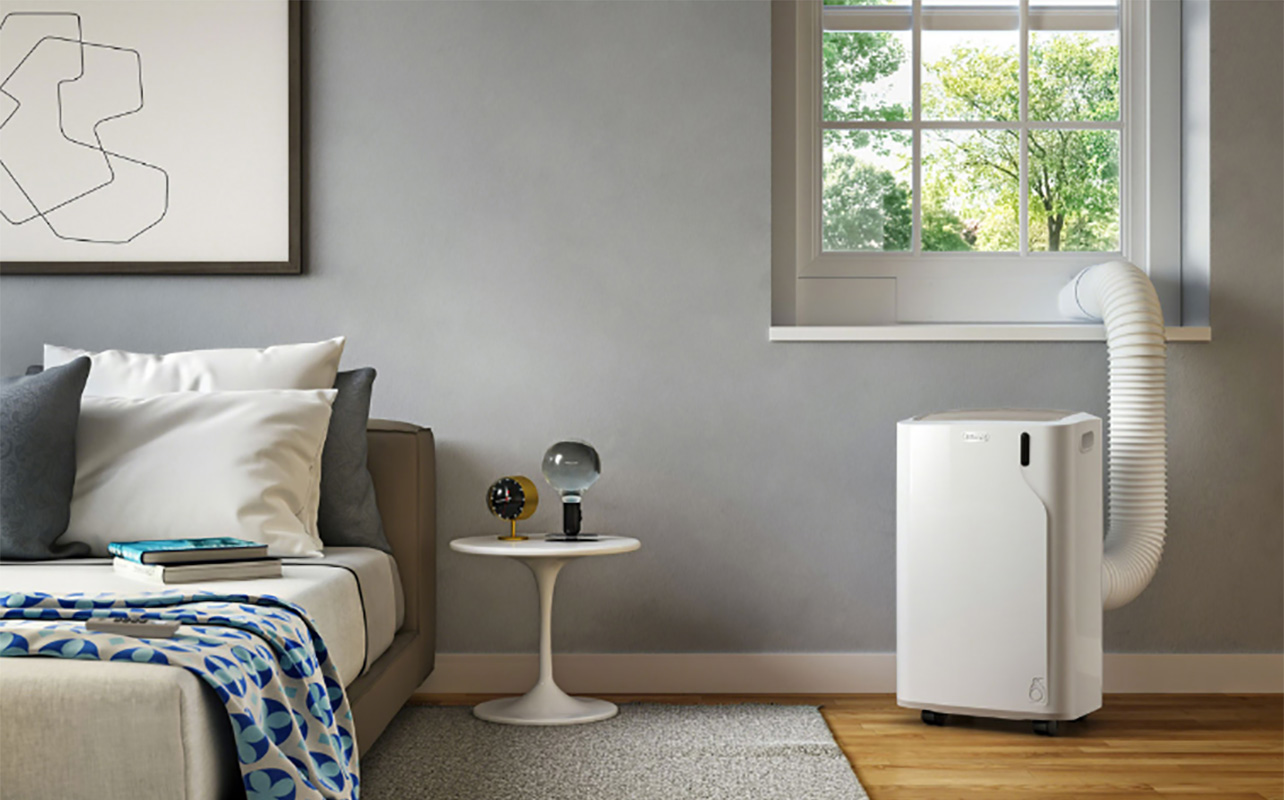
SEER/CEER ratings are actually slightly different depending on the type of air conditioner you have, including portable vs. window vs. mini split AC. They use different rating systems and efficiency ranges.
Portable ACs: The best portable air conditioners usually start at around 10 CEER, while a CEER rating of 8-12 is typical. Single-hose models are less efficient than dual-hose models. This is because they exhaust air from indoors to vent heat, which results in negative air pressure in the room.
Window ACs: A higher CEER rating of 10-15 is more typical, and these tend to be more efficient. If you’re looking to cool a single room as efficiently as possible without wasting energy, a window AC is the way to go.
Mini-split AC: SEER ratings are higher at 15-30+ given the more elaborate set-up, larger, two-part units (one indoors and one out), and permanent installation. Using inverter compressor technology, the air conditioner modulates output. So, you get long-term savings even though there’s a higher upfront cost. It’s worth looking into rebates from your local energy company.
How much can you save with an energy efficient AC?
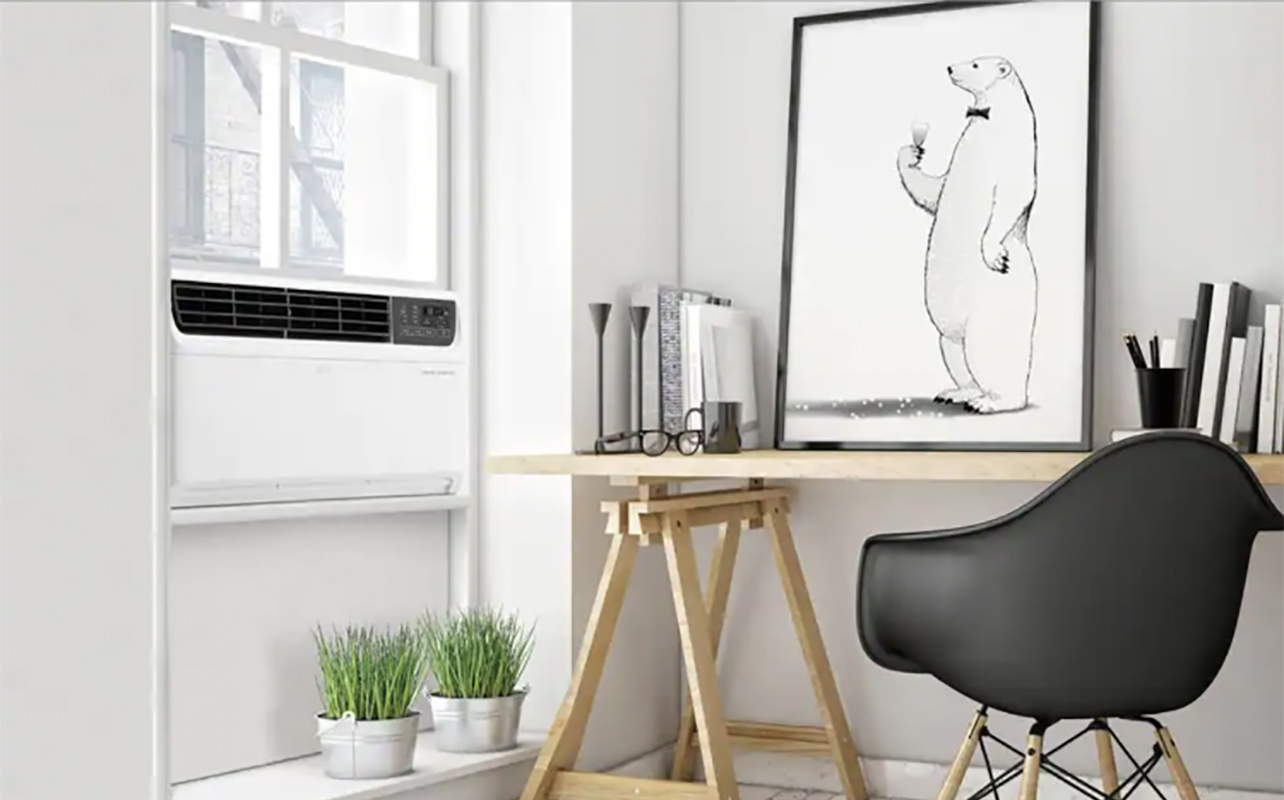
Savings come down to BTUs and unit efficiency as well as usage cost in your province and/or city and potential rebates. When comparing a standard 10,000 BTU window AC with a CEER 10 rating to an ENERGY STAR model with a CEER 12 rating, you could save anywhere from $20-$30 per summer in Ontario with typical usage. It doesn’t sound like a lot, but that adds up over time, especially if you run it more than usual. Amortize that over 10 years and that’s an extra $200-$300 in your pocket.
When looking at multi-room cooling, you’d probably spend about 40-50 per cent more to run multiple portable ACs in different rooms versus getting an 18,000 BTU mini-split unit with a SEER 20 rating. It would cost more upfront, but you’ll realize the operational savings over time. Plus, installation will leave you with more open floor space.
When looking at provincial rebates in Canada, you can further save with upfront funds or monthly discounts. It’s worth contacting your local energy company to learn about what’s available.
Canadian government rebates for energy efficient air conditioners
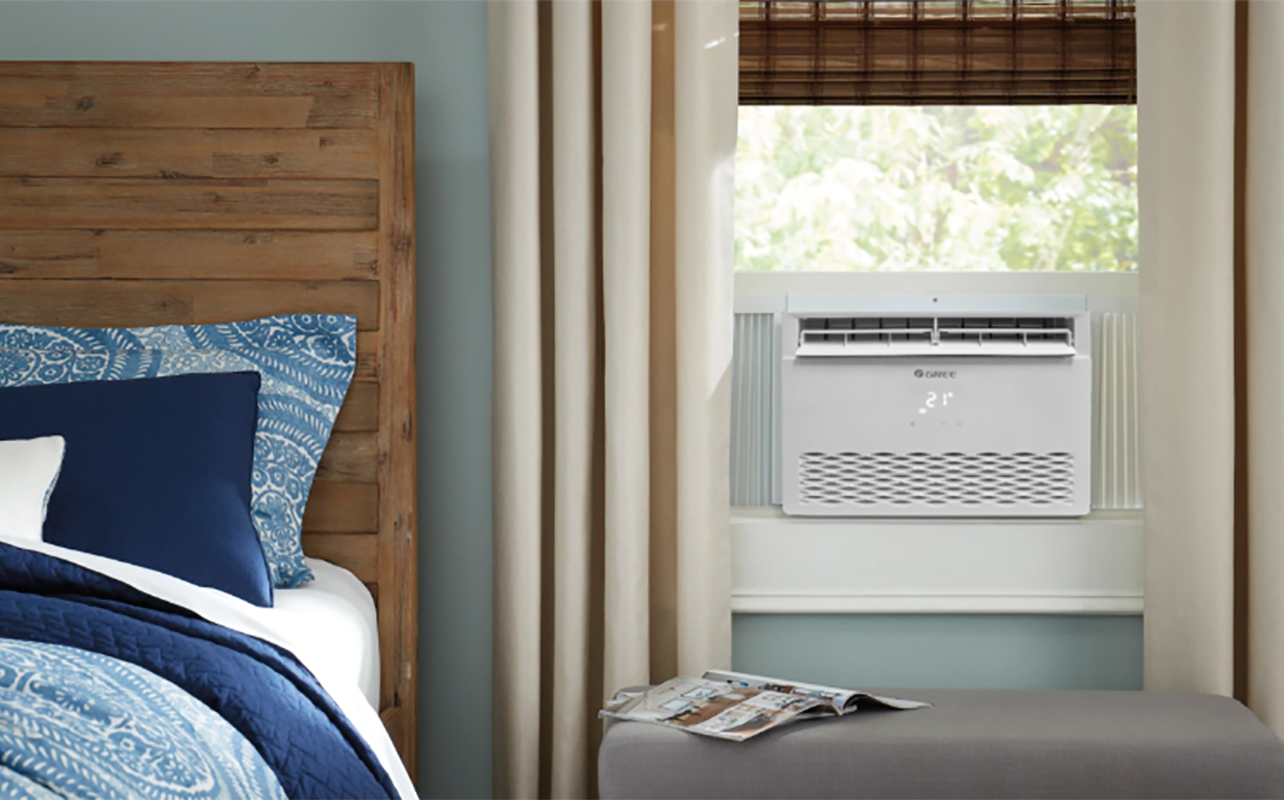
When considering costs, look into government rebates as well.
ENERGY STAR: First, some provincial governments offer rebates when you use ENERGY STAR appliances. This varies by province, but if you’re considering an ENERGY STAR model, check to see if it qualifies and what rebates might be available.
OHPA: There was a Canada Greener Homes Initiative program running, but it has since closed. However, there is the Oil to Heat Pump Affordability Program (OHPA), which runs through July 31, 2026 and is designed to assist those with a threshold income with the switch from oil to an eligible heat pump system. It’s open to customers in Alberta, Manitoba, Northwest Territories, Quebec, and Saskatchewan, while other provinces have different programs. You can get anywhere from a $250 one-time incentive payment to up to $25,000 in grants.
Utility company rebates: Every province offers different utility rebates that are worth investigating. BC Hydro has ENERGY STAR and heat pump rebates, Enbridge Gas in Ontario offers rebates for heat pump systems, Hydro-Québec provides rebates on qualifying heat pump mini-splits, and Efficiency Nova Scotia has its own home cooling rebate programs. At the time of this writing, Alberta does not currently offer its own rebate program.
It’s worth keeping in mind that these rebates can change from one season to the next. The Canada Greener Homes Initiative, for example, only recently ended in December 2025. Your local utility company will have the most up-to-date information. For now, you can find an entire collection of ENERGY STAR AC units at Best Buy Online.
Tips for reducing AC energy costs in Canada
Alongside choosing the most efficient model, adjusting time of use to save (in Ontario, at least), and taking advantage of available rebates, there are small things you can do and habits you can adjust to further help reduce your AC energy costs.
Set your thermostat: Rather than constantly turn the AC on and off as it gets too hot or too cold, set your thermostat to a reasonable temperature of about 24-26°C (75-78°F). This sounds warm, but every degree lower increases energy use by 3-5 per cent.
Use a smart thermostat: A smart, Wi-Fi-connected thermostat automatically adjusts based on the ambient temperature in the room, analysis of the temperature outside, or even by sensing if no one is home or knowing your daily patterns. It can turn cooling down during the day when the house is empty and turn it back up an hour before you get home so you return to a cooled home. And this saves money in the long run.
Run during off-peak hours: Plan to turn up cooling at night when energy pricing might be cheaper. This will keep the room cool for a comfortable sleep and ensures you’ll wake to a cool home in the morning. Then, turn cooling down during peak hours when no one is probably home anyway.
Keep curtains and blinds closed: Especially when it comes to south-facing windows, keeping curtains and blinds closed will prevent peak heat from adding warmth to the room as the sun shines through. The room might be darker, but it will be cooler, too.
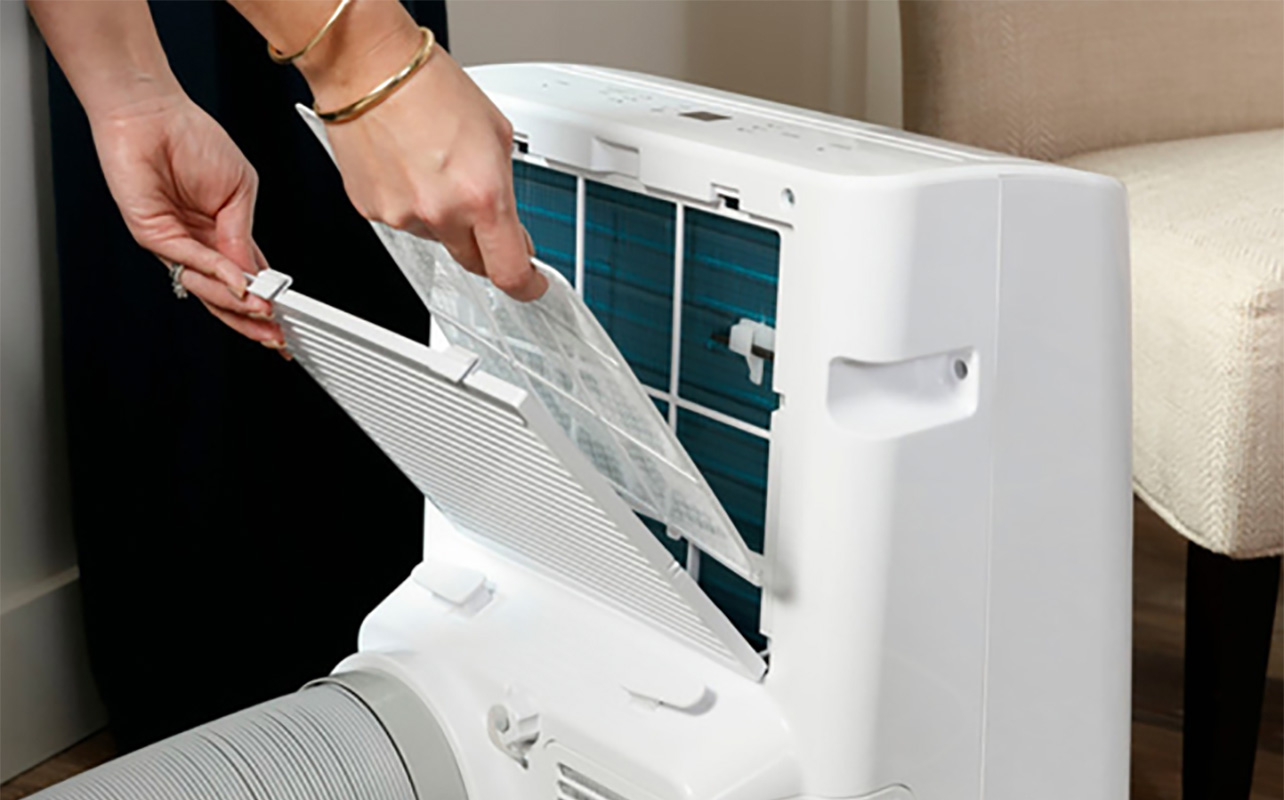
Clean or replace filters every 4-6 week: Chances are you only using your air conditioner for a few months out of the year. But you use it heavily during that time, so it’s important to keep it clean. Change or clean the filter every month or so to prevent clogs and the unit working harder to cool than it needs to.
Use ceiling fans: You might think it’s counterintuitive to run a ceiling fan at the same time as an air conditioner. But it’s brilliant because the ceiling fan helps better circulate the air around the room.
Get the most efficient air conditioner

When you’re looking to buy an air conditioner, you want it to have the right amount of BTUs, be the right type for your space, fit with your budget, and be efficient. That means using as little energy as possible while offering maximum cooling. ENERGY STAR ratings and high SEER/CEER marks are important considerations, even if they add to the upfront price of the unit. You’ll reap the benefits in the long run. Knowing what all those numbers and figures mean will help you make a more informed choice and feel cool about being, well, cool all summer long.
Check out a wide range of air conditioners at Best Buy Online and see our air conditioner buying guide to help you find the right model for your home.
FAQs
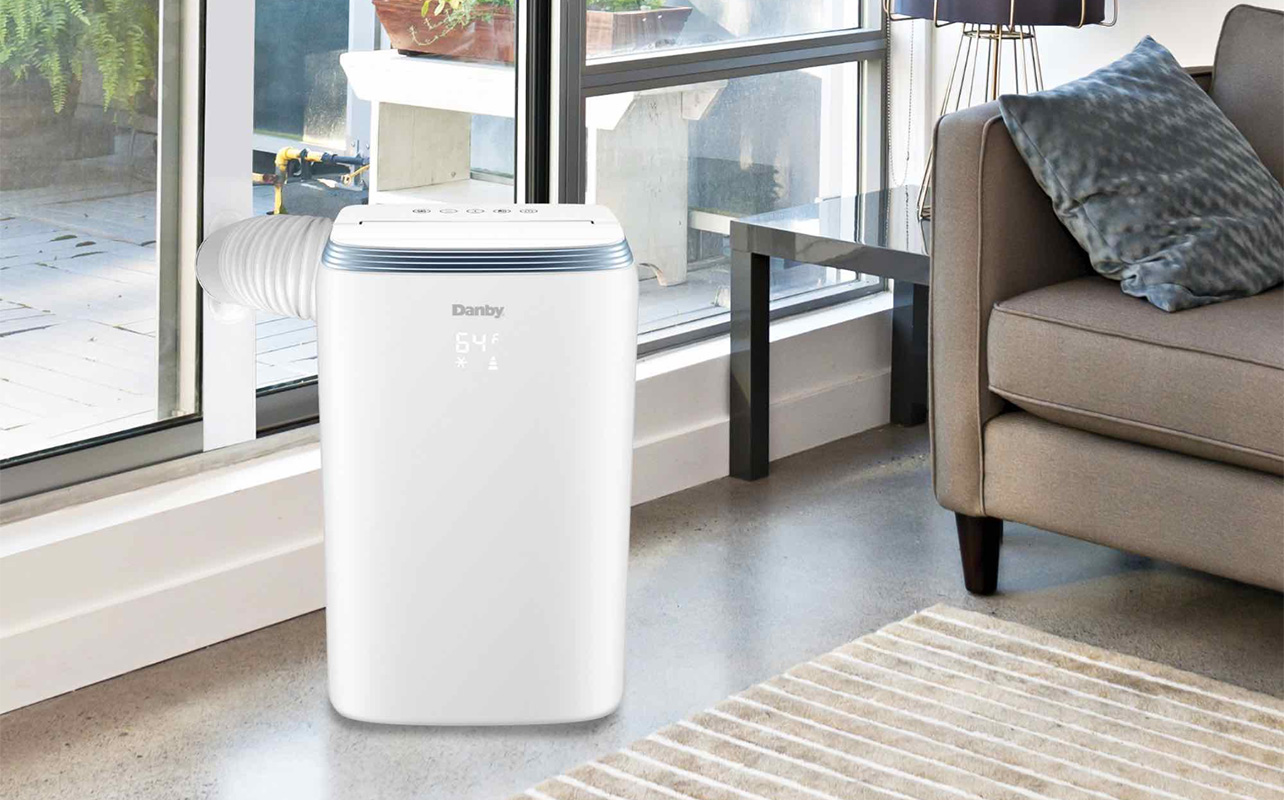
What is a good CEER rating for a portable air conditioner in Canada?
A typical CEER rating for a portable air conditioner is 8-12, while ENERGY STAR models are 10 and higher.
What is the difference between SEER and CEER?
SEER measures the cooling efficiency of a central or mini-split AC while CEER measures window and portable ACs, accounting for both active cooling efficiency and standby power.
Does ENERGY STAR certification matter for air conditioners in Canada?
Yes! An ENERGY STAR certified model will consume 10-15% less energy and may even qualify you for government, provincial, or utility company rebates.
How much does it cost to run an air conditioner all summer in Canada?
Using an example of a 12,000 BTU air conditioner with a SEER/CEER rating of 15 used in Ontario at an average of $0.13/kWh, assuming you’d run the unit for six hours per day for three months for June, July, and August, it would cost about $56.16 to run through the summer. Double that if you’re running it for half days, seven days a week.
Which type of air conditioner is most energy efficient?
Window ACs are the most efficient simple solution air conditioner. Mini-split ACs are efficient for cooler larger spaces and multiple rooms but require permanent installation and are more expensive.
Do energy efficient air conditioners qualify for rebates in Canada?
Yes, they can. It’s dependent on where you live, provincial programs, and your utility company. Contact your utility company or visit your local energy website to see what programs are available as they change often.
Is it cheaper to run a mini-split or a portable air conditioner?
In the long-run, it’s cheaper to run a mini-split. You would need multiple portable ACs to cover the same space as efficiently. Mini-splits are a built-in solution with a compressor that expels hot air outside, quickly keeping indoors cool and comfortable.