
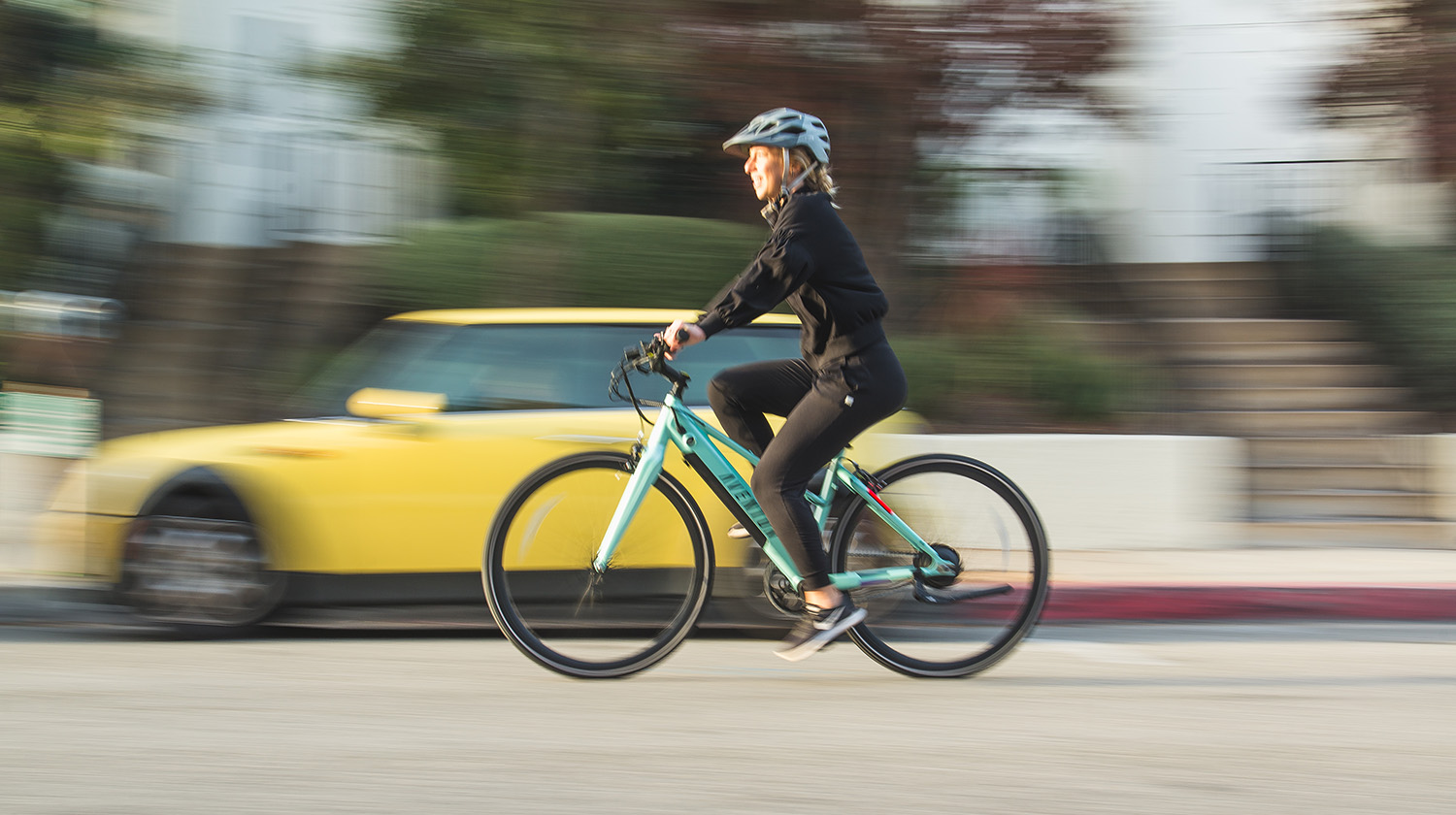
An electric bike is a popular way to get around nowadays. They are ideal for both active individuals as well as those who might not necessarily have the stamina or skill to pedal away through various terrain. If you’re considering an e-bike, this guide will provide everything you need to know. Learn about the different types, what to consider, and how much you should spend depending on your needs.

Table of contents
- What is an electric bike?
- Types of e-bikes
- Different e-bike frames
- What to consider when choosing an e-bike
- How much should you spend for an e-bike?
- E-bike FAQs
What is an electric bike?
An electric bike or e-bike combines a traditional bicycle with an electric motor and rechargeable battery to provide assistance while you ride. Unlike an electric scooter or e-moped, an e-bike must have fully functional pedals to be legal in Canada. You can choose how much assistance you want through either pedal assist or throttle assist, depending on the bike and your riding style. This extra power makes it easier to tackle steep hills, ride longer distances, carry cargo, or simply enjoy a more comfortable commute.
E-bikes are available in several types. They include city and commuter bikes, cruisers, cargo bikes, and off-road models. So, there’s an option for nearly every type of rider.
By understanding the different types of e-bikes and features available, you’ll be better equipped to choose the right model for your lifestyle.
Consider an electric scooter as well? Check out our comparison of e-scooters vs. e-bikes.
What are the types of e-bikes?
There are two core types of e-bikes: city/commuter e-bikes and off-road e-bikes. The right e-bike depends on where you ride most often and what you plan to carry.
1. City and commuter e-bikes
Best for: Everyday commuters, students, casual and recreational riders
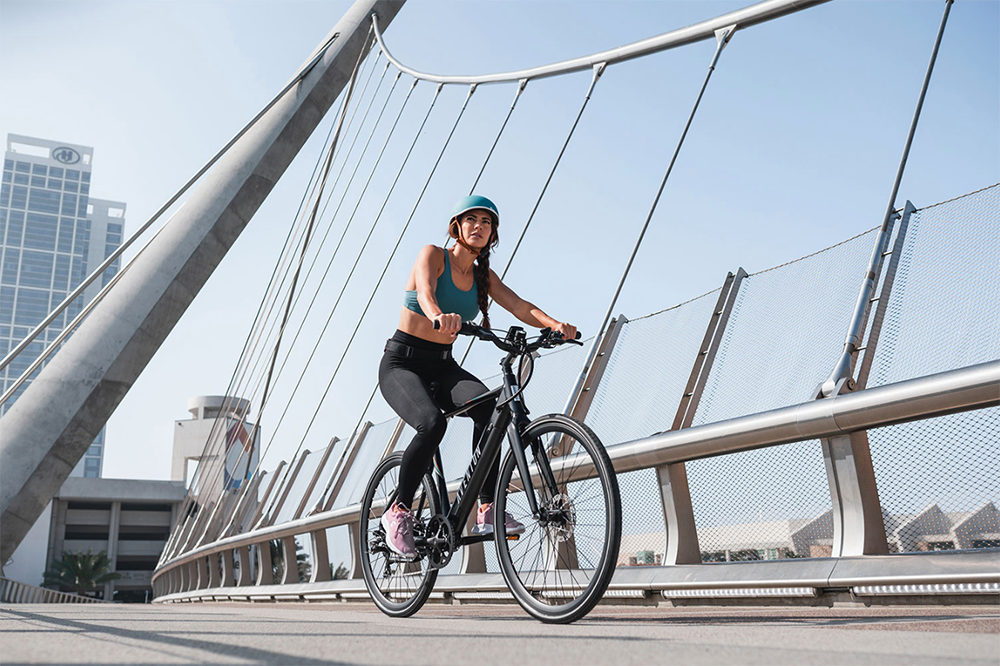
Electric city and commuter e-bikes are designed for those with heavy commuting needs. Riding for work or school? Carrying deliveries around the city? This type of e-bikes is built to be sturdy. You can carry your gear with you, as they are able to withstand loads of stress. You’ll find that many have a rack for cargo, like a backpack, groceries, and other items. They are less aerodynamic than a road e-bike but also more comfortable with an upright seated position. Their strong frames, typically made from aluminum alloy, are made to support the extra weight. There’s support for different attachments, including racks and fenders.
Many newer commuter e-bikes also include an integrated display with navigation, smartphone connectivity, and built-in security features such as wheel locks and GPS tracking on select models.
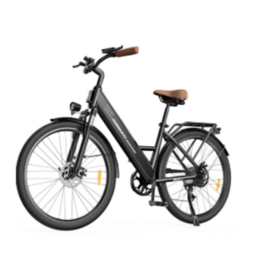
Electric cruiser bikes
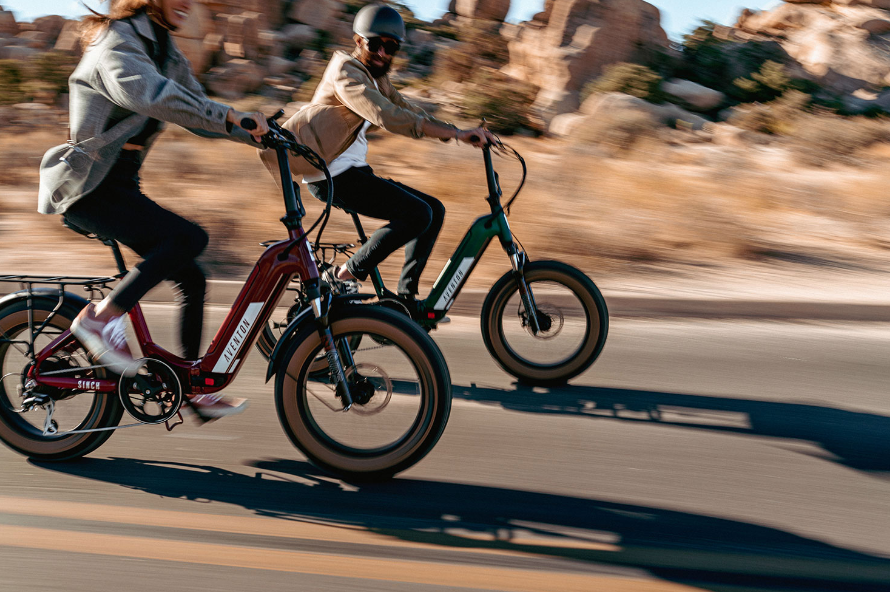
Great for getting a bit of exercise or running short errands, an electric cruiser bike is more for casual and recreational riders. They often have swept back handlebars, with a step-through frame for easy mounting and dismounting. Many come with accessories like a basket, bag, or rack. They do, however, tend to be thicker and heavier. And they aren’t the best option for long distances nor for getting over hills since you might find them to be a bit wobbly.
Today’s cruiser e-bikes often feature wider tires and improved suspension seat posts, making them even more comfortable on rough pavement and bike paths than earlier models.
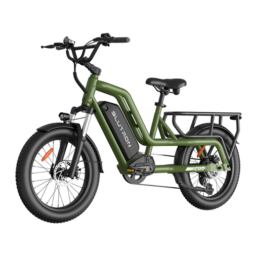
Electric cargo bikes
An electric cargo bike comes with an extended frame designed to carry more than a standard bicycle. Cargo models often feature a front or rear cargo area that can hold groceries, packages, and other bulky items. Some designs also include passenger seating.
They are a viable, cost-effective alternative to using a car when you only need to run short errands or go short distances but still need to bring some cargo along with you. The storage area can be in front of or behind the handlebars.
Remember to look at the payload or max carrying capacity for cargo bikes to ensure they will meet your needs. Factor accessories into the cost of one of these e-bikes, including things like racks and child seats, just as you would need for a car.
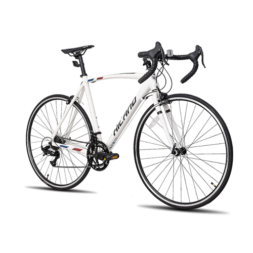
Electric road bike
An electric road bike has drop handlebars so you’re sitting in a sportier position than you would use a cruiser or cargo e-bike. They are great for long distances, especially given the lightweight design and aluminum or carbon frame that is made for speed. These are good for paved roads and mixed surfaces like trails and bike paths. Usually with step-over frames and drop-down handlebars with narrow tires, you’ll sit in the more aggressive, facing forward riding position.
2. Off-road e-bikes
Best for: Adventurers who will be traveling through various types of terrain, like the beach and mountains, travelling to the countryside, or going on trails with steep hills and inclines
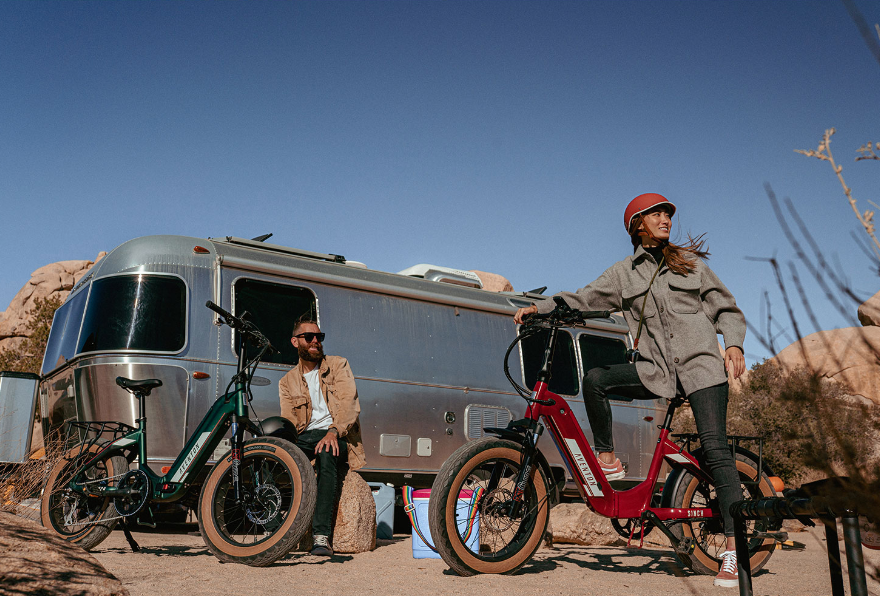
Often with thicker tires and a more durable suspension system, electric off-road bikes are built ruggedly to withstand any terrain. Fat tire versions either come with or can be upgraded to tires that are four inches wide versus the standard two or three inches. These are worth considering if you’ll need better traction, stability, and comfort while riding through especially bumpy and rugged terrain, including snow and even sand. Adjust pressure to go fully inflated for paved roads and deflated for soft or rocky terrain.
You can go farther with these bikes and ride quickly with less effort thanks to the electric power option. An off-road bike also makes it easier to scale larger hills and inclines. It offers better stability and control than you’d find with other types of e-bikes.
What are the different e-bike frames?
Like traditional bicycles, electric bikes come in several frame styles. The frame affects how easy the bike is to mount, how comfortable it feels, and what type of riding it’s best suited for.
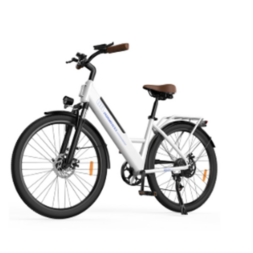
1. Step-through (V-frame)
With step through frame design, it’s easy to mount and dismount without having to raise your leg. This makes them great options for those with limited mobility, older riders, casual riders, and those who might be riding to work in clothing that isn’t as flexible, such as a suit or dress pants. There is no top tube on these bikes: rather, the front of the bike slopes down and extends to the back. The seat, meanwhile, is in an upright position. Step-through e-bikes tend to have thicker frames and can be heavier, but they are also sturdy and safe. However, keep in mind that if you ride a lot on hilly terrain, they can feel a bit wobbly.
Modern step-through frames have become significantly stiffer than earlier designs thanks to improved frame engineering. While older step-through bikes sometimes flexed under heavier loads, many newer models are designed to provide excellent stability while still offering easy accessibility.
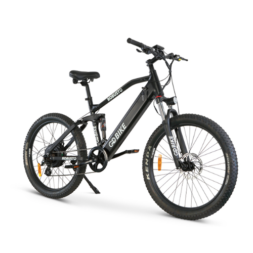
2. Step-over (A-frame)
Conversely, e-bikes with a step-over frame have a diamond or triangle-shaped frame so you need to step over the top tube when mounting and dismounting the bike. They are commonly found in city and road bikes, mountain bikes, and high-end racing bikes.
They are designed for riding in all types of terrain. Because they are lightweight, they can go pretty fast. But keep in mind they aren’t ideal for riding in extreme weather conditions nor for heavier rides. Consider specialized tires based on where you want to ride most often, whether it’s streets or off-road.
Many cargo and high-performance e-bikes also use reinforced step-over frames because they provide excellent strength when carrying heavy loads or riding over uneven terrain.
3. Foldable e-bike
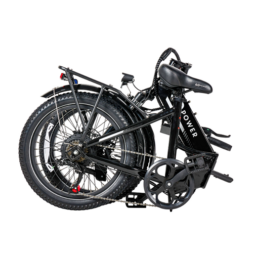
Foldable e-bikes are found across most types. It’s a nice feature for those with minimal storage space or who want to travel with their e-bikes. You can fold it and take it with you on the train (if permitted) or load it in the trunk of a car. It can save plenty of space, particularly if you ride during certain seasons and want to store the bike neatly in your own condo or apartment for the winter.
What should you consider when choosing an e-bike?
Considering everything, from range and speed to battery size and budget, can help you choose an electric bike you’ll enjoy riding for years.
1. Range and speed of an e-bike
How fast does an e-bike actually go? While speed can vary, power-assisted bicycles are limited to a maximum assisted speed of 32km/h in most Canadian provinces. Most e-bikes will shut down the motor once it reaches its top speed. While you might want a super-fast e-bike, consider the regulations in your province and choose accordingly.
In terms of range (distance travelled) per battery charge, this too can vary considerably. Most e-bikes today offer between 50km and 120km of real-world riding per charge, while some long-range models can exceed 150km under ideal riding conditions. But keep in mind that other factors will impact range, including your weight and the weight of any cargo you’re carrying, the terrain you’re riding on, the steepness of hills you climb, the wind, and how much you pedal versus relying on the motor. But, you should be able to get as far as somewhere that would typically be a 10–15-minute ride away without issue with most e-bikes.
Once ready to recharge, simply plug the bike in and it should fully charge in 3.5 to six hours. The average cost to run and maintain an e-bike will depend on the price of electricity in your area and many other factors. While it’s more costly than a regular bike, it’s also significantly less than a car.
E-bike regulations
If you’re considering purchasing an e-bike in Canada, it’s important to familiarize yourself with the regulations in your province. In most provinces, including Alberta, British Columbia, Ontario, and Quebec, e-bikes are approved for use and do not require a licence to operate. However, regulations vary by province and may be different based on the terrain you’ll be riding on. It’s also important to note that some provinces have minimum age requirements for e-bike riders, ranging from 12 to 18+.
Generally, e-bikes are required to have a maximum output of 500 watts and a maximum speed of 32km/h, except for Manitoba where the speed limit is 50km/h. Riders are required to wear a helmet and follow the same traffic rules as a regular bike. Before making a purchase, be sure to check local regulations and ensure that the bike meets the necessary criteria.
2. Battery capacity and durability
Rather than comparing range alone, it’s often more useful to compare battery capacity, which is measured in watt-hours (Wh). Generally speaking, the larger the Wh rating, the farther the bike can travel on a single charge. Typical battery sizes include:
| Battery size | Typical use |
|---|---|
| 350–500Wh | Short commutes and recreational riding |
| 500–700Wh | Daily commuting and mixed riding |
| 700Wh+ | Long-distance riding, cargo bikes, mountain bikes |
Some premium e-bikes now feature removable dual-battery systems, allowing riders to travel well over 150km before recharging.
As with lithium-ion batteries in any electronic device, they will lose capacity over time. Keeping the bike properly stored when not in use and ensuring the battery compartment is properly sealed and cared for will help extend its life. If storing the battery for several weeks or longer, leave it partially charged (around 30–60%) rather than fully charged or completely empty. Most modern lithium-ion e-bike batteries are designed to last approximately 700 to 1,000 full charge cycles, or roughly five to eight years with proper care.
Charging an e-bike
Many batteries now recharge in approximately four to eight hours, depending on battery size and charger speed. Some premium models now support faster charging, reducing downtime between rides.
Many batteries are removable, allowing you to charge them indoors without bringing the entire bike inside. This is especially convenient for apartment dwellers or anyone storing their bike in a garage or shed.
3. Motor types in e-bikes
One of the biggest differences among e-bikes is the type of motor they use. While every e-bike uses an electric motor to assist your ride, where that motor is located significantly affects how the bike feels and performs.
| Motor type | Best for | Advantages |
|---|---|---|
| Hub motor | Commuting, recreational riding | Affordable, simple, low maintenance |
| Mid-drive motor | Hills, cargo, mountain biking | Better balance, improved climbing, smoother ride |
Hub motors
Hub motors are located in either the front or rear wheel. They are common on commuter and entry-level e-bikes because they are reliable, affordable, and require little maintenance. Best for everyday commuting or casual recreational riding, they work well on city streets and bike paths but may feel less natural on steep hills.
Mid-drive motors
Mid-drive motors are positioned near the pedals and transfer power through the bike’s drivetrain. They provide better balance, improved hill-climbing performance, and a smoother riding experience. While they typically cost more, they are popular on premium commuter (especially when you’re riding on steep hills), cargo, and mountain e-bikes.
4. Pedal assist vs. throttle assist power
There’s a growing number of e-bikes with both pedal and throttle assist. Here’s the difference.
Pedal assist
E-bikes with pedal assist offer partial assistance to make riding easier. Once you start pedaling, the motor kicks in. Usually, there are different settings so you can choose the speed and level that suits your trip. You can usually get to higher speeds with a bike that has pedal assist since it combines both your manual footwork and the extra assistance of the motor. E-bikes that are regenerative also recharge the bike once you apply the brakes. If the battery dies while you’re out and about, you can continue riding by manual pedalling alone.
Many modern pedal-assist systems now use either cadence sensors or torque sensors. Cadence sensors activate the motor when the pedals begin rotating, while torque sensors measure how hard you’re pedalling to deliver smoother, more natural assistance. Torque-sensing systems are increasingly common on mid-range and premium e-bikes.
Throttle assist
More e-bikes nowadays include throttle assist, which allows for a complete takeover of power so you can cruise without pedalling. This is similar to the cruise control feature in a vehicle. Unlike with pedal assist, where you have to pedal for the motor to engage, full throttle simply goes once you twist the throttle or use your thumb, much like with a motorcycle.
Many e-bikes on the market today come equipped with both pedal assist and throttle assist modes, allowing riders to choose between pedaling with electric assistance or simply using the throttle to power the bike. This versatility makes them a popular choice for commuters, recreational riders, and anyone looking for an eco-friendly alternative to traditional transportation.
Keep in mind that using the throttle alone typically drains the battery faster than riding with pedal assist because the motor is doing all of the work. If maximizing range is important, pedal assist is usually the more efficient option.
E-bike classifications
E-bikes are often grouped into classes based on how the motor provides assistance:
Class 1: Pedal assist only. The motor provides assistance only while you’re pedalling and stops assisting once the bike reaches 32km/h.
Class 2: Includes a throttle that can propel the bike without pedalling. Motor assistance is still limited to 32km/h.
Class 3: Similar to Class 1 or Class 2 depending on local regulations, but capable of assisting beyond 32km/h and typically equipped with a speedometer.
Regulations vary across Canada, so always check provincial and municipal requirements before purchasing an e-bike.
5. E-bike brakes and other safety features
Many of the latest e-bikes include connected features that add convenience, security, and customization to your rides. Depending on the model, you may find Bluetooth connectivity, companion smartphone apps, GPS ride tracking, navigation, battery health monitoring, ride statistics, firmware updates, digital locking systems, theft alerts, and even USB charging ports for your devices. While these features aren’t essential for every rider, they can make it easier to monitor your bike, plan routes, and keep your e-bike performing at its best over time.
6. Size and payload capacity
Consider your right e-bike size. The frame size should match your height and inseam, as it can’t be adjusted later. Keep in mind that road, commuter, and mountain e-bikes can fit differently. Once you’ve found the right frame size, you can adjust the saddle and riding position for comfort. Before you buy, check the manufacturer’s sizing chart, then fine-tune the saddle and riding position once you’ve found the right fit.
If you plan to carry groceries, camping gear, work equipment, or even add a passenger, be sure to consider an e-bike’s payload capacity. Payload refers to the combined weight of the rider, cargo, accessories, and anything else the bike is carrying. Choosing a bike with the appropriate payload rating not only improves safety but also helps maintain performance and handling. Cargo e-bikes generally offer the highest payload capacities. But even commuter bikes have maximum weight limits that you should check before you buy.
7. Tire selection and replacement
As noted, keep the tires at optimal pressure levels at all times. And make sure you use the right tires for the right conditions based on where you plan to ride. Some e-bikes come with all-terrain tires, but you can always swap out for something more suited to your plans if you plan on taking it on adventures.
8. Maintenance
Regular maintenance helps keep your e-bike safe, reliable, and enjoyable to ride. Fortunately, caring for an e-bike is similar to maintaining a traditional bicycle, with a few additional considerations for the battery and electrical components. Here are some key maintenance tips:
- Clean the frame and drivetrain regularly. Dirt, mud, and road debris can wear down drivetrain components over time. Clean and lubricate the chain according to the manufacturer’s recommendations.
- Inspect the brake pads for wear, and check your tire pressure before longer rides. Worn brake pads reduce stopping power, while improperly inflated tires can affect handling, comfort, and battery range.
- Periodically tighten any loose bolts. Regular riding over bumps and rough terrain can cause bolts on the handlebars, seat post, racks, and other components to loosen over time. Checking them periodically helps prevent unnecessary wear and keeps the bike safe to ride.
- Store the battery indoors during periods of extreme heat or cold. Lithium-ion batteries perform best when stored in a cool, dry location away from direct sunlight or freezing temperatures.
- Install the latest firmware, if your e-bike supports software updates. Firmware updates may improve motor performance, battery management, ride modes, and compatibility with smartphone apps.
- Schedule an annual tune-up at a professional bike shop. It also help identify worn components early and keep your e-bike in top condition.
How much should you spend for an e-bike?
Today’s electric bike market offers options for nearly every budget. Entry-level commuter and recreational e-bikes typically start around $1,000 to $1,800. Mid-range models generally range from $1,800 to $3,500, while premium commuter, cargo, mountain, and road e-bikes can exceed $4,000 depending on the motor, battery, suspension, and smart features included.
Determine what type of standard bicycle you would be buying, or perhaps already own. Chances are that the e-bike equivalent to that bicycle would be the best option.
Consider where you ride, whether it’s smooth paved roads or rougher terrain when you ride, and how often. If you plan to take the bike with you often, like up to your cottage on the weekends, a foldable e-bike is a worthwhile option to consider in whatever main e-bike category you choose.
Check out our wide range of e-bikes at Best Buy Canada. If you know your budget ahead of time, you can filter your selection by adding your desired price range to help you narrow your choices.
E-bike FAQs:
Most modern e-bikes travel between 50km and 120km on a single charge, while some long-range models can exceed 150km under ideal riding conditions. Actual range depends on battery size, rider weight, terrain, weather, cargo, and the level of motor assistance used.
In most Canadian provinces, you don’t need a driver’s licence, vehicle registration, or insurance to ride a compliant power-assisted bicycle. Maximum speed, helmet laws, minimum rider ages, and local riding rules vary by province and municipality, so remember to check your local e-bike regulations.
Yes. If the battery runs out or you simply prefer more exercise, you can continue pedalling the bike like a traditional bicycle. Keep in mind that e-bikes are generally heavier than regular bicycles, so riding without assistance requires more effort.
Yes. Most e-bikes are designed to handle rain and wet roads, but they should never be submerged in water or cleaned with a high-pressure washer. After riding in wet conditions, wipe down the bike, dry the battery contacts if necessary, and lubricate the chain to help prevent corrosion.

This article was drafted using AI technology and then reviewed, fact-checked, and revised by a member of our editorial team.




There is no mention of e-bike tricycle for stability for older riders who want stability wit their exercise
Hi, thank you for your comment. We will consider adding content aimed for older riders in our next update of this guide.