
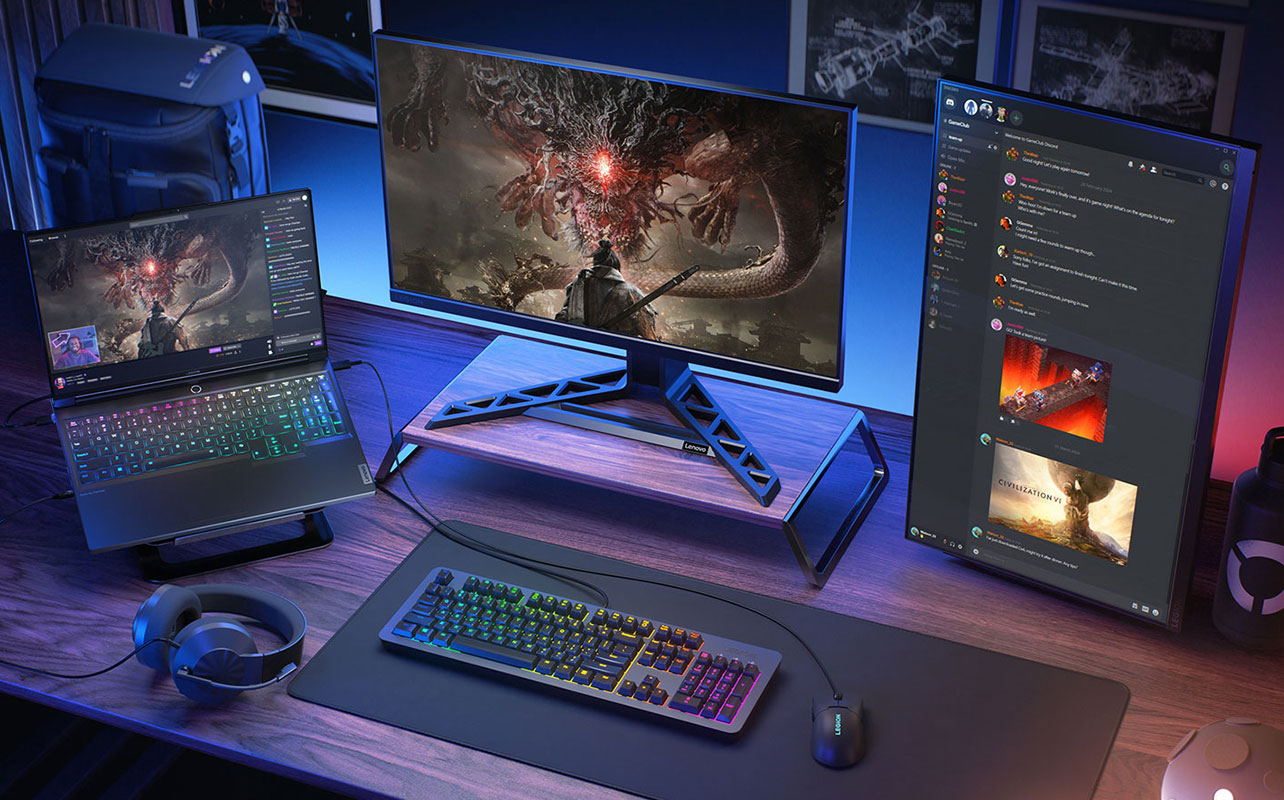
Choosing a gaming PC feels overwhelming until someone explains the one thing that actually matters most: the graphics card. Everything else, the processor, the RAM, the storage, plays an important supporting role, but the GPU is where your gaming experience lives or dies. Once you understand how to match a graphics card to what you want to play and how you want it to look, the rest of the decisions follow naturally. This PC gaming buying guide walks you through every key choice.
Whether to go desktop or laptop, which GPU tier fits your needs, how to build or upgrade a system without wasting money, and which accessories complete the experience. Whether you’re buying your first gaming PC or refreshing an older build, you’ll find clear and practical answers here, no jargon wall, no spec overload.
Table of contents
- Choosing between desktops and laptops
- What performance tier do you actually need?
- Building or upgrading your system: know your parts
- Prebuilt or custom build: which is right for you?
- How to upgrade a gaming PC
- Add the right accessories to complete your setup
- FAQs

Choosing between desktops and laptops
The first decision in any gaming PC purchase is also one of the most important: do you want a desktop or a laptop? Both can deliver a genuinely capable gaming experience, but they serve different needs and come with real tradeoffs. Getting this choice right before you think about specs will save you a lot of second-guessing later.
Gaming desktops give you the most performance for your money
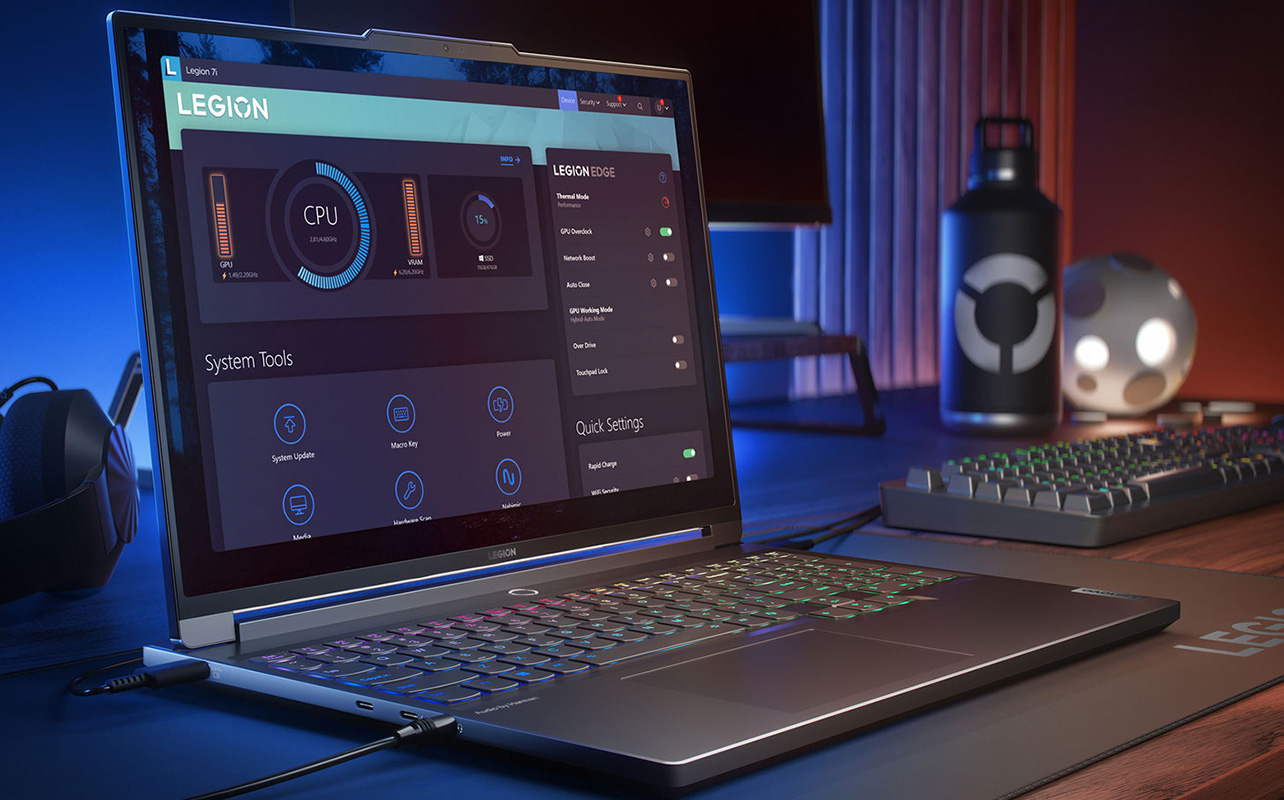
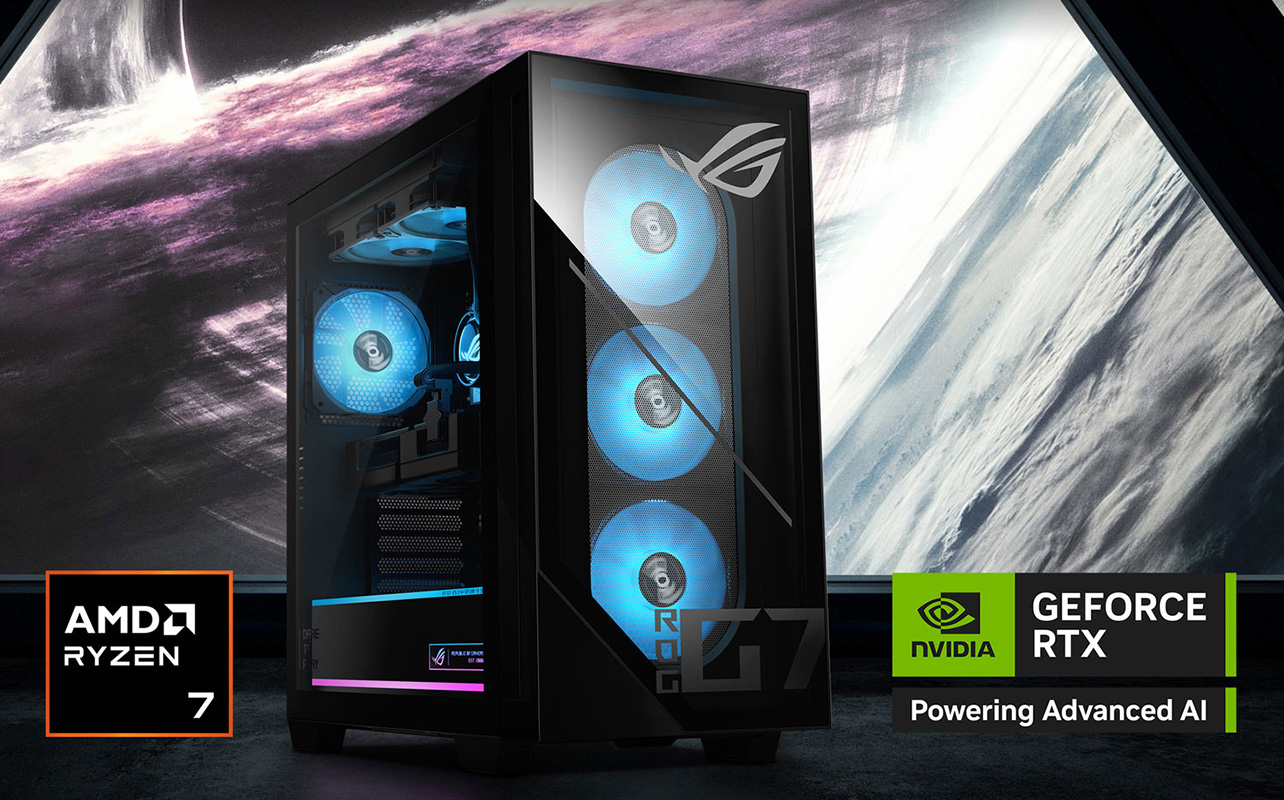
If you picture a glowing tower sitting beside a desk with a tangle of cables and RGB lighting, that’s a gaming desktop, and it remains the best way to get the most performance at a given budget. Because desktops have room for larger components, better cooling, and a proper power supply, they consistently outperform laptops at equivalent price points. They’re also upgradeable. When a new GPU generation arrives, you can swap in a better card without replacing the entire machine.
Here’s when a gaming desktop makes the most sense:
- You game primarily at home and want the best possible experience for your budget.
- You want the flexibility to upgrade individual components over time.
- You’re targeting 1440p or 4K gaming, where desktop GPUs have a clear advantage over mobile equivalents.
- You want the most GPU performance per dollar.
The current desktop generation runs NVIDIA RTX 50 Series and AMD Radeon RX 9000 Series graphics cards alongside Intel Core Ultra 200S and AMD Ryzen 9000 Series processors.
Gaming laptops offer flexibility and portability
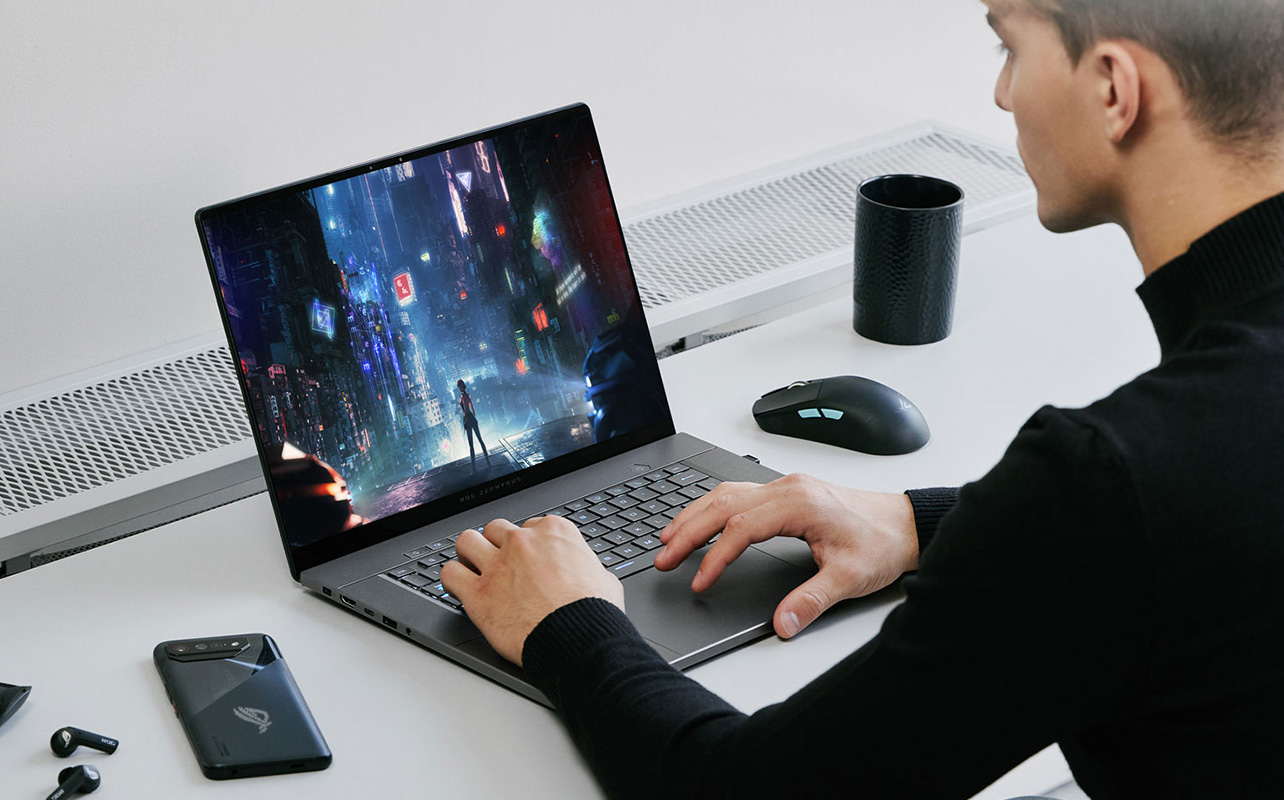
Gaming laptops pack desktop-class hardware into a portable form. The best current models feature NVIDIA RTX 50 Series mobile GPUs, QHD displays running at up to 240Hz, and NVIDIA’s Blackwell-based AI features, including DLSS 4. Some Copilot+ certified gaming laptops also include dedicated NPU chips that help manage power and optimise settings automatically.
The tradeoff is real and worth understanding. A gaming laptop with an RTX 5070 mobile GPU will not perform identically to a desktop RTX 5070. Mobile chips run at lower power limits to manage heat and battery life, which means less raw performance. You’re paying a premium for the form factor, and that premium is meaningful.
A gaming laptop makes sense if:
- You want to game from different locations: a couch, a friend’s place, a hotel room.
- You need one machine that handles both work and gaming.
- Desk space is limited, and a full desktop setup isn’t practical.
If you’re still deciding between a desktop, laptop, or something smaller, our AI laptop and desktop buying guide walks through the tradeoffs in more detail.
What performance tier do you actually need?
Before you look at a single GPU name or component spec, it helps to decide what gaming experience you’re actually after. Your target resolution and frame rate define your performance tier, and your performance tier shapes every buying decision that follows, particularly which GPU to choose.
There are three tiers that cover most gaming PC buyers:
- Entry-level 1080p gaming: At 1080p resolution, games look sharp on most screens up to 27 inches and run at 60 to 144 frames per second with the right hardware. This is the right starting point if you’re new to PC gaming, working with a tighter budget, or play competitive titles like Valorant, CS2, or Apex Legends, where high frame rates matter more than visual fidelity.
- Mid-range 1440p gaming: At 1440p (also called QHD), games look noticeably sharper than 1080p without the steep hardware demands of 4K. Most serious PC gamers land here because it delivers excellent visual quality with strong, consistent performance. Expect 60 to 165 frames per second in most modern titles at high-to-ultra settings with a mid-range GPU. This is where the GPU market currently offers the best value.
- High-end 4K gaming: At 4K, games look spectacular, but the hardware requirements are steep. You’ll need a high-end GPU to run modern titles smoothly at 4K with settings turned up, and a 4K monitor to match. This tier is for buyers who want the maximum visual experience and are willing to pay for it.
Most buyers are best served by the 1440p tier. It’s the sweet spot right now: better visuals than 1080p, more achievable than 4K, and the GPU tier where competition between NVIDIA and AMD is creating the strongest value.
Building or upgrading your system: know your parts
Whether you’re buying a prebuilt or choosing components yourself, understanding what each part does will help you make smarter decisions and avoid common mistakes, like spending too much in the wrong place.
Graphics card (GPU): the decision that matters most
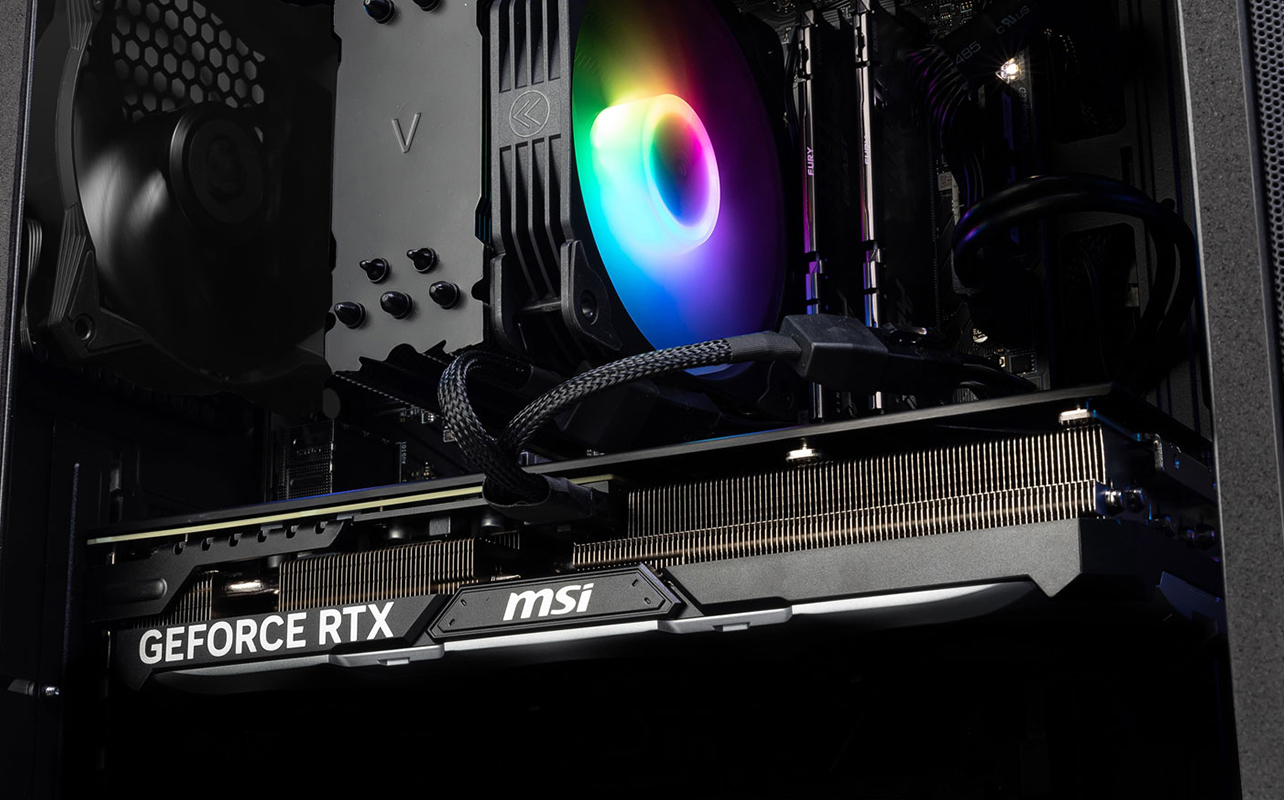
The GPU or graphics card is the single most important component in any gaming PC. It handles everything visual: textures, lighting, shadows, reflections, and the overall smoothness of what you see on screen. When someone asks, “Can this PC run that game?” they’re almost always asking about the GPU. No other component has a more direct impact on gaming performance. If you have one place to put your budget, this is it.
Which GPU should you actually buy?
The GPU market is genuinely competitive right now. NVIDIA’s RTX 50 Series (Blackwell architecture) and AMD’s brand-new RX 9000 Series (RDNA 4 architecture) both offer strong options across every performance tier. The table below maps each tier to the right card, what it’s best suited for, and where the key tradeoffs are.
Every GPU in both families is a significant step forward from the previous generation in raw performance, AI-assisted rendering, and ray tracing capability. The question is which tier makes sense for your gaming goals, Let’s break it down:
| Performance tier | NVIDIA option | AMD option | Best suited for |
| Entry-level (1080p) | RTX 5060 / RTX 5060 Ti | RX 9060 XT | 1080p gaming at 60–144fps, competitive titles, budget-conscious builds |
| Mid-range (1440p) | RTX 5070 / RTX 5070 Ti | RX 9070 / RX 9070 XT | 1440p gaming at high-to-ultra settings, most modern AAA titles |
| High-end (4K) | RTX 5080 | NA | 4K gaming at high settings, high-refresh 1440p with maximum headroom |
| Flagship (4K max) | RTX 5090 | NA | Maximum 4K performance, path tracing, content creation, no-compromise builds |
A few things worth knowing about the mid-range matchup in particular: the AMD Radeon RX 9070 XT, came in as one of the most competitive mid-range cards in years. Independent reviewers found its rasterisation performance competitive with the NVIDIA RTX 5070 Ti at a lower price point, and it ships with 16GB of VRAM compared to the RTX 5070’s 12GB. The tradeoff is ray tracing, NVIDIA still leads meaningfully in ray-traced workloads, with the gap widening in heavily ray-traced titles. AMD’s FSR 4 upscaling has also closed the quality gap with DLSS significantly, but DLSS 4.5 still holds a slight edge in supported games.
At the high end, the RTX 5080 is the more practical flagship for most 4K gamers. The RTX 5090 is the most powerful consumer GPU available with 32GB of GDDR7 memory and a 575W TDP, but its price-to-performance ratio drops sharply compared to the 5080. Unless you’re chasing maximum path tracing, running a multi-monitor setup, or want the absolute longest upgrade cycle, the 5090 is more than most gamers will ever need.
How much VRAM do you need?
VRAM, video memory, is the GPU’s own dedicated memory, separate from your system RAM. It stores textures, lighting data, and scene information for whatever game is running. As games get more detailed and resolutions climb, they demand more of it.
Here’s a simple guide as per your gaming:
- 8GB VRAM: Works at 1080p in most titles, but increasingly tight in demanding current-generation games at high texture settings.
- 12GB VRAM: A solid baseline for 1440p gaming. The RTX 5070 ships with 12GB.
- 16GB VRAM: The comfortable standard for 1440p and capable 4K gaming. Both the RTX 5070 Ti and the RX 9070 XT ship with 16GB, a meaningful advantage for texture-heavy games and future-proofing.
If you’re buying a mid-range or better card, don’t settle for less than 12GB. At 1440p and above, you’ll feel the difference in demanding games.
What is DLSS 4.5, and does it matter for which GPU you choose?
DLSS, Deep Learning Super Sampling, is NVIDIA’s AI upscaling technology. In plain terms: the GPU renders the game internally at a lower resolution, then uses AI to reconstruct a sharper, higher-quality image before it reaches your screen. The result is significantly more frames per second with minimal visual quality loss.
DLSS 4, available on RTX 50 Series cards, introduced Multi Frame Generation, the ability to use AI to generate multiple frames per rendered frame, multiplying frame rates dramatically in supported titles. NVIDIA announced DLSS 4.5 at CES 2026, adding a second-generation transformer model for improved Super Resolution image quality and 6X Dynamic Multi Frame Generation, enabling smooth 240+ fps at 4K in supported games.
AMD’s equivalent technology is FSR 4, which launched alongside the RX 9000 Series. Previous versions of FSR were spatial algorithms that ran on any hardware. FSR 4 is AMD’s first machine-learning-based upscaler, using dedicated AI hardware built into RDNA 4 chips. Early testing places its image quality significantly closer to DLSS than any previous FSR version, though DLSS 4.5 maintains a slight overall edge in supported titles.
The practical takeaway: if you play a lot of games that support DLSS and want the best possible upscaling quality and frame generation, RTX 50 Series cards have the advantage. If VRAM capacity and rasterisation performance per dollar are your priority, AMD’s RDNA 4 cards are now genuinely competitive in a way they haven’t been for several years.
Processor (CPU): the brain of your PC
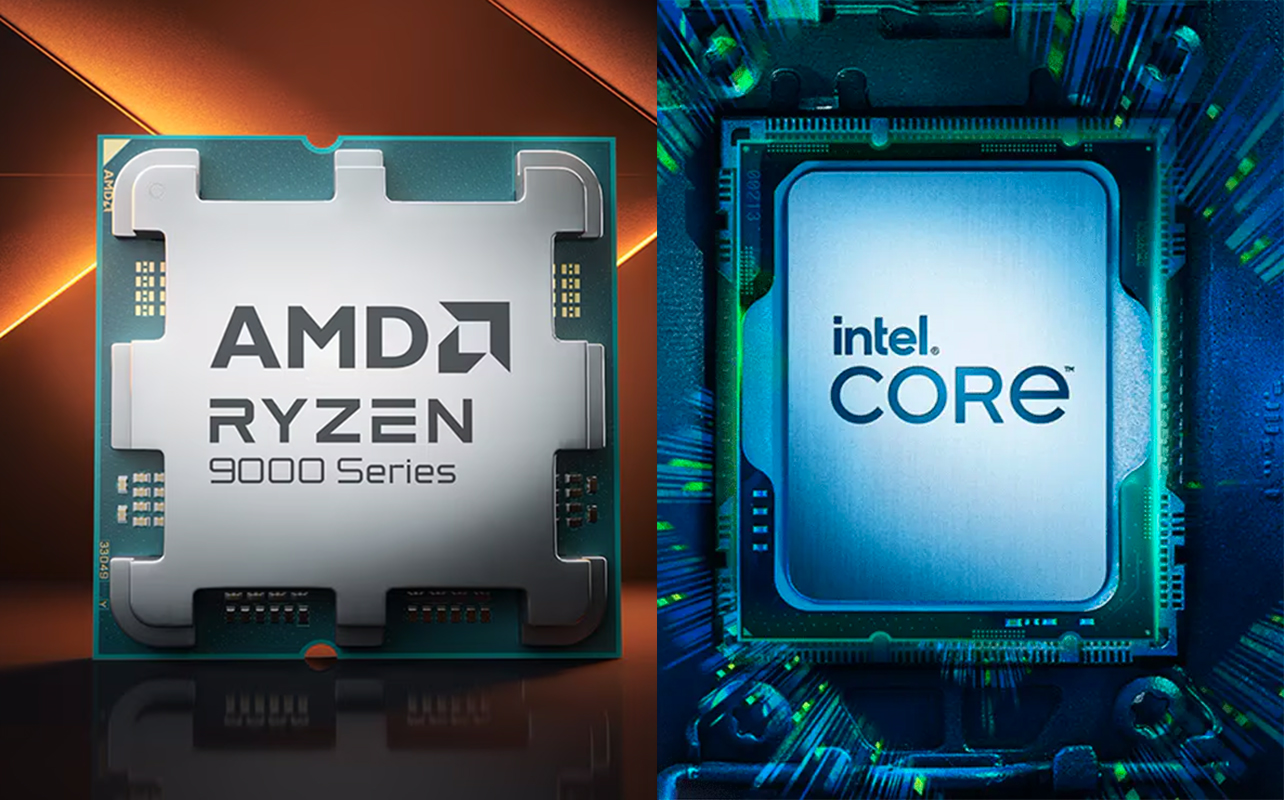
The CPU tells your PC what to do: running game logic, handling physics, managing AI behaviour, and coordinating everything happening in a scene. For most games, the GPU is the limiting factor, but the CPU matters more than many buyers realise.
Games with complex simulation, large numbers of active characters, or heavy open-world streaming rely significantly on the processor. Streaming your gameplay live while playing is also CPU-intensive. And pairing a high-end GPU with an underpowered processor creates what’s called a CPU bottleneck, where the processor can’t feed the graphics card fast enough, causing frame stutters and inconsistent performance even when the GPU has spare capacity.
Current platform options are the Intel Core Ultra 200S (Arrow Lake, socket LGA1851) and AMD Ryzen 9000 Series (socket AM5). Here’s how to think about tiers:
- For gaming-focused builds: A six-to-eight core processor like the AMD Ryzen 7 9700X or Intel Core Ultra 5 245 handles the vast majority of games without issue.
- For the best gaming frame rate consistency: The AMD Ryzen 7 9800X3D, which uses AMD’s 3D V-Cache technology, is widely considered one of the strongest gaming processors available, particularly in CPU-demanding titles and open-world games.
- For streaming, content creation, or heavy multitasking: Step up to ten or more cores, such as the Ryzen 9 9900X or Intel Core Ultra 7 265K.
As a rule, balance matters more than outright CPU power. A mid-range processor paired with a strong GPU will outperform a top-tier CPU paired with a weak GPU in almost every gaming scenario.
Memory (RAM): your PC’s short-term memory
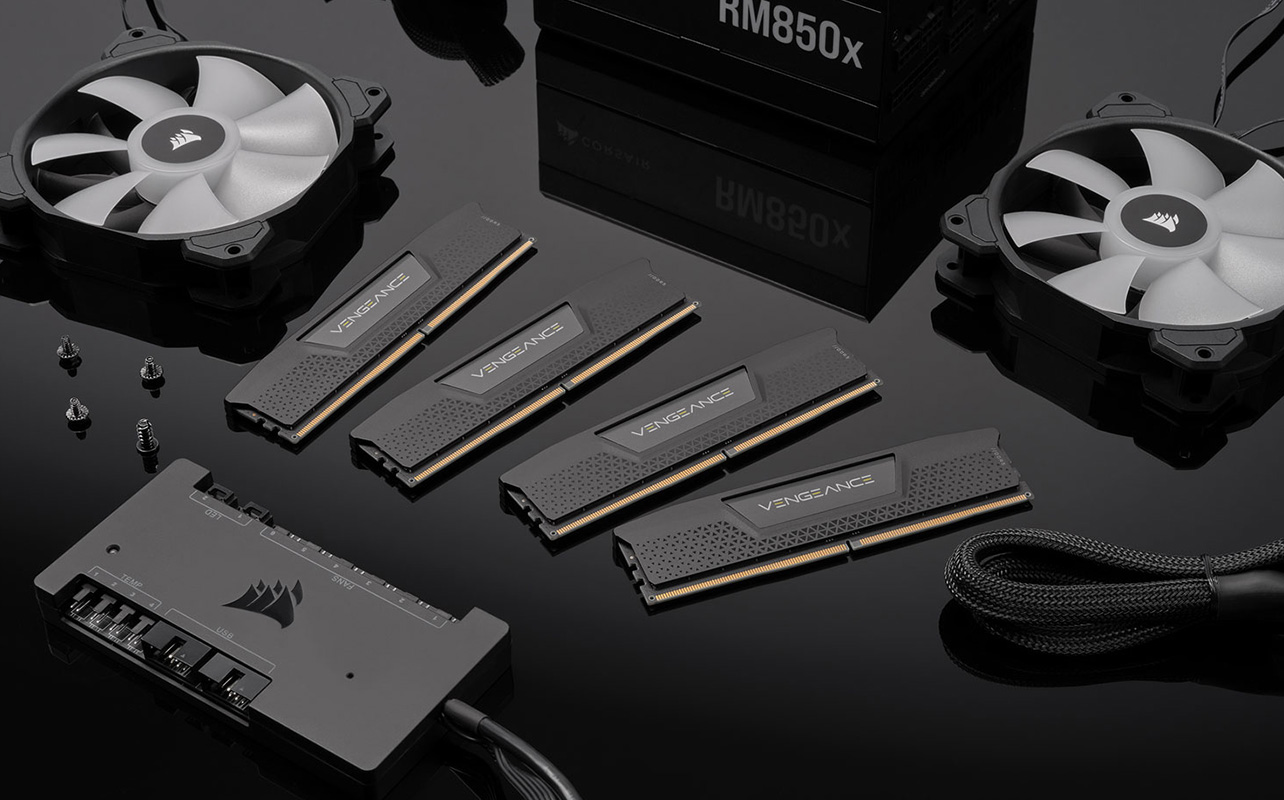
RAM is what allows your system to run games smoothly while keeping other things, such as your browser, Discord, and streaming software, open at the same time. DDR5 is the current standard across both Intel (LGA1851) and AMD (AM5) platforms.
Here’s how to choose:
- 16GB DDR5: The minimum for gaming. Works for most titles, but leaves little headroom for background applications or streaming.
- 32GB DDR5: The recommended standard for most gaming builds. Handles gaming, streaming software, and multitasking without issue.
- 64GB DDR5: Only worth considering if you’re doing video editing, 3D rendering, or running demanding creative software alongside gaming.
Don’t confuse RAM with VRAM. RAM is your system’s general working memory; VRAM is the GPU’s own dedicated memory discussed above. Both matter, but they’re separate.
Storage: fast load times and plenty of space
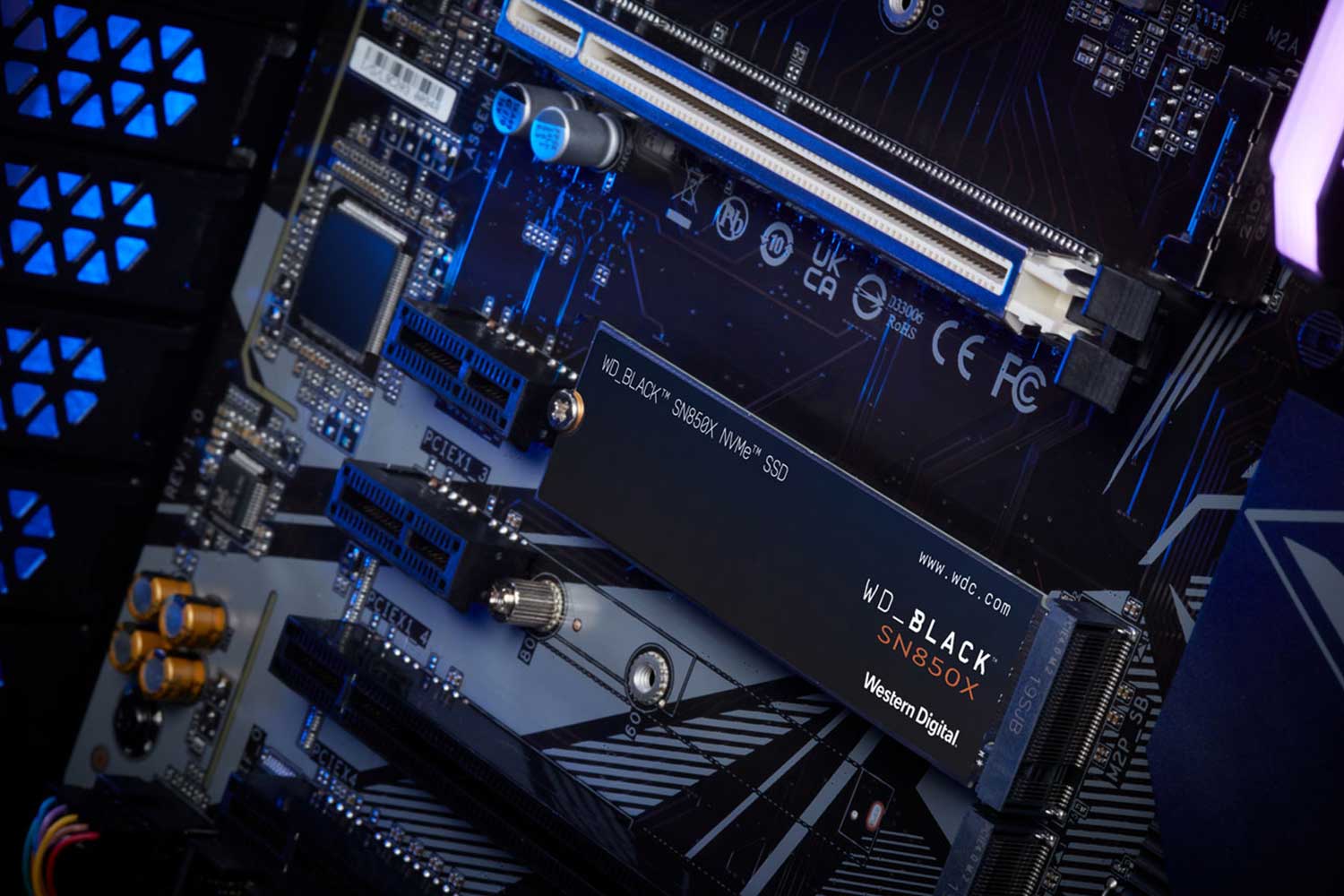
Modern games take up significant space. A single Call of Duty installation regularly exceeds 100GB. Baldur’s Gate 3 approaches 120GB. A single SSD fills up faster than most people expect.
The recommended setup for a gaming PC:
- Primary drive: A PCIe Gen 4 or Gen 5 NVMe SSD of at least 1TB for your operating system, applications, and most-played games. These deliver fast load times, even large open-world titles can boot in under ten seconds.
- Secondary drive: A 2TB or larger HDD or secondary SSD for game library overflow, media, and backups.
Don’t settle for a single 512GB SSD if you plan to keep more than a few games installed. You’ll run out of space quickly and be uninstalling titles you want to play.
Motherboard: the central connection hub
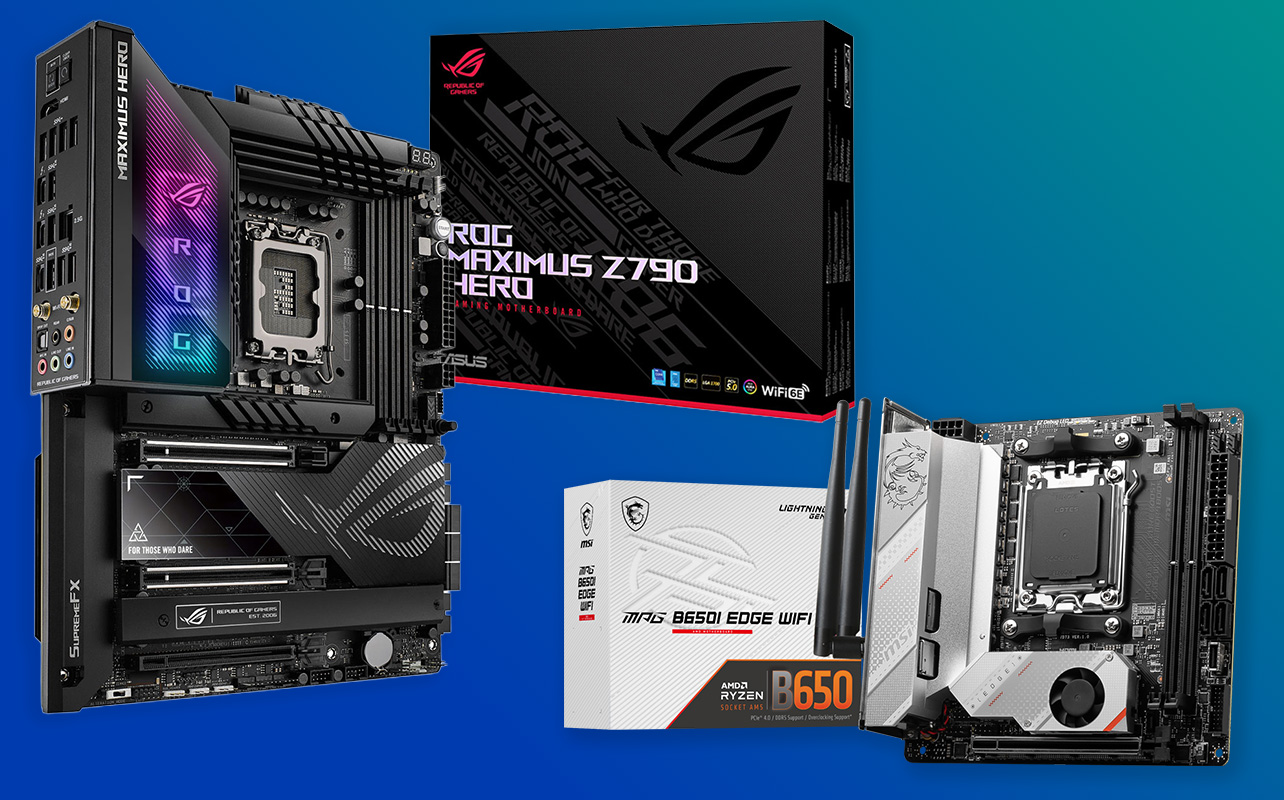
The motherboard is what everything connects to: your CPU, GPU, RAM, storage, and every peripheral. It defines your upgrade path and overall system compatibility.
For most buyers, especially those choosing a prebuilt, the motherboard decision is handled automatically. For those building their own, here’s what to keep in mind:
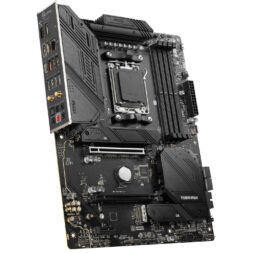
- Socket compatibility: LGA1851 for Intel Core Ultra 200S; AM5 for AMD Ryzen 9000 Series. These must match your CPU; there is no workaround.
- PCIe 5.0 support: Ensures full-speed access to current-generation GPUs and the fastest NVMe SSDs.
- M.2 slots: Check that the board has enough slots for your storage plans, ideally at least two.
- Wi-Fi and connectivity: Look for Wi-Fi 6E or Wi-Fi 7 and USB4 support on mid-range and above boards.
Cooling system: keep your system cool and quiet
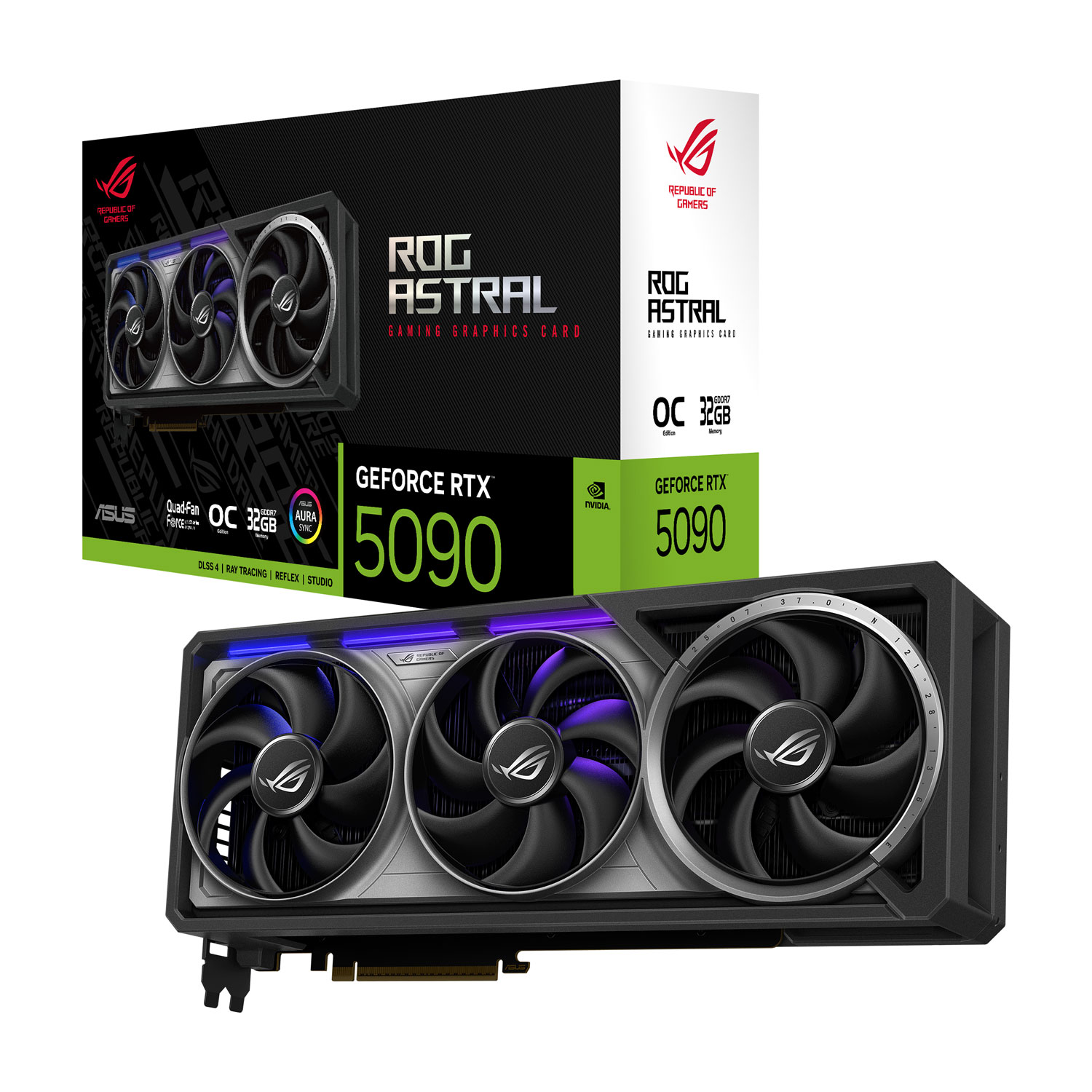
Powerful components generate significant heat, particularly the CPU and GPU under gaming load. Good cooling keeps performance consistent, reduces noise, and extends the lifespan of your components.
Most gaming builds use one of two approaches:
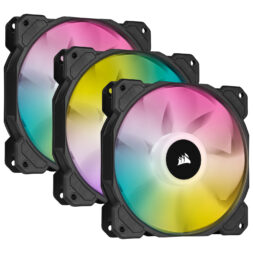
- Air cooling: uses heatsinks and fans to draw heat away from the CPU. It’s affordable, reliable, and straightforward to install. A quality air cooler is more than sufficient for mid-range builds and most gaming-focused CPUs.
- AIO (all-in-one) liquid cooling: uses a pump, radiator, and liquid loop to move heat away from the CPU more efficiently. It runs quieter under load and handles heat better from high-performance processors. It’s the preferred choice for top-tier CPU builds or compact cases where airflow is limited.
One thing to keep in mind: the RTX 50 Series flagship GPUs run hot under load. The RTX 5090 has a 575W TDP. If you’re building at the top tier, make sure your case has strong airflow in addition to proper CPU cooling.
Power supply (PSU): don’t cut corners here
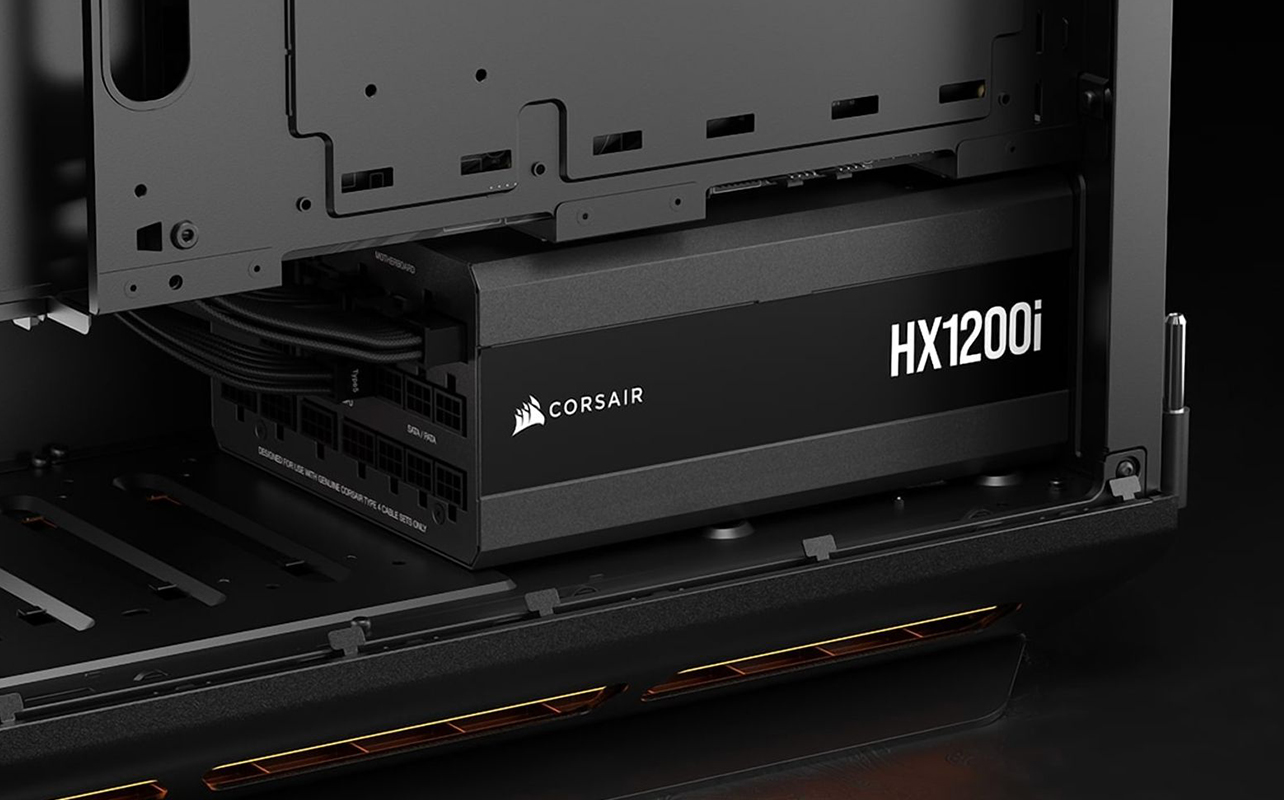
The power supply feeds energy to every component in your build. A poor quality or undersized PSU can cause system instability, damage components, or fail entirely under load, and it’s not a part you want to find out about the hard way.
Use these as rough wattage guidelines:
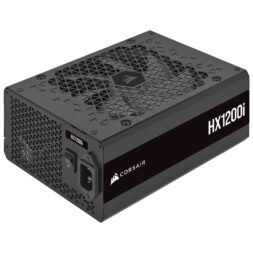
- 650–750W: Sufficient for entry-level and mid-range builds with RTX 5060 or RX 9070 class GPUs.
- 850–1000W: The right range for high-end builds with RTX 5080-class cards.
- 1000W or more: Required for builds with the RTX 5090, which has a 575W TDP on its own.
Beyond wattage, look for an 80 Plus Gold or Platinum efficiency rating. This means the PSU wastes less power as heat, runs cooler, and costs less to operate over time. Modular cables are worth the modest premium; they let you use only the cables you need, which improves airflow and makes cable management much easier.
Computer case: it’s not just a box
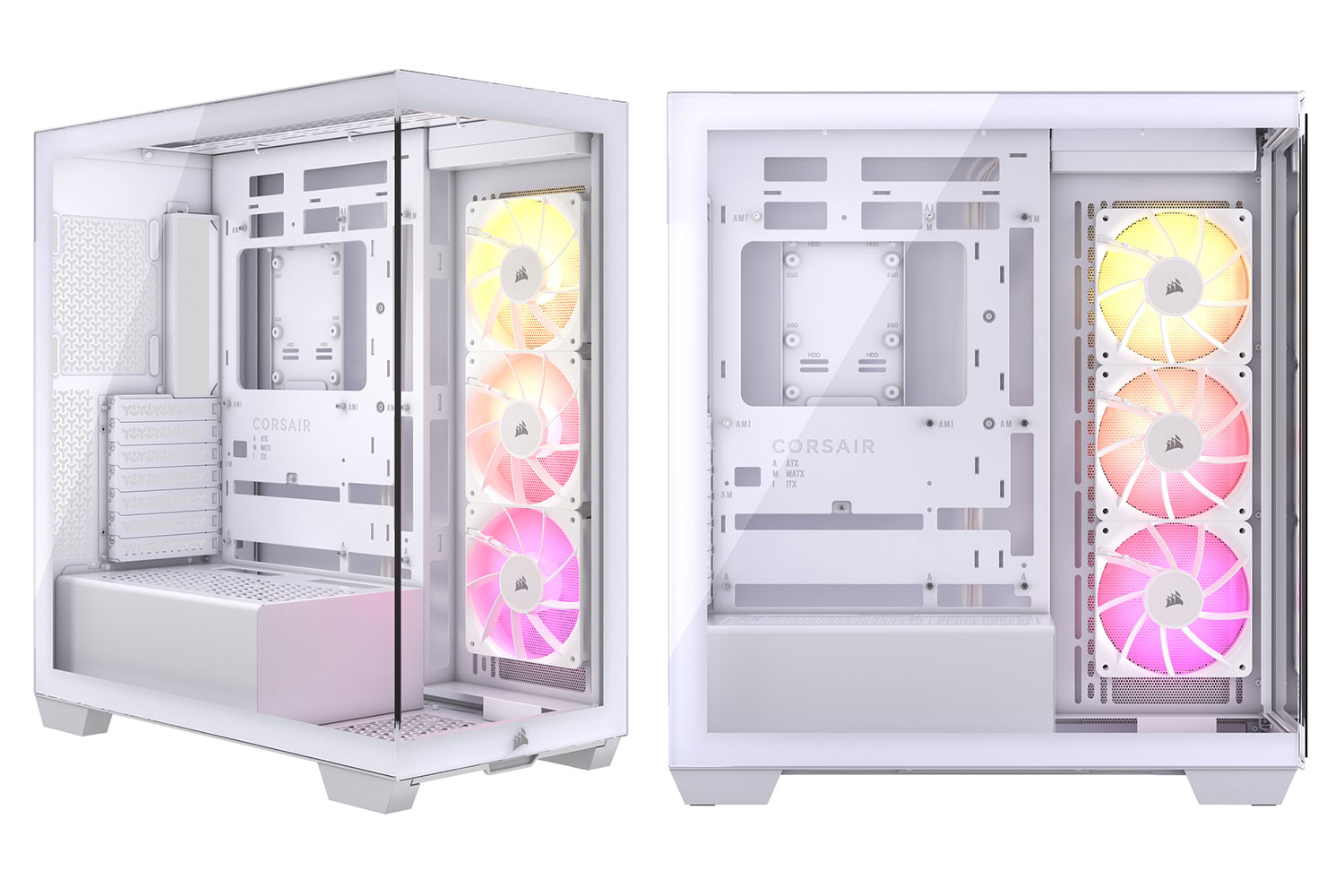
The case holds everything together, shapes your system’s airflow, and sets the visual tone of your setup. It’s worth choosing deliberately rather than treating it as an afterthought.
When choosing a case, consider:
- Size compatibility: Make sure your case supports your motherboard form factor (ATX, Micro-ATX, Mini-ITX) and has clearance for your GPU length and CPU cooler height.
- Airflow design: Cases with mesh front panels and well-placed fan mounts move air more efficiently, important for high-performance builds.
- Aesthetic: From clean and minimalist to full-RGB showcase builds, there’s a wide range. Choose what fits your space and style.
- Cable management: Roomy cases with dedicated cable routing channels make building and maintaining a system much easier.
Thinking of building from scratch? Our PC components buying guide covers every part in greater depth and walks through compatibility step by step.
Prebuilt or custom build: which is right for you?
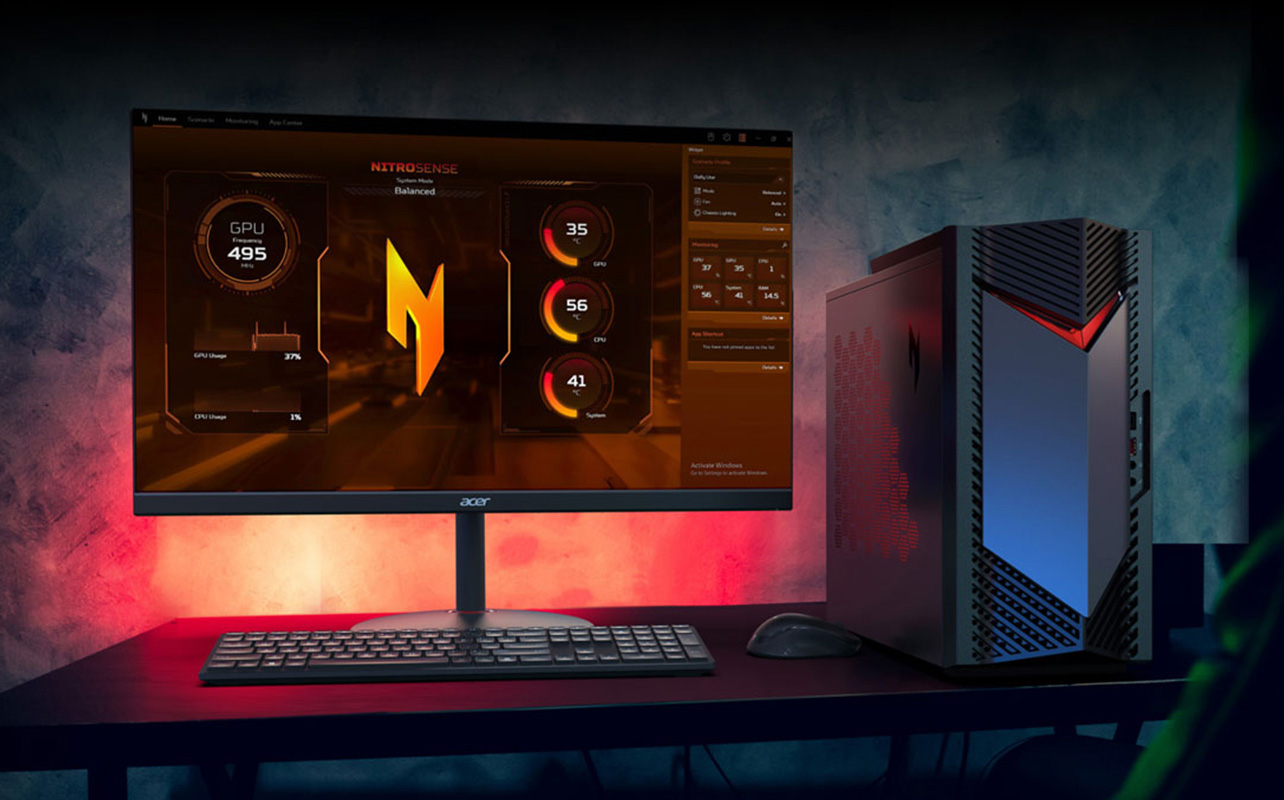
One of the first real decisions for any gaming PC buyer is whether to purchase a complete prebuilt system or assemble one from individual components. Both are valid approaches; the right choice depends on your priorities.
- Prebuilt gaming PCs: They are the easier path. Brands like ASUS ROG, Lenovo Legion, and HP Omen sell complete systems that are tested, warranted, and ready to use straight out of the box. If you want to skip the research and get gaming quickly, a prebuilt from a reputable brand is a sound choice. The tradeoff is less control: some manufacturers save on supporting components, RAM speed, storage capacity, or PSU quality, while putting most of the budget into the GPU headline. Always check the full specification list, not just the featured GPU.
- Custom builds: They give you full control. You choose every component, which means you can optimise for your specific performance target, avoid compromises on parts that matter to you, and often get better value at the mid-range and above. The tradeoff is time and responsibility: you need to research compatibility, source parts, assemble the system, and troubleshoot if something goes wrong.
A practical middle ground: buy a prebuilt from a reputable brand, but scrutinise the GPU tier, RAM capacity and speed, and storage type before committing. If those three things check out, a prebuilt is usually a solid buy.
How to upgrade a gaming PC
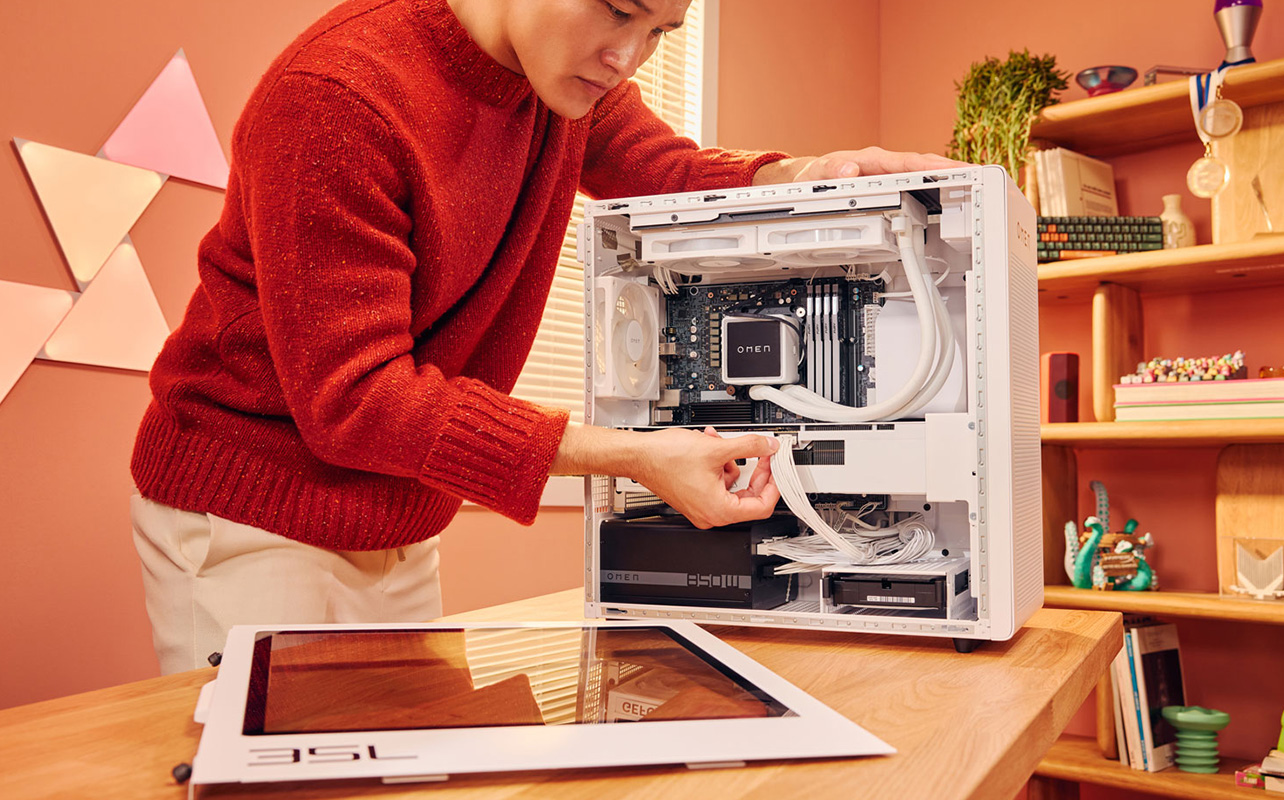
Understanding upgrade priority is one of the most useful things any PC gamer can know. Whether you’re refreshing an older build or trying to squeeze more performance out of a system that’s starting to struggle, the order in which you upgrade makes a real difference.
Here’s the sequence that makes sense for most setups:
- GPU first: In almost every scenario, upgrading the graphics card delivers the most noticeable improvement in gaming performance. If games feel sluggish at your target resolution and settings, the GPU is where to start.
- RAM second: If you’re running 8GB or 16GB and noticing stutters, particularly in open-world games or when switching between applications, upgrading to 32GB DDR5 is one of the most cost-effective fixes available.
- Storage third: Slow load times and running out of space are both solved with a faster or larger NVMe SSD. A PCIe Gen 4 drive is a relatively affordable upgrade with a clear and immediate quality-of-life improvement.
- CPU last: Modern processors age well in gaming contexts. Unless you’re clearly hitting a CPU bottleneck, identifiable through performance monitoring tools showing the processor at near-100% while the GPU sits well below its capacity, the CPU is usually the last component worth replacing.
One practical note before upgrading a GPU: confirm that your PSU can handle the new card’s power requirements. Moving from a mid-range card to an RTX 5080 or 5090 may require a PSU upgrade at the same time. Also, check that your motherboard has a PCIe 5.0 x16 slot if you’re moving to the current flagship tier.
Add the right accessories to complete your setup
The PC is the foundation, but the experience is shaped by what surrounds it. The right accessories are what turn a capable machine into a setup you actually enjoy spending time at.
Gaming monitor: match your display to your GPU
A monitor that can’t keep up with your GPU wastes the performance you paid for. A card capable of 1440p at 165fps connected to a 1080p 60Hz panel is a significant mismatch; you’ll feel the difference immediately. Here’s how to match your display to your build:
- For entry-level builds: A 1080p monitor at 144Hz or higher is the right pairing. Fast refresh rate matters more than resolution at this tier, especially for competitive games.
- For mid-range builds: A 1440p monitor at 144Hz to 165Hz is the sweet spot. This is where you’ll feel the full benefit of an RTX 5070 or RX 9070 XT class card.
- For high-end builds: A 4K monitor at 144Hz makes full use of what RTX 5080-class performance can deliver.
On panel types: IPS panels offer strong colour accuracy and wide viewing angles, making them a reliable all-round choice. OLED delivers the deepest blacks, fastest pixel response times, and the most visually immersive experience, though at a higher price. Mini-LED is a strong middle ground, offering excellent brightness and contrast in a more affordable package than OLED.
Gaming headset: sound matters more than you think
In competitive gaming, what you hear is just as important as what you see. Knowing the direction an enemy is approaching from, hearing footsteps before they appear on screen, catching audio cues that aren’t visible, these are advantages a good headset provides that cheap audio simply can’t.
Key features to look for:

- Virtual surround sound (7.1 or Dolby Atmos): Creates 3D spatial awareness so you can place sounds accurately in 360 degrees around you.
- Noise-cancelling microphone: Keeps your voice clear in team communication without picking up background noise.
- Wireless connectivity: Reduces desk clutter and lets you move freely; look for low-latency wireless rather than standard Bluetooth for gaming.
- Comfort for long sessions: Over-ear designs with memory foam padding and adjustable headbands make a real difference during extended play.
Gaming keyboard: fast, responsive, and built to last
Gaming keyboards are built differently from standard office keyboards, primarily in their switch technology. Mechanical switches register keypresses more precisely, last significantly longer, and provide tactile or audible feedback that helps with timing in fast-paced games.
What to look for:
- Switch type: Linear switches are smooth and quiet, preferred by many competitive players. Tactile switches provide a bump you can feel. Clicky switches add an audible click. Personal preference plays a large role. Try different types if you can.
- Anti-ghosting and N-key rollover: These ensure every keypress registers even when multiple keys are held simultaneously, important in action games and strategy titles.
- Hot-swappable switches: Allow you to replace individual switches without soldering, useful for customisation or repairs.
- Compact layouts: 60% and tenkeyless keyboards reduce desk footprint and keep your mouse hand closer to the keyboard, a preference among many competitive players.
Gaming mouse: precision that makes a real difference
A high-performance gaming mouse improves accuracy, reduces input lag, and fits more naturally in your hand during long sessions. The right sensor and ergonomics matter more than DPI numbers alone.
What to look for:

- Sensor quality: A high-quality optical sensor tracks movement accurately at high speeds without skipping or drifting. DPI (dots per inch) determines sensitivity; most players use somewhere between 400 and 3,200 DPI, regardless of the maximum rating.
- Grip style: Palm grip mice are larger and support the whole hand. Claw grip mice have a more arched shape. Fingertip grip mice are small and light. Choosing the right shape for how you hold a mouse reduces fatigue during long sessions.
- Wired or wireless: Low-latency wireless gaming mice are now comparable to wired options in responsiveness. The choice comes down to preference and whether you want to manage battery life.
- Programmable buttons: Side buttons mapped to frequently used actions, abilities, push-to-talk, weapon swaps, can meaningfully reduce the actions your keyboard hand needs to manage.
Gaming mousepad: the foundation it all sits on
A dedicated gaming mousepad improves tracking consistency, protects your desk surface, and keeps your mouse in place during fast movements. It’s a small detail that makes a noticeable difference once you try a proper one:
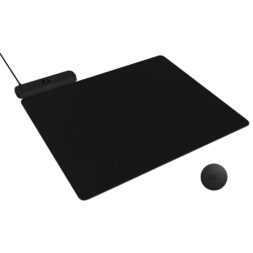
- Speed surfaces (smooth, low-friction): suit fast, sweeping movements, popular with low-sensitivity players.
- Control surfaces (lightly textured): slow down glide slightly and improve precision, preferred for tactical and strategy games.
- Extended or XL pads: cover both your mouse and keyboard for a clean, unified desk surface.
- Anti-slip rubber bases: keep the pad firmly in place even during intense sessions.
Ready to power up your play?
Choosing the right gaming PC is simpler than it looks once you know what to focus on. Start with your target resolution; that decision narrows your GPU tier immediately. Match your CPU so it doesn’t hold your GPU back, make sure you have at least 32GB DDR5 RAM and a fast NVMe SSD, then choose a prebuilt that hits those marks or build your own from there.
At Best Buy Canada, you’ll find gaming desktops, high-performance laptops, individual components, and all the peripherals to complete your setup, all in one place. Whether you’re starting fresh or upgrading what you already have, the PC Gaming Gear page is a great place to explore what’s available.
Frequently asked questions
What’s the most important component in a gaming PC?
The GPU. It has the most direct impact on gaming performance, frame rates, resolution, visual quality, and which games you can run smoothly. If you have one place to prioritise your budget, it’s here.
Should I buy a desktop or a gaming laptop?
If you game primarily at a desk and want the best performance for your budget, a desktop is almost always the stronger choice. If portability matters, gaming in different locations or needing one machine for both work and play, a laptop is worth the tradeoff. Just be aware that mobile GPUs deliver less raw performance than their desktop equivalents.
How does the AMD RX 9070 XT compare to the NVIDIA RTX 5070 Ti?
Reviewers found the RX 9070 XT competitive with the RTX 5070 Ti in rasterisation-heavy workloads at both 1440p and 4K, with a lower price point and 16GB of VRAM on both cards. NVIDIA holds the lead in ray tracing; the gap widens in ray-tracing-heavy titles. DLSS 4.5 also maintains a slight edge over FSR 4 in upscaling quality in supported games.
What is VRAM, and how much do I need?
VRAM is the GPU’s own dedicated memory, separate from your system RAM. It stores textures and scene data for the game currently running. When gaming at 1080p, 8GB of VRAM is still workable, but starting to feel limited. At 1440p resolution, 12GB becomes a reasonable minimum for smooth performance. To enjoy 4K gaming or ensure future-proofing, aim for 16GB as the comfortable standard.
Is the RTX 5090 worth it for most gamers?
For most people, no. The RTX 5090 is the fastest consumer GPU available, but its price-to-performance ratio drops sharply compared to the RTX 5080. It makes sense for 4K enthusiasts, content creators, or buyers who want the absolute longest upgrade cycle. For the majority of gamers, the RTX 5080 or RTX 5070 Ti delivers better real-world value.
How long will a gaming PC last before it needs upgrading?
A well-built mid-range system should stay relevant for three to five years without significant changes. Upgrading the GPU partway through that window can meaningfully extend the life of the machine without a full rebuild. The CPU, RAM, and storage tend to age more slowly in gaming contexts.
What should I upgrade first on an older gaming PC?
Start with the GPU, it has the most impact on gaming performance. If that’s already current, 32GB DDR5 RAM and a fast NVMe SSD are affordable upgrades with a noticeable effect. The CPU is usually the last thing to replace unless you’re seeing a clear bottleneck.
Can I use a gaming PC for school or work as well?
Absolutely. A gaming PC handles everything a standard PC does, documents, spreadsheets, video calls, and content creation, and typically does it faster. The GPU and RAM headroom in a gaming build benefit productivity workload just as much as games.